Plum tomatoes
Also called Roma tomatoes
Plum tomatoes are the practical fresh tomato for cooking: firm flesh, modest seed chambers and enough structure to survive a hot pan.
The numbers
| Nutrient | Amount | % RI |
|---|---|---|
| Calories | 18 kcal | — |
| Water | 94.5 g | — |
| Carbs | 3.9 g | — |
| Fibre | 1.2 g | 5% |
| Protein | 0.9 g | 2% |
| Vitamin C | 13.7 mg | 17% |
Source: USDA FoodData Central, FDC 170457 (raw red tomato reference; cultivar values vary) · FDC ID 170457 · % RI against EU adult reference intakes.
Buying and keeping
What to look for at the shop, and how to make it last once it is home.
How to pick
- Pick fruit that feels firm but not hard, with an even red colour and a tomato smell at the stem.
- Look for dense weight and unbroken skin. A plum tomato should not feel hollow when you lift it.
- Avoid green woody shoulders if you plan to eat the tomato raw.
- For sauce, a slightly firm batch is useful because it will hold shape while the first water cooks off.
How to store
- Keep whole plum tomatoes at room temperature until ripe, stem side down on a flat surface.
- Do not stack them deeply. Pressure bruises the lower layer before you notice it.
- Once cut, refrigerate in a covered container and bring to room temperature before serving raw.
- Freeze ripe plum tomatoes for sauce. Thaw them in a bowl so their juice does not run across the fridge shelf.
Best months
If you have none
Swaps that hold up, with what changes when you use them.
Why cooks like the long shape
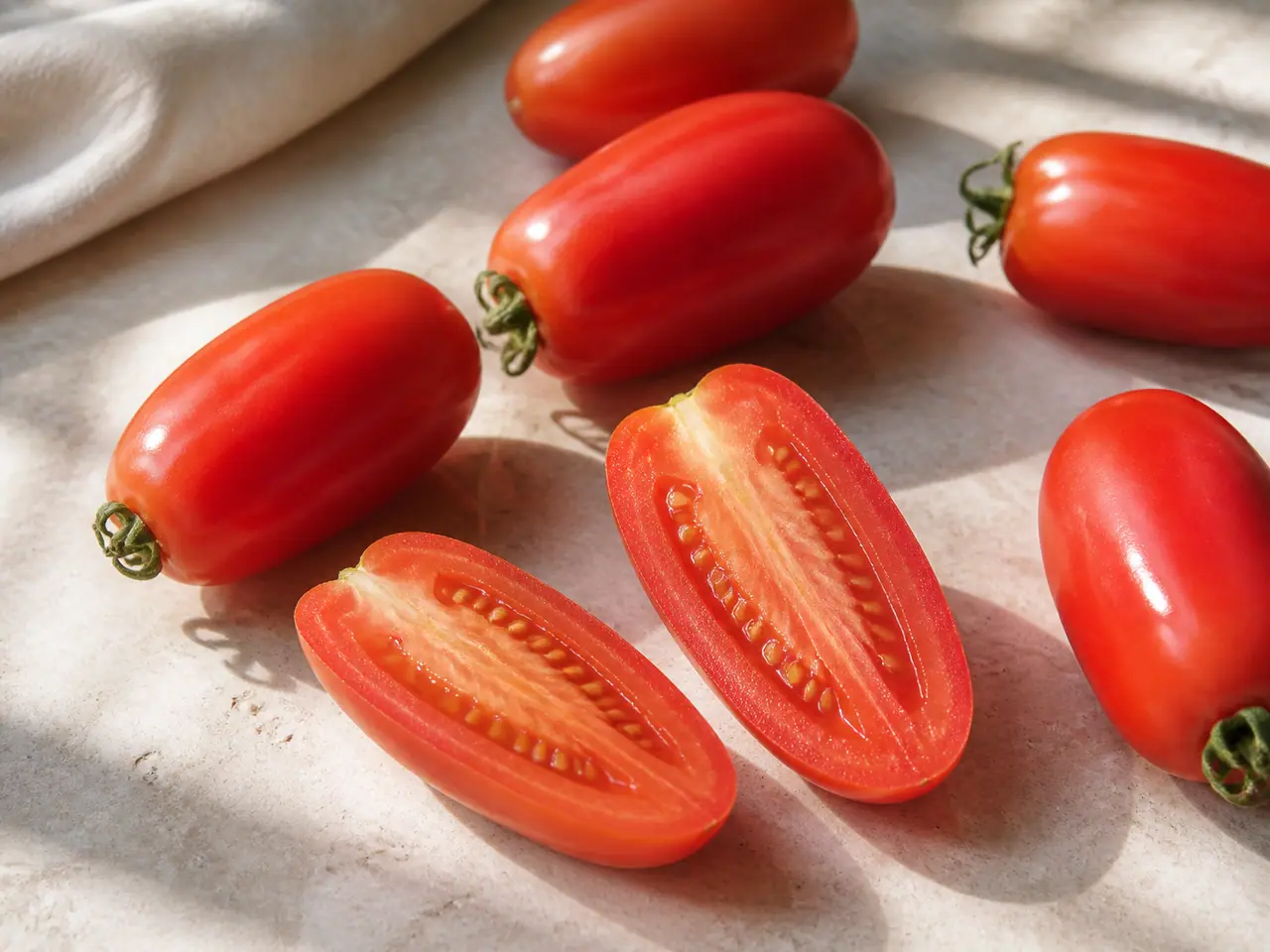
The useful thing about a plum tomato is not its name or its origin. It is the ratio of skin to flesh and the compact seed chambers inside. Cut one lengthwise and you can scoop out a relatively small amount of loose pulp, leaving a piece that will sit on toast or in a roasting dish without immediately collapsing.
Shape helps, but it never cancels out ripeness. A tomato can be the right variety and still be a poor tomato on the day you buy it. I use the long shape as a cooking clue, not a promise. It tells me the pieces may stay together and the sauce may need less waiting, while the smell tells me whether the fruit has enough flavour to deserve a raw finish. If the skin is tight, the flesh dense and the stem fragrant, the tomato is doing what I need. If only the shape is right, I save it for a dish with garlic, oil and time.
That structure makes plum tomatoes good for sauces, though it does not make every plum tomato ripe. A firm, pale fruit is still a firm, pale fruit. Smell it, taste a slice and decide whether the pan needs extra time. If it tastes watery raw, do not expect twenty minutes of simmering to create the perfume it never had. The dense flesh is an advantage only after the tomato has flavour of its own. In a sauce I often leave the pieces large at first, let them soften, then crush them against the side of the pot. That keeps the early cooking calm and gives me a chance to judge the liquid before everything becomes one texture.
Peeling is worth it in one situation
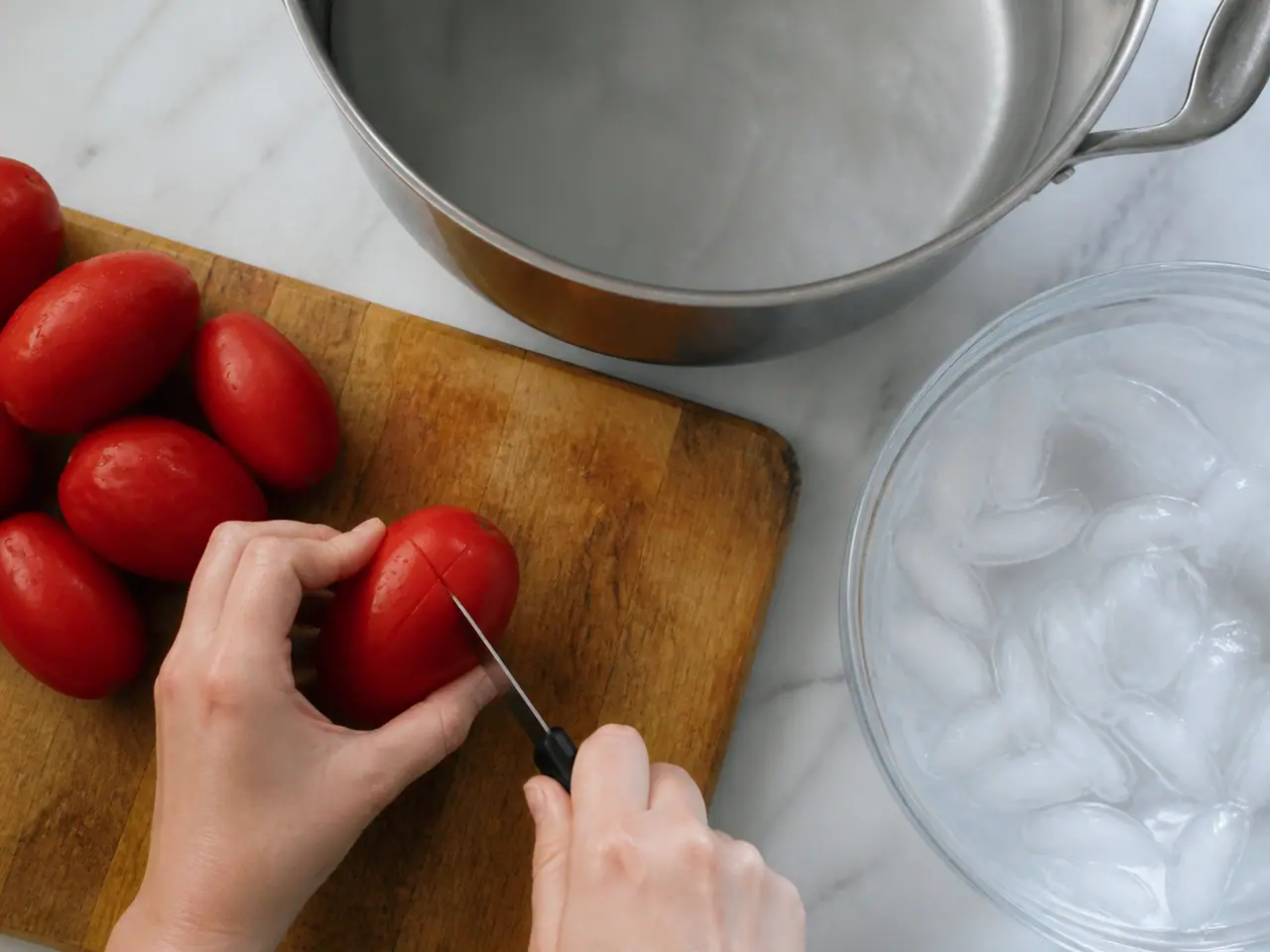
For a rustic sauce, leave the skin on. For a smooth soup or a sauce that will be blended briefly, peeling is useful because strips of tomato skin can catch on the spoon. Score a shallow cross at the base, lower the tomatoes into boiling water for thirty seconds, then move them to cold water. The skin should slip under your thumb.
Do not boil them until the flesh softens. The point is to loosen the skin, not cook the tomato. If the cross opens widely and the flesh starts to fall away, the water was too hot or the tomatoes stayed in too long. They are still usable, but they will be harder to handle.
Fresh plum tomatoes in a salad
Because the flesh is denser, plum tomatoes can take a little more salt before they turn to liquid. Cut them into wedges, salt them ten minutes before eating and drain only if the bowl has filled with juice. That juice is good with bread. Removing it automatically is a habit that throws away the best part.
They work well in the charred corn and peach salad with chilli oil, where their shape stands up to sweet fruit and hot oil. The salad is better when the tomato is ripe enough to taste before the dressing arrives.
Storage without a bruised bottom
Plum tomatoes bruise where they touch the counter, especially when they are stacked in a bowl. Keep them in a single layer, stem side down, and rotate the fruit if you are holding it for several days. Once a soft patch appears, use that tomato first. A bruise is not a reason to throw away the whole batch, but it is a reason to stop waiting.
Questions
Are plum tomatoes good for sauce?
Are Roma tomatoes the same as plum tomatoes?
Can I eat plum tomatoes raw?
How do I peel plum tomatoes?
Should plum tomatoes go in the fridge?
Recipes using plum tomatoes
2 on the site so far.
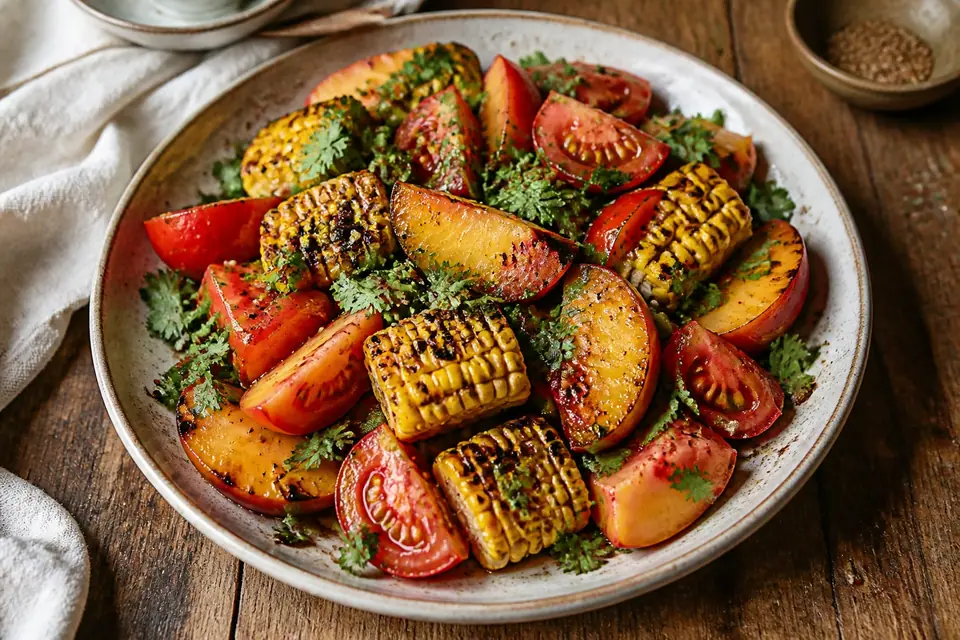
Charred corn, tomato and peach salad with chilli oil
Chilli oil gives ripe peaches and tomatoes a sharp edge, while charred corn adds the savoury part. Keep the oil warm, not smoking.
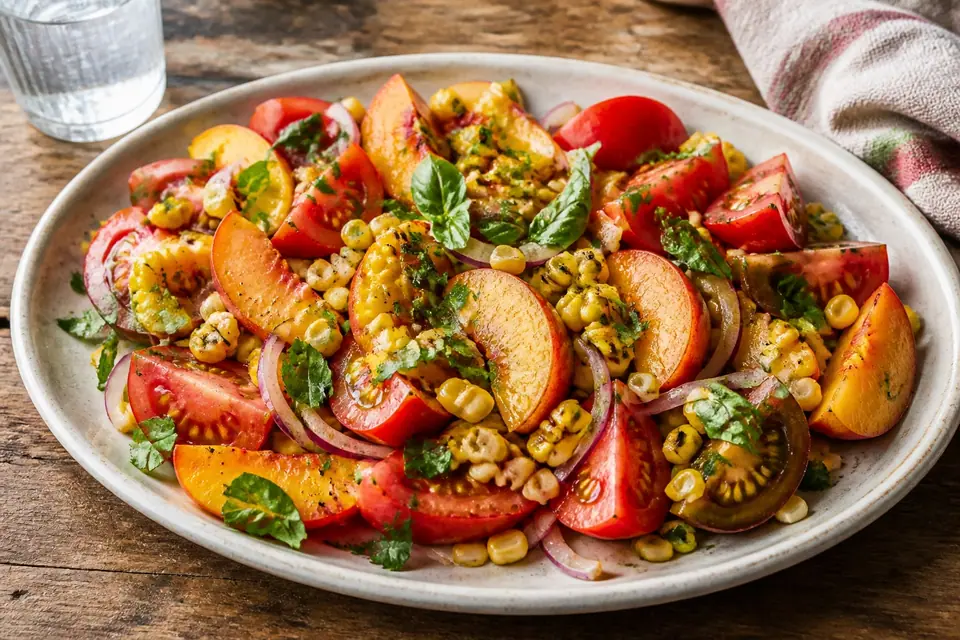
Charred corn, tomato and peach salad with lemon and herbs
Corn, tomatoes and peaches brought together by lemon, olive oil and a handful of herbs. The corn gets charred; everything else stays fresh.