Tomatillos
Also called Mexican husk tomatoes
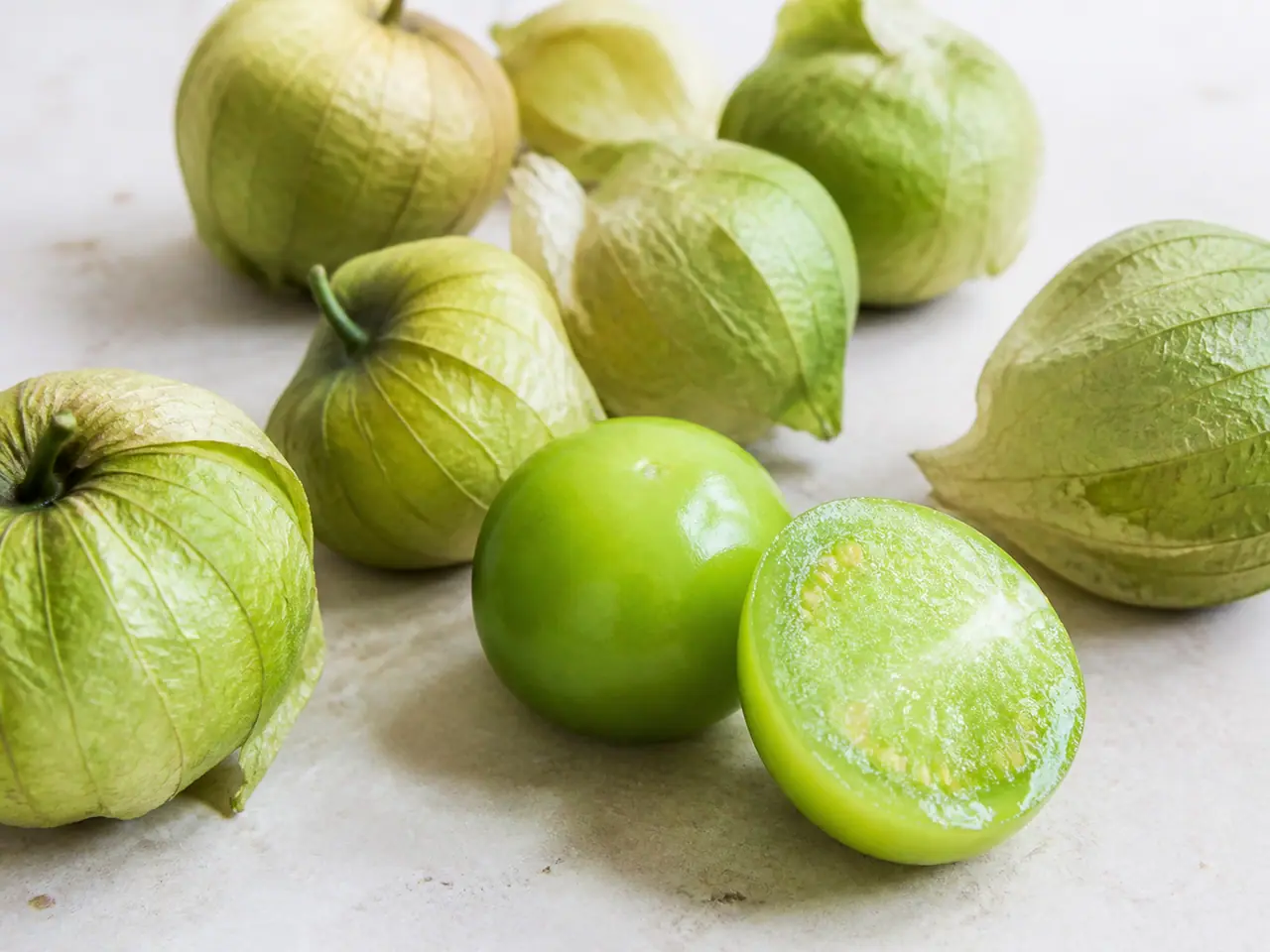
Tomatillos are tart, firm and slightly sticky under their husks. Rinse off the residue, then roast or simmer them when a green sauce needs bite.
The numbers
| Nutrient | Amount | % RI |
|---|---|---|
| Calories | 18 kcal | — |
| Water | 94.5 g | — |
| Carbs | 3.9 g | — |
| Fibre | 1.2 g | 5% |
| Protein | 0.9 g | 2% |
| Vitamin C | 13.7 mg | 17% |
Source: USDA FoodData Central, tomato reference used as a related produce comparison; tomatillo values vary by record · FDC ID 170457 · % RI against EU adult reference intakes.
Buying and keeping
What to look for at the shop, and how to make it last once it is home.
How to pick
- Choose firm fruit that fills the husk, with green skin free of soft black patches.
- A slightly dry husk is fine if the fruit is firm. A wet collapsed husk usually means the tomatillo is old.
- Pick fruit with a fresh sharp smell rather than a fermented one.
- Small tomatillos can be tart; larger ones are often a little sweeter, though ripeness still decides the flavour.
How to store
- Keep tomatillos in their husks in a paper bag in the fridge for up to two weeks.
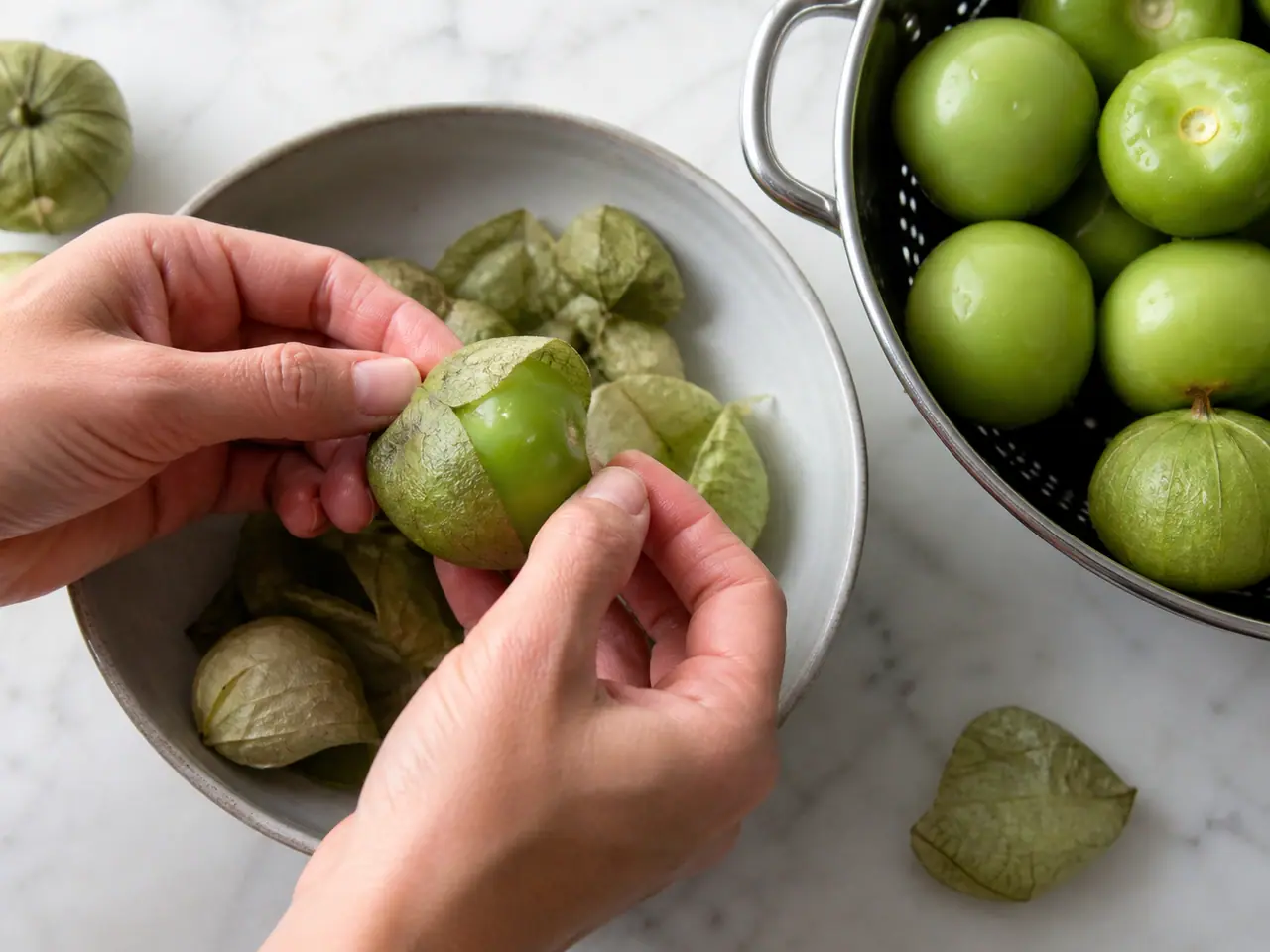
- Remove the husks and sticky film only when you are ready to cook, unless you need to prep them in advance.
- Freeze cleaned tomatillos whole for sauces. Thawing softens them, which is fine for blending.
- Do not seal damp tomatillos in plastic. The husk holds enough moisture already.
Best months
If you have none
Swaps that hold up, with what changes when you use them.
The husk is part of the shopping clue
Tomatillos arrive wrapped in a papery husk that can be tight and green or loose and dry. The husk is useful because it protects the fruit, but it can hide a soft patch. Lift it enough to check the skin and press gently. The fruit should feel firm, with a clean sharp smell. A sticky surface is normal; a fermented smell is not.
The husk is a useful bit of packaging, but it is not a quality stamp. Always check the fruit underneath before buying a full bag. Look for fruit that fills the husk without sitting in a pocket of dampness. A dry papery wrapper is fine; a collapsed wrapper stuck to leaking skin is a warning. The green colour also tells you little on its own, because a bright fruit can be sharp and a slightly yellow one can be pleasantly mellow. Firmness and smell are the useful checks here.
After removing the husk, rinse the tomatillo under warm water. The fruit has a tacky film that catches dust and makes a raw salsa feel oddly gummy. Pat them dry before roasting. Do not scrub hard enough to bruise them; the skin is thin and the heat will do the rest. If you are blending them, a little remaining film will not ruin the sauce, but rinsing makes the flavour cleaner and keeps the knife from dragging. I dry the fruit before it reaches the tray because wet tomatillos steam around the edges. A dry surface blisters faster and gives the finished salsa a more useful smoky note.
Raw, simmered or charred
Raw tomatillos are crisp and sharply acidic. They are useful in a salsa where lime, onion and herbs can meet that acidity without making the bowl taste like plain green tomato. Simmered tomatillos soften and become more rounded. Charred tomatillos gain smoky edges while keeping their green bite in the middle.
For a quick char, use a dry skillet or a hot grill and turn them until the skin blisters in patches. Do not blacken the whole fruit as if it were a pepper. You want a few dark marks and enough softening to blend or chop. Overcooked tomatillos lose the clean tartness that makes them useful.
How to balance the sharpness
Salt brings out the fruit, while a little fat rounds the sharp edges. Avocado, olive oil, yogurt or toasted seeds can all do that job. Sugar is rarely needed. If a salsa tastes aggressively sour, add more cooked tomatillo, onion or avocado before reaching for sugar.
Tomatillos also pair well with sweet corn and peaches. The charred corn and peach salad uses them as a sharper variation, where their acidity keeps the fruit from reading as dessert.
Storage that keeps them useful
Keep tomatillos in their husks in a paper bag in the fridge. The husks protect the skin and the paper stops condensation building around the fruit. Cleaned tomatillos can sit in a covered container for a day, but the surface becomes wetter and less pleasant to char.
Freezing is a good answer to a large market bag. Remove the husks, rinse, dry and freeze the fruit whole. They will soften when thawed, so plan to blend them into salsa, sauce or soup rather than slice them raw.
Questions
Do I need to wash tomatillos?
Can I eat tomatillos raw?
Are tomatillos the same as green tomatoes?
How long do tomatillos last?
Can I freeze tomatillos?
Recipes using tomatillos
2 on the site so far.
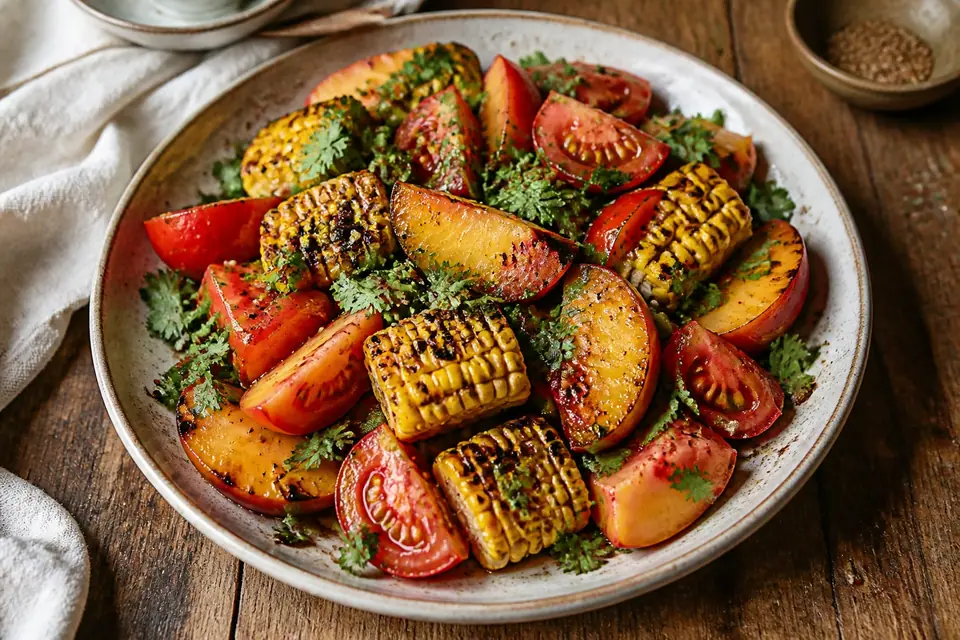
Charred corn, tomato and peach salad with chilli oil
Chilli oil gives ripe peaches and tomatoes a sharp edge, while charred corn adds the savoury part. Keep the oil warm, not smoking.
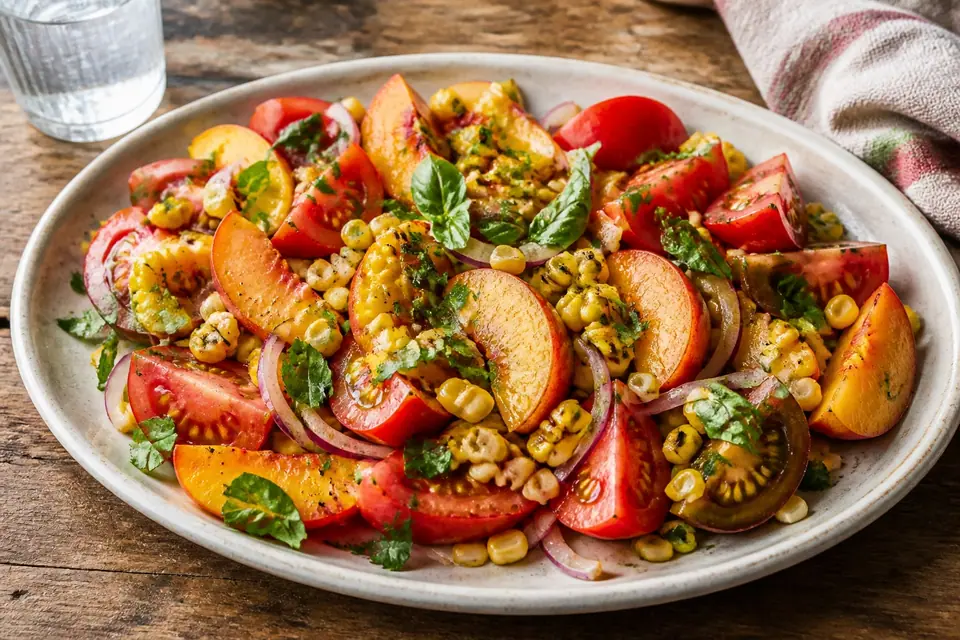
Charred corn, tomato and peach salad with lemon and herbs
Corn, tomatoes and peaches brought together by lemon, olive oil and a handful of herbs. The corn gets charred; everything else stays fresh.