Five ways to make the stalk part of dinner
The whole broccoli can become dinner when each part gets the cut and cooking time it needs. These five ideas keep the stalk, leaves and florets in play.

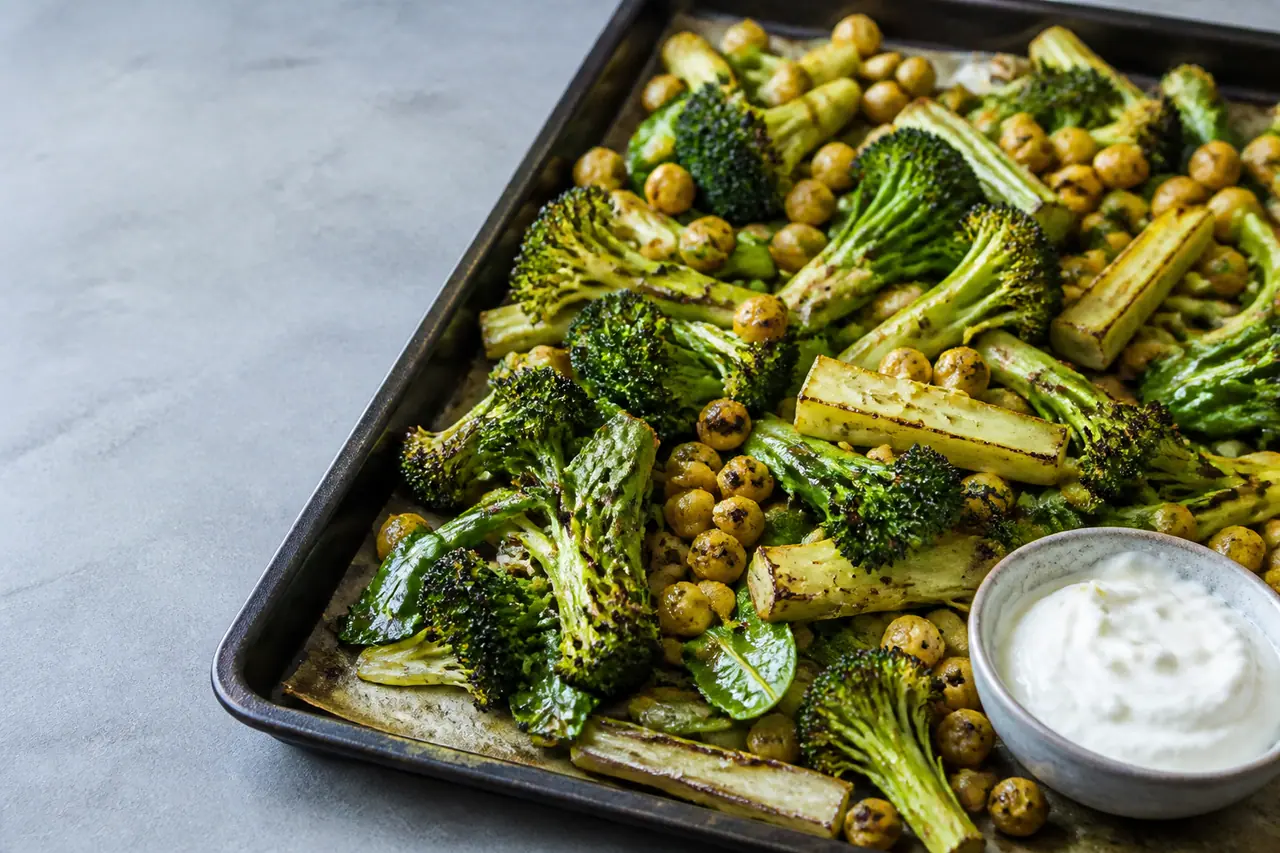
A broccoli head is not one ingredient with a discarded handle. The florets roast, the peeled stalk stays crisp, and the leaves catch at the edges like small greens. I use five dinners that give each part a job: a tray roast with chickpeas, a lemon pasta, a sesame rice bowl, a creamy soup and a skillet with eggs.
The timing is the thread through all five. I cut the stalk smaller or start it earlier, then bring in the florets. That keeps the crown from collapsing while the thick centre catches up. If I cook the pieces as though they are identical, the vegetable feels uneven. If I separate their jobs, the whole head becomes useful.
I keep this part quiet and practical, then let the food show whether it worked.
1. Broccoli, chickpea and lemon tray
Peel the stalk, cut it into 1 cm batons and roast it with drained chickpeas for eight minutes before adding medium florets. Toss with oil, cumin and black pepper, then roast until the crowns catch at the tips. Finish with lemon and yogurt or tahini. The stalk gives the tray a firm bite, while the chickpeas make it enough for dinner.
I keep the florets fairly large because their edges cook fast. Leaves go on for the final five minutes, where they turn crisp at the rims. A handful of cooked grains underneath makes the leftovers easier to pack. This is the dinner I choose for a head that needs using before the crown opens.
I make that decision before the pan is hot, while the ingredient can still change.
2. Whole broccoli lemon pasta
Boil the peeled stalk pieces with the pasta for the last four minutes, then add the florets for the final two. Reserve pasta water before draining. In the same pot, warm garlic, lemon zest and olive oil, then toss everything together with the water until the starch coats the vegetables.
The stalk becomes part of the sauce without disappearing. I slice it thin enough that a piece can sit on a fork with the pasta. Any tender leaves can be shredded and added with the florets. Toasted breadcrumbs bring crunch if the broccoli has cooked a little softer than planned.
That small pause tells me more than the packet does on a busy shopping day.
3. Sesame broccoli rice bowls
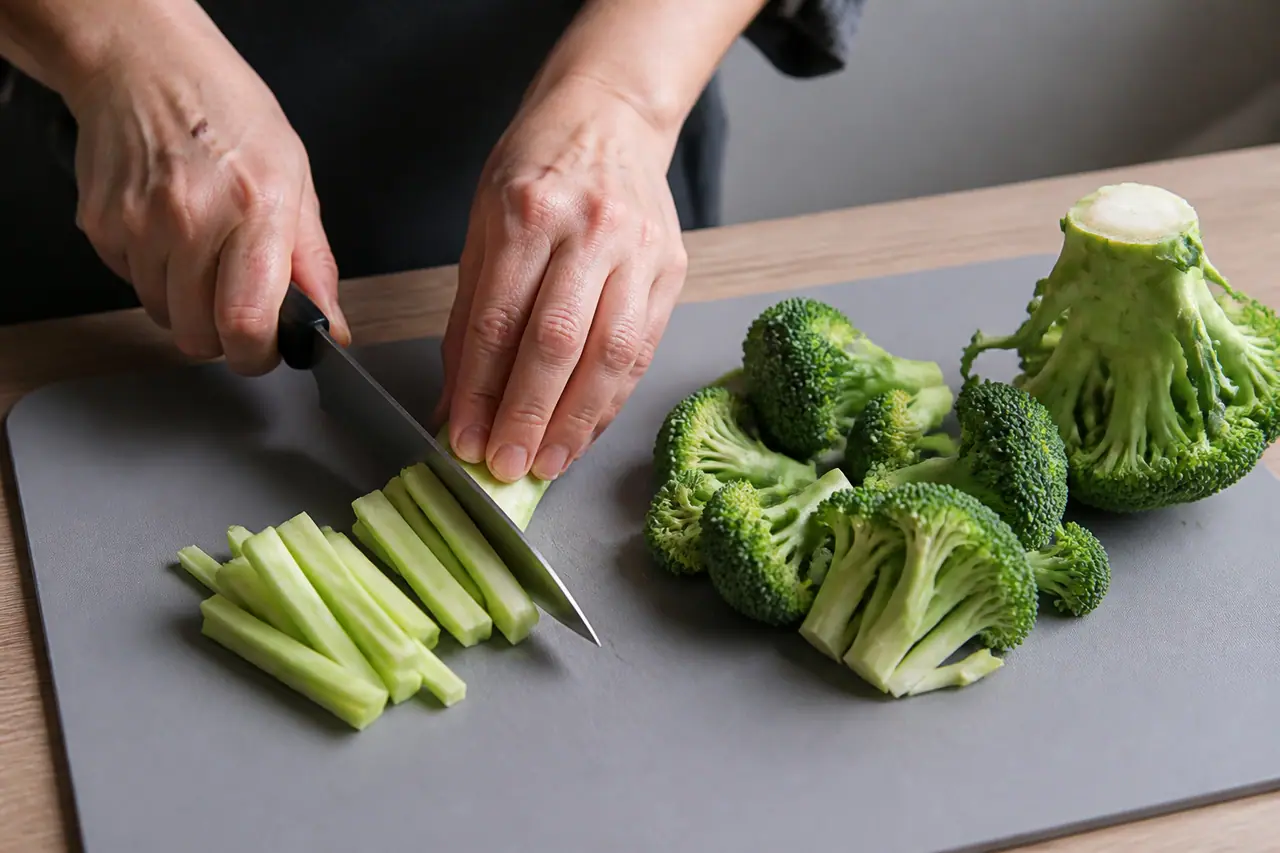
Pan-fry stalk coins with ginger and a little oil, then add florets and a splash of water. Cover for one minute, uncover and add soy, sesame oil and rice vinegar. Spoon the broccoli over rice with a fried egg, tofu or leftover chicken. The sauce grips the flat cut faces of the stalk better than it grips a whole unpeeled chunk.
I make a quick cucumber or pickled onion side because the broccoli and rice are soft together. Leaves can be sliced and wilted in the same pan. This bowl is good for tenderstem too, but a regular head gives more stalk to cut into coins.
I write the result down when the difference matters for the next dinner.
4. Broccoli stalk and white bean soup
Sweat onion and garlic, add peeled stalk, potato and stock, then simmer until the stalk yields to a knife. Add florets for the final five minutes so some stay green. Blend half the soup and leave the rest chunky. Stir in white beans and lemon at the end.
The stalk gives the soup a clean vegetable base without needing the entire head to be boiled into softness. I save a few roasted florets for the top, which keeps the bowl from becoming one colour. This is the best route for a head with open flowers but a firm, clean stalk.
The useful clue is in the texture, not the promise printed on the bag.
5. Broccoli and egg skillet
Slice the peeled stalk into thin pieces and cook with onion until lightly browned. Add florets and a spoonful of water, cover briefly, then uncover and pour in beaten eggs. Let the base set before folding. Finish with chili, herbs or grated cheese.
The stalk gives the eggs a crisp vegetable centre, while the small florets catch in the soft curds. I use the leaves too, shredding them with the onion. Bread or potatoes make this a complete meal, and the skillet is fast enough for the night when the vegetable is already past its best.
I would rather change the cut than add another ingredient to hide the problem.
| Dinner | Stalk | Florets and leaves |
|---|---|---|
| Lemon tray | Early roast with chickpeas | Late roast for colour |
| Pasta | Boils with the pasta | Added near the end |
| Rice bowl | Pan-fried coins | Steamed and glazed |
| Soup | Simmered for body | Part blended, part visible |
| Egg skillet | Browned first | Folded into the setting eggs |
Source: Maren Ashby dinner planning notes, 2026
How I stop whole broccoli dinners becoming soft
I dry the florets, keep the pan broad and avoid covering for longer than the recipe needs. Steam is useful for the thick stalk and dangerous for a crown that should brown. I also add lemon, vinegar or pickled vegetables at the end. Acid wakes up a soft vegetable and makes the meal feel more deliberate.
The order matters more than the exact sauce. Start with the piece that takes longest, give the florets less time, and finish with something sharp or crunchy. That rhythm works in a tray, pot or skillet.
One test piece is enough to set the timing for the rest of the pan.
My final choice
Choose the tray roast when you want hands-off cooking, pasta when the broccoli must become sauce, rice bowls for leftovers, soup for a mature head and eggs for speed. All five use the whole vegetable because the stalk is treated as food from the beginning.
The next move depends on what the centre feels like under the knife.
Questions
Can broccoli leaves be eaten?
How much broccoli do I need for dinner?
How do I cook broccoli stalks and florets together?
What can I do with broccoli that is starting to flower?
More guides
All guides →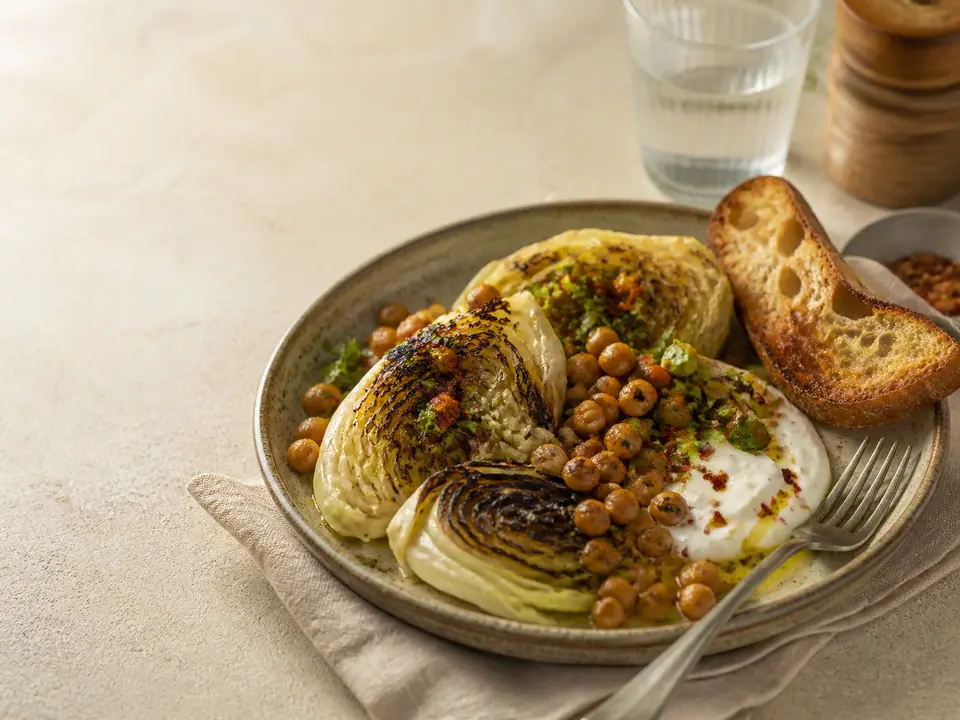
5 cabbage dinners that are not boiled cabbage
A cabbage head can become a roast wedge, a noodle-like skillet, a bean dinner, a chicken tray and a crisp topping without a pot of boiling water.
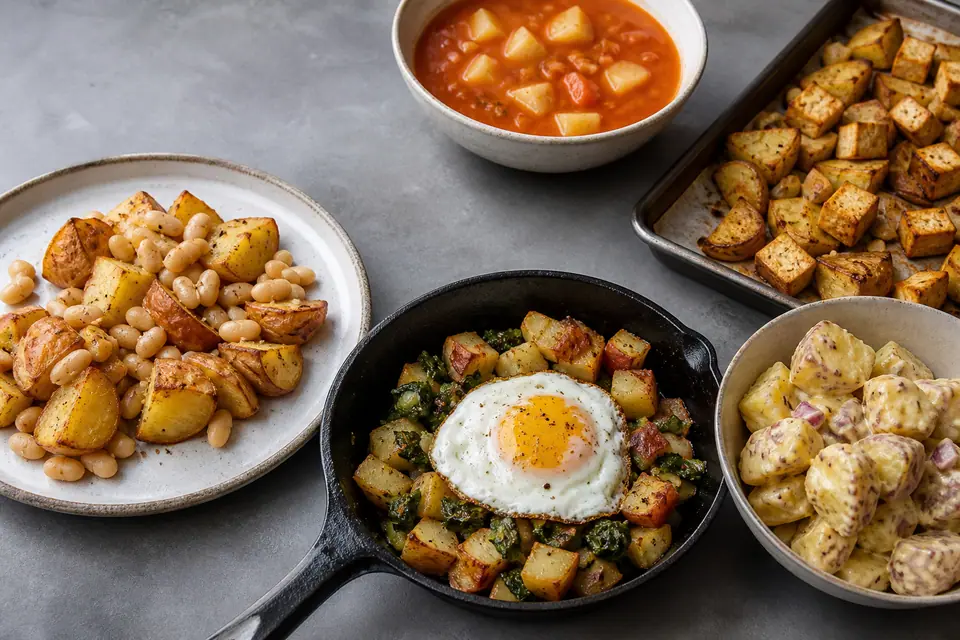
5 dinners that start with potatoes
Potatoes can start a dinner in five directions: roasted with beans, folded into eggs, simmered into soup, crisped for a bowl or dressed as a warm salad.

5 dinners for a bag of carrots
Roast carrots with beans, blend them into lentil soup, fry them with rice, fold them through pasta or build a spiced traybake around them.