Look for a firm head, not a flawless one
Fresh broccoli feels heavy, looks green and keeps its florets closed. A few marks are harmless; open yellowing flowers and a soft stalk are the signs to avoid.

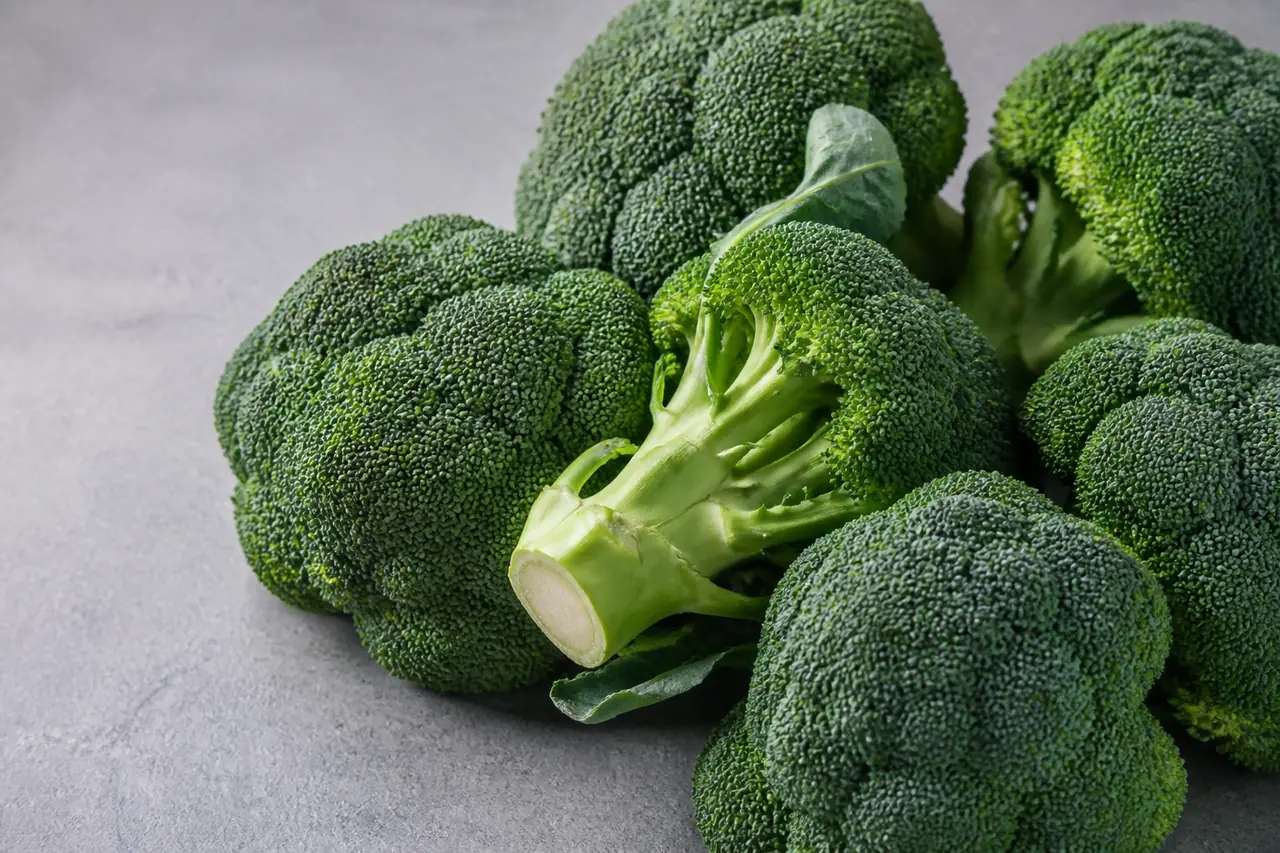
I choose broccoli with my hands before I choose it with my eyes. A good head feels heavy for its size, the stalk is firm, and the florets are tight enough that the crown looks compact. One head can be bright green and already tired if the cut stem is soft. Another can have a few rubbed florets and still cook beautifully.
My shop routine takes less than a minute. I turn the head over, look at the stalk, press the crown lightly, and check for wet dark patches. I do not reject a broccoli head because it is not perfectly symmetrical. I reject the one that feels hollow, smells sour or has flowers opening across the top.
I learned to look at the centre first, because the outside often gives a false answer.
Start with the stalk
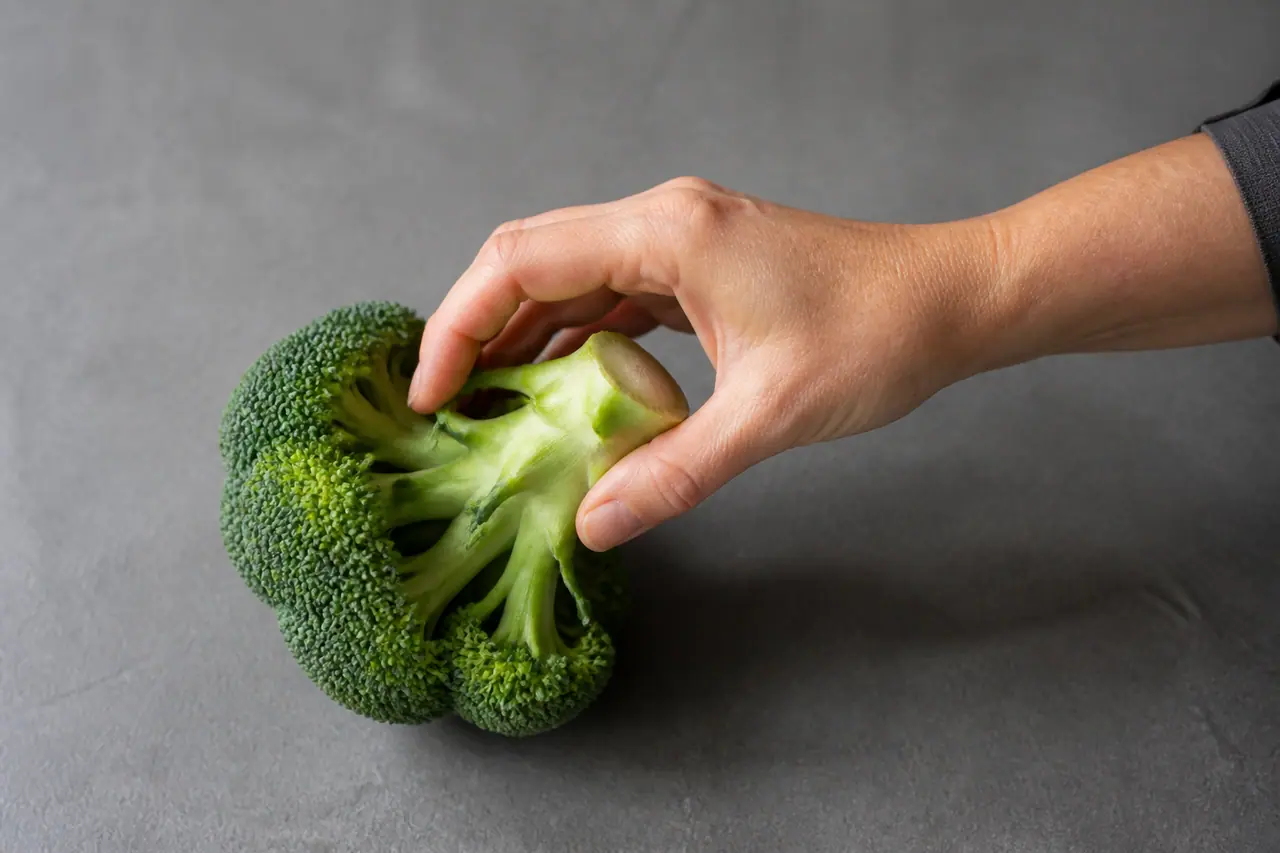
The cut stalk is the closest thing broccoli has to a freshness clock. It should be firm and moist-looking, not split, shrivelled or slimy. A little browning at the cut is not a crisis if the rest of the head is tight, but a deep soft ring means the texture is already moving downhill.
I lift two heads of similar size and take the heavier one. Weight alone can mislead, but it helps when paired with firmness. A head that feels surprisingly light may have lost moisture. A compact, heavy head usually gives me more crisp stalk and less loose flower.
I make that decision before the pan is hot, while the ingredient can still change.
What tight florets look like
Broccoli florets are unopened flower buds. I want them close together, with a deep green colour and no broad yellow areas. A few tiny yellow dots can be trimmed away, but a crown with many open flowers will be softer and more bitter after storage. The surface should look textured, not dusty or wet.
Purple or blue-green tones can belong to the variety and are not the same as yellowing. I pay attention to the combination of colour and texture. Bright green florets that separate at a touch are less useful than a darker compact head that feels dense.
That small pause tells me more than the packet does on a busy shopping day.
| Check | Good sign | Warning sign |
|---|---|---|
| Crown | Compact, green buds | Loose yellow flowers |
| Stalk | Firm and moist at the cut | Soft, split or slimy |
| Weight | Heavy for its size | Light or hollow feeling |
| Surface | Dry and clean | Wet dark patches |
| Smell | Fresh, mild vegetable smell | Sour or strong odour |
Source: Maren Ashby market checklist, 2026
A few marks are not a reason to panic
Broccoli gets knocked around in a crate. A small rubbed patch or a broken floret is a trimming issue, not proof that the head is bad. I cut away damaged tissue, keep the good pieces dry and cook them soon. The useful question is whether the damage is dry and local or wet and spreading.
I am stricter with slime than with colour. A damp dark patch can move into nearby florets while the head sits in a bag. If the head smells sour or the wet area is broad, I do not try to rescue it. Food waste is frustrating, but cooking spoiled produce does not turn it into a good dinner.
I write the result down when the difference matters for the next dinner.
Match the head to your cooking plan
For roasting, I choose a compact head with thick florets because the pieces keep their shape while the edges colour. For steaming, a slightly smaller head works well because the crowns stay close in size. For soup, I can use a head with a few open buds as long as it is firm and clean, since blending changes the final texture.
If I am shopping for one meal, I choose a head I can cook within two days. If I need it to wait, I choose the firmest stalk and avoid washing it until preparation. Broccoli does not become fresher in the fridge. The shop check only buys time; it does not stop moisture loss.
The useful clue is in the texture, not the promise printed on the bag.
My final buying rule
Choose the head that feels dense, has a firm stalk and keeps its florets tight and green. Ignore minor cosmetic marks if the surface is dry and the smell is fresh. The best broccoli is not the prettiest one in the crate. It is the one that still has structure when your knife meets it.
I would rather change the cut than add another ingredient to hide the problem.
What to do once you get home
I leave broccoli unwashed until I am ready to cook, then dry it well after rinsing. Water trapped between the florets turns a hot tray into a steamer. If the head is large, I separate the florets and peel the stalk at once, so the useful parts are ready before I start the pan.
If I see a few yellow buds after buying, I trim those pieces and use the rest first. I do not put a damp head into a sealed container. A little breathing room and a cool fridge keep the surface from becoming slick while I plan the meal.
One test piece is enough to set the timing for the rest of the pan.
Questions
How can I tell if broccoli is fresh?
Is broccoli with a few yellow flowers safe to eat?
Should broccoli be heavy?
Should I wash broccoli before storing it?
More guides
All guides →
5 cabbage dinners that are not boiled cabbage
A cabbage head can become a roast wedge, a noodle-like skillet, a bean dinner, a chicken tray and a crisp topping without a pot of boiling water.
5 dinners that start with potatoes
Potatoes can start a dinner in five directions: roasted with beans, folded into eggs, simmered into soup, crisped for a bowl or dressed as a warm salad.

5 dinners for a bag of carrots
Roast carrots with beans, blend them into lentil soup, fry them with rice, fold them through pasta or build a spiced traybake around them.