Three potato dinners, three useful textures
The best potato depends on whether you need a fluffy centre, a crisp edge or a piece that keeps its shape. Use the label and a small test to choose well.

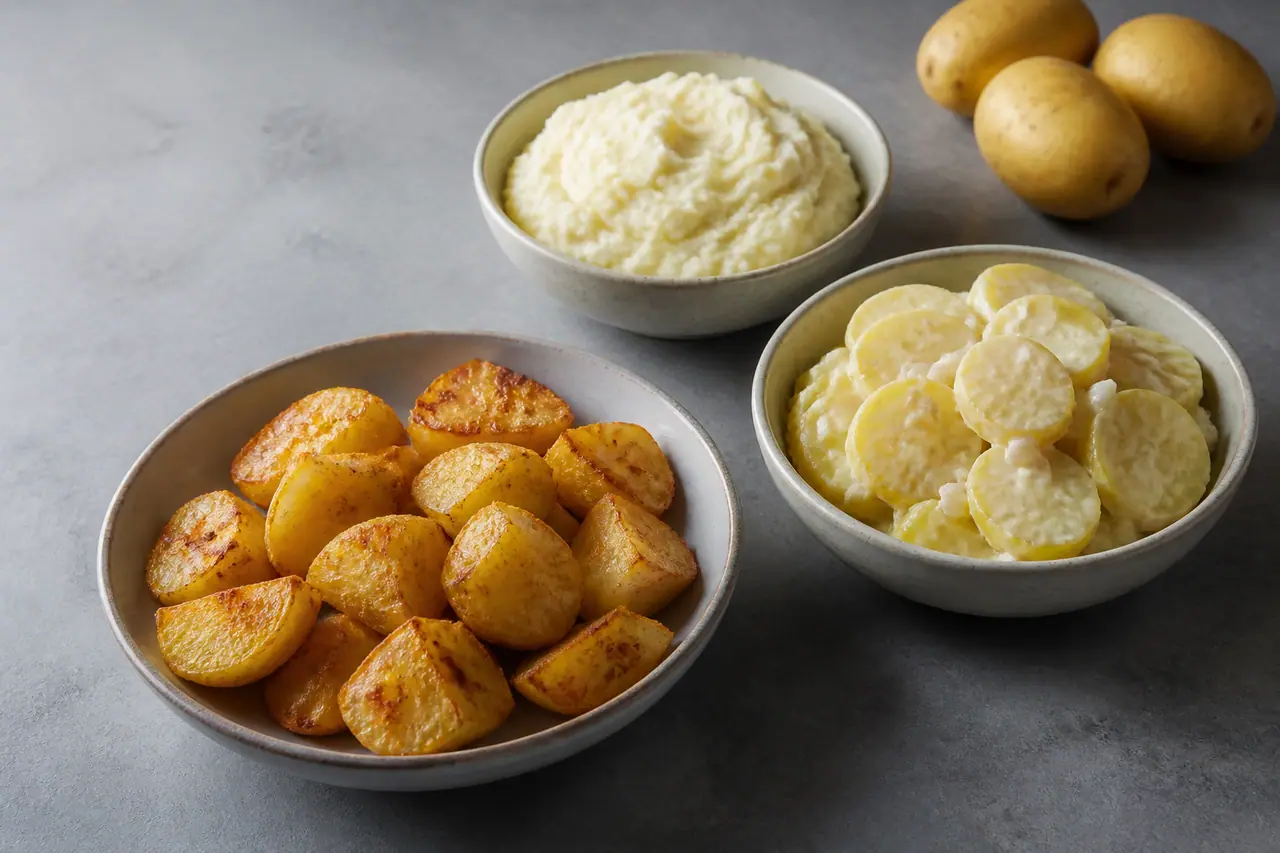
I do not buy potatoes by colour alone. Red skin can hide a floury centre, yellow flesh can belong to a waxy variety, and a bag labelled all-purpose can vary from shop to shop. I choose by the dinner I am making: a rough surface for roasting, a dry fluffy centre for mash, or a neat slice for salad.
The useful shop question is not “Which potato is best?” It is “What do I need it to do?” Pick floury for mash and roast potatoes, waxy for salad and stews, and all-purpose when the week is undecided. If the label is unhelpful, boil one piece and press it with a fork before committing the whole bag.
I use the same check at home that I use under bright shop lights.
For roasting, look for a potato that roughens
A roasting potato needs a surface that can become uneven after parboiling. Floury potatoes do this readily: the edges soften, a shake breaks them and oil catches on the rough bits. I look for a bag described as floury, fluffy or good for roasting. I do not need the largest potatoes; medium pieces cook more evenly.
If the only choice is a waxy potato, I cut it into flatter pieces, dry it thoroughly and give it space. The roast will have a firmer centre and a tidier surface. That can be exactly right with a saucy meal, even if it is not the crackly roast from a floury variety.
I keep the finished pieces visible while I work so the timing stays honest.
For mash, choose a dry centre
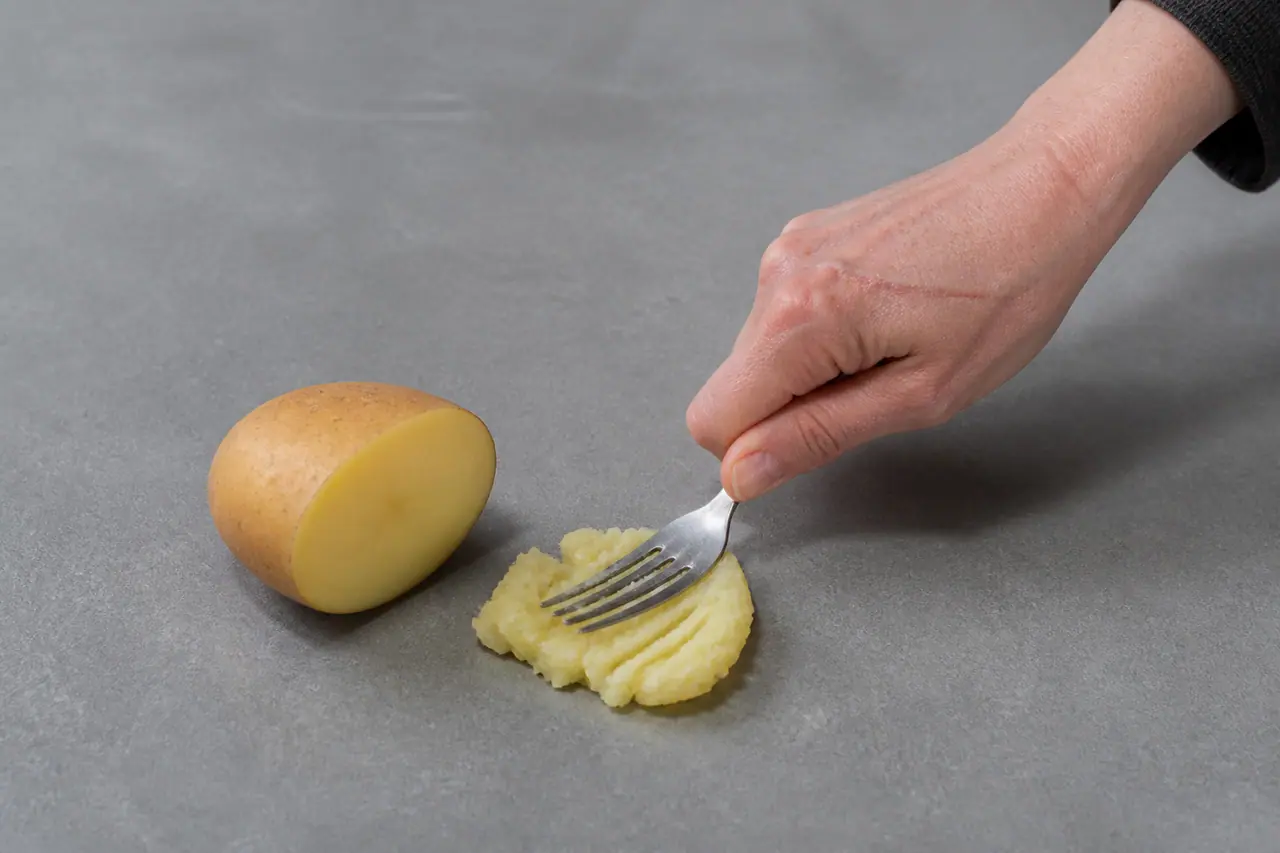
Floury potatoes mash with a fork into a light texture because they break apart readily. I choose them when mash is the main event or needs to hold gravy. The most important shop clues are the cooking label and a potato that feels firm, without soft patches or deep cuts.
Waxy potatoes make a denser mash that can be lovely with olive oil and herbs, but they need more pressing. I avoid beating them hard, because overworking a dense potato can turn the bowl sticky. The right potato reduces the amount of force the cook needs.
That is where a small kitchen habit earns its place at dinner.
| Dinner | Texture to seek | Label words that help |
|---|---|---|
| Roast potatoes | Floury, rough edges | Fluffy, floury, roasting |
| Mash | Dry, crumbly centre | Floury, baking, mash |
| Potato salad | Firm, clean slices | Waxy, salad, new |
| Stew | Holds shape | Waxy or all-purpose |
| Unplanned week | Middle texture | All-purpose |
Source: Maren Ashby shopping guide, 2026
For salad, firmness is the point
Waxy potatoes keep a clean edge after boiling and cooling. I cut them to similar sizes, start them in cold water and drain them while the centre is tender but not collapsing. The dressing goes on while they are warm, so vinegar and mustard enter the surface without forcing me to stir the pieces into paste.
A floury potato can still make salad, but I handle it gently and choose a chunky style. I use a wide bowl, fold with a spatula and accept a few broken edges. The dressing may soak in well, but the salad will feel softer and more absorbent.
The pan gives me the answer before the recipe has finished explaining itself.
How I test an unknown bag
I boil one peeled 3 cm piece in salted water until tender, drain it and leave it for a minute. Then I press it with a fork. A waxy piece stays smooth and compact. A floury piece flakes and looks dry. An all-purpose piece sits between them. The test is not a scientific classification, but it gives me a cooking decision I can use.
I also cut one raw potato. A fresh potato should have a clean smell, firm flesh and no green patches. I avoid a bag with many soft, wet or heavily sprouted pieces. The cooking texture cannot rescue a potato that has already deteriorated.
I save this check for the moment the food can still change course.
The answer in one line
Choose floury potatoes for fluffy mash and rough crisp roast edges. Choose waxy potatoes for salad and stews where the pieces need to stay intact. Use all-purpose potatoes for mixed plans, but let the cooking method respect their middle texture.
A little room on the board makes the decision clearer before cooking starts.
A note on names and markets
Potato labels are not identical in every market, so I treat variety names as clues rather than guarantees. A recipe written for a British “floury” potato may need a little adjustment if your shop uses a different name. Cut size, simmer and oven space still matter, but the bag should point you toward the right behaviour.
The best habit is to write down which bag worked for which meal. After a few shops, you will have a local map of your own potatoes. That is more useful than memorising a list that belongs to another country.
I make that decision before the pan is hot, while the ingredient can still change.
Questions
Which potatoes are best for roast potatoes?
Can I use waxy potatoes for mash?
What potatoes are best for potato salad?
How do I identify a potato type without a label?
More guides
All guides →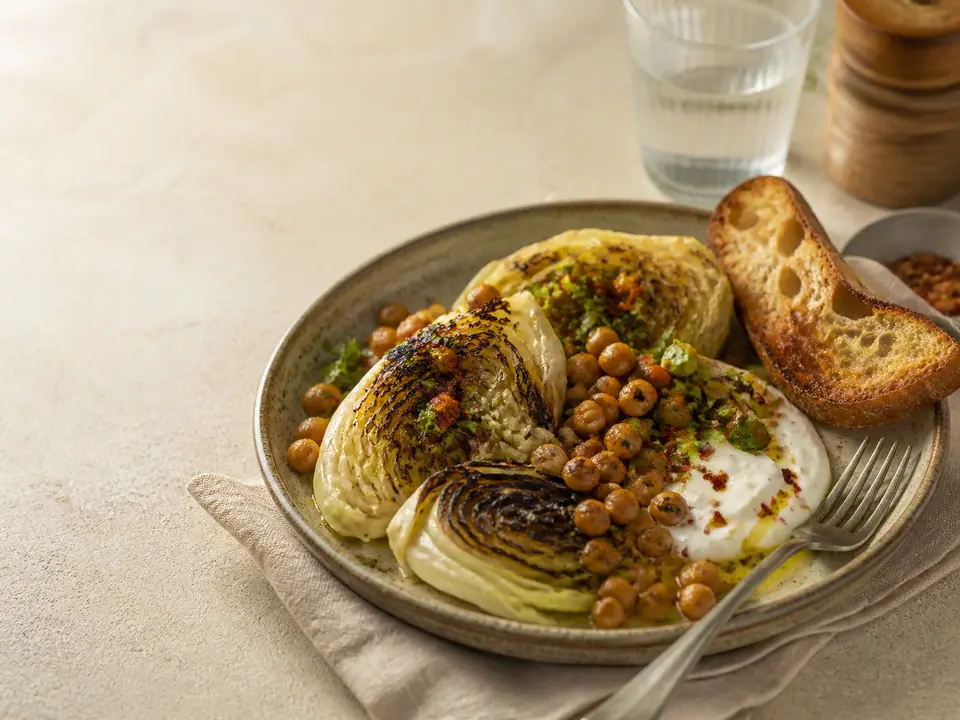
5 cabbage dinners that are not boiled cabbage
A cabbage head can become a roast wedge, a noodle-like skillet, a bean dinner, a chicken tray and a crisp topping without a pot of boiling water.
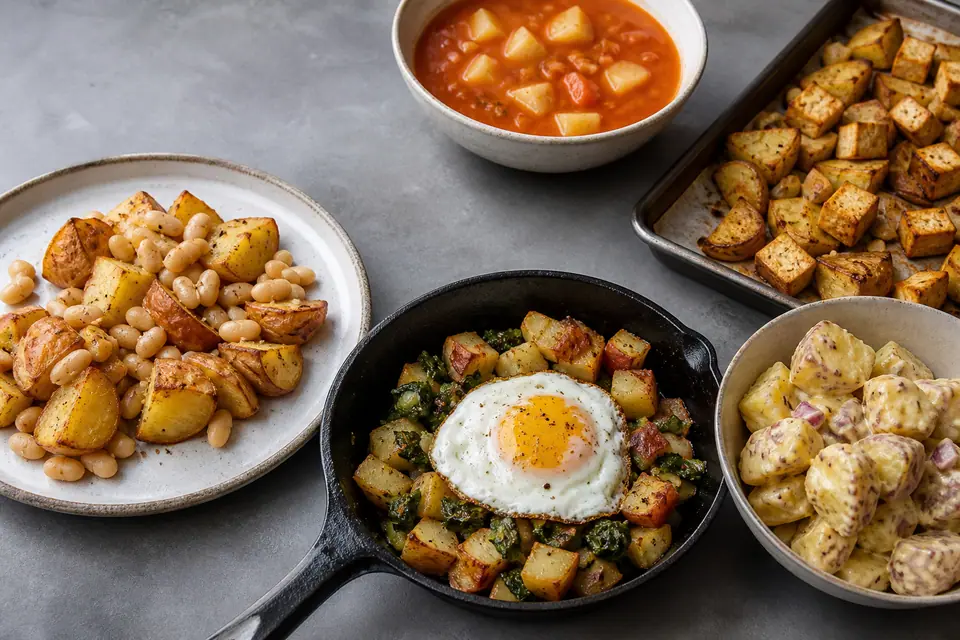
5 dinners that start with potatoes
Potatoes can start a dinner in five directions: roasted with beans, folded into eggs, simmered into soup, crisped for a bowl or dressed as a warm salad.

5 dinners for a bag of carrots
Roast carrots with beans, blend them into lentil soup, fry them with rice, fold them through pasta or build a spiced traybake around them.