Give broccoli air, cold and a short deadline
Broccoli stays in better shape when it is kept cold, dry on the surface and loosely wrapped. Use the stalk first if the crown starts to open.

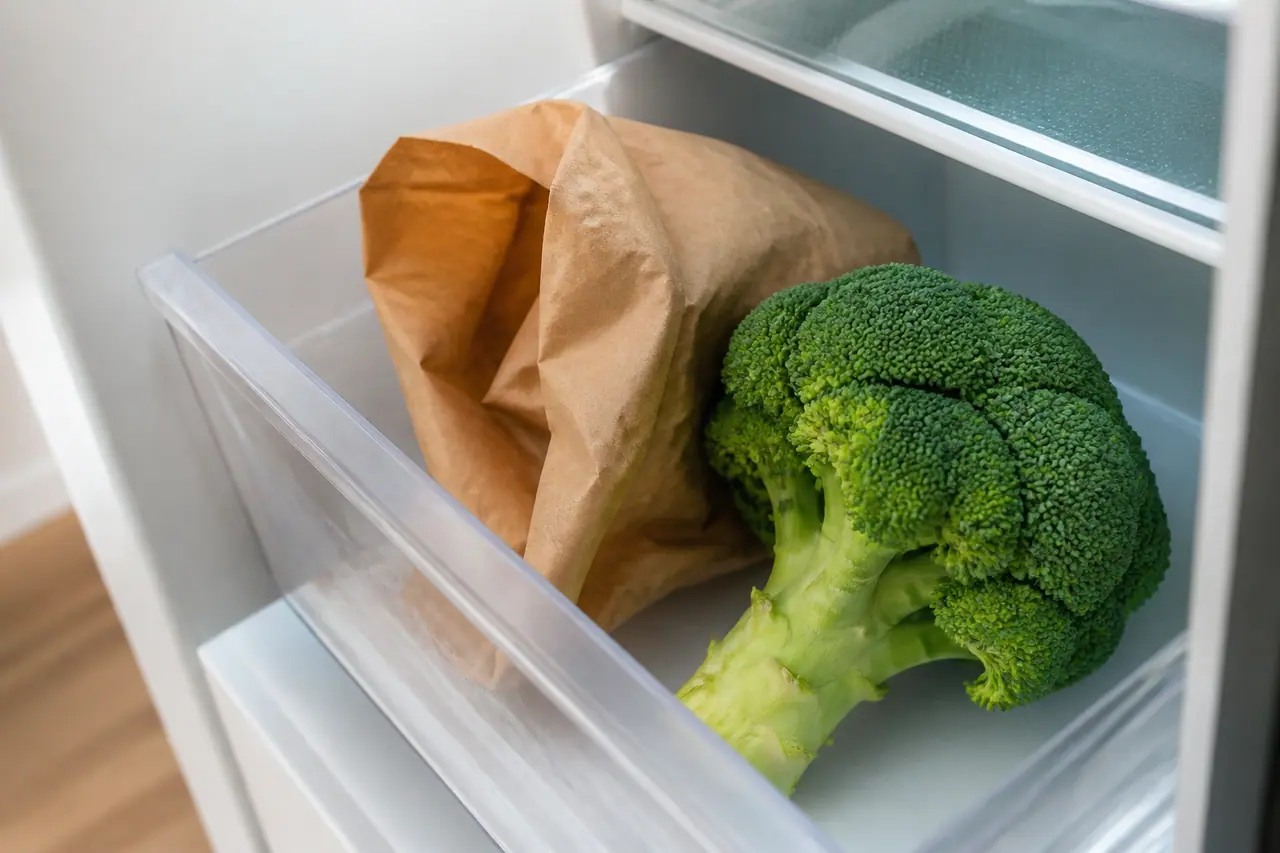
Broccoli has two opposite storage problems: it can dry out, or it can sit wet until the florets turn slick. I used to solve the first by sealing the head in a tight plastic bag, which created the second. The better arrangement is cool air, a little protection from drying and no trapped puddle around the cut stalk.
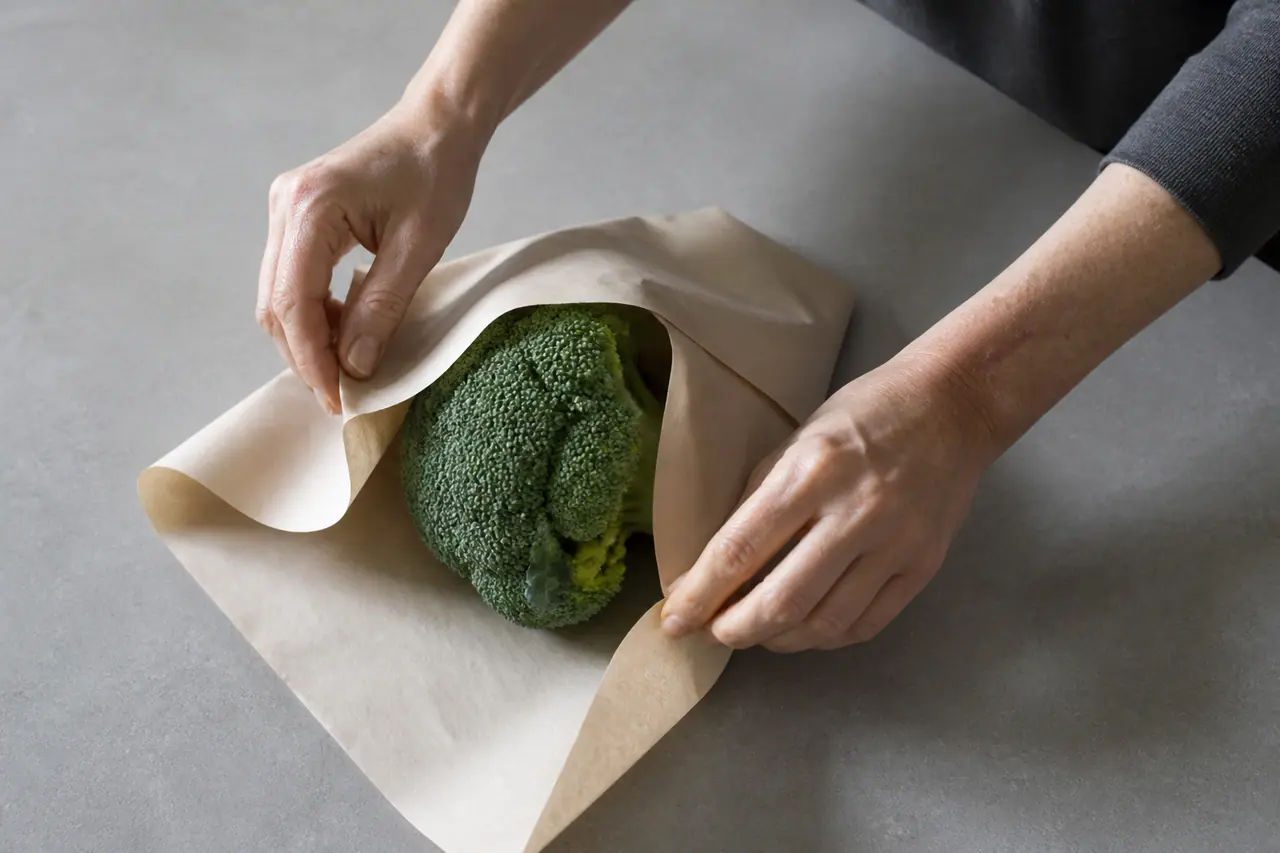
My routine is unglamorous and reliable. I leave the head unwashed, wrap it loosely or put it in a perforated bag, and use it within a few days. If the crown begins to open, I cut the stalk and florets apart and cook the stem first. Crispness is easier to preserve than to recover.
The useful choice is still reversible at the shop, but not once the heat takes over.
Why the fridge drawer is not enough
A vegetable drawer slows moisture loss, but it does not correct a wet surface. Broccoli keeps respiring after harvest, and the cut stalk can release moisture into a closed bag. If that moisture condenses on the florets, the crown becomes soft before it looks obviously old.
I dry only visible water after rinsing, but I do not wash the head for storage. The rough crown holds droplets in places a towel cannot reach. Keeping the surface dry means less trapped moisture and fewer soft patches when I finally cut it.
The next move depends on what the centre feels like under the knife.
My three-day storage test
I stored three similar heads in three ways: sealed in a tight bag, loose in the drawer and unwrapped on a refrigerator shelf. After three days, the tight bag had the wettest florets and the strongest smell. The unwrapped head had a dry cut stalk and slightly leathery outer buds. The loose head kept the best balance of crispness and clean surface.
The test was small and my fridge is not a controlled room, but it made the practical choice obvious. Broccoli needs a breathable layer. A loose bag, a few holes or a paper towel that is changed when damp all work better than sealing liquid against the crown.
I keep the finished pieces visible while I work so the timing stays honest.
| Storage method | What happens | My use |
|---|---|---|
| Loose in a perforated bag | Cool with some air exchange | Best default |
| Tight wet bag | Condensation gathers | Avoid |
| Unwrapped shelf | Surface dries quickly | Short emergency hold |
| Washed and well dried | Ready to cook, but shorter window | Use within a day |
Source: Maren Ashby refrigerator test, 2026
Cut it only when the pan is ready
Every cut face is a new place for moisture to leave. I keep a whole head intact until I know what dinner is. When I do cut it, I separate the thick stalk, peel the outer layer and use it in the first cooking stage. The florets can wait on a dry tray while the stem gets its head start.
If I need prep ahead, I cut the broccoli, dry it thoroughly and store it in a shallow container lined with a clean towel. I leave the lid slightly vented if the pieces are still cool from rinsing, then close it once the surface is dry. A deep packed container gives the lower pieces no room to breathe.
That is where a small kitchen habit earns its place at dinner.
The rescue for a limp crown
A broccoli head that has gone limp but has no slime or off smell can often be improved by trimming the stalk and standing it in a little cold water for 20 to 30 minutes. The stalk takes up some water, and the florets regain a little tension. I drain and dry it before cooking, because wet broccoli will steam rather than roast.
This is a texture rescue, not a way to reverse spoilage. I discard pieces with mould, spreading rot, slime or a sour smell. If only the outer florets are tired, I cut them away and use the firm inner pieces in soup or a sauce.
The pan gives me the answer before the recipe has finished explaining itself.
The short answer
Keep broccoli cold, unwashed and loosely protected from drying. Avoid a sealed wet bag, dry the pieces after rinsing and use the head before the green buds become open flowers. A breathable setup preserves crispness; a late rescue can only do so much.
I save this check for the moment the food can still change course.
Use the whole head in the right order
I cook the stalk first, the florets second and any leaves alongside them if they are fresh. This order gives the thickest piece time to soften while the crowns stay green and firm. It also means the broccoli goes from fridge to pan with a clear plan, rather than sitting cut on the board while I decide what sauce to make.
When the vegetable is close to its deadline, I add it to a dish with enough contrast to carry a softer piece: rice, a sharp dressing or toasted seeds. Crispness matters, but a slightly mature broccoli head can still make a good dinner when the cooking method respects its condition.
A little room on the board makes the decision clearer before cooking starts.
Questions
Should broccoli be stored in a plastic bag?
How long does broccoli stay crisp in the fridge?
Can limp broccoli become crisp again?
Should broccoli be washed before refrigeration?
More guides
All guides →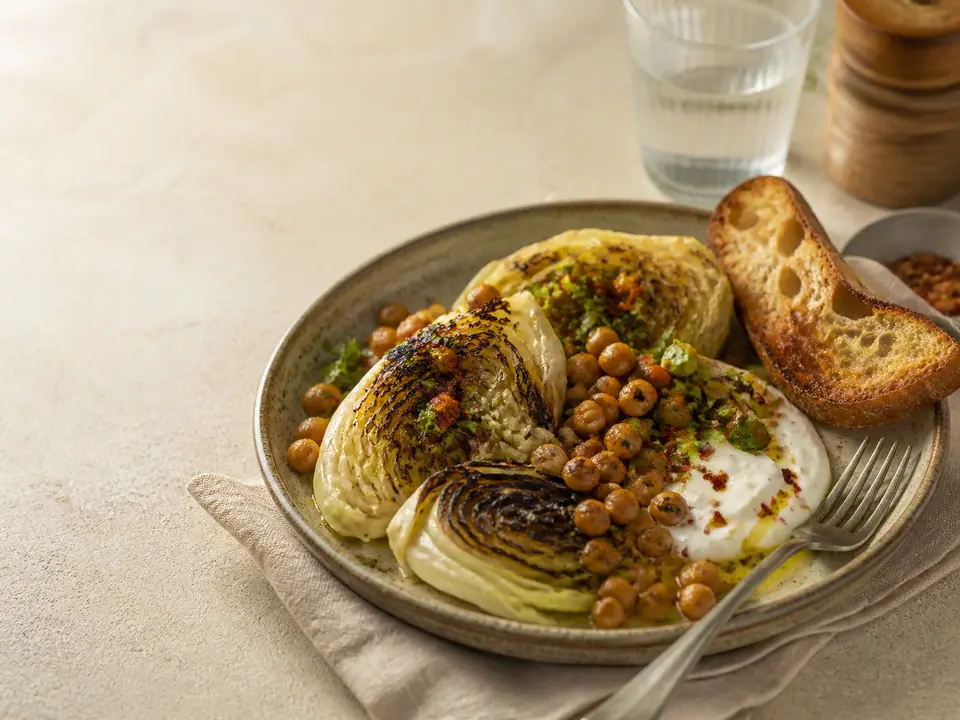
5 cabbage dinners that are not boiled cabbage
A cabbage head can become a roast wedge, a noodle-like skillet, a bean dinner, a chicken tray and a crisp topping without a pot of boiling water.

5 dinners that start with potatoes
Potatoes can start a dinner in five directions: roasted with beans, folded into eggs, simmered into soup, crisped for a bowl or dressed as a warm salad.

5 dinners for a bag of carrots
Roast carrots with beans, blend them into lentil soup, fry them with rice, fold them through pasta or build a spiced traybake around them.