Dark, dry and breathable beats the fridge
Potatoes sprout faster in warm light and can develop an unwanted sweet taste in a cold fridge. A dark, dry, ventilated cupboard is the useful middle ground.

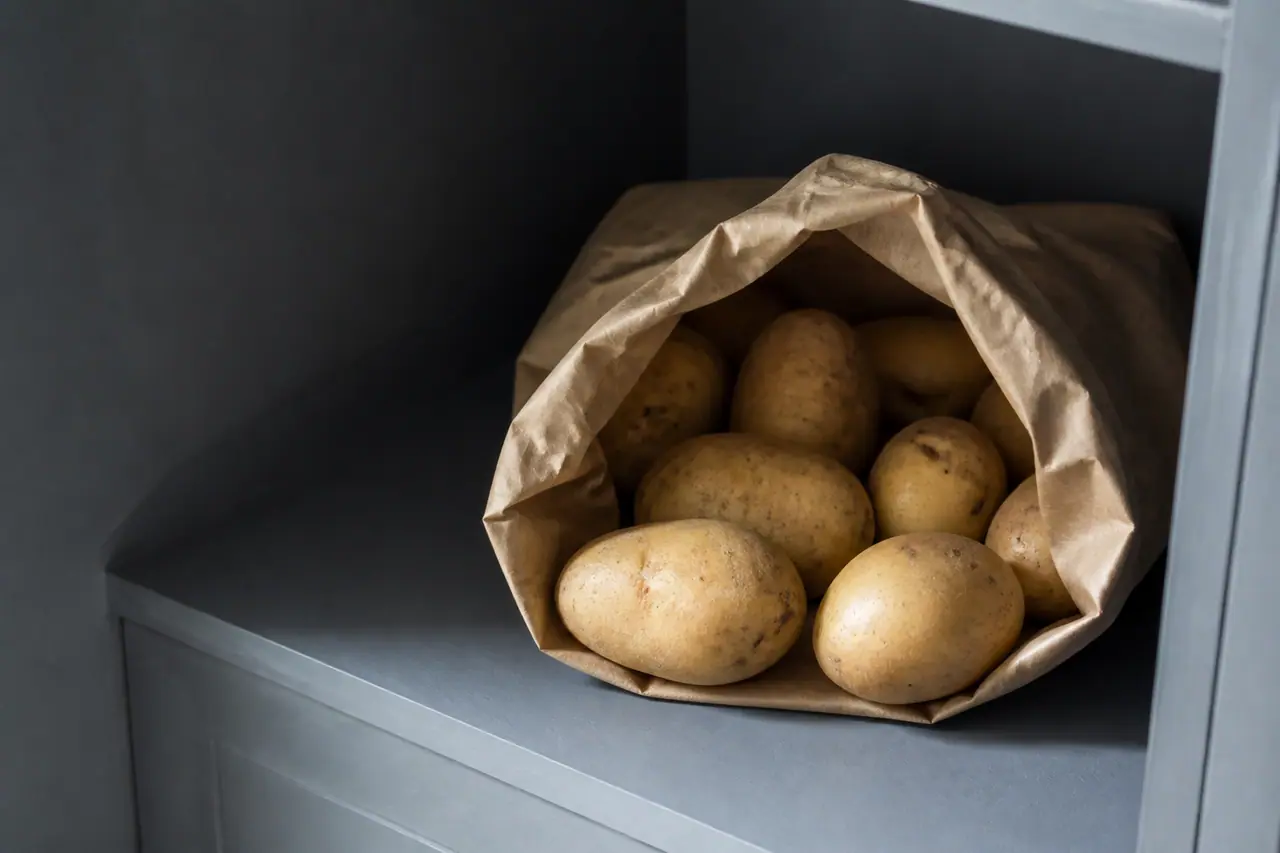
My potatoes sprouted when I put them in the wrong place, not because the bag was cursed. The cupboard was warm, the bag was sealed and a strip of afternoon light reached the shelf. A week later, every eye was awake. The better storage spot is cool, dark, dry and able to breathe, which rules out both the sunny counter and the damp fridge drawer.
I bring home only what I can inspect. I tip potatoes into a paper sack or open basket, remove any soft one and keep the rest away from onions and direct light. Small sprouts can be trimmed from a firm potato, but a green, bitter or shrivelled one has passed the point where I want to use it.
A small pause here saves more time than repairing the wrong texture later.
Why light and warmth wake the eyes
A potato is still a living storage organ. Warmth and light encourage the eyes to sprout. Light can also turn the skin green, which is a quality warning rather than a colour I want to ignore. I store potatoes in the darkest cool part of my kitchen, not in a decorative bowl beside the window.
The cupboard does not need to feel cold like a fridge. It needs to be away from the oven, dishwasher and radiator. I check the shelf with my hand at different times of day. A spot that feels hot after cooking is a poor storage room even if it looks dark.
That small pause tells me more than the packet does on a busy shopping day.
The fridge is not the easy answer
A domestic fridge is colder than the usual quality target for raw potatoes. Cold storage can change the balance of sugars and starch, which may make potatoes taste sweeter and darken more during cooking. I use the fridge for cooked potatoes, not as my default for a raw bag.
There are kitchens where the coolest cupboard is still warm, especially in summer. In that case I buy smaller amounts and use them sooner. A shorter shopping cycle is easier than trying to create a root cellar beside the toaster.
I write the result down when the difference matters for the next dinner.
| Place | Main risk | My choice |
|---|---|---|
| Dark ventilated cupboard | Best balance | Default |
| Sunny counter | Greening and sprouting | Avoid |
| Sealed plastic bag | Condensation and soft spots | Avoid |
| Very cold fridge | Sweet taste and dark cooking | Not for raw storage |
| Open paper sack | May dry if too warm | Good short-term option |
Source: University of Maine Cooperative Extension guidance, 2026
How I pack the bag
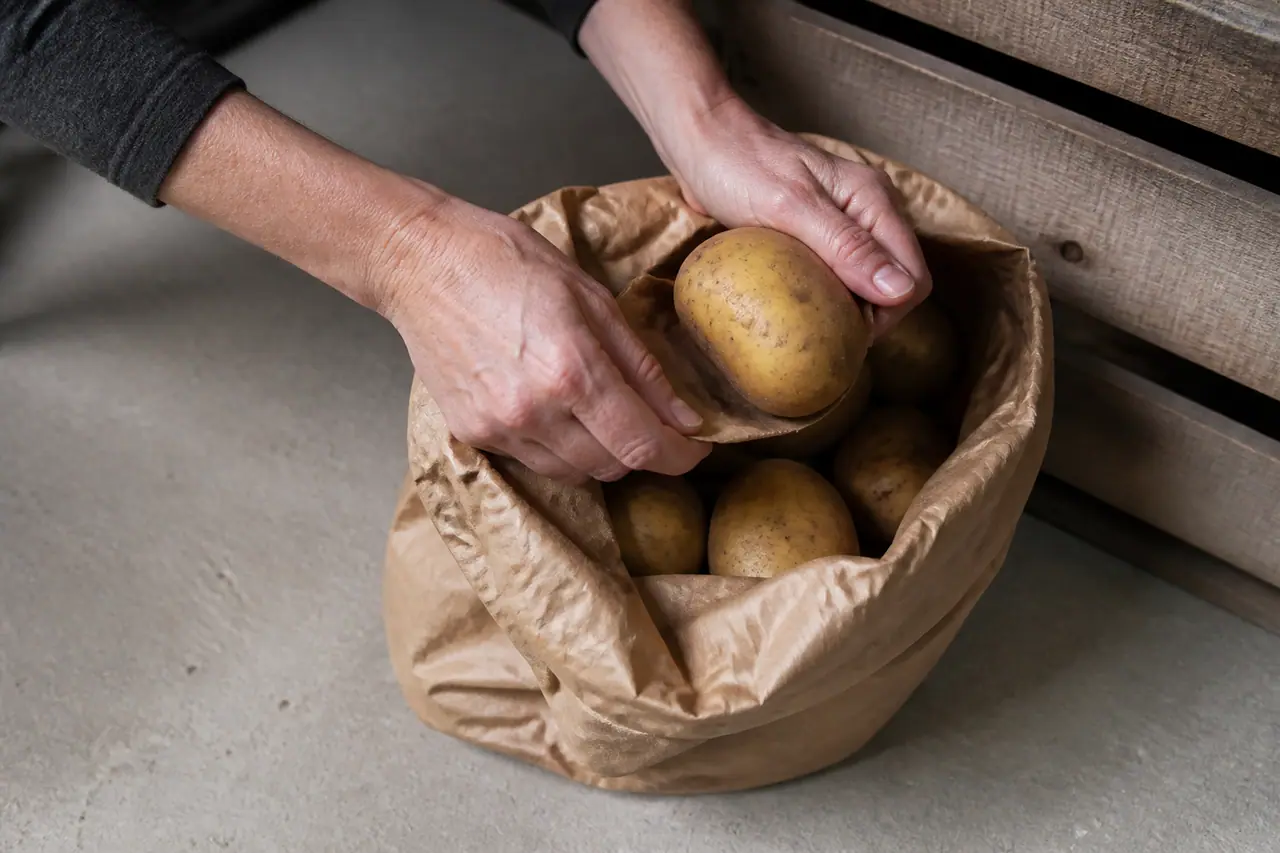
I do not wash potatoes before storing them. I brush away loose soil, leave air around the sack and keep it off a damp floor. Paper or a ventilated crate works because it lets moisture leave. A tightly closed plastic bag holds the exact dampness that makes a soft patch spread.
I keep potatoes separate from onions in my cupboard. Both need air, but their moisture and odours can shorten each other’s useful life when stored in one closed container. The easiest arrangement is two shallow bags with space between them, not one deep crowded bin.
The useful clue is in the texture, not the promise printed on the bag.
What to do with small sprouts
A firm potato with a small sprout can sometimes be used after I remove the sprout and any green areas generously. I cut it open and check the flesh. If it is firm, smells normal and has no broad green or bitter-looking area, I use it soon rather than putting it back into storage.
I do not cook a potato that is green across a large area, shrivelled, mouldy, leaking or bitter-smelling. Trimming is for a minor quality defect on a sound potato, not a way to disguise spoilage. When in doubt, the bin is the safer place.
I would rather change the cut than add another ingredient to hide the problem.
The short answer
Store raw potatoes in a cool, dark, dry and ventilated place. Keep them away from light, heat, sealed plastic and the coldest part of the fridge. Inspect them often, use small sprouts on firm potatoes promptly and discard green or spoiled ones.
One test piece is enough to set the timing for the rest of the pan.
The storage rule I actually follow
I buy for the cupboard I have, not the storage room I wish I had. If the kitchen is warm, I buy less. If a bag contains mixed sizes, I use the small potatoes first. Storage is part of meal planning: the best place to keep a potato is close enough that I remember it before the eyes wake up.
I write the purchase date on a small paper tag, not on the potatoes themselves. When two bags overlap, that mark tells me which one needs a dinner first. It is a tiny habit, but it keeps the back of the cupboard from becoming a hidden experiment.
The next move depends on what the centre feels like under the knife.
Questions
Should potatoes be stored in the fridge?
How do I stop potatoes sprouting?
Can I eat potatoes with small sprouts?
Can potatoes be stored with onions?
More guides
All guides →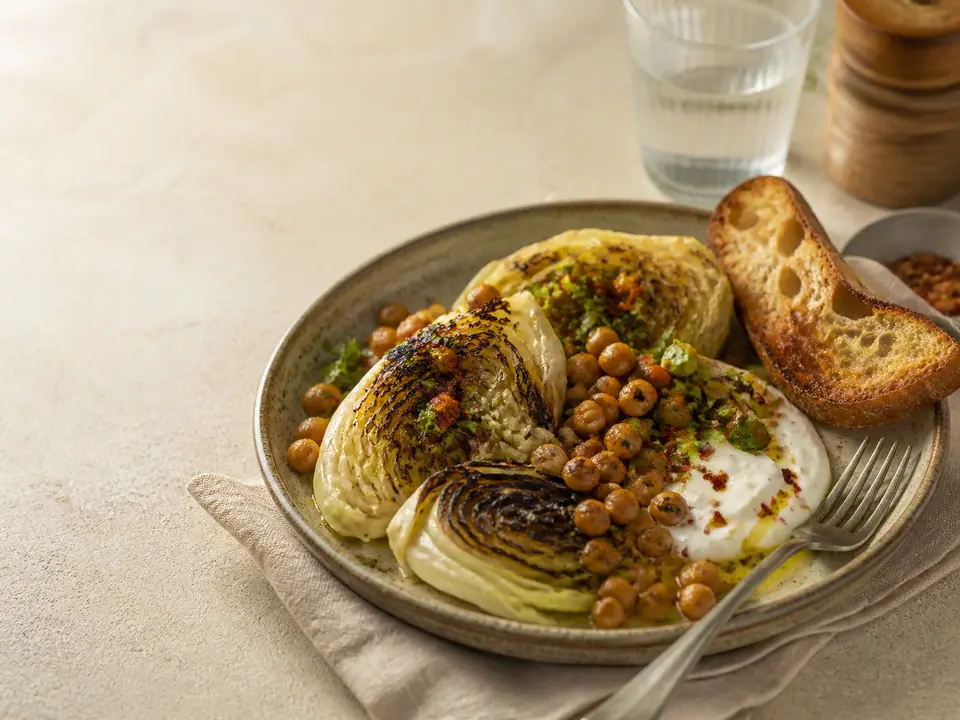
5 cabbage dinners that are not boiled cabbage
A cabbage head can become a roast wedge, a noodle-like skillet, a bean dinner, a chicken tray and a crisp topping without a pot of boiling water.
5 dinners that start with potatoes
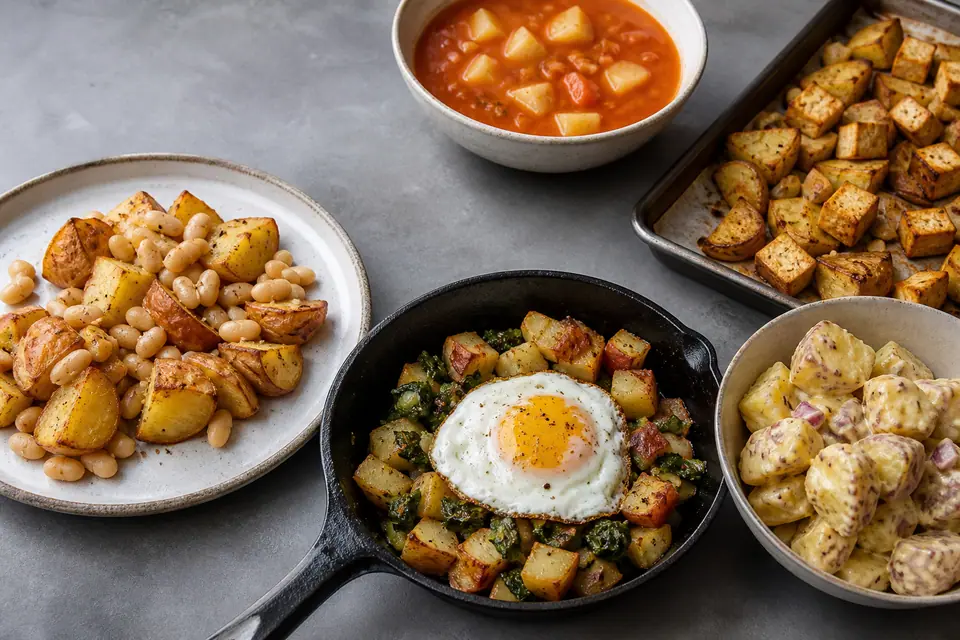
Potatoes can start a dinner in five directions: roasted with beans, folded into eggs, simmered into soup, crisped for a bowl or dressed as a warm salad.

5 dinners for a bag of carrots
Roast carrots with beans, blend them into lentil soup, fry them with rice, fold them through pasta or build a spiced traybake around them.