The stalk is the crisp part you keep throwing away
The thick broccoli stalk is not a kitchen scrap. Peel the fibrous outside, slice the tender centre and give it a head start before the florets.

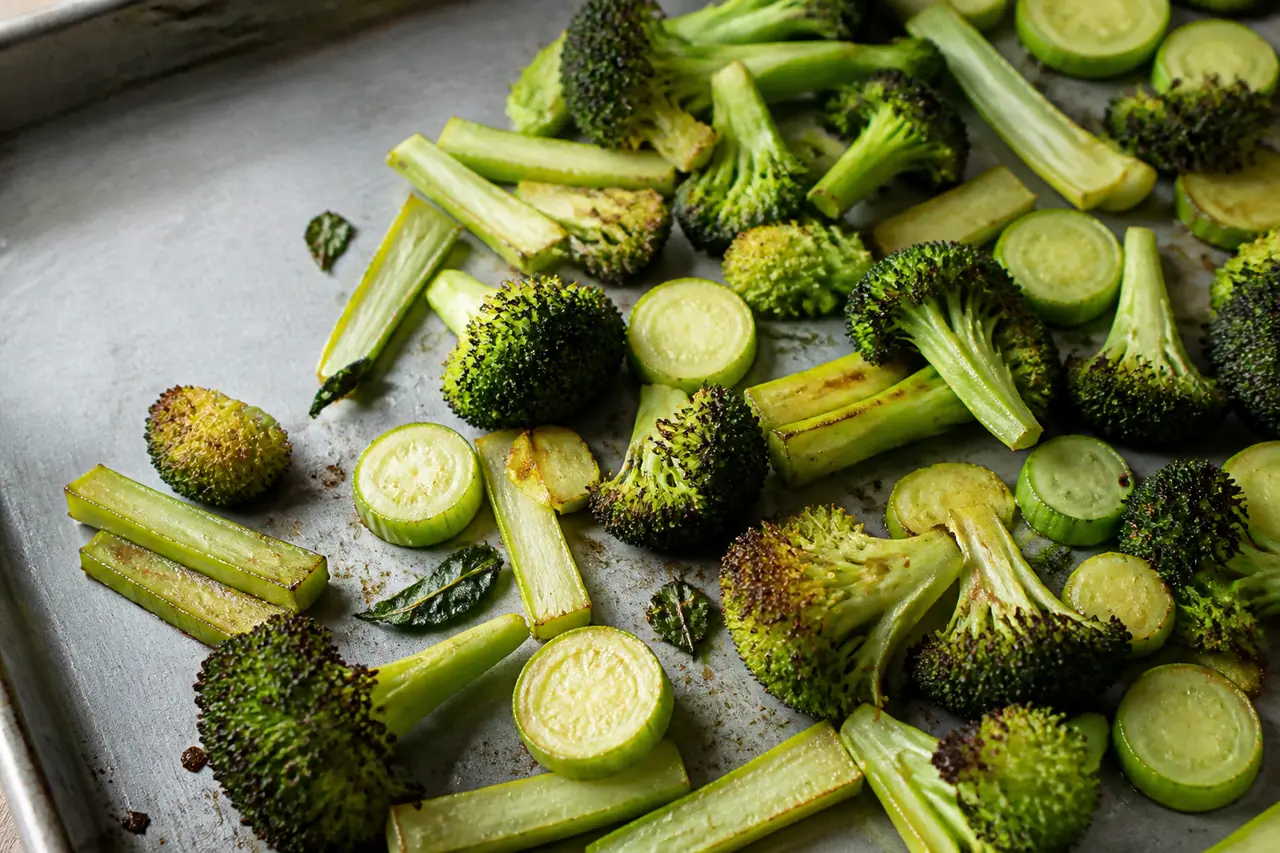
The first time I cooked the whole broccoli, the stalk was the best part. The florets caught at the edges and the peeled stem stayed juicy, with a crispness that made the soft pieces more interesting. The mistake is not keeping the stem. It is putting a thick unpeeled cylinder into the pan beside small florets and expecting both to finish together.
Peel away the tough outer skin, cut the inner stalk into thin coins or batons, and give it two to four minutes of head start depending on the dish. The stem has a mild sweetness and a clean crunch. It is also the piece that takes seasoning well because its flat cut surfaces brown instead of hiding among the florets.
That first check happens on the board, where a small cut can save a whole dinner.
The outside is tough, the centre is not
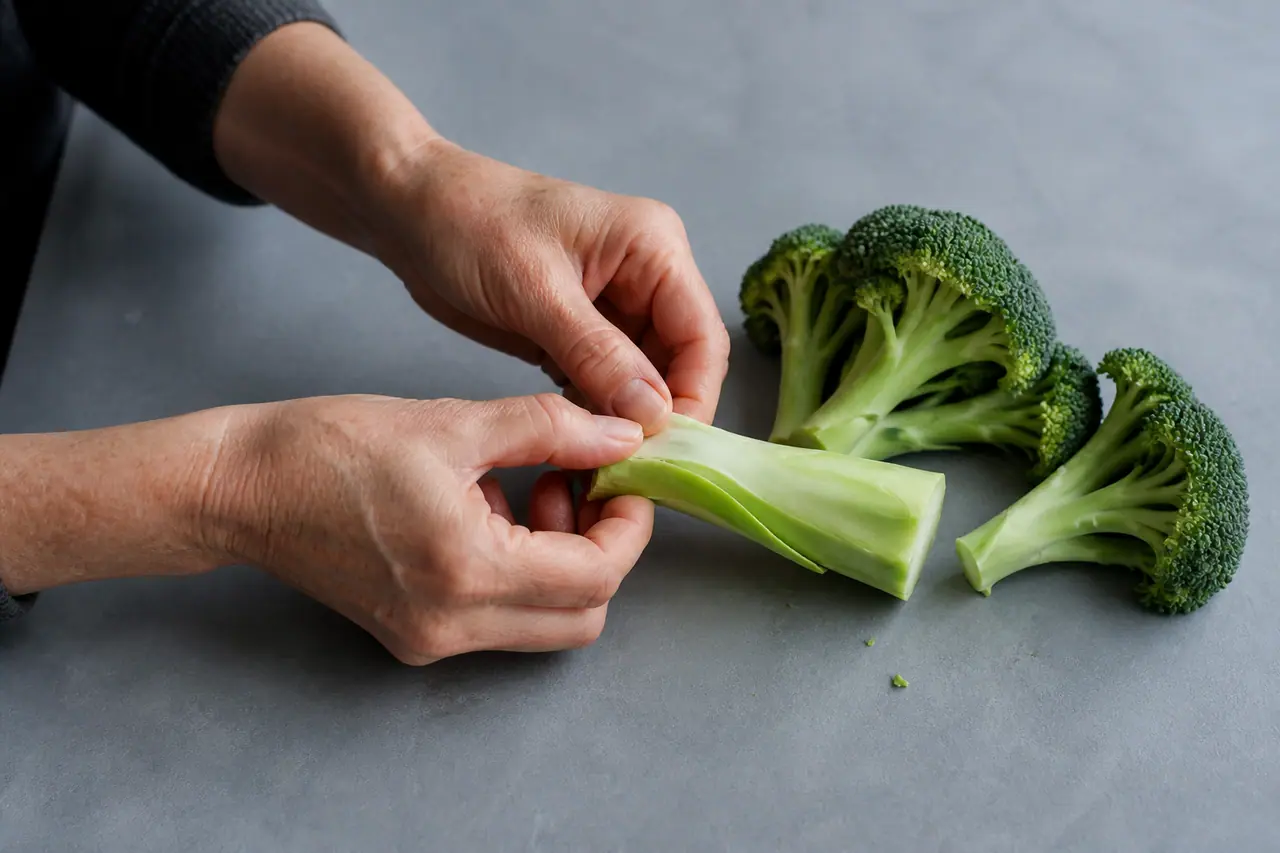
A broccoli stalk grows as a support for the head, so its outer layer can be fibrous. That layer is the reason a bite feels stringy. The inner core is different: pale, moist and crisp enough to eat raw. I trim the dry base, stand the stalk upright and run a peeler down the sides until the ridges disappear.
There is no need to peel a tender upper stem or a thin stalk from a small head. I peel only the section that feels resistant under a knife. The test is quick: if the blade glides through and the cut face looks pale and wet, keep it. If the edge drags and pulls threads, remove another thin strip.
The next move depends on what the centre feels like under the knife.
Why the stalk needs a head start
Florets have many small branches and a large exposed surface, so heat reaches them quickly. A thick stalk has a smaller surface-to-centre ratio. If both go into the same hot tray at once, the florets colour while the centre of the stalk is still firm. Cutting the stalk smaller brings its cooking time closer to the florets.
For a skillet, I start with 1 cm coins or 1 cm batons in oil over medium-high heat. After three minutes, I add the florets and a splash of water, then cover for one minute. The steam softens the crowns while the stalk keeps contact with the metal. Remove the lid and let the water evaporate before adding lemon or soy.
I keep the finished pieces visible while I work so the timing stays honest.
| Cut | First pan contact | Finish I expect |
|---|---|---|
| 1 cm coins | With the oil | Tender centre, browned face |
| 1 cm batons | With the oil | Crisp edges, easy to turn |
| Thick wedges | 2–4 minutes before florets | Soft centre with roasted edges |
| Unpeeled chunks | Not recommended | Stringy outside, uneven centre |
Source: Maren Ashby cooking test, 2026
The stem works in more than a roast
Raw, peeled stalk is good in a slaw because it stays crisp after dressing. I cut it into matchsticks, add a little salt and wait five minutes before mixing with yogurt, lemon and black pepper. It softens at the surface without losing the crunch that makes the bowl feel fresh.
In a stir-fry, the stalk is the first broccoli piece in the wok. It can take the high heat and gives the sauce a firm vegetable to cling to. I add the florets later, then a spoonful of water to create a brief cloud of steam. This is the same logic as a sheet pan, translated to a faster pan.
That is where a small kitchen habit earns its place at dinner.
What I do with the little scraps
The peeled ribbons are not worth a separate recipe, but I do not throw them out. I put them in the same roasting tray, where they crisp at the edges. Small florets that break away can go into eggs, rice or a soup. Keeping the stalk changes how I see the head: it becomes several useful cuts rather than one crown with a handle.
If the stalk is cracked, dry or soft around the base, I cut away the damaged section. A firm stem with a few marks is fine. I avoid using a stem with a slimy surface or an off smell, because no amount of peeling makes spoiled produce good.
The pan gives me the answer before the recipe has finished explaining itself.
The answer in one line
Broccoli stems deserve to stay in the pan because their peeled centres are crisp, mild and able to brown. Their thickness is the only problem. Remove the fibrous skin, cut them smaller and give them the minutes they need before the florets arrive.
I save this check for the moment the food can still change course.
A useful way to plan the plate
When I build a dinner around broccoli, I decide the cut before choosing the sauce. Coins suit rice and noodles because they catch in the fork. Batons suit a tray roast because they turn easily. Thin shreds suit a cold side. The same stalk feels like a different ingredient once its shape matches the rest of the meal.
That little bit of planning also protects the florets. I am not rushing to cook the crowns while the stem catches up, and I am not boiling the whole head until every piece is soft. Broccoli is easier when the pan sees the pieces as separate parts with related, not identical, cooking times.
A little room on the board makes the decision clearer before cooking starts.
Questions
Do broccoli stems need peeling?
How do I make broccoli stems tender?
Can broccoli stems be eaten raw?
Why are my broccoli stems stringy?
More guides
All guides →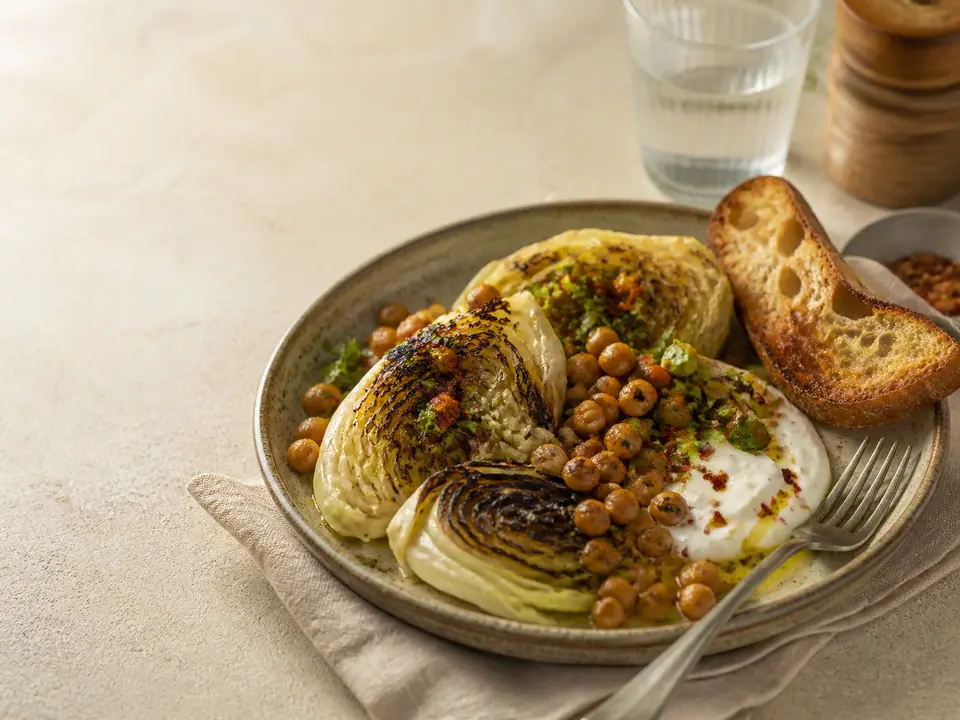
5 cabbage dinners that are not boiled cabbage
A cabbage head can become a roast wedge, a noodle-like skillet, a bean dinner, a chicken tray and a crisp topping without a pot of boiling water.
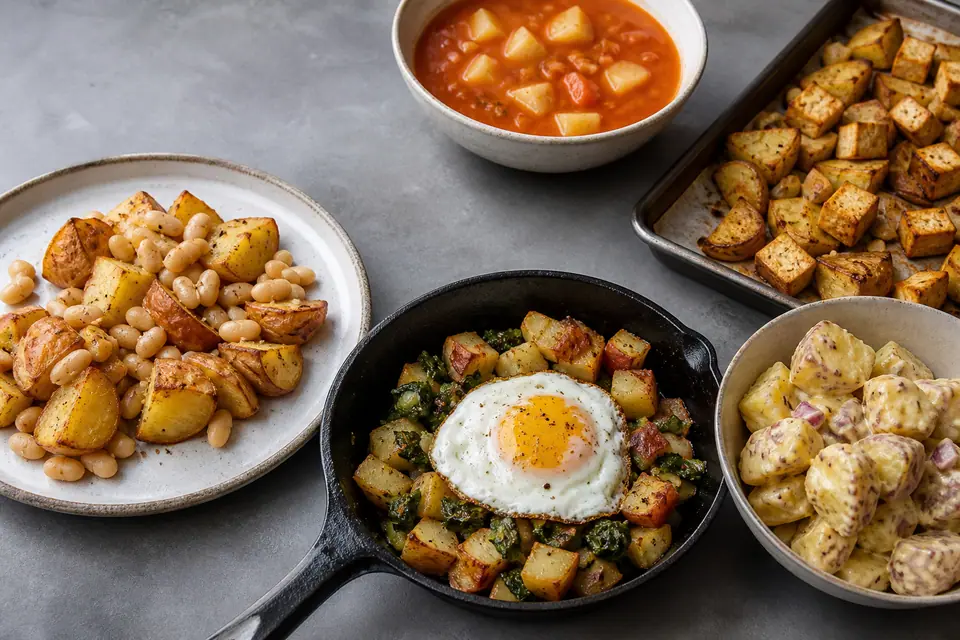
5 dinners that start with potatoes
Potatoes can start a dinner in five directions: roasted with beans, folded into eggs, simmered into soup, crisped for a bowl or dressed as a warm salad.

5 dinners for a bag of carrots
Roast carrots with beans, blend them into lentil soup, fry them with rice, fold them through pasta or build a spiced traybake around them.