The outside can be done while the centre is not
Uneven cuts, a violent boil and different potato textures can leave a pot with broken edges and hard centres. The fix starts before the water boils.

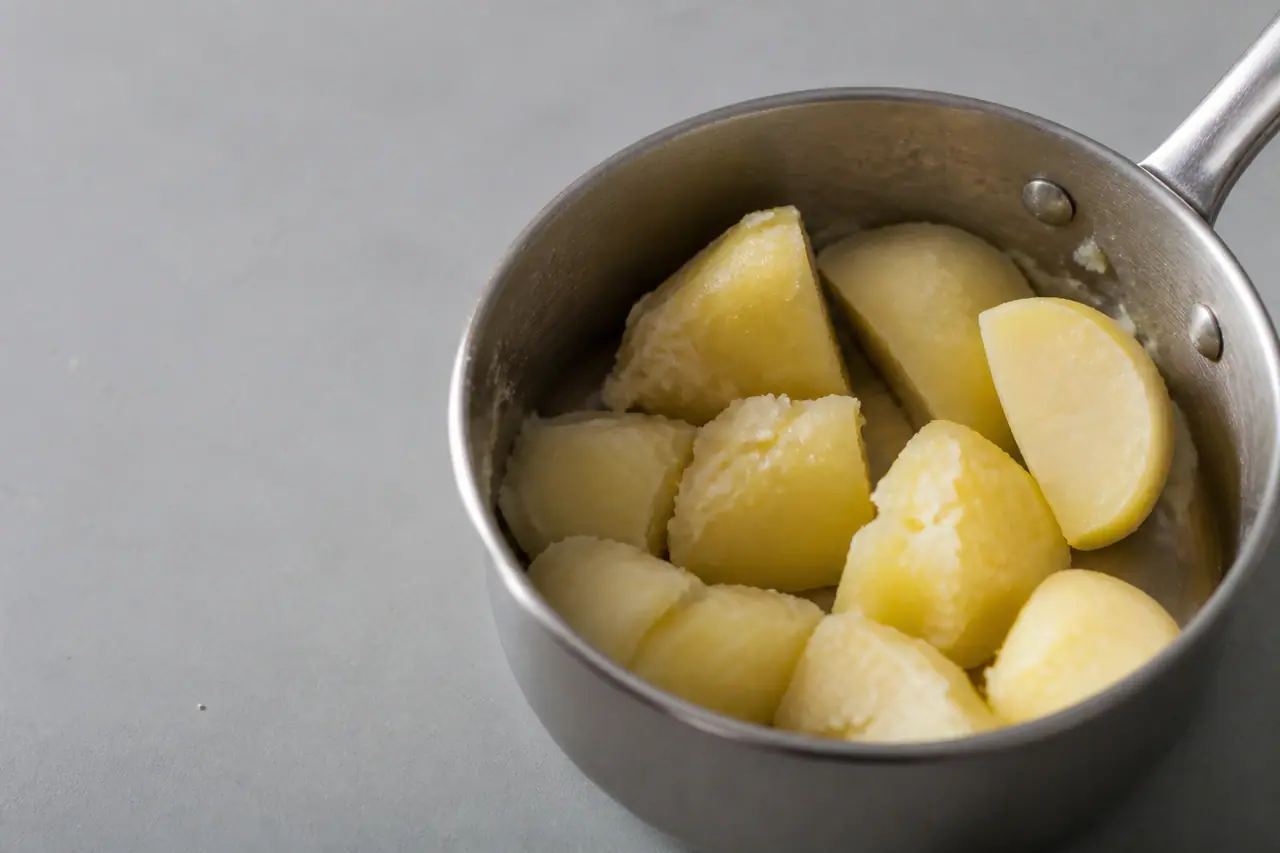
A pot of potatoes can be soft around the edges and stubborn in the centre at the same time. I used to blame the potato, then I noticed the largest pieces were nearly twice the width of the smallest. The small ones broke apart in the boiling water while the centre of the big pieces stayed hard. Uneven size had made two different cooking times in one pot.
The answer is not always a lower simmer. Cut pieces to a similar thickness, start them in cold water, keep the water at a steady simmer and test the largest piece. Floury potatoes will break sooner than waxy ones, so the method has to match the texture you bought.
The ingredient gives me a clue before any seasoning has had a chance to hide it.
The centre is the clock
Potatoes soften from the outside inward. The outside meets hot water first, so a small piece can become tender while a thick one still resists the knife. In a rolling boil, the pieces knock into one another and the softened edges break away, which makes the pot look done before the middle is ready.
I choose a test piece from the centre of the pot, not one floating at the edge. A knife should enter the thickest piece with a little resistance and leave cleanly. If it slides in but the piece shatters when lifted, I have gone too far for a salad, though it may still be good for mash.
That small pause tells me more than the packet does on a busy shopping day.
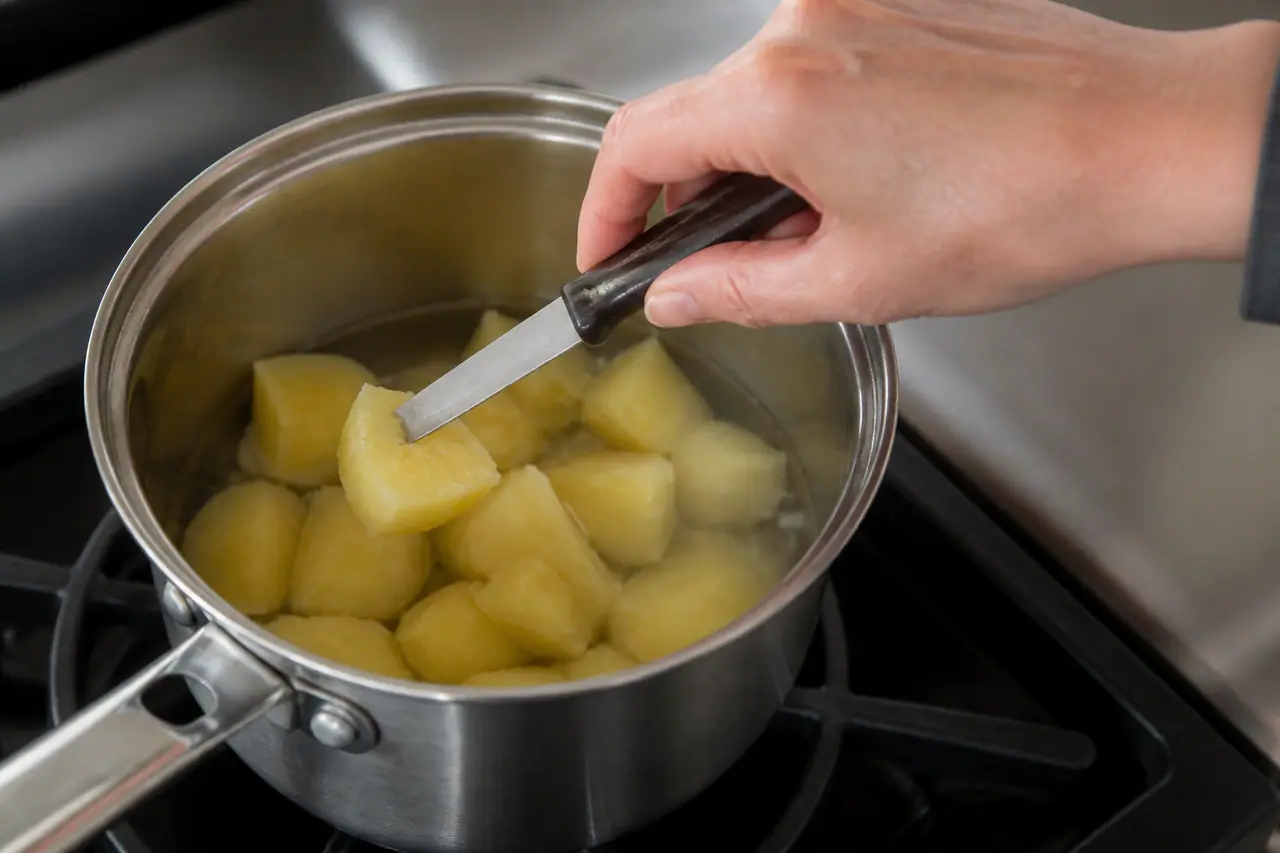
My uneven-cut test
I simmered one pot of potatoes cut into mixed chunks and another cut into pieces close to 3 cm. In the mixed pot, the small pieces were soft and shedding starch while the largest needed another six minutes. The even pot reached a more useful finish together, with clearer water and cleaner edges.
The exact minutes depend on the potato and the pan, but the pattern repeats. A 1 cm difference feels small on the board and large in the pot. I cut by thickness rather than by count, then halve any piece that looks much wider than its neighbours.
I write the result down when the difference matters for the next dinner.
| Cause | What I see | Better move |
|---|---|---|
| Mixed sizes | Small pieces break, large stay hard | Cut by thickness |
| Rolling boil | Edges knock and crumble | Use a steady simmer |
| Starting in hot water | Outside softens quickly | Start in cold water |
| Overfilled pot | Temperature drops and timing drifts | Leave room for circulation |
| Wrong texture | Waxy stays firm or floury collapses | Match potato to job |
Source: Maren Ashby saucepan test, 2026
Cold water gives the centre a chance
I cover cut potatoes with cold water, add salt and bring the pot up together. The outside warms while the centre follows, instead of being dropped into already-hot water and shocked by a steep temperature difference. I do not use a lid once the simmer begins unless I am watching it closely; the water can climb fast.
A steady simmer looks active but not violent. Bubbles should move the water without throwing potato pieces against the sides. If the boil is too strong, I lower the heat before the edges turn ragged. The aim is even heat, not speed at any cost.
The useful clue is in the texture, not the promise printed on the bag.
What waxy and floury potatoes do differently
Waxy potatoes keep their structure longer, which is useful for salad and stew but can make a thick piece feel hard after a short boil. Floury potatoes soften and break down sooner. I handle them less once tender and drain them as soon as the centre passes the knife test.
If I mix potato types, I do not expect one pot to finish perfectly. I add the firmest or largest pieces first, or cook them separately. A mixed bag is convenient until the texture matters. Then two pans can be less work than rescuing one broken pot.
I would rather change the cut than add another ingredient to hide the problem.
The short answer
Potatoes fall apart while staying hard when pieces cook at different rates or the boil is too aggressive. Cut evenly, start in cold water, simmer gently and test the largest centre piece. Potato texture decides how much handling the pot can take.
One test piece is enough to set the timing for the rest of the pan.
A timing habit that helps
I set the timer for a check, not a finish. At the first alarm, I test a large piece and look at the water. If the edges are clouding but the centre is firm, I lower the heat and give the pot more time. If the knife meets no resistance, I drain immediately. Potatoes keep cooking from their own heat after the water leaves.
That small pause stops me from following a recipe minute blindly. The pan, the cut and the bag all change the result. The centre tells me what happened.
The next move depends on what the centre feels like under the knife.
Questions
Why do potatoes fall apart when boiled?
Why are my potatoes still hard in the middle?
Should potatoes start in cold or hot water?
Can I save potatoes that are partly cooked?
More guides
All guides →
5 cabbage dinners that are not boiled cabbage
A cabbage head can become a roast wedge, a noodle-like skillet, a bean dinner, a chicken tray and a crisp topping without a pot of boiling water.
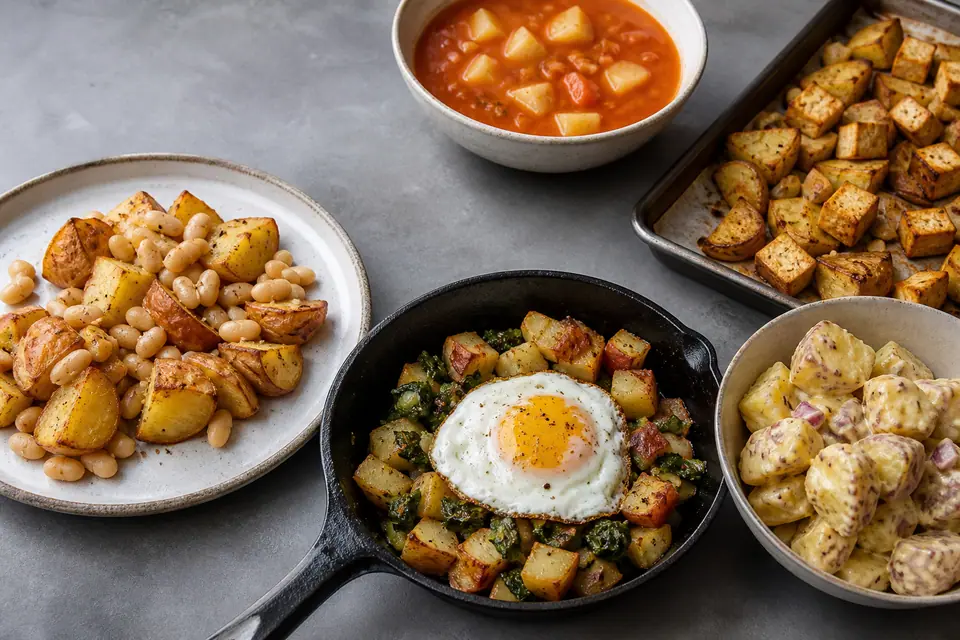
5 dinners that start with potatoes
Potatoes can start a dinner in five directions: roasted with beans, folded into eggs, simmered into soup, crisped for a bowl or dressed as a warm salad.

5 dinners for a bag of carrots
Roast carrots with beans, blend them into lentil soup, fry them with rice, fold them through pasta or build a spiced traybake around them.