Bird's eye chillies are small enough to underestimate once
Also called bird eye chilli, Thai chillies, African bird's eye chillies
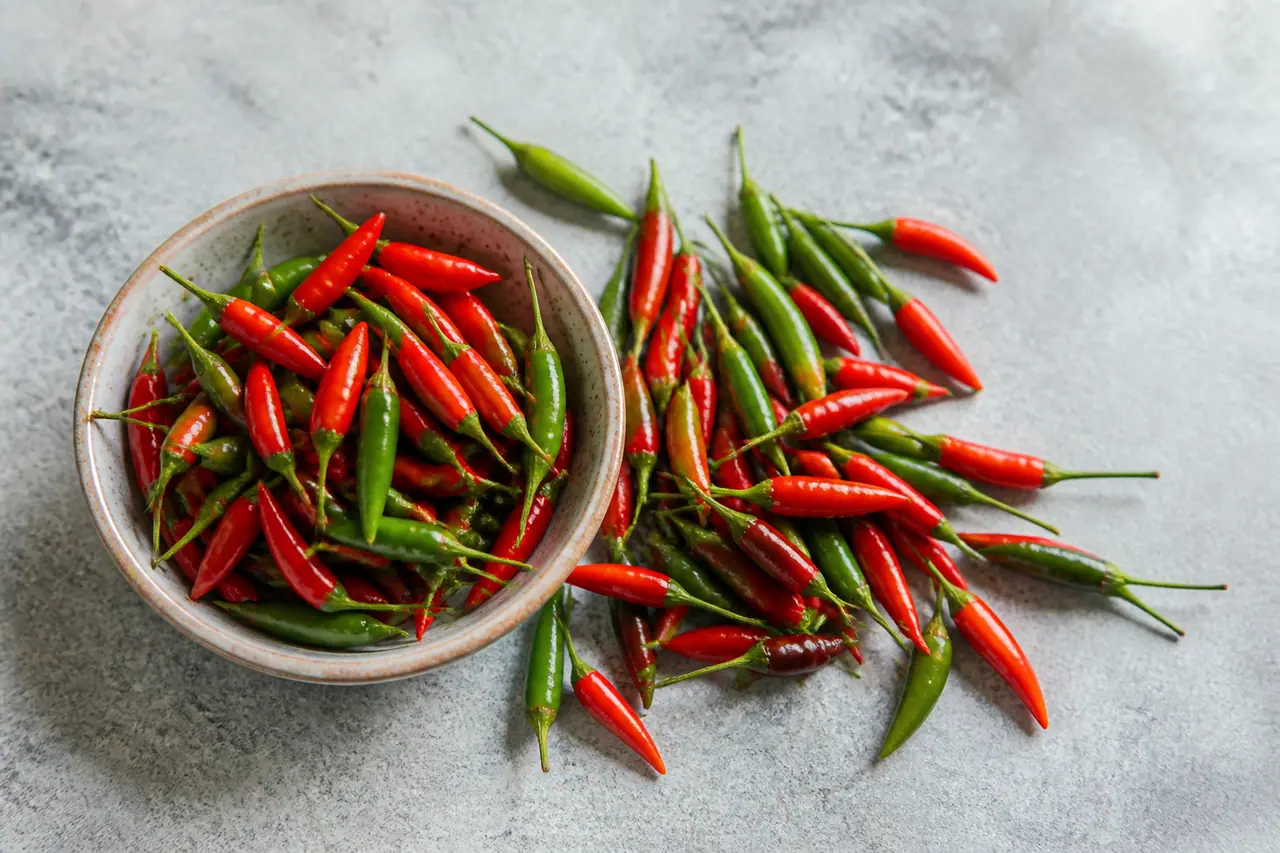
Bird's eye chillies are small, thin and hot, with a clean sharp burn. Use them sparingly in sauces, stir-fries and pickles, and keep a mild ingredient nearby to make adjustment possible.
The numbers
| Nutrient | Amount | % RI |
|---|---|---|
| Calories | 40 kcal | — |
| Water | 88 g | — |
| Carbs | 8.8 g | — |
| Fibre | 1.5 g | 6% |
| Protein | 1.9 g | 4% |
| Vitamin C | 143.7 mg | 180% |
| Potassium | 322 mg | 16% |
Source: USDA FoodData Central, SR Legacy record for raw hot chilli peppers; bird's eye varieties differ · % RI against EU adult reference intakes.
Buying and keeping
What to look for at the shop, and how to make it last once it is home.
How to pick
- Choose pods that are firm, bright and attached to green stems. Both red and green pods can be fresh.
- Avoid a soft shoulder, leaking tip or sour smell. Small does not mean safe from spoilage.
- Buy a few first. Their heat is high enough that a large handful can overwhelm a family-sized dish.
- For sauces, choose pods with unbroken skin. Split chillies lose moisture quickly.
- Red pods taste fruitier; green pods are more vegetal and often a little sharper.
How to store
- Keep the pods dry in the fridge for about one week.
- Put sliced chillies in a covered container and use within three days.
- Freeze them whole for curry pastes, sauces and stir-fries. Do not thaw a whole bag if you need one pod.
- Dry bird's eye chillies fully before storing them in an airtight jar. Any remaining moisture invites mould.
- Label a jar clearly if you dry them. They look small and harmless six months later.
Best months
If you have none
Swaps that hold up, with what changes when you use them.
Small pod, serious heat
Bird's eye is a name used for several small hot chillies, so the exact heat is not fixed. They are common in Thai, Southeast Asian and African cooking, where a little pod seasons a whole pan. Their thin flesh gives a direct burn and a clean, green or fruity aroma depending on whether the pod is green or red.
I never chop a whole handful by instinct. I slice one, touch the cut surface with the tip of a clean spoon and decide from there. A quarter of one pod can be enough for a mild family sauce. The goal is to let the chilli support the other ingredients, not to make the heat the only thing anyone can taste.
How to use one without losing control
For a stir-fry, add a finely sliced pod to the oil with garlic and ginger, then move quickly. For a dipping sauce, mince it with lime, sugar and fish sauce so the sweet and sour edges make the heat feel clear rather than blunt. For a curry paste, blend a small amount first and add more after tasting the cooked sauce; raw chilli can taste hotter than the finished dish.
Keep the stem out of the pot and treat the ribs as optional. Leave them in when you need maximum heat, remove them when you want the chilli aroma without quite as much burn. The seeds usually travel with the ribs and carry oil, but they are not an independent heat source.
Safe hands matter here
With bird's eye chillies, handwashing is part of the recipe. Wear gloves for a large batch and wash the knife, board and bowl with hot soapy water. Do not rub your eyes, nose or lips while cooking. Water may move the chilli around but does not dissolve the oily capsaicin film.
If a dish is too hot, divide it if possible and dilute each half with more of its main ingredients. Coconut milk, yoghurt or oil can soften the sensation, but adding a full can of coconut milk also changes the dish's balance. Taste after dilution, then bring back salt and acid carefully.
Fresh, dried or frozen
Fresh pods give the brightest aroma. Frozen pods are useful in cooked food and keep their heat, but they lose their crispness. Dried pods taste deeper and slightly smoky, especially when toasted briefly before soaking. Use poblano peppers when you want green pepper flavour with less heat, and keep red bell pepper nearby when a sauce needs sweetness to balance the chilli.