Poblano peppers
Also called poblanos, ancho peppers when dried
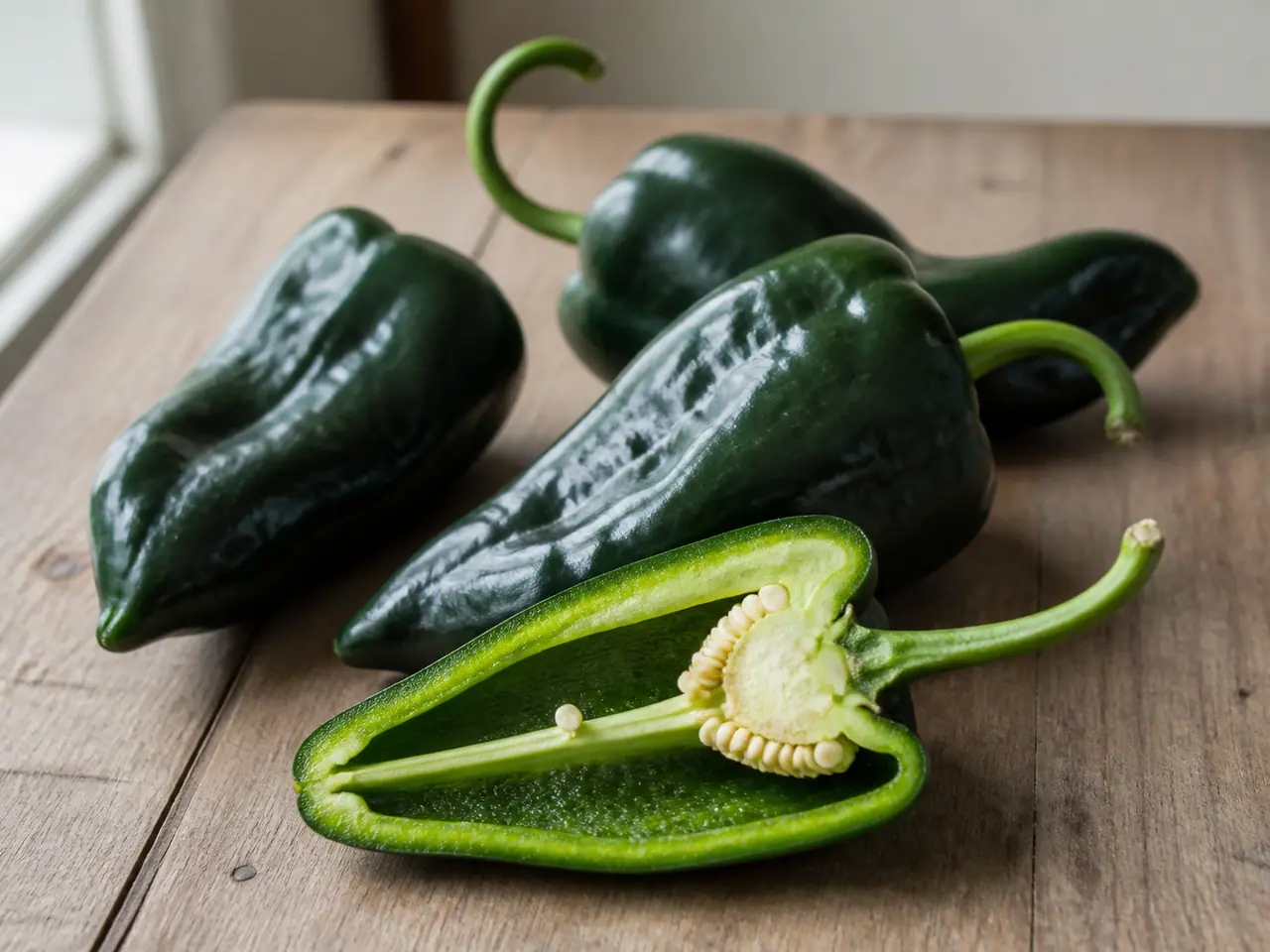
Poblanos are broad green chiles with a mild, earthy heat that gets sweeter when blistered. Treat the skin like a pepper skin, not a garnish.
The numbers
| Nutrient | Amount | % RI |
|---|---|---|
| Calories | 20 kcal | — |
| Vitamin C | 80.4 mg | 100% |
| Water | 93.9 g | — |
| Carbs | 4.6 g | — |
| Fibre | 1.7 g | 7% |
| Protein | 0.9 g | 2% |
Source: USDA FoodData Central, FDC 170427 (sweet green peppers, raw; poblano heat and size vary) · FDC ID 170427 · % RI against EU adult reference intakes.
Buying and keeping
What to look for at the shop, and how to make it last once it is home.
How to pick
- Choose firm, glossy green poblanos with tight skin and a fresh stem.
- A few shallow wrinkles are fine for roasting, but avoid soft sunken areas.
- Large peppers are easier to stuff; smaller ones are useful when you want the flavour without a whole serving of chile.
- Heat varies. If you are cooking for guests, taste a small raw edge or use less until you know the batch.
How to store
- Keep poblanos dry in the fridge crisper for about a week.
- Do not wash them until you are ready to use them. Moisture around the stem speeds softening.
- Char, peel and freeze cooked poblanos in flat portions for sauces and stews.
- Store dried ancho peppers in a sealed cupboard; the dried form is sweeter and more concentrated.
Best months
If you have none
Swaps that hold up, with what changes when you use them.
Poblano heat is not a fixed number
Poblanos are usually mild enough for a family dinner, but one pepper can be noticeably hotter than the next. Growing conditions, maturity and the individual fruit all matter. The green pepper is earthy and slightly bitter; when it is fully ripe and dried it becomes an ancho chile, which is sweeter and more raisin-like.
Heat is the variable worth respecting. A calm-looking green chile can still bring a sharp finish to a whole pot. I decide how much to use by tasting the flesh near the stem and then a little closer to the tip. I remove the ribs when I want the pepper flavour without much heat, and I keep some when the dish has beans, tomatoes or dairy to soften it. That approach is more reliable than assuming every poblano from the same box will behave identically.
That variation is a reason to taste a small piece before building the whole dish around it. If the raw edge is hot, remove the seeds and inner ribs for a gentler result. The flesh carries most of the green pepper flavour, so you do not lose the point of the ingredient. I also decide whether the pepper is going into a long stew or a quick traybake. Long cooking rounds the heat and softens the green flavour; a short roast keeps both sharper. That is why the same poblano can taste gentle in a bean pot and lively beside fish, even when the raw pepper seemed identical.
Char, steam, peel
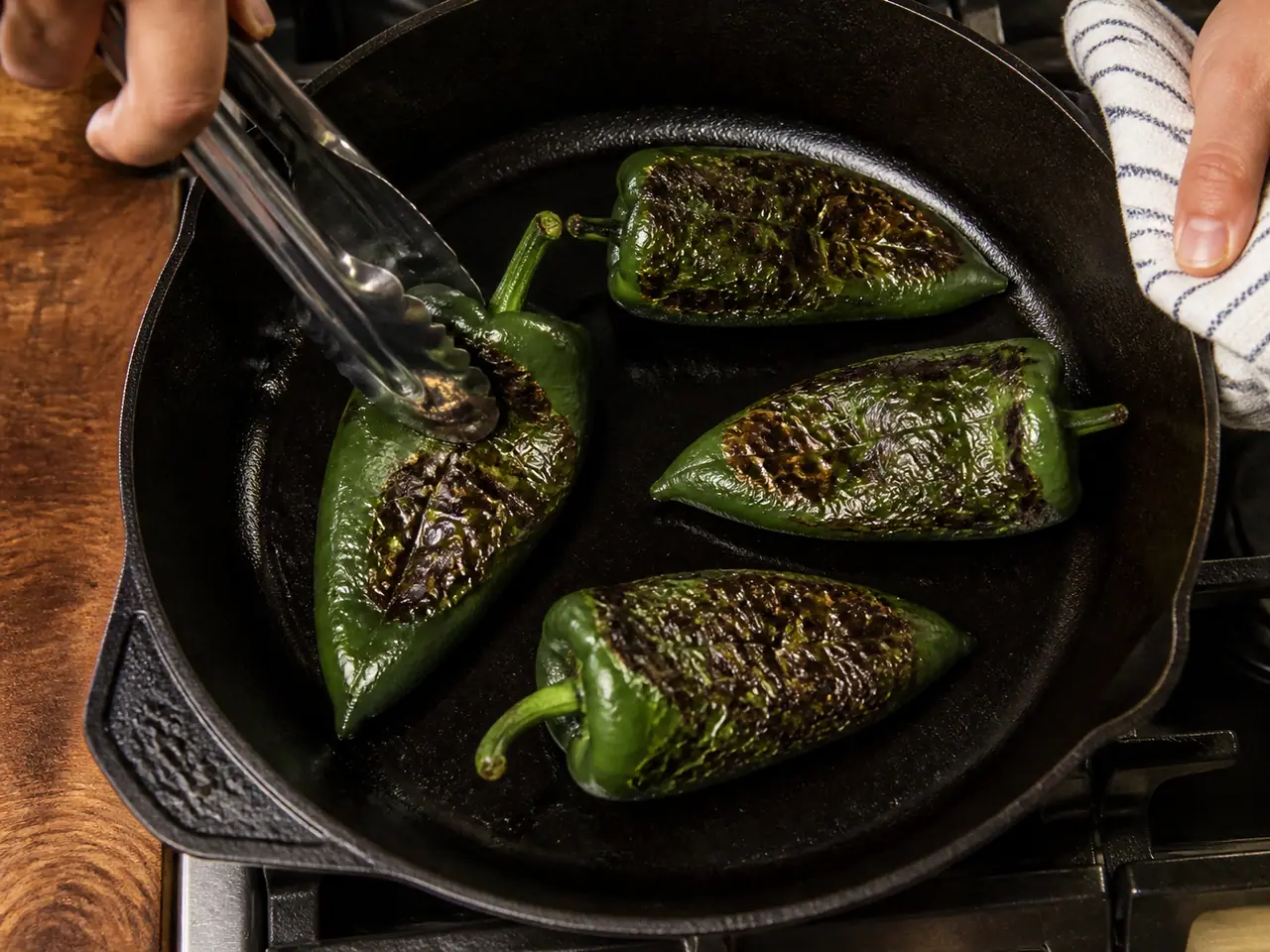
Char poblanos in a dry skillet, under a grill or over a gas flame until the skin blisters in broad dark patches. Put them in a bowl and cover for ten minutes. The steam loosens the skin, which should peel away in strips. Do not rinse the peppers under the tap; water removes the smoky oil and leaves them wet.
Remove the stem and seeds after peeling. A few seeds are harmless, but they make the heat unpredictable. Slice the flesh into a stew, fold it into eggs or stuff it with beans and cheese. If you are adding it to a traybake, raw thick strips need a head start so the skin can soften.
Pairing poblanos with sweeter peppers
Poblano and red bell pepper make a good pair. The red pepper supplies sweetness while the poblano supplies green depth and a little heat. That combination is useful in the charred red pepper and chickpea stew. Use two poblanos with the red peppers rather than replacing everything on the first try. The red pepper gives the stew its round base, while the poblano keeps the flavour from becoming sugary. If the batch is hot, a spoonful of yogurt or tahini at the table will soften the impression without removing the chile flavour. If it is mild, finish with lemon and a little more charred pepper instead of adding raw chile at the end.
They also sit well beside fish. In the sheet-pan salmon recipe, one poblano among the sweet peppers adds a smoky edge without taking over the pan. Add jarred piquillo peppers after roasting if you want another soft, sweet layer.
Fresh storage and freezing
Keep fresh poblanos dry and cool. A loose bag in the crisper is better than a sealed wet container. Use them while the skin is firm and the stem is green. A pepper with one small soft spot can be trimmed and cooked today; a collapsed, leaking pepper should go.
Cooked poblano freezes well because the texture is going into a sauce or stew anyway. Char, peel, seed and freeze in portions. Label the bag with the heat note if the batch was especially lively. Future you will not remember.
Questions
Are poblano peppers hot?
Do I need to peel poblanos?
Can I eat poblanos raw?
What is an ancho pepper?
How do I store fresh poblanos?
Recipes using poblano peppers
3 on the site so far.
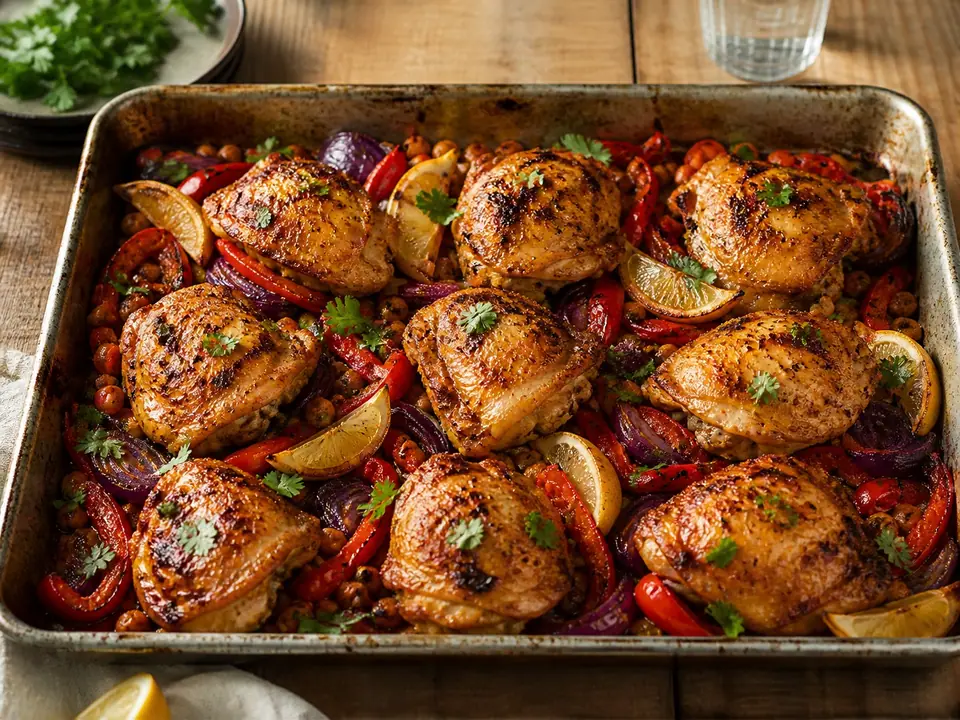
Harissa roast chicken traybake
Chicken thighs roasted on top of chickpeas and red peppers, so the fat renders down into everything underneath. One tray, one wash-up.
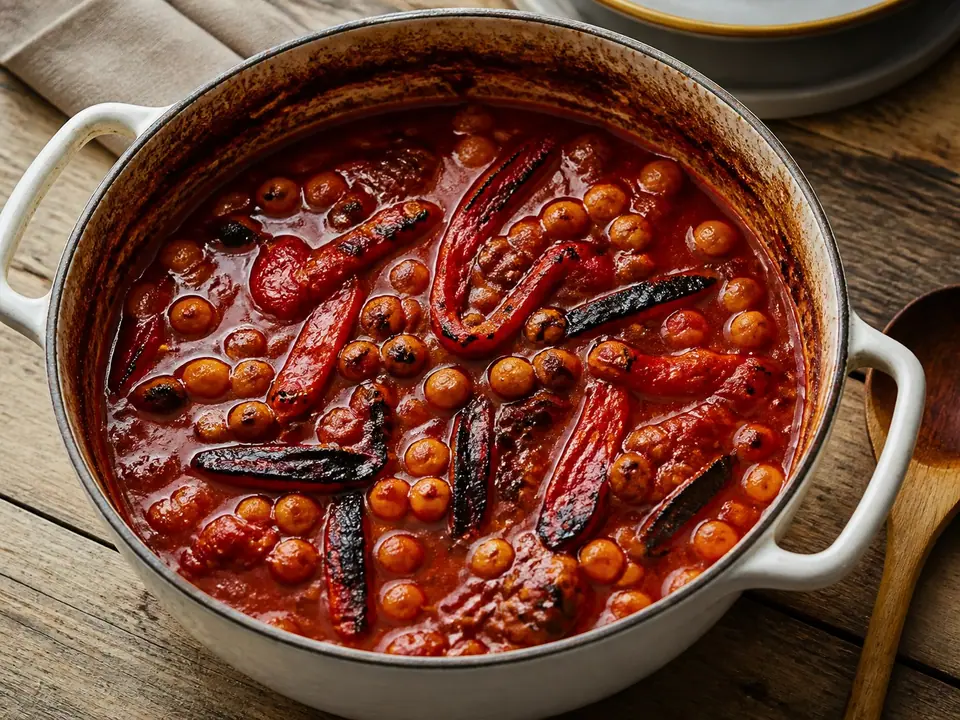
Charred red pepper and chickpea stew
The peppers go under the grill until they are properly black in patches. That ten minutes is the whole flavour of the dish.
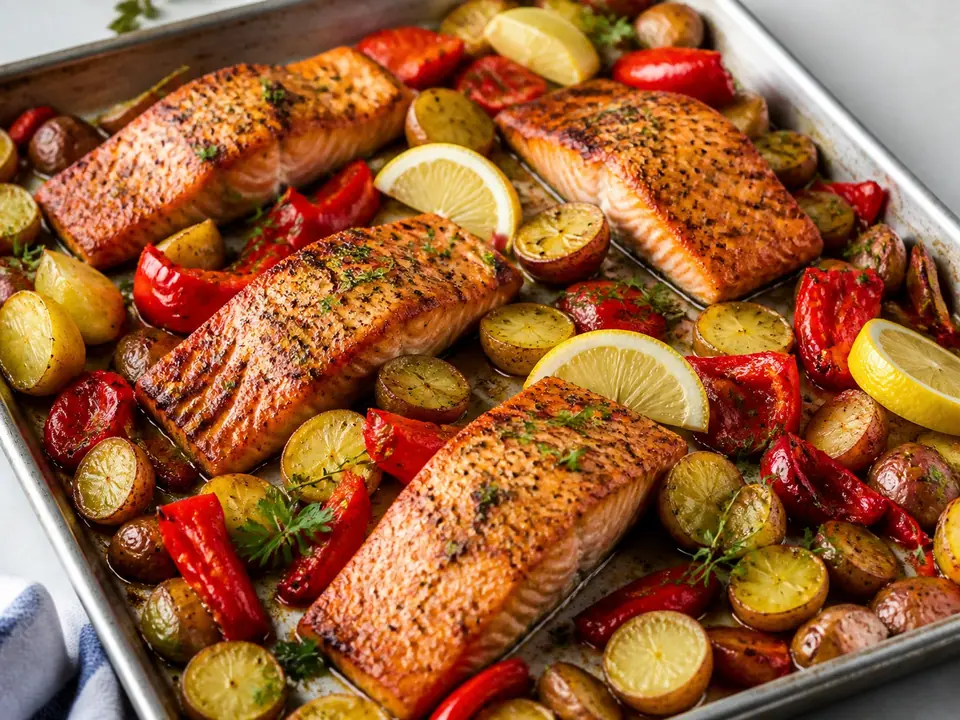
Sheet-pan salmon with peppers and capers
The peppers get a fifteen-minute head start. Put them in at the same time as the fish and one of them will be wrong.