Sheet-pan salmon with peppers and capers
youryum.com/recipes/sheet-pan-salmon-peppers · serves 4
Peppers first, salmon after
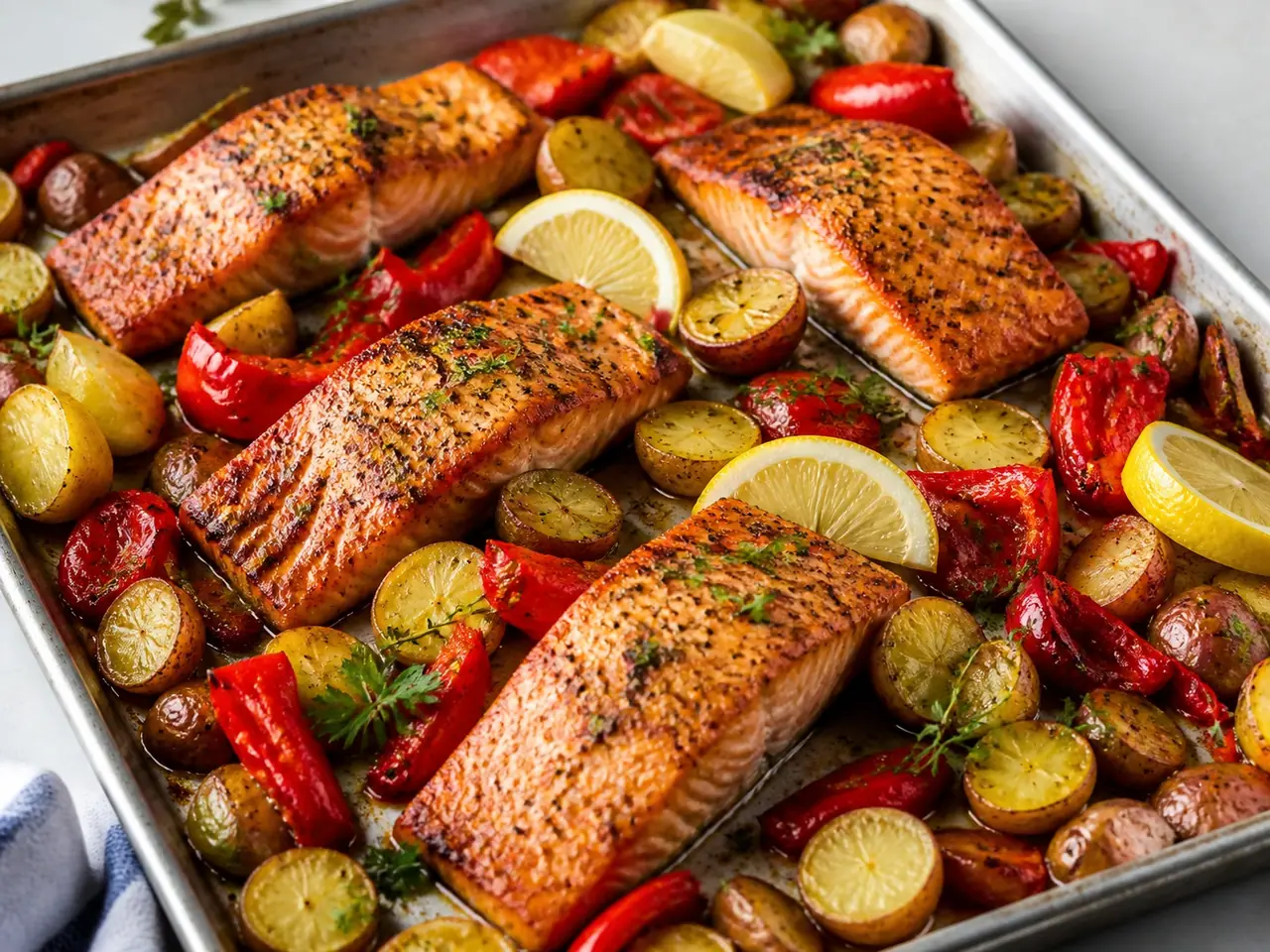
The peppers get a fifteen-minute head start. Put them in at the same time as the fish and one of them will be wrong.
- Gluten free
- Dairy free
- High protein

- Prep
- 10 min
- Cook
- 27 min
- Total
- 37 min
- Serves
- 4
- Per serving
- 428kcal
- Effort
- Easy
Salmon takes twelve minutes. Peppers take twenty-five.
Almost every sheet-pan recipe on the internet pretends otherwise, tells you to put everything in together, and delivers either crunchy peppers or fish with the texture of a bath sponge. The fix is not clever. Give the vegetables a fifteen-minute head start and add the fish to a tray that is already hot.
Ingredients
Equipment
- Roasting tin
Method
-
Peppers and tomatoes go in alone
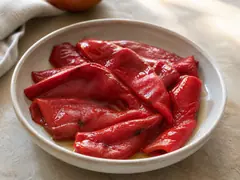
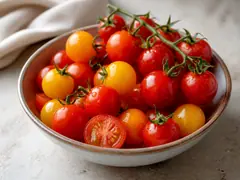
220°C fan. Toss the pepper strips and cherry tomatoes with two tablespoons of the oil, a good pinch of salt and the oregano, then spread them across the tin.
Fifteen minutes, until the edges of the peppers are starting to catch and a few of the tomatoes have split.
-
Make room for the fish
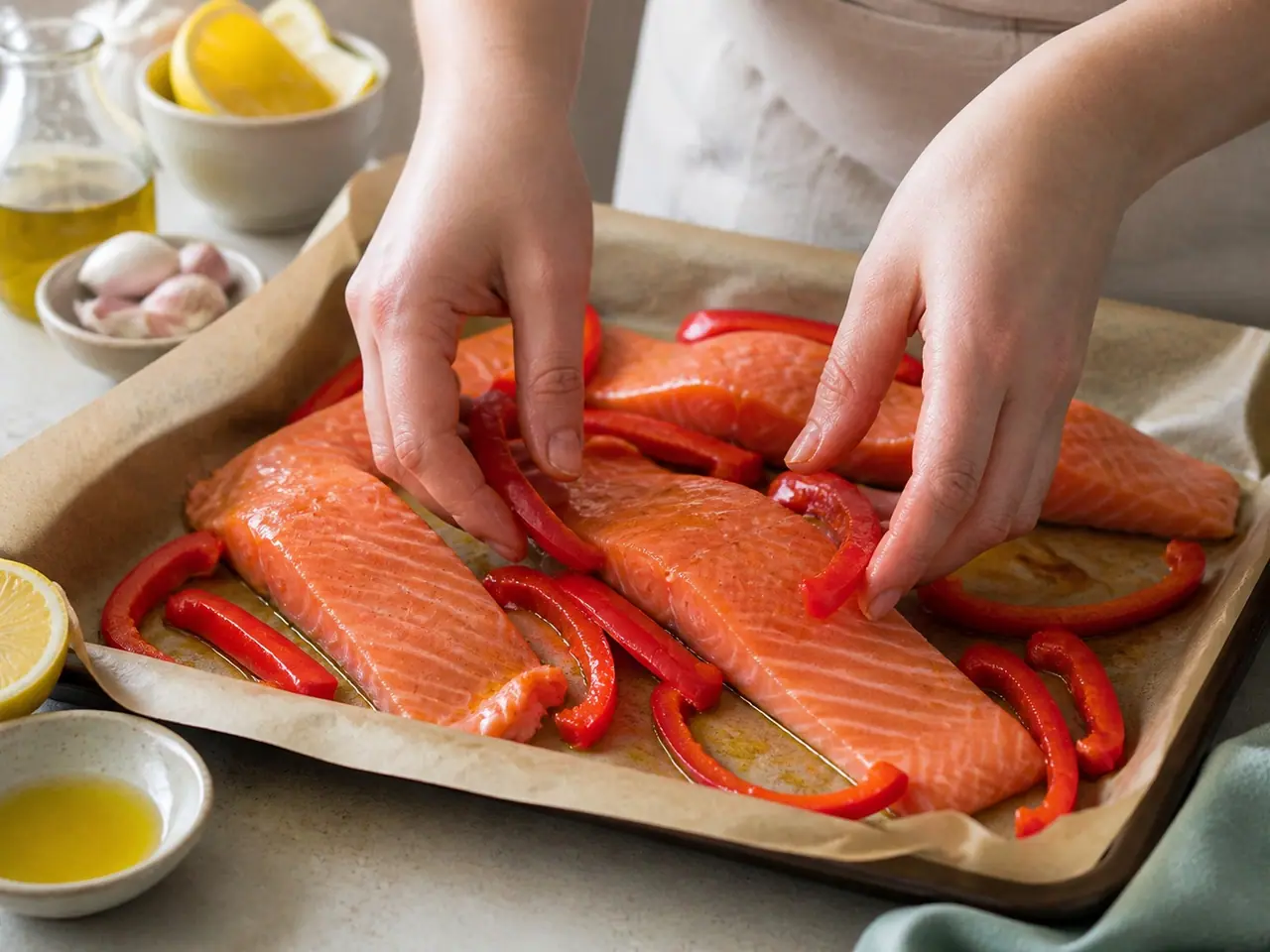
Pull the tray out and push the vegetables towards the edges, clearing four bare patches of metal in the middle.
Salmon straight onto the hot tin, skin side down. That contact with hot metal is what crisps the skin, and it is the reason this works better than a lined tray. If you must use paper, expect soft skin.
-
Twelve minutes together
Scatter the capers and lemon slices over everything, drizzle the last of the oil across the fish, and put the tray back in.
Twelve minutes for fillets around two and a half centimetres thick. It is done when a fork twists a flake away from the top with no resistance and the very centre still looks slightly translucent.
-
Rest, then squeeze
Three minutes out of the oven before anyone touches it. Salmon carries on cooking off the heat, which is why pulling it a minute early is deliberate rather than careless.
Squeeze the lemon half over the whole tray at the table.
What's in it
Nutrition, buying and storage notes for the ingredients this recipe leans on.
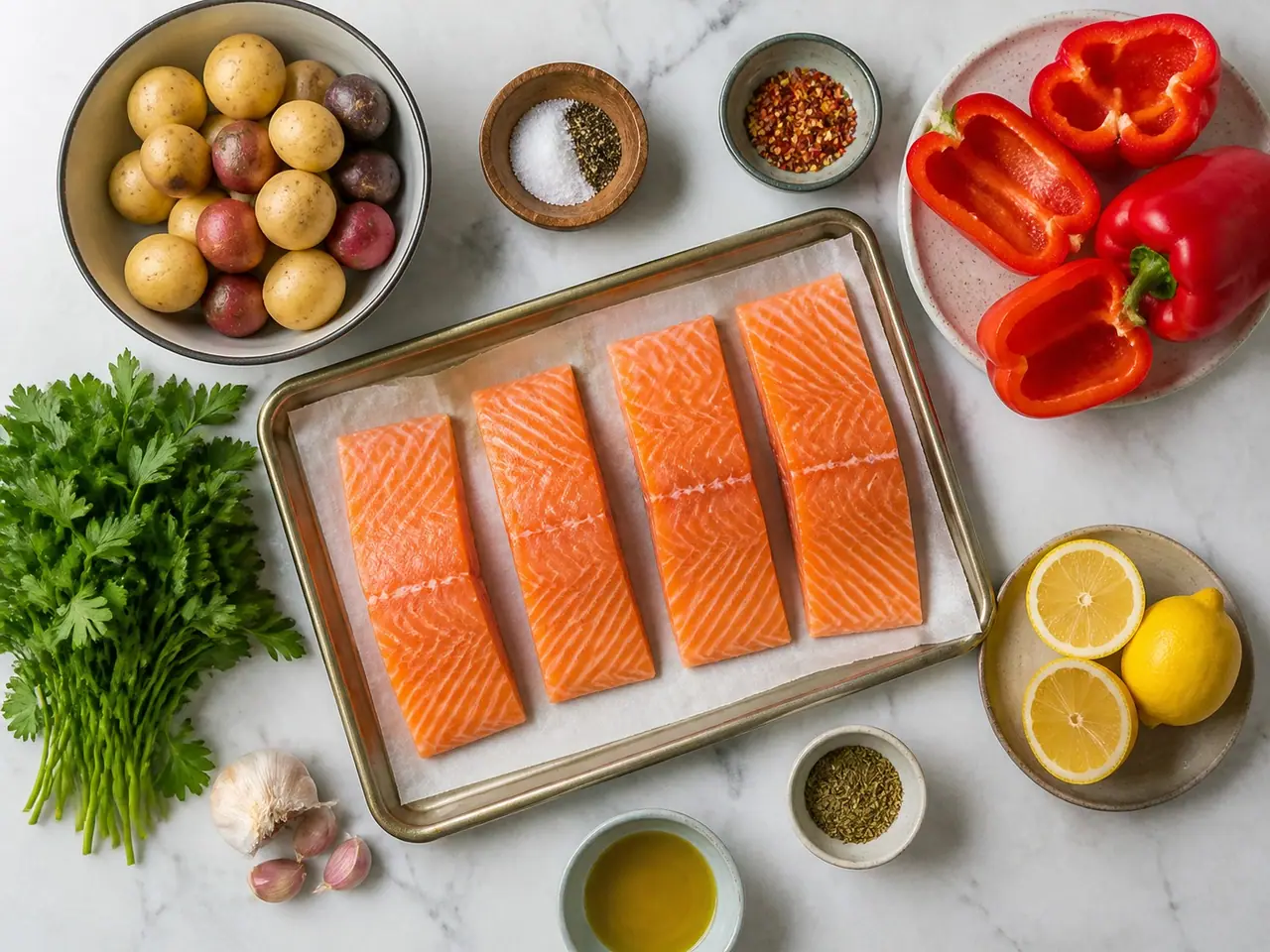
Reading a salmon fillet
Colour is a bad guide because farmed salmon is pigmented by feed. Thickness is what matters, and it varies enormously along a single side of fish.
If your four fillets are not the same thickness, arrange them with the thickest towards the back of the oven, which in most domestic ovens is the hotter end. It is a small thing and it is the difference between four cooked fillets and three cooked ones plus a dry one.
What else can go on the tray
- New potatoes, halved, with the peppers from the start. Add ten minutes to the first stage.
- A tin of drained white beans, stirred in when the fish goes on, to soak up the pan juices.
- Thick slices of fennel, which want the same twenty-five minutes the peppers do.
Nutrition
Per serving, for 4 servings. Estimated from ingredient weights — it moves with the brands and cuts you actually use.
| Nutrient | Per serving |
|---|---|
| Calories | 428 kcal |
| Protein | 36 g |
| Carbohydrate | 11 g |
| Fibre | 3 g |
| Fat | 27 g |
Source: Estimated from ingredient weights, USDA FoodData Central
Questions
How do I stop the salmon sticking?
Can I use a different fish?
Is the skin worth eating?
Can I do this for eight people?
Filed under
Cook this next
All recipes →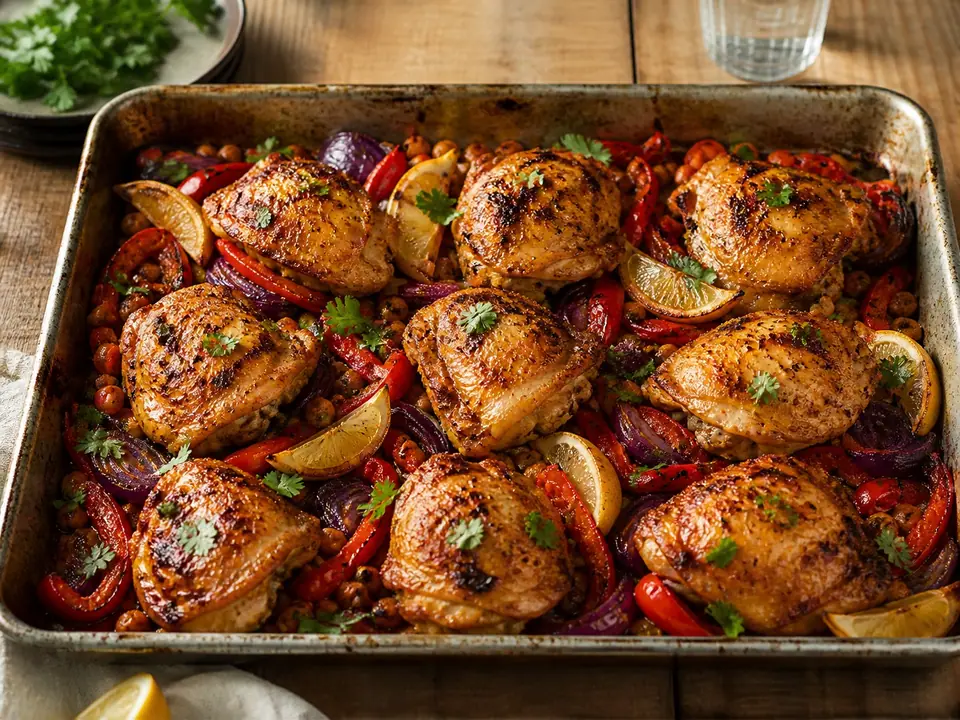
Harissa roast chicken traybake
Chicken thighs roasted on top of chickpeas and red peppers, so the fat renders down into everything underneath. One tray, one wash-up.
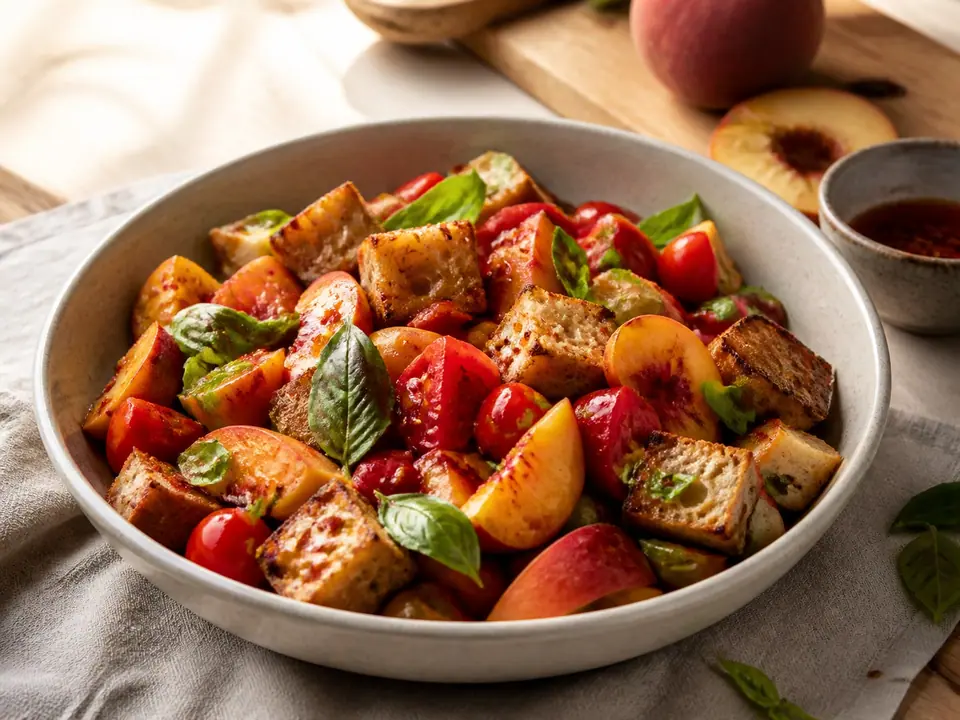
Peach and tomato panzanella with chilli oil
Chilli oil gives the sweet fruit a savoury edge, while toasted bread catches every drop of tomato and lemon juice.
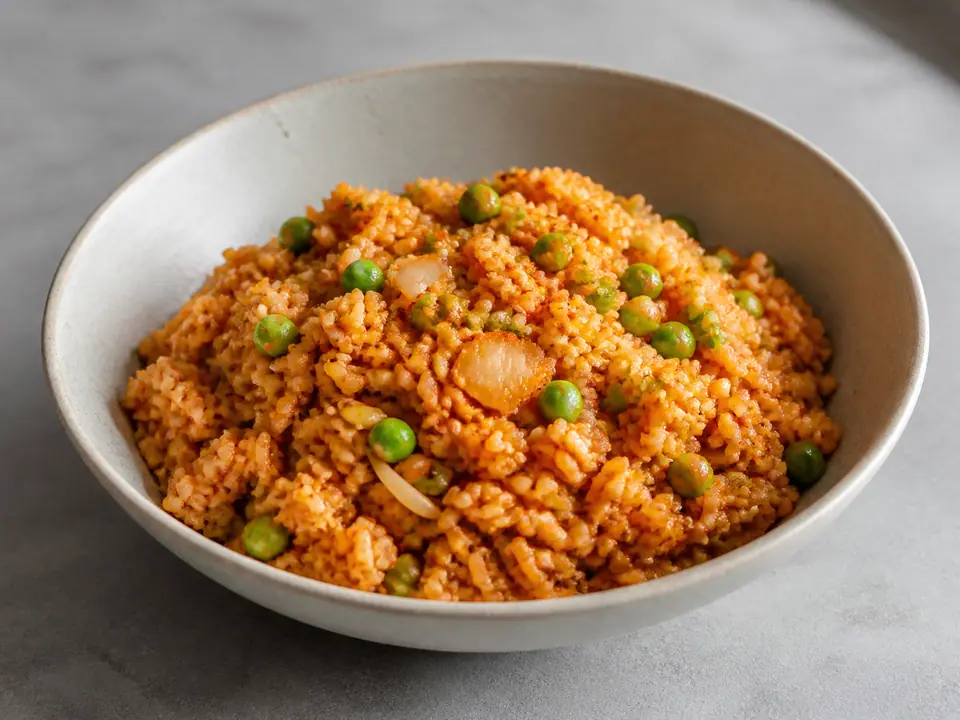
Kimchi fried rice with peas with crispy beans
Roasted butter beans add a dry, crisp contrast to kimchi fried rice and sweet green peas.