The red pepper has more vitamin C than an orange
Also called red capsicum, red sweet pepper
127.7 mg of vitamin C per 100 g, more than twice what an orange carries. It is also nothing more exotic than a green pepper that nobody picked.
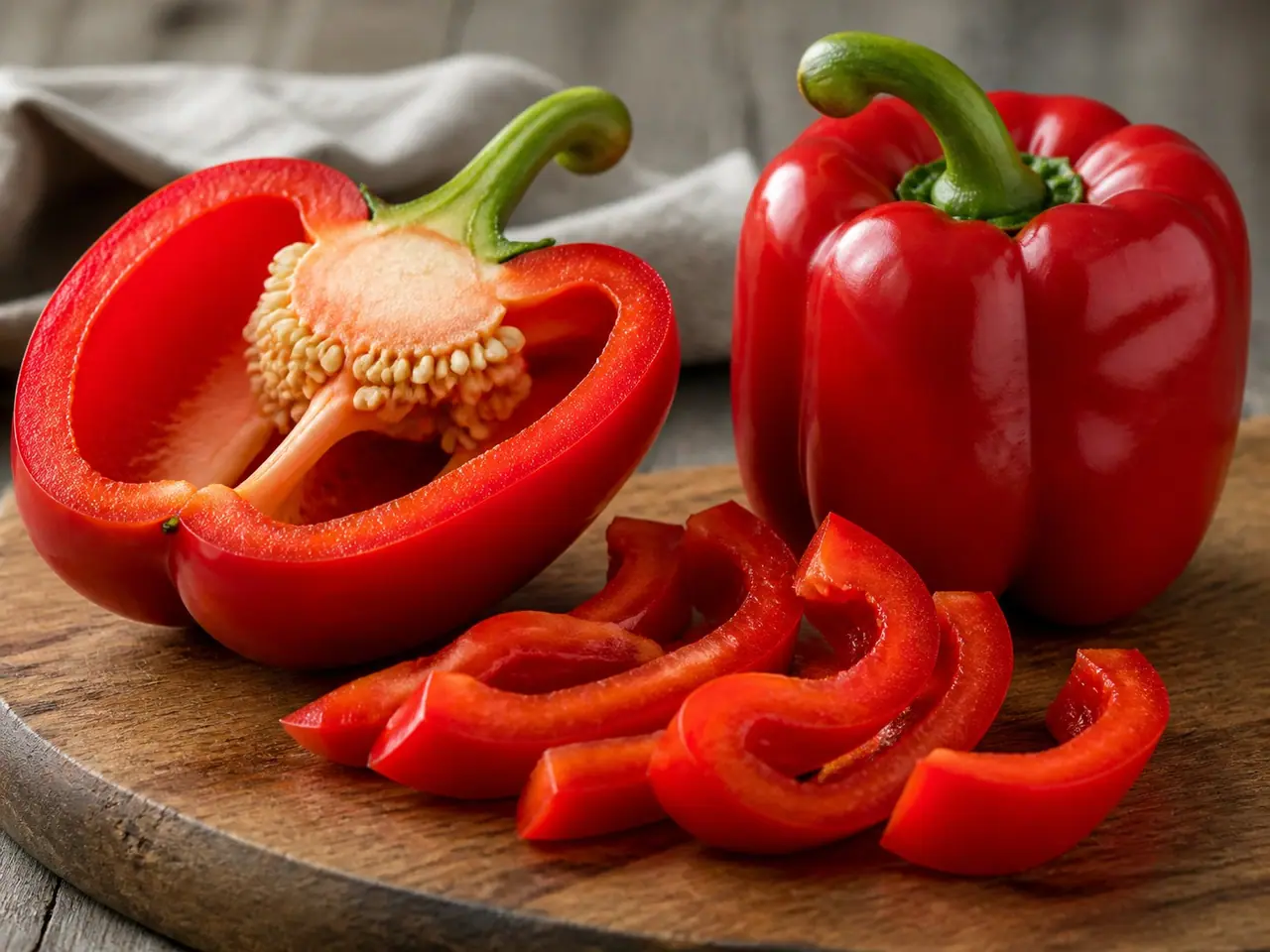
The numbers
| Nutrient | Amount | % RI |
|---|---|---|
| Calories | 26 kcal | — |
| Vitamin C | 127.7 mg | 160% |
| Vitamin A | 157 µg | 20% |
| Protein | 1 g | 2% |
| Carbs | 6 g | — |
| Fibre | 2.1 g | 8% |
| Potassium | 211 mg | 11% |
Source: USDA FoodData Central, SR Legacy 170108 (peppers, sweet, red, raw) · FDC ID 170108 · % RI against EU adult reference intakes.
Buying and keeping
What to look for at the shop, and how to make it last once it is home.
How to pick
- Heavy for its size, with taut skin and no soft patches around the shoulders where they bruise first.
- A dry, firm green stem. A shrivelled or blackened stem means it has been off the plant a fortnight, whatever the flesh looks like.
- Deep, even colour. Patches of green mean it was picked early to survive transport, and it will taste thinner and cost the same.
- Three lobes or four makes no difference to sweetness or to sex, despite what you have read. Lobe count is variety and growing conditions.
- Weight for weight, the ones sold loose are usually fresher than the ones sealed in a tray of three.
How to store
- Fridge drawer, unwashed and unbagged. One to two weeks.
- Once cut, wrap the cut face against the flesh and use within three days. The seeds go slimy before the flesh does, so take them out first.
- Roast and peel a batch, then keep them submerged in oil in the fridge for a week. This is the single best use of a glut.
- Freezes well raw: slice, freeze flat on a tray, then bag. The texture goes soft on thawing so use them for cooking only.
- Keep them away from apples and bananas. Ethylene accelerates the softening.
Best months
If you have none
Swaps that hold up, with what changes when you use them.
Green, yellow, red: the same fruit
A green pepper is an unripe red one. Left on the plant it turns yellow, then orange, then red, getting sweeter and roughly doubling its vitamin C on the way.
That is also why red costs more. It occupies the plant for several weeks longer, which is several weeks the grower cannot use that space for anything else, and a ripe pepper bruises far more easily in a crate than a green one does.
Vitamin C per 100 g, raw
- Red bell pepper 127.7mg
- Kiwi 92.7mg
- Green bell pepper 80.4mg
- Strawberry 58.8mg
- Orange 53.2mg
- Lemon 53mg
Source: USDA FoodData Central
How to roast and peel them
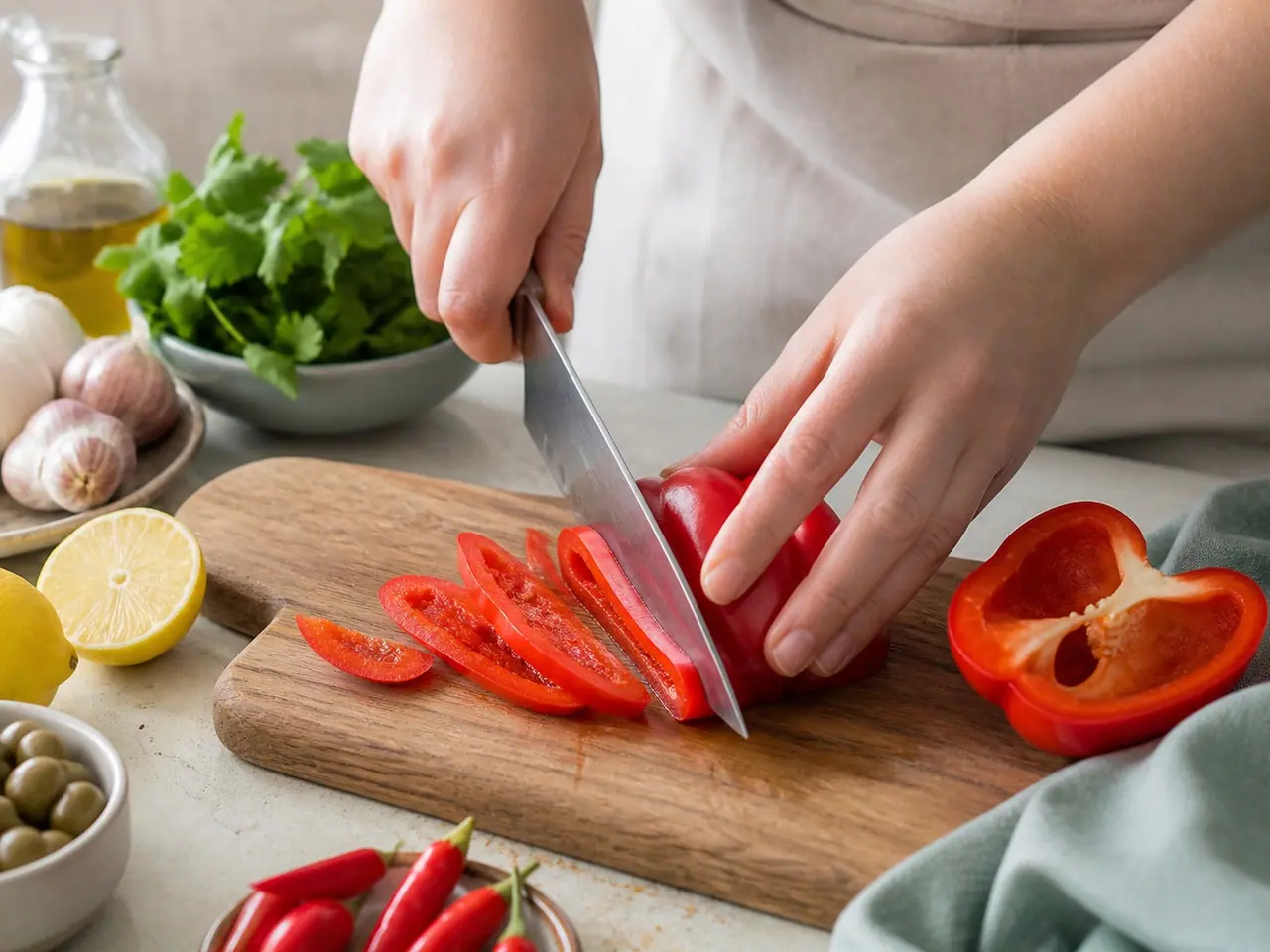
Whole, under a hot grill, turned every few minutes until blistered and black in patches. Ten minutes or so.
Then into a bowl with a plate over the top for ten minutes. The trapped steam lifts the skin away and afterwards it comes off in sheets under your thumb. Do not run them under the tap to hurry it along; you will wash away the smoky oil that was the entire point of standing at the grill.
What to do with a glut
Roast the lot, peel them, and pack them into a jar under olive oil with a bashed garlic clove. A week in the fridge, and the oil afterwards is worth as much as the peppers.
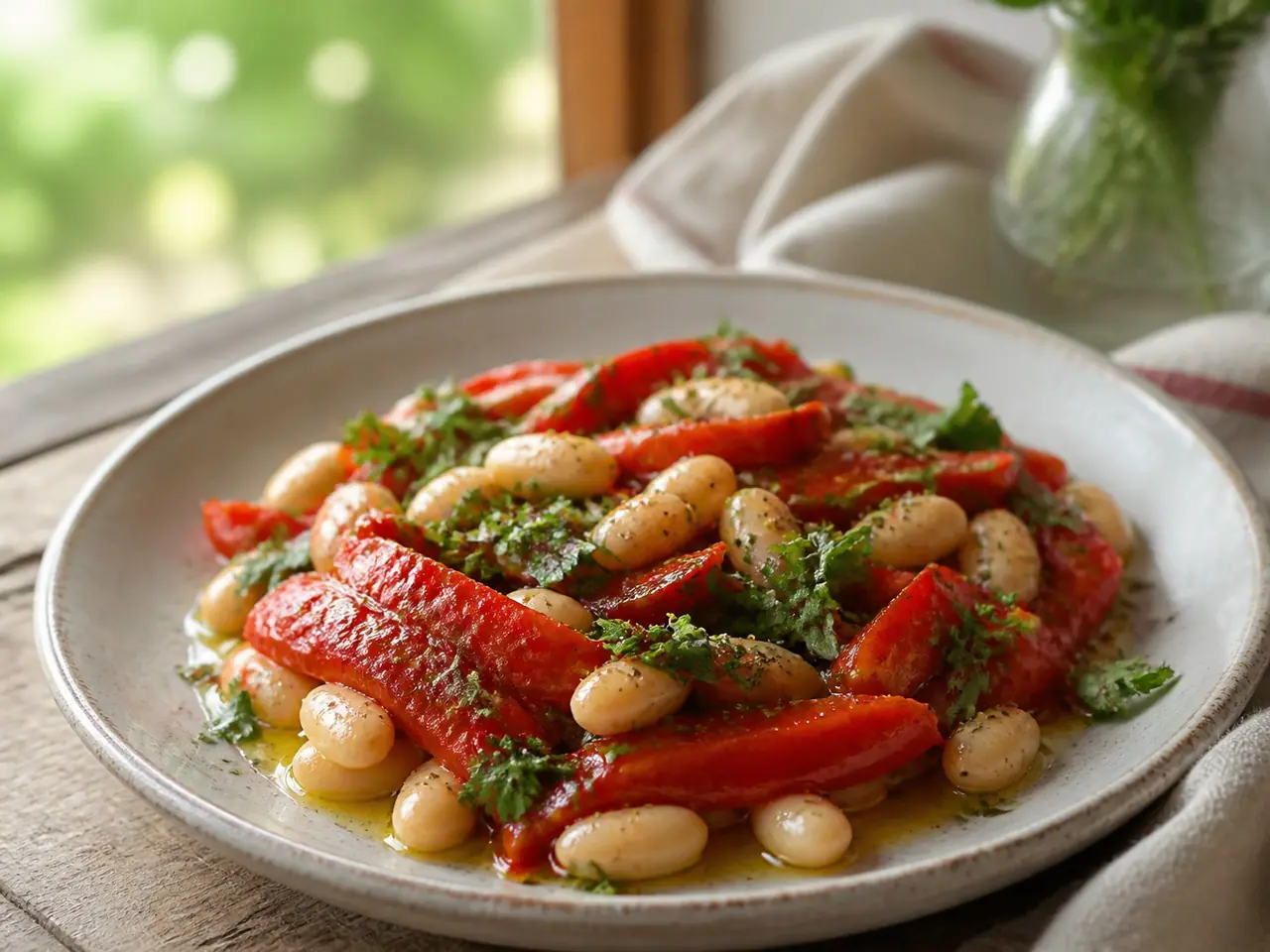
They go into sandwiches, onto toast with anchovies, blended into a sauce for pasta, or chopped through a bowl of chickpeas. This is the most useful thing you can do with a bag bought on offer, and it takes half an hour of mostly waiting.
Questions
Is a red pepper really higher in vitamin C than an orange?
Should I peel peppers?
Why are some peppers bitter?
Are the white ribs inside worth removing?
Can I eat the seeds?
Recipes using red bell pepper
3 on the site so far.
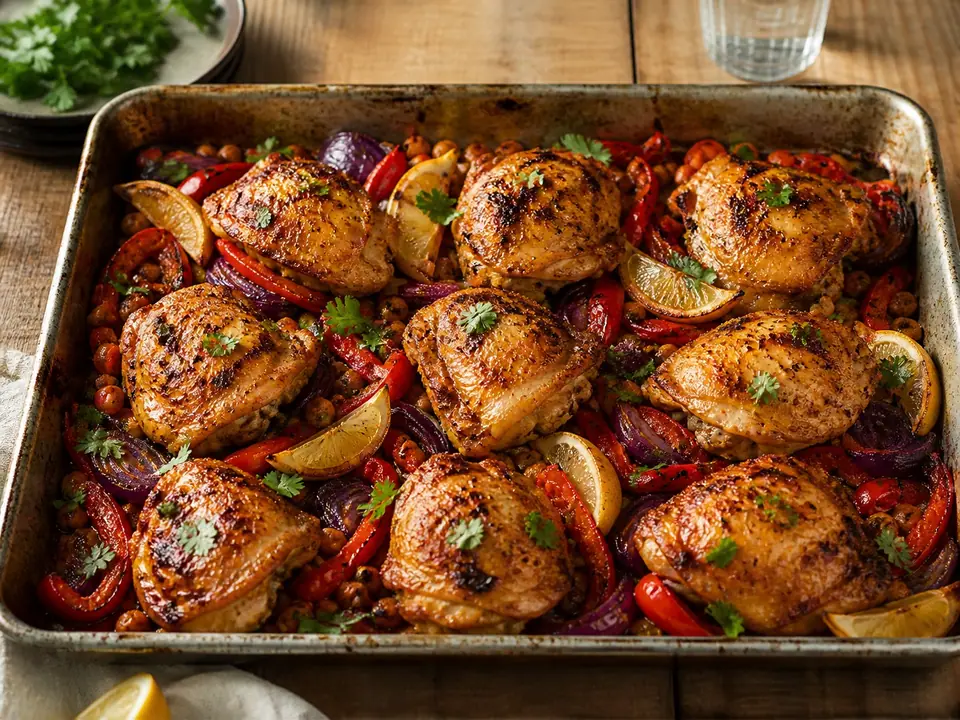
Harissa roast chicken traybake
Chicken thighs roasted on top of chickpeas and red peppers, so the fat renders down into everything underneath. One tray, one wash-up.
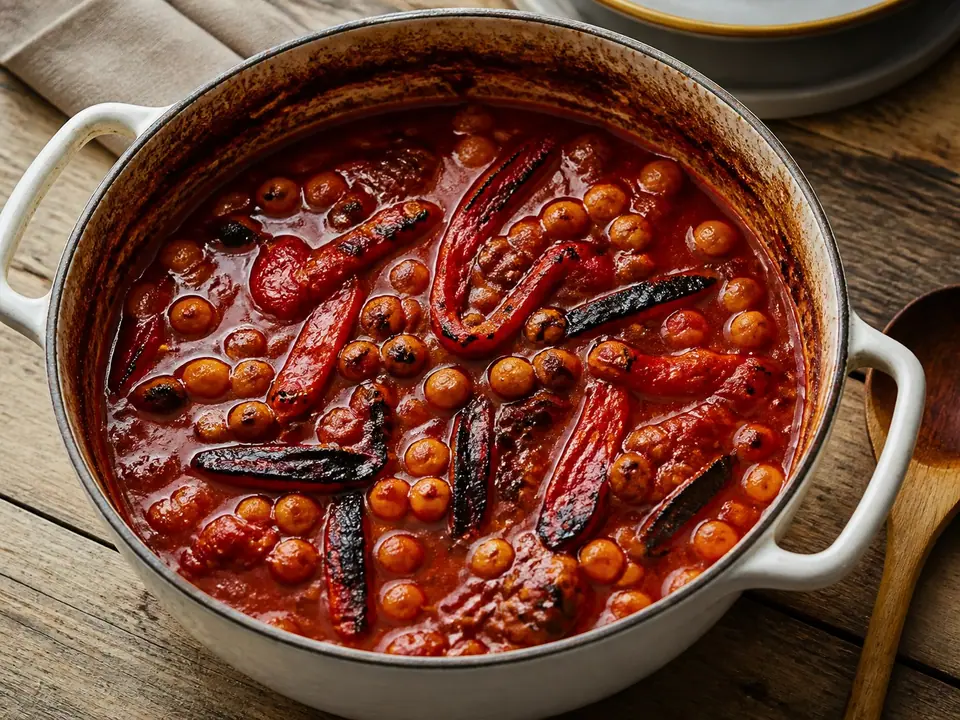
Charred red pepper and chickpea stew
The peppers go under the grill until they are properly black in patches. That ten minutes is the whole flavour of the dish.
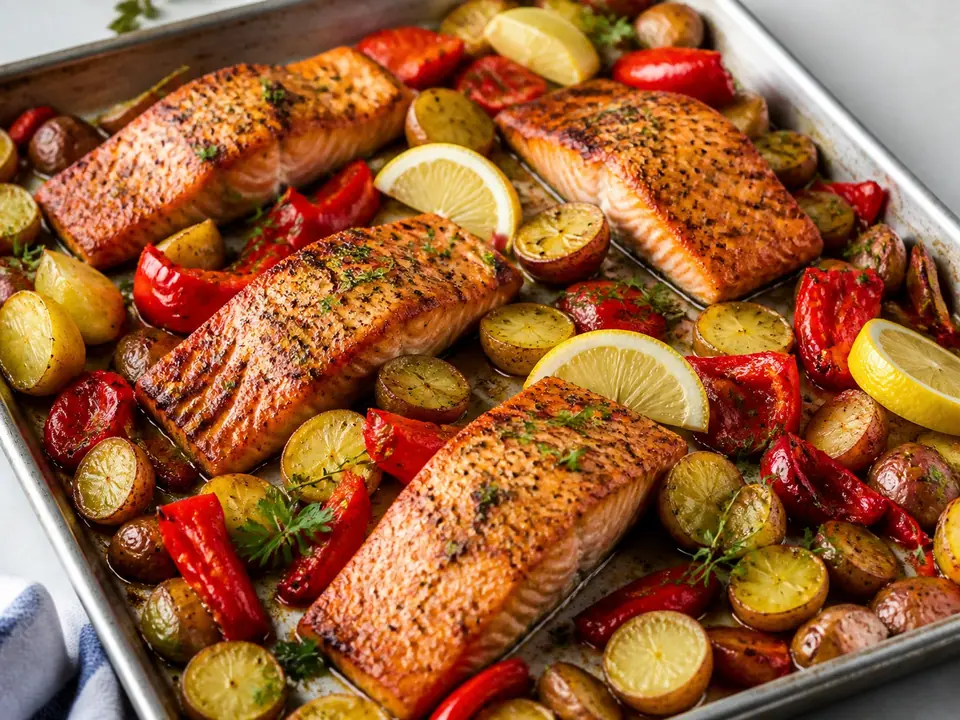
Sheet-pan salmon with peppers and capers
The peppers get a fifteen-minute head start. Put them in at the same time as the fish and one of them will be wrong.