Fennel bulbs bring crunch first, then a soft anise sweetness
Also called Florence fennel, finocchio
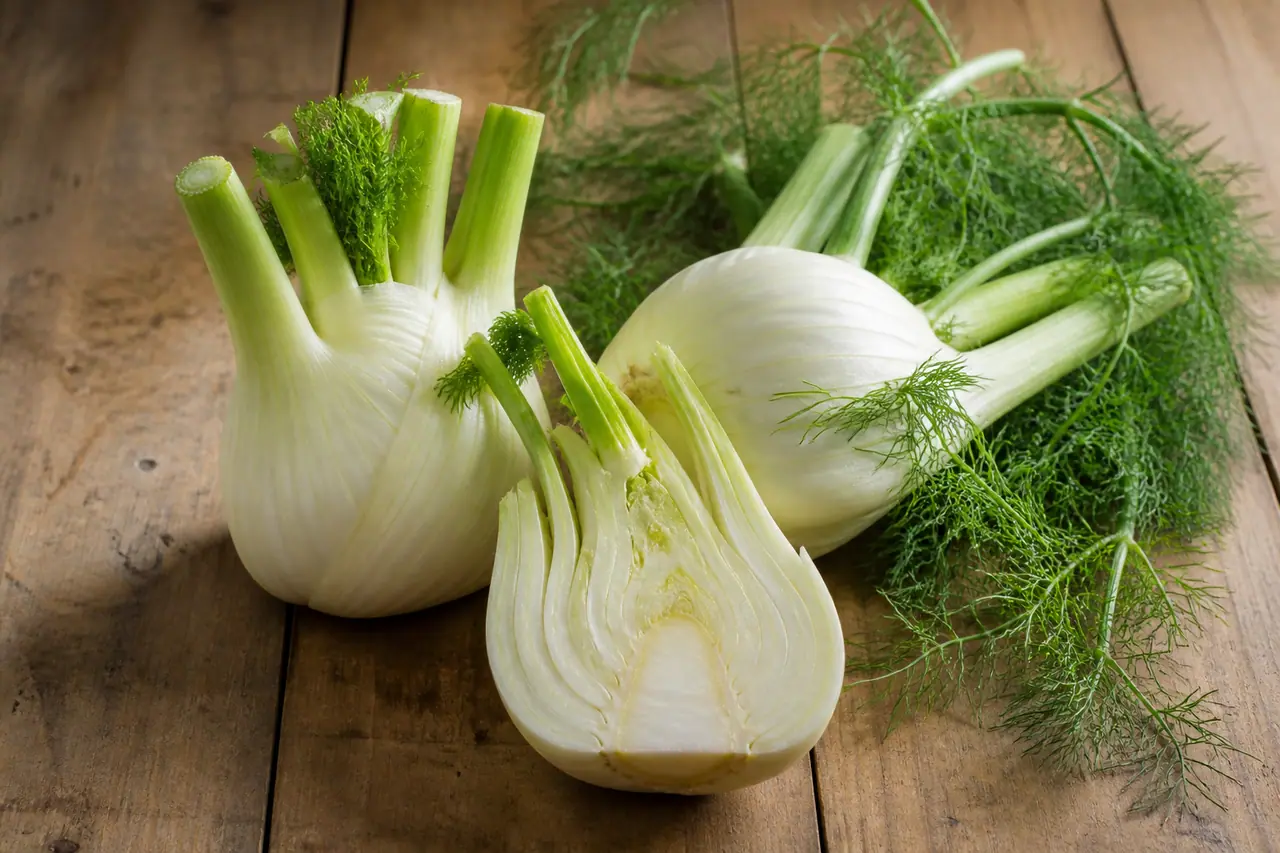
Fennel bulbs have crisp layers, feathery fronds and a gentle anise note that mellows with heat. Choose heavy, pale bulbs and use the fronds as a fresh finishing herb.
The numbers
| Nutrient | Amount | % RI |
|---|---|---|
| Calories | 31 kcal | — |
| Water | 90.2 g | — |
| Carbs | 7.3 g | — |
| Fibre | 3.1 g | 11% |
| Protein | 1.2 g | 2% |
| Vitamin C | 12 mg | 15% |
| Potassium | 414 mg | 21% |
Source: USDA FoodData Central, SR Legacy record for fennel bulb, raw · % RI against EU adult reference intakes.
Buying and keeping
What to look for at the shop, and how to make it last once it is home.
How to pick
- Choose bulbs that feel heavy for their size, with pale firm layers and fresh green fronds.
- Small to medium bulbs are often tender. Very large bulbs may have a tougher outer layer.
- The stalks should be crisp and the base should not be brown, split or slimy.
- Avoid bulbs with dry hollow patches, bruising or a strong stale smell.
- A little green frond wilt is easy to trim, but a soft bulb will not recover in the pan.
How to store
- Refrigerate fennel bulbs in a loose bag. Keep the fronds separate if you want them to stay perky.
- Use the bulb within a week for the best crunch and the fronds within a few days.
- Wrap cut fennel tightly or keep it in a covered container so it does not dry out.
- Trimmed stalks and fronds can be frozen for stock, though they will not stay crisp.
- A cut surface may brown slightly. Rub it with lemon if appearance matters in a raw dish.
Best months
If you have none
Swaps that hold up, with what changes when you use them.
Three parts, three uses
Fennel bulbs are built for contrast. The layers are crisp and juicy raw, the inner core helps hold slices together, and the fronds taste like a softer version of the bulb. The thick stalks are fibrous but useful in stock or under a roast. I separate the parts rather than treating the whole plant as waste.
The anise note is gentler in young bulbs and more obvious raw. Heat rounds it out, especially with olive oil, tomato, citrus or white wine. If someone at the table dislikes liquorice flavours, slice the fennel thinly and cook it until tender instead of serving large raw wedges.
Slice for texture
Cut away the stalks and fronds, keeping them for another use. Remove only the toughest outer layer, then halve the bulb through the root. For salad, make thin slices across the layers and keep the root attached until the last cut. For roasting, cut through the root into thick wedges so the fennel holds together.
Rinse between the layers if soil is present, then dry the slices. A mandoline makes a very thin salad slice, but a sharp knife gives you more control and less waste. The core is edible. I leave it in wedges and remove it only when it feels woody or is getting in the way of neat slices.
Raw crunch or slow sweetness
Raw fennel likes acid. Toss thin slices with lemon, orange, vinegar or a sharp dressing and let them sit for a few minutes. Add the fronds just before serving so they stay green. Fennel works with beans, fish, apples, citrus, olives and creamy dressings because its fresh aroma can cut through rich ingredients.
For roasting, coat thick wedges with oil and salt and leave space between them. Turn once when the underside is golden. In a braise, let fennel soften slowly in stock or wine until the centre is tender. A final squeeze of lemon keeps the cooked bulb from tasting flat. If you want more colour, finish it under a hot grill after it is tender.
A good vegetable swap
Leeks are the closest soft cooked alternative, while celery keeps the crunch in a salad. Yellow onions offer deeper browning but change the flavour completely. Choose fennel when the dish benefits from a clean, slightly sweet aroma as well as a vegetable texture.