Leeks make a soft, sweet base when you wash between the layers
Also called garden leeks, poireaux
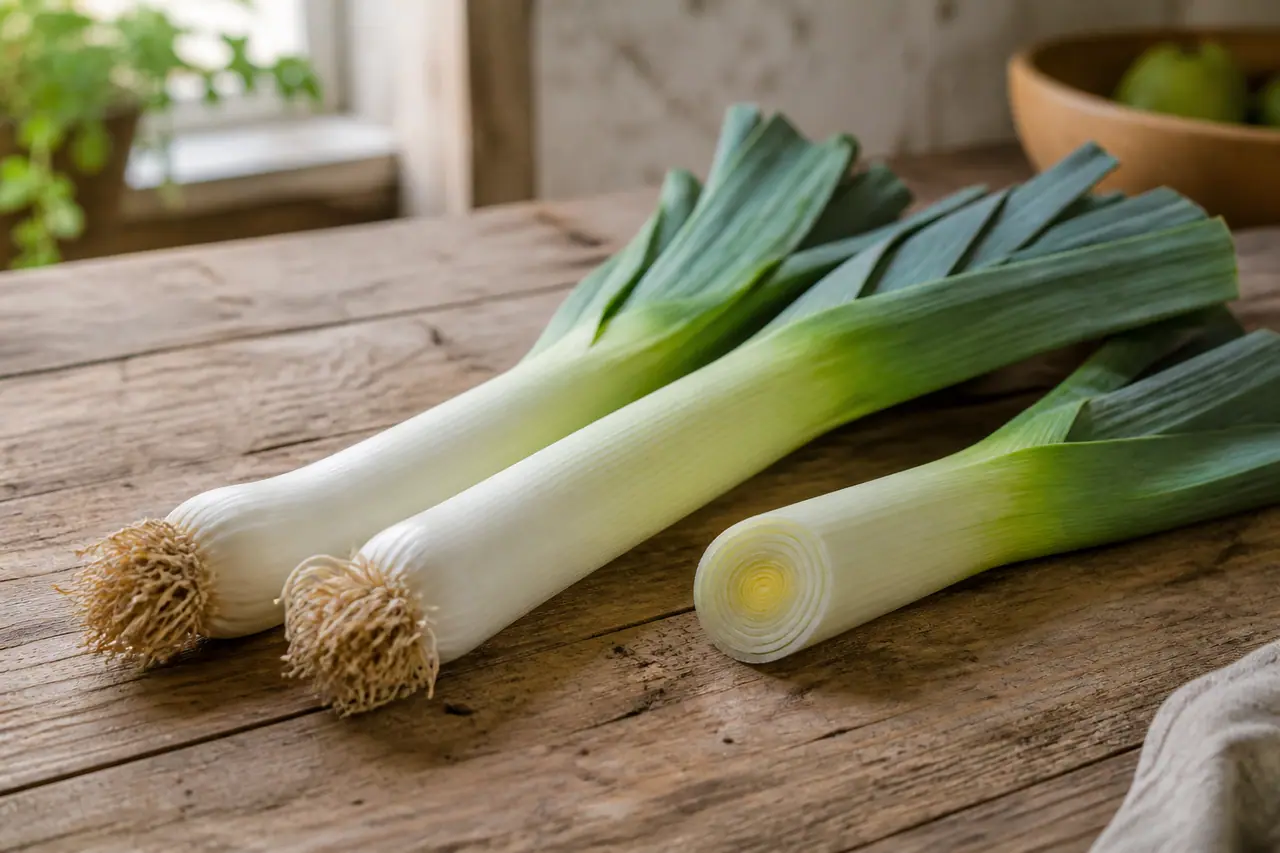
Leeks have a mild onion flavour and a tender texture after slow cooking. Choose firm white stems with fresh green leaves, then rinse every cut layer to remove field grit.
The numbers
| Nutrient | Amount | % RI |
|---|---|---|
| Calories | 61 kcal | — |
| Water | 83 g | — |
| Carbs | 14.2 g | — |
| Fibre | 1.8 g | 6% |
| Protein | 1.5 g | 3% |
| Vitamin C | 12 mg | 15% |
| Potassium | 180 mg | 9% |
Source: USDA FoodData Central, SR Legacy record for leeks, raw · % RI against EU adult reference intakes.
Buying and keeping
What to look for at the shop, and how to make it last once it is home.
How to pick
- Choose leeks with firm white and pale green stems, crisp leaves and no slimy folds.
- Medium leeks are often tender and sweet; very thick ones can have a tougher outer layer.
- The roots should be pale and damp, not dark, dry or soft.
- Avoid yellowing leaves, bruised stems and a strong sour smell.
- A longer white section means more tender usable stem, but green leaves still add flavour to stock.
How to store
- Keep whole leeks unwashed in the fridge, loosely wrapped so the leaves can breathe.
- Use the tender white and pale green sections within a week for the best sweetness.
- Save clean dark green leaves for stock, or freeze them in a labelled bag.
- Sliced leeks should be covered and refrigerated, then used within two to three days.
- Do not leave cut leeks uncovered because their onion smell spreads quickly through the fridge.
Best months
If you have none
Swaps that hold up, with what changes when you use them.
The washing is part of the recipe
Leeks grow with soil tucked between their layers, so cutting and rinsing them is not optional. Trim the roots and the dark green leaves, split the stem lengthwise, then fan the layers under cold running water. For rings, slice first and wash the pieces in a bowl, lifting them out of the water so the grit stays at the bottom. Dry them well before they meet the pan.
The white and pale green parts are tender enough for almost any dish. The dark leaves are firmer but full of flavour, and I keep them for stock with herb stems and vegetable trimmings. If a leek has a thick outer layer, remove it after washing rather than throwing away half the vegetable before you know what is usable.
Build sweetness slowly
Leeks reward gentle heat. Slice them into half moons, add them to oil or butter with salt and cook until they collapse. A covered pan speeds the softening, but uncover it near the end so excess water can leave. I stir often because the thin edges catch before the middle turns tender. A splash of water is useful if the pan looks dry, but it should not become a leek soup unless that is the plan.
Softened leeks are good in soups, gratins, savoury tarts, mashed potatoes and fillings. They can also be roasted in thick sections. Keep the pieces large enough to hold together, coat them with oil and turn them once. The outside colours while the centre becomes creamy. Finish with lemon or a sharp cheese to balance their natural sweetness.
How to avoid a watery dish
Leeks contain a lot of water, which is helpful for soup and less helpful in pastry or a crisp potato cake. Cook sliced leeks until the pan is nearly dry before adding them to a filling. Let them cool, then squeeze or drain if the mixture still looks wet. This small pause protects the pastry and keeps the flavour concentrated.
For a soup, use the green leaves to make stock and the pale stem for the finished bowl. For a braise, let the leeks sit in a single layer with enough liquid to come halfway up their sides. They should be tender without floating. I add delicate herbs near the end so the leek stays the centre of the dish.
Choosing between alliums
The leeks vs onions guide is useful when a recipe gives you a choice. Use yellow onions for stronger browning and a firmer base, or spring onions when freshness matters more than long cooking. Leeks are the better pick when you want the allium to become soft, sweet and almost creamy.
Questions
How do I wash leeks properly?
Can I eat the dark green part of a leek?
Why are my leeks gritty?
Do leeks need to be refrigerated?
Can I substitute onion for leek?
Recipes using leeks
10 on the site so far.
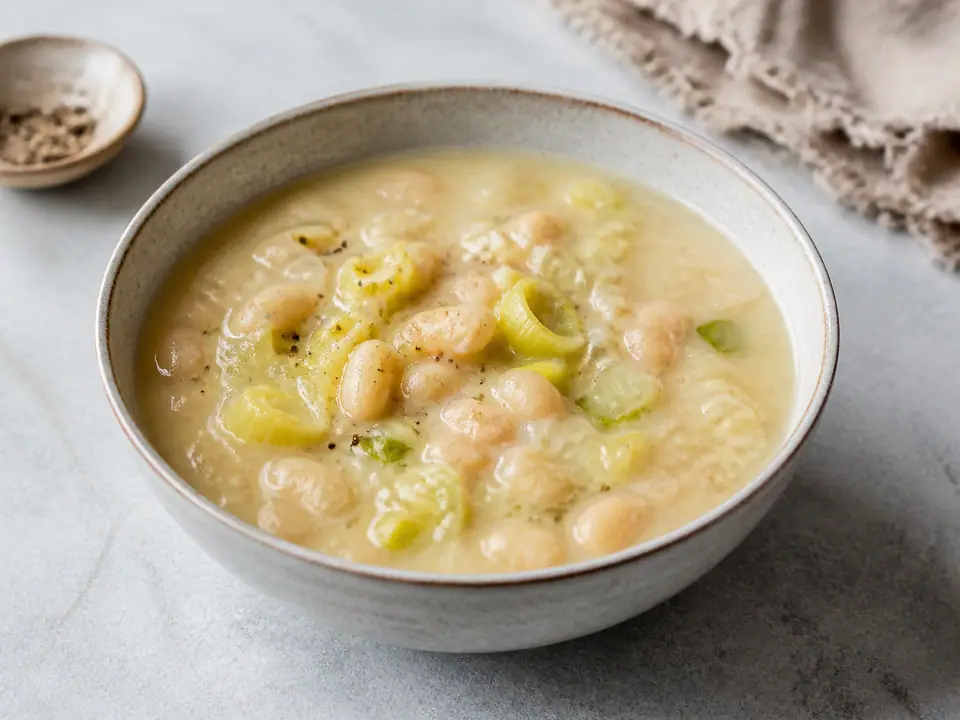
White bean and leek soup for a one-pot dinner
Kale and white beans give leek soup enough substance for dinner, with toast to catch the thick broth.

White bean and leek soup for the freezer
This white bean and leek soup freezes well when the fresh lemon and herbs are saved for the reheated bowl.
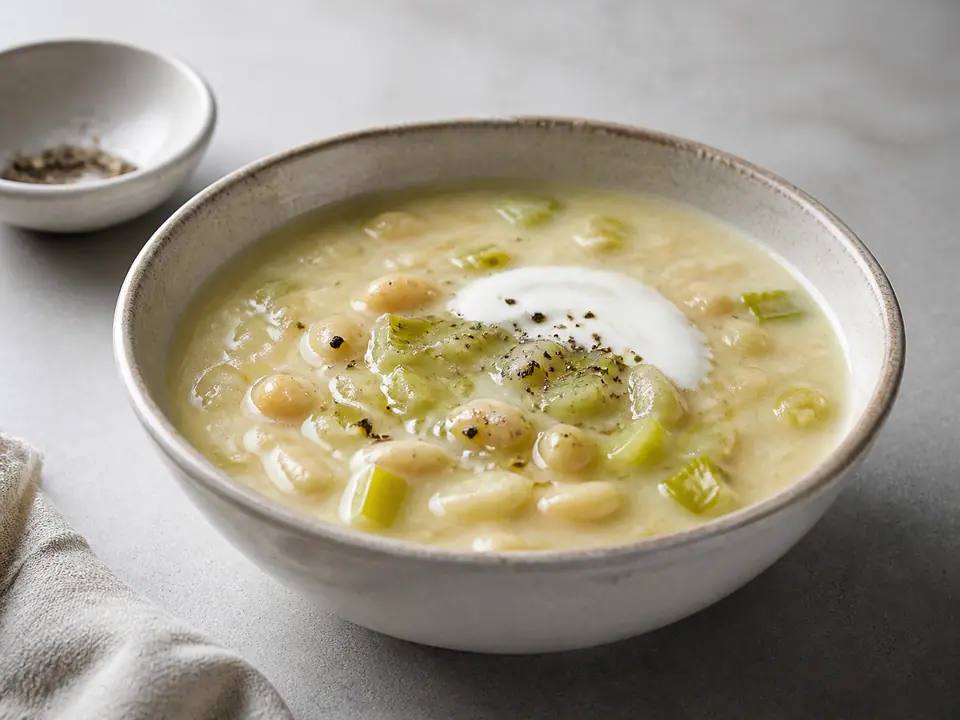
White bean and leek soup with yogurt
Cool lemon yogurt gives the creamy bean soup a fresh contrast and makes the leeks taste sweeter.

White bean and leek soup with chilli oil
A mellow leek and bean soup gives smoky chilli oil room to smell fragrant rather than simply hot.
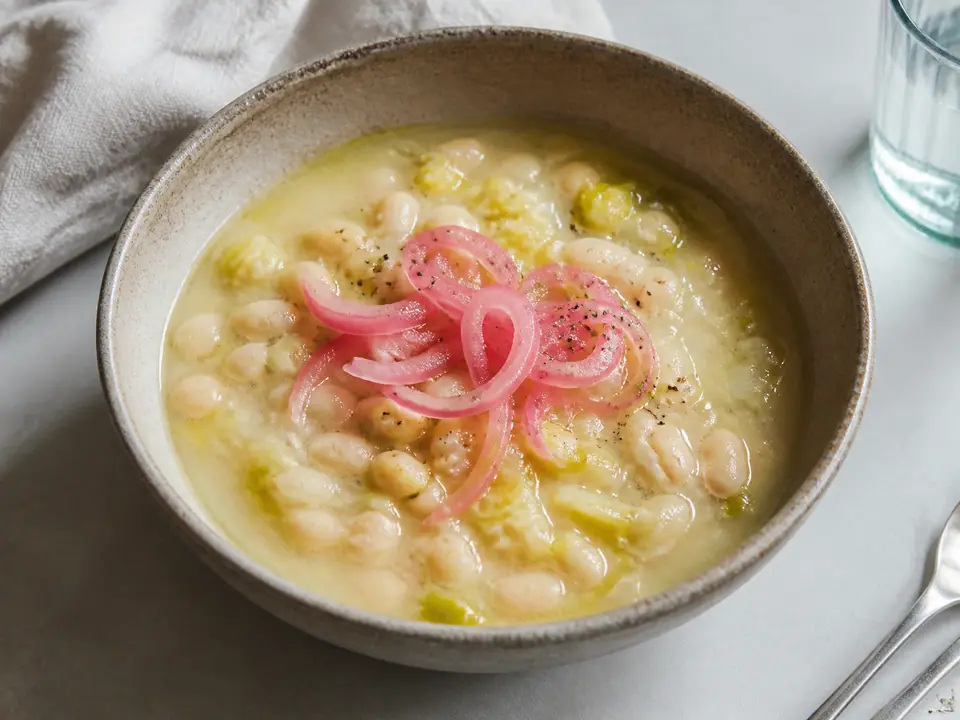
White bean and leek soup with pickled onions
Quick pickled onions cut through the creamy beans and make the quiet leek flavour feel more vivid.

White bean and leek soup with crispy chickpeas
Crispy chickpeas bring the crunch that a smooth white bean and leek soup needs.
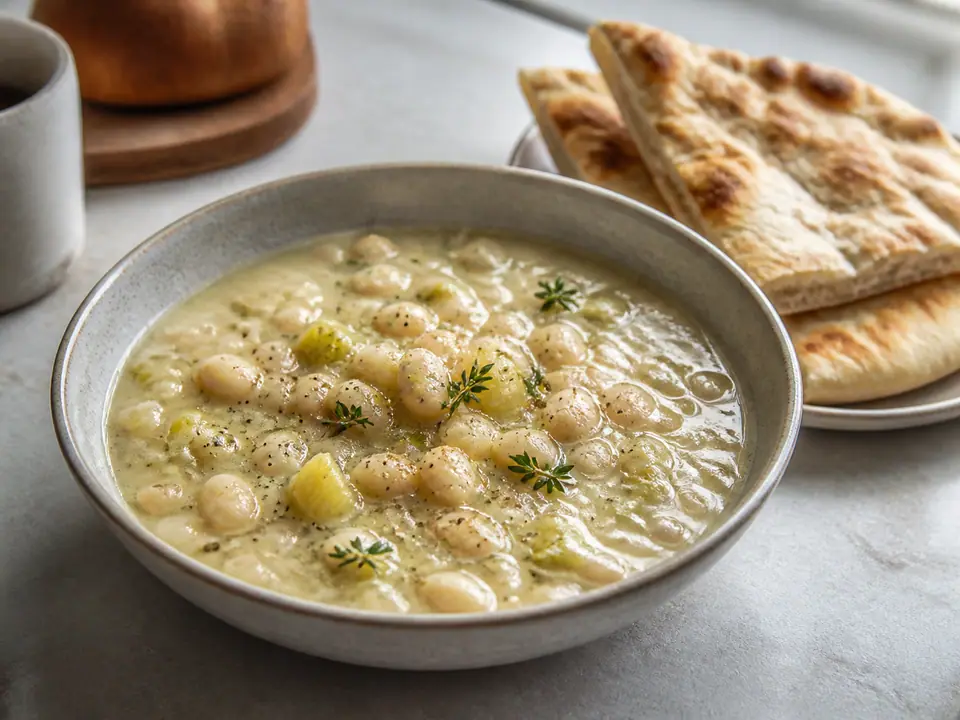
White bean and leek soup with warm flatbread
Blend some of the beans into the stock so the soup is thick enough for warm flatbread to dip without collapsing.
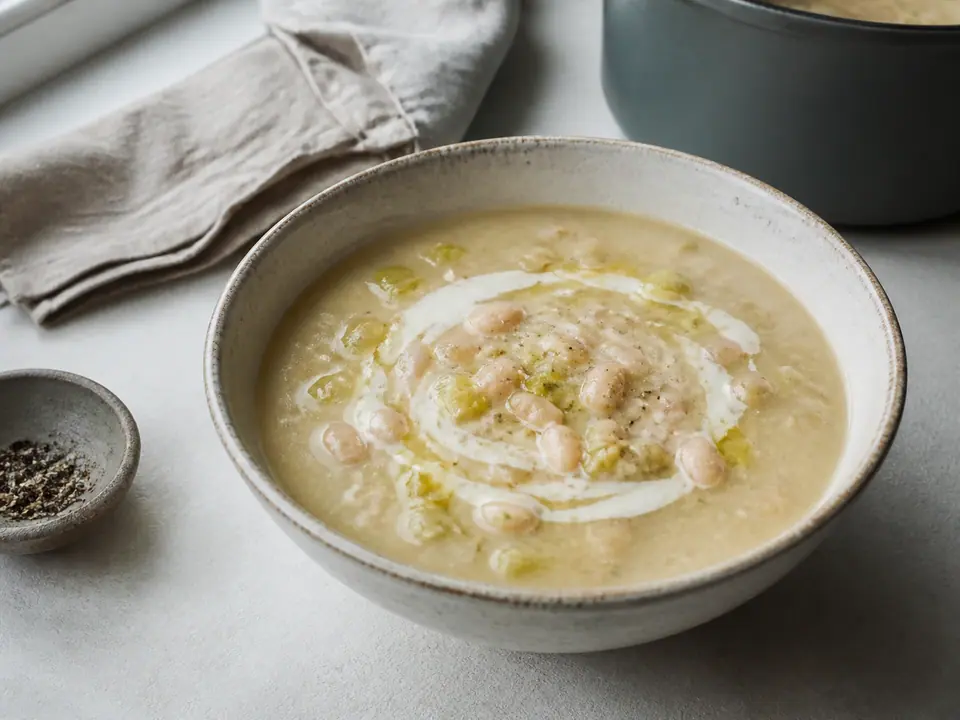
White bean and leek soup with tahini swirl
A loose lemon tahini swirl adds richness to this gentle bean soup without needing cream.
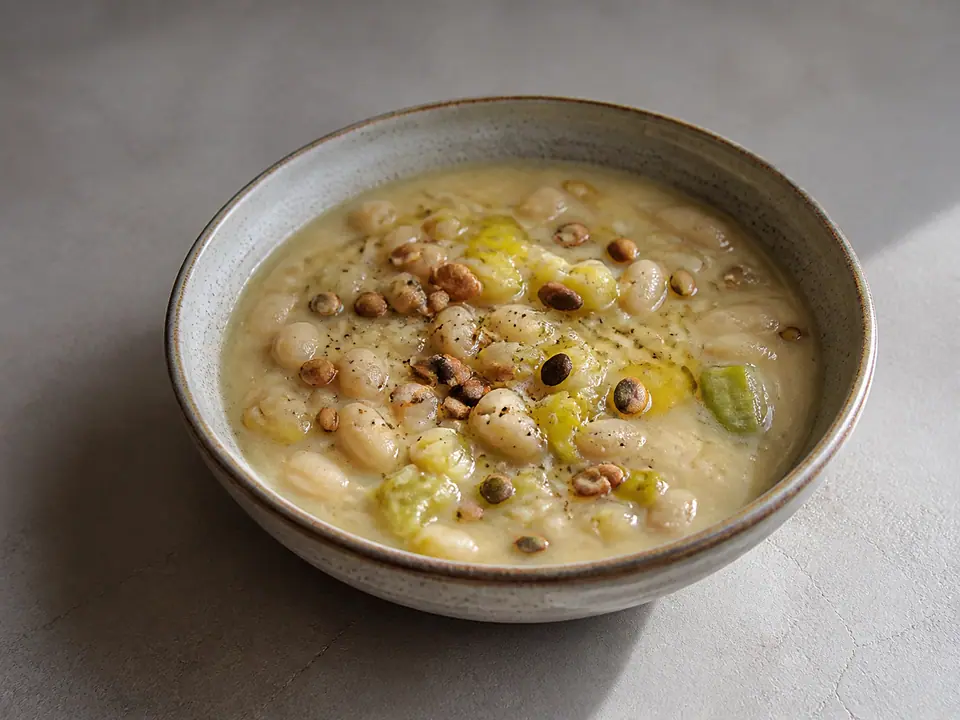
White bean and leek soup with toasted seeds
Toasted seeds give creamy leek soup a dry, nutty edge and make each spoonful more interesting.
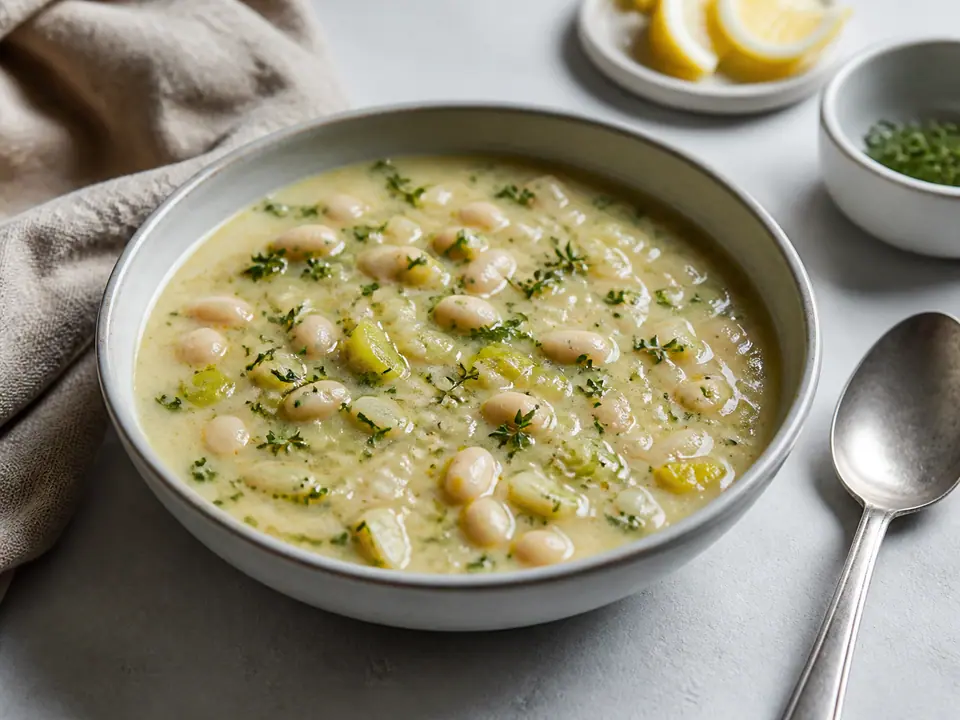
White bean and leek soup with lemon and herbs
Soft leeks and creamy white beans make a gentle soup that wakes up with lemon, parsley and dill.
Guides about leeks
All guides →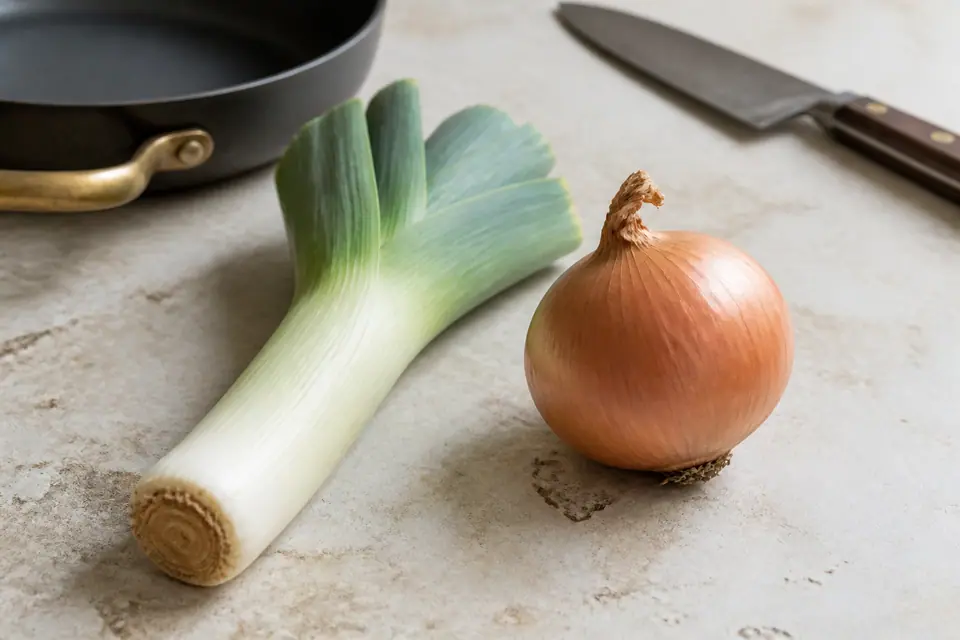
Leeks vs onions: when does the softer flavour matter?
Use onions when you want a strong savoury base; use leeks when you want a tender, sweet allium that can remain visible in the finished dish.