Choose leeks when the allium should stay gentle
Use onions when you want a strong savoury base; use leeks when you want a tender, sweet allium that can remain visible in the finished dish.

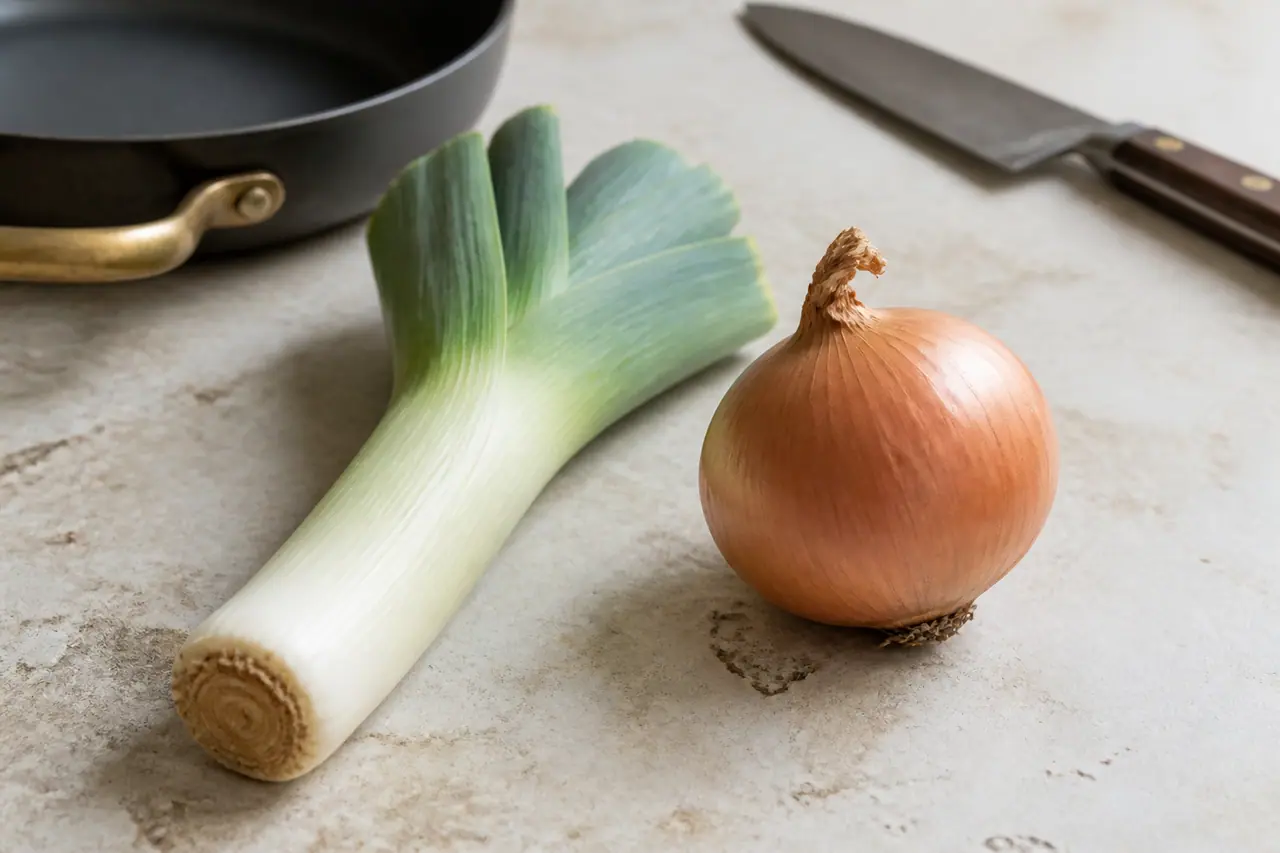
If I want a sauce to taste unmistakably savoury, I reach for an onion. If I want the allium to melt into a soup, a gratin or a bowl of beans without taking over, I reach for a leek. That is the useful answer: leeks are not mild onions, and onions are not a cheaper substitute in every dish.
On a weeknight, I choose the leek when its softness is part of the dish.
The softer flavour matters when the vegetable itself stays on the plate. Leeks bring sweetness, a faint grassy note and a tender texture after slow cooking. Onions bring more sharpness and a stronger browned edge. I cooked both in the same pan, with the same oil and salt, and the difference was clearest after ten minutes: the onion had become the base; the leek still tasted like a vegetable worth eating.
Which allium should lead the dish?
A practical flavour comparison after slow cooking in the same pan.
Leeks
Soft, sweet and vegetal
✓ Best for the main flavour
Onions
Sharper, deeper and more savoury
Leeks win when the allium should be visible and gentle. Onions win when you are building a base under tomatoes, beans, meat or stock.
Source: Maren Ashby's kitchen test, 2026-08-24
The difference starts with the way they cook
A chopped onion has layers that separate quickly and edges that brown readily once its water cooks off. A leek has a long stack of tightly nested leaves. The white and pale green parts soften into a silky mass, while the darker green tops remain more fibrous and are better for stock unless sliced very thinly. The result is less about raw heat and more about patient collapse.
In the pan, the leek asks for patience before it offers sweetness.
That is why I do not swap an equal handful of onion into a leek tart and expect the same thing. The onion will push the filling towards sweetness and roastiness. The leek will make it feel creamy even when there is no cream. In a simple pan of beans, that distinction is the whole point.
When onions are the better buy
- Long-simmered tomato sauces: onions give the sauce a recognisable savoury start and stand up to garlic, chilli and herbs.
- Caramelised onions: the structure and stronger sugars are what you want when the vegetable is cooked down for a long time.
- Recipes that start with a large chopped base: onions are usually cheaper, last longer in the cupboard and do not bring the washing step leeks require.
When leeks earn their place
Leeks are worth buying for potato soup, creamy gratins, braised vegetables, omelettes and white-bean dishes where a harsh allium would make the rest taste thin. They are also excellent with fish because their sweetness supports the delicate flavour instead of competing with it. I like them with lemon and black pepper, not because they need disguising, but because the acidity makes their sweetness easier to notice.
The biggest mistake is cooking them like a quick onion. Give sliced leeks a medium-low pan, a pinch of salt and enough time to soften. If they catch before they collapse, add a spoonful of water. The water should help them steam briefly, then evaporate; the finished pan should not be watery.
Do not throw away the green tops too quickly
The dark green leaves are tougher, but they are not rubbish. Tie them with parsley stems for stock, slice them into a long-simmered soup, or chop them very finely for a braise. I keep the firm outer leaves in a freezer bag and add them to the next stock pot. The white part is the tender star; the green part is useful background flavour.
Leeks are members of the same allium family as onions, but their flavour and structure are different enough to make the shopping decision worthwhile. The Utah State University leek guide describes the edible sheath and the cool, humid conditions that help it hold quality, which matches what I see in the kitchen: the thick white shaft is the part that gives the best texture.
The verdict
Choose an onion when you need a foundation. Choose a leek when you want a soft, sweet allium to remain part of dinner. Wash leeks carefully, slice them across the layers and cook them until they give up their firmness. Once you stop treating them as pale onions, the price and the extra preparation make sense.
Questions
Can I substitute onion for leek?
Can I eat the green part of a leek?
Do leeks taste like onions?
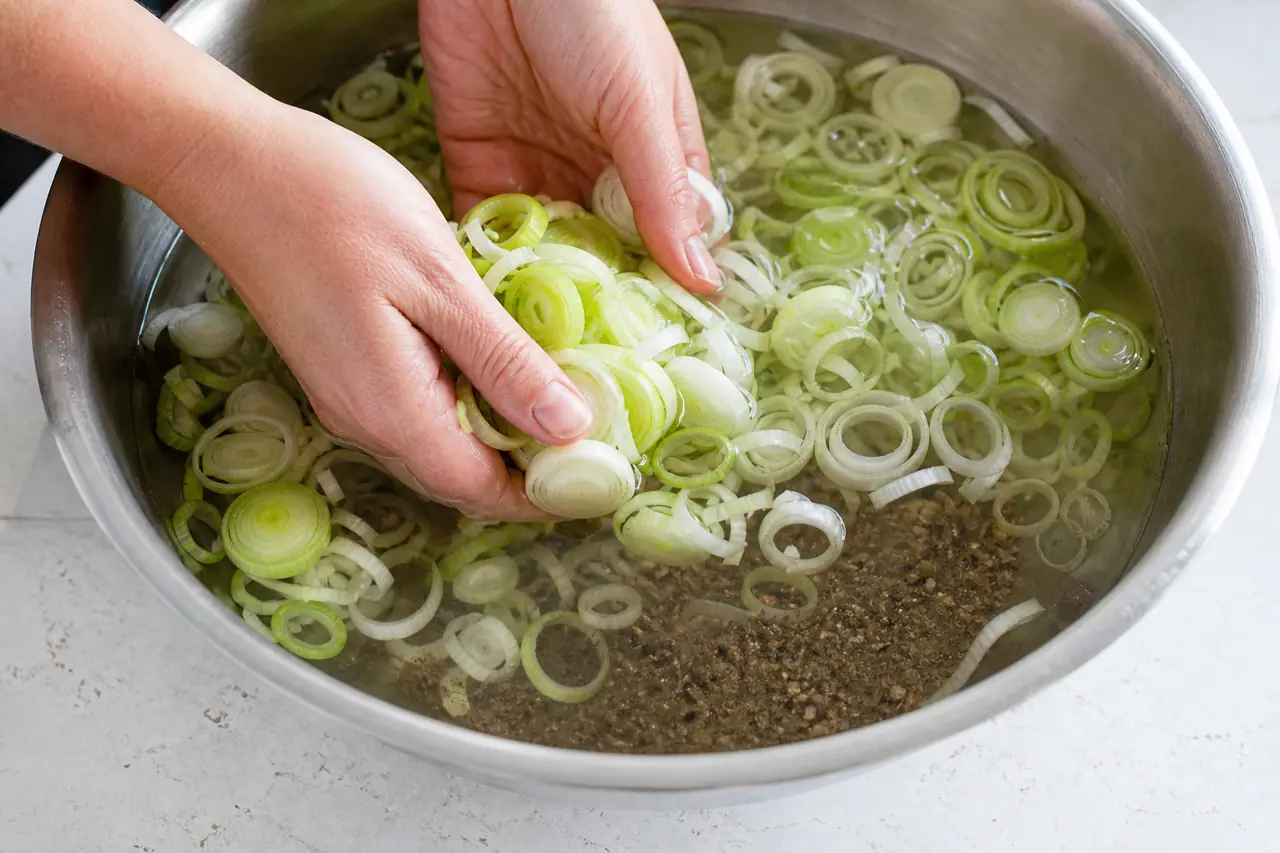
Why do leeks need to be washed so carefully?
Ingredients in this guide
Recipes for this guide
All recipes →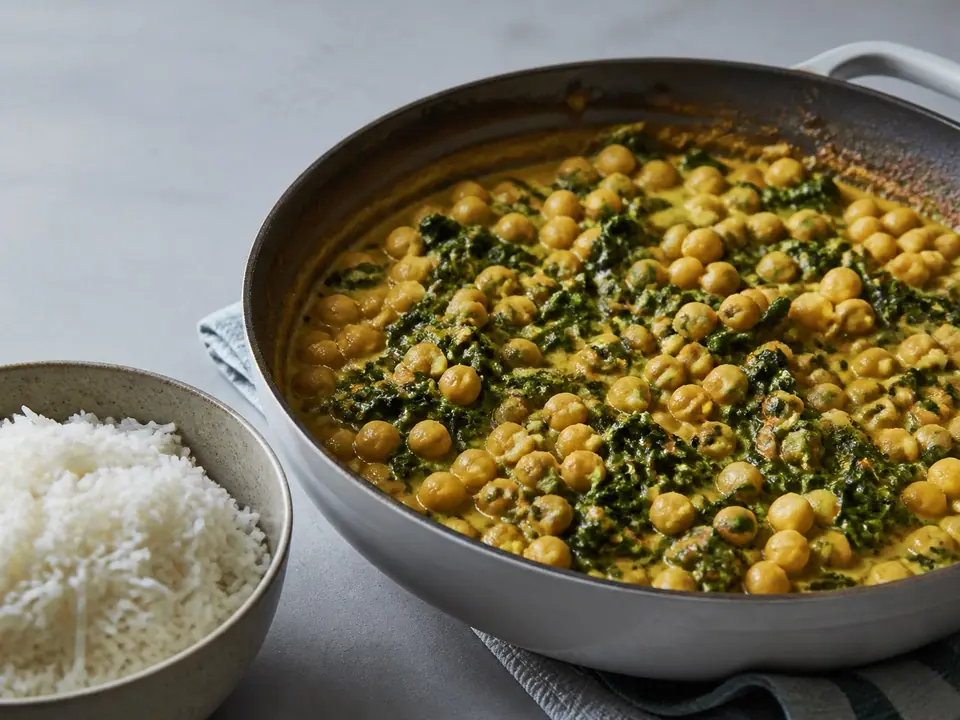
Coconut chickpea curry with greens for a one-pan dinner
Everything for this coconut chickpea curry goes into one wide pan, including the greens, so dinner is on the table with very little washing up.
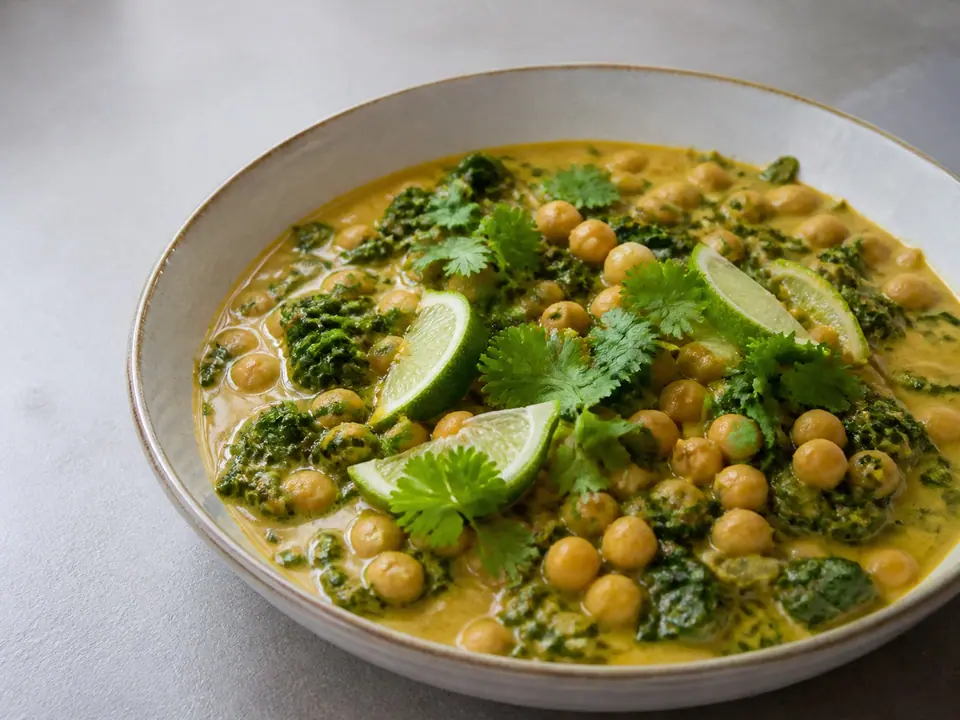
Coconut chickpea curry with greens for the freezer
Cook the coconut chickpea base now, freeze it in portions, and add fresh greens and lime after reheating so the curry still tastes alive.
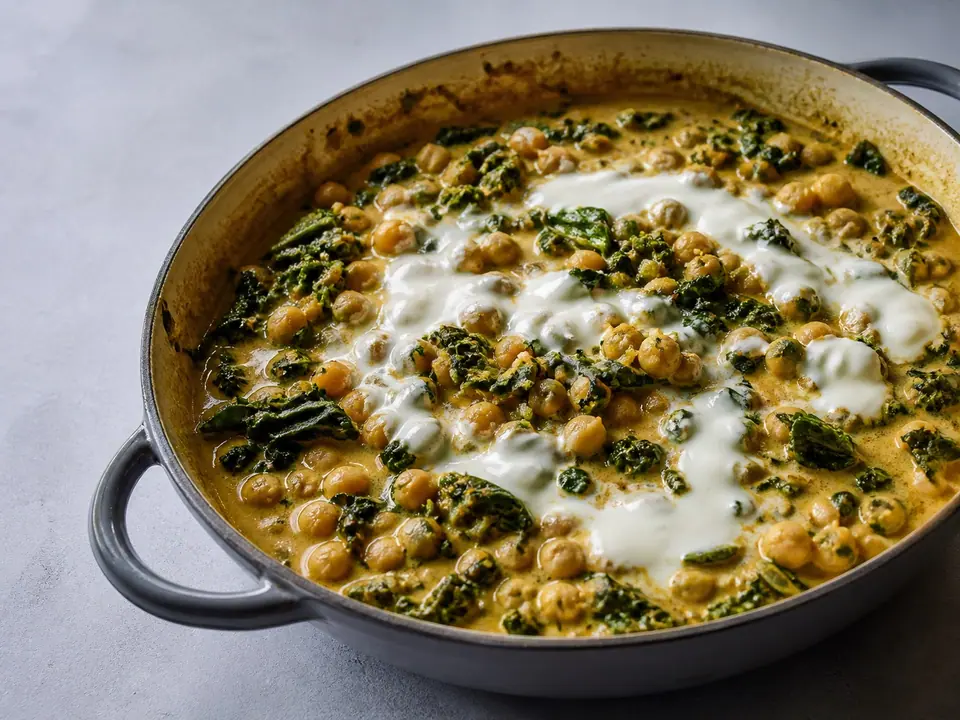
Coconut chickpea curry with greens with yogurt
A creamy chickpea curry is finished with cool lemon yogurt, which gives the coconut sauce contrast without taking over the bowl.
More guides
All guides →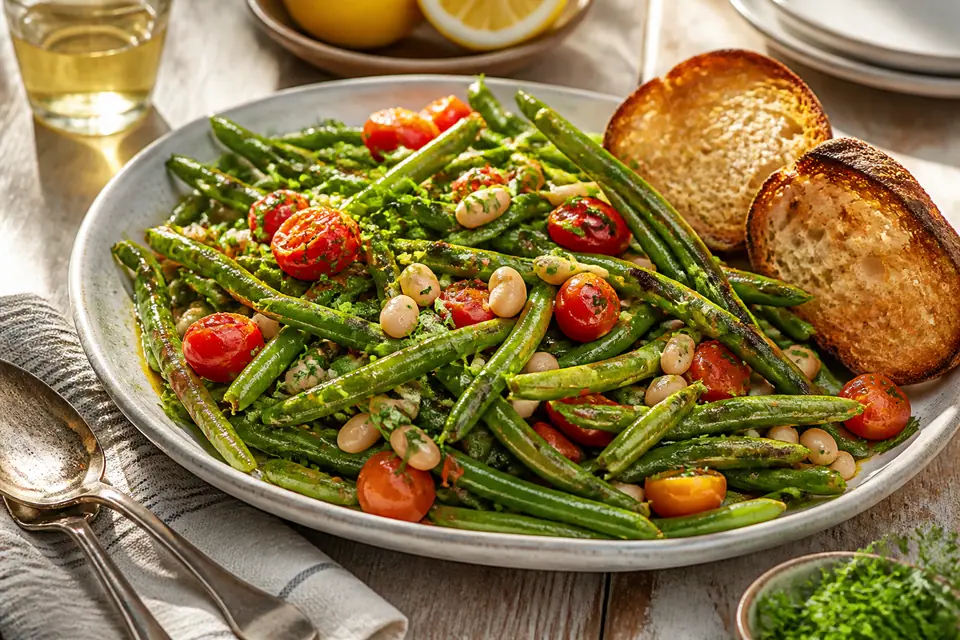
5 summer dinners for green beans
Use green beans as the vegetable that carries dinner: blister them with tomatoes, fold them through noodles, pair them with eggs or build a warm white-bean skillet.
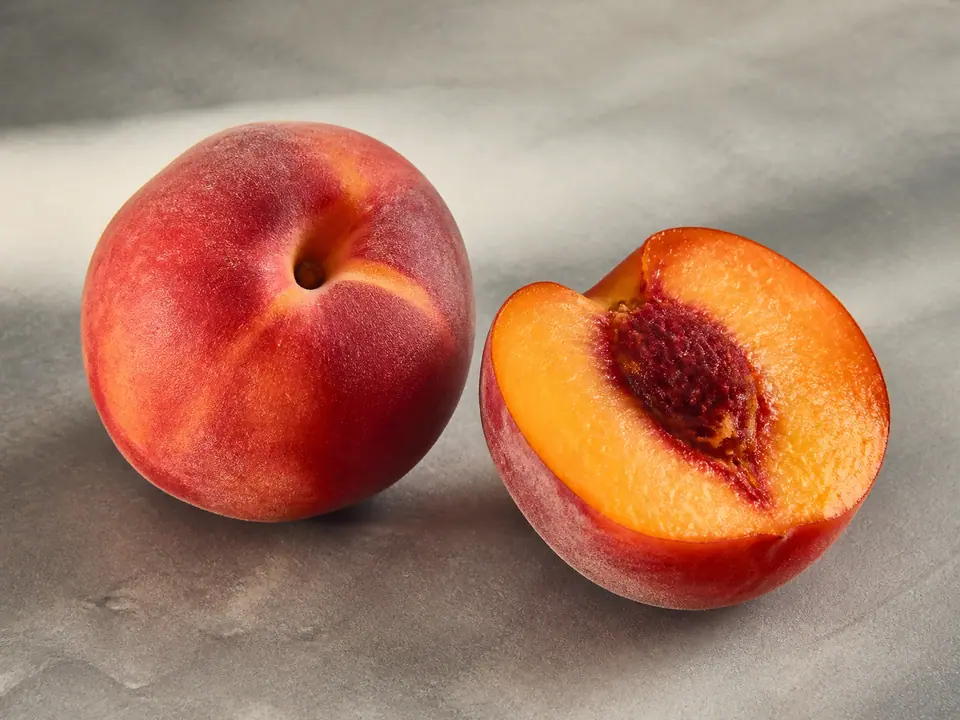
Why peaches can smell ripe and still taste hard
Peach aroma can build before the flesh becomes soft and juicy. Let firm fruit ripen at room temperature, then chill it only after the texture is ready.

How to choose carrots that are crisp, not rubbery
Firm carrots with a fresh stem end and smooth, unbroken skin are more likely to stay crisp. Rubberiness means water has already left the root.