Yellow onions are the dependable base behind a good pan
Also called brown onions, cooking onions
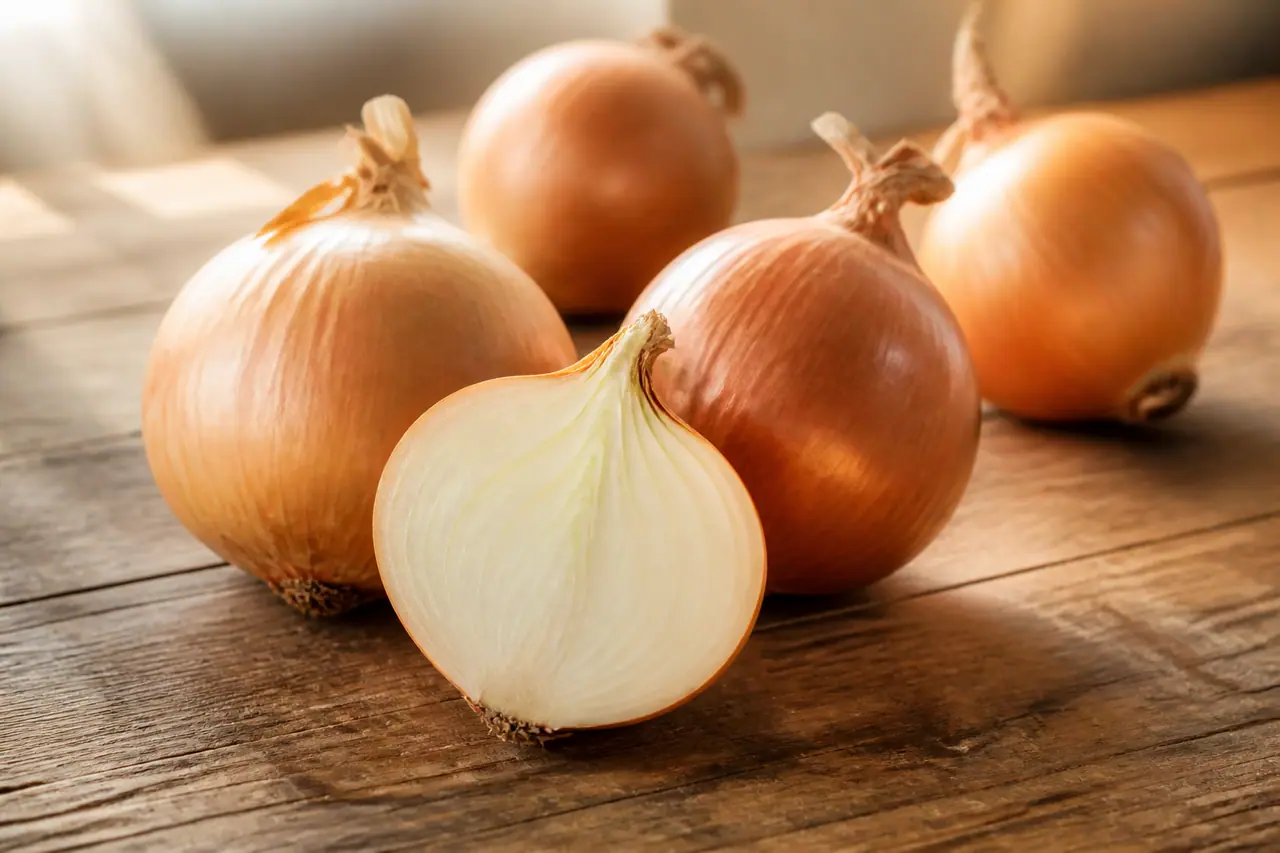
Yellow onions bring savoury depth, sweetness after slow cooking and enough firmness for roasting. Choose heavy, dry bulbs with papery skins and keep them cool, dark and well ventilated.
The numbers
| Nutrient | Amount | % RI |
|---|---|---|
| Calories | 40 kcal | — |
| Water | 89.1 g | — |
| Carbs | 9.3 g | — |
| Fibre | 1.7 g | 7% |
| Protein | 1.1 g | 2% |
| Vitamin C | 7.4 mg | 9% |
| Potassium | 146 mg | 7% |
Source: USDA FoodData Central, SR Legacy record for onions, raw; bulb varieties vary · % RI against EU adult reference intakes.
Buying and keeping
What to look for at the shop, and how to make it last once it is home.
How to pick
- Choose bulbs that feel heavy and hard, with dry papery skin and no soft shoulder.
- The neck should be tight and dry. A wet or open neck is where rot starts.
- Pick a bulb with a solid root end and no green shoots if you want it to keep for weeks.
- Size is about yield, not quality. Small onions can taste strong; large ones are easier to dice evenly.
- Avoid onions with a sweet fermented smell, wet skin or powdery mould between the layers.
How to store
- Keep whole onions in a cool, dark, dry place with air moving around them, not in a sealed cupboard box.
- Do not store whole onions beside potatoes. Moisture and gases shorten the life of both.
- Keep a cut onion covered in the fridge and use within three to four days.
- Sliced onions freeze well for soups, braises and sauces, though they lose their raw crunch.
- Use sprouting onions quickly after removing the green shoot if the bulb is still firm.
Best months
If you have none
Swaps that hold up, with what changes when you use them.
Why yellow onions do so much work
Yellow onions have enough sharpness to wake up a stew and enough sugar to become sweet when given time. They are the onion I reach for when the recipe does not specify a variety, because their flavour can move in several directions. Raw, they are crunchy and hot. Fried slowly, they become soft and savoury. Roasted in wedges, they hold their shape at the edges while the middle turns tender.
The skin is not wasted, either. Dry yellow skins can colour a stock, though I use them only when they are clean and free from mould. The edible layers should be firm and white or pale gold inside. A translucent wet layer is a warning to cut farther in and check the rest rather than assuming the whole bulb is fine.
Cutting without tears
Chill the onion for ten minutes if your eyes are sensitive, then leave the root end attached while you halve and peel it. Slice from the stem towards the root, make a few horizontal cuts if you need dice, then cut across. A sharp knife matters more than speed. A blunt knife crushes cells and sends more onion vapour into the air.
For wedges, cut through the root so the layers stay together. For a sauce, a fine dice melts sooner. For a tray, thick wedges are better because thin pieces burn while the rest of the vegetables are still firm. I remove the root at the end, not the beginning; it gives the onion something stable to hold while I cut.
Raw, softened or deeply browned
Onions need room in the pan. If you pile them into a small saucepan, they release water and turn pale before they can colour. Use a wide pan and medium heat for a soft golden base. Add salt early when you want the onion to collapse, or later when you want the edges to stay distinct. A splash of water can loosen browned bits, but it cannot replace the flavour of time.
Caramelised onions are not a twenty-minute job if you want proper depth. Keep the heat moderate, stir when the bottom colours and add a spoon of water if the sugars catch. Stop when the onion tastes sweet and savoury, not when it is merely brown. For everyday cooking, ten minutes of softening is usually enough. It gives the base shape without turning dinner into a project.
Where the comparison helps
Use red bell pepper when the base needs sweetness and colour beside the onion. For a softer allium, compare poblano peppers only as a flavour partner, not a direct replacement. The closest dedicated guide is leeks vs onions, which explains when a milder allium earns its space.
Questions
Are yellow onions the same as brown onions?
How long do yellow onions last?
Why did my onion sprout?
Can I freeze yellow onions?
How do I make onions sweet?
Recipes using yellow onions
11 on the site so far.
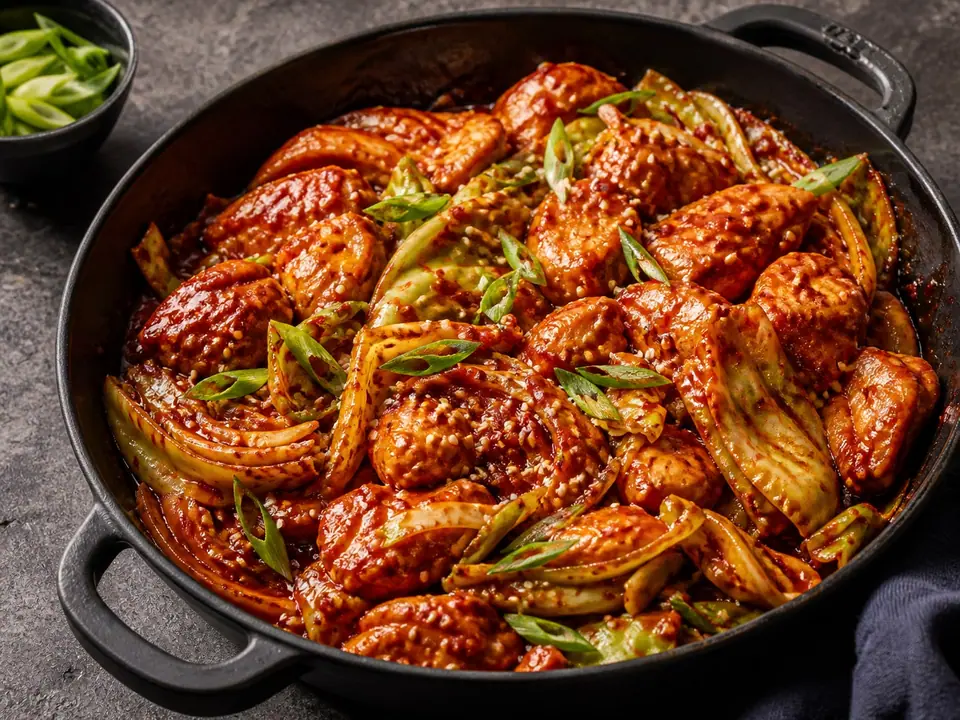
Gochujang chicken with cabbage for the freezer
Cook the cabbage until silky and the sauce until thick, then add fresh toppings after reheating for a freezer meal with balance.
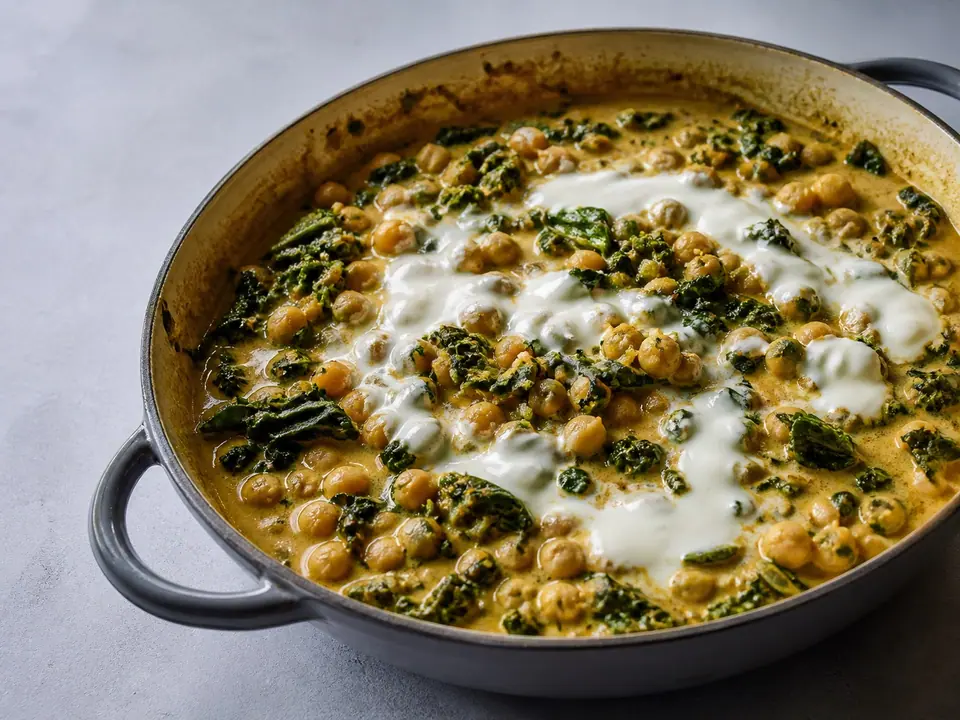
Coconut chickpea curry with greens with yogurt
A creamy chickpea curry is finished with cool lemon yogurt, which gives the coconut sauce contrast without taking over the bowl.
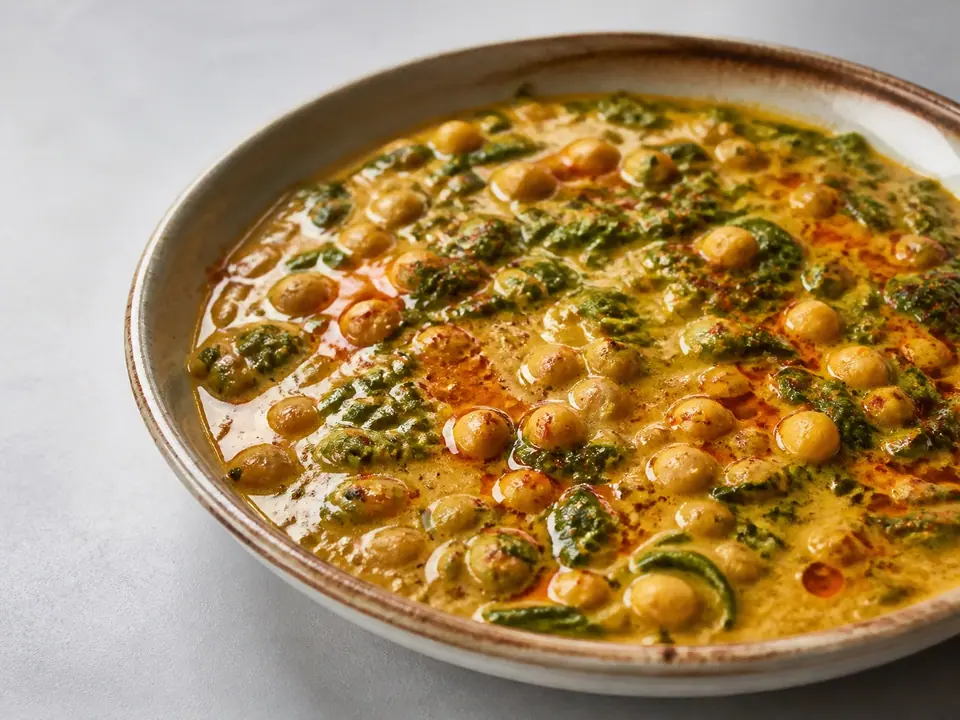
Coconut chickpea curry with greens with chilli oil
The curry is gently spiced and creamy; a cumin chilli oil made in the same pan adds heat without making every mouthful fiery.
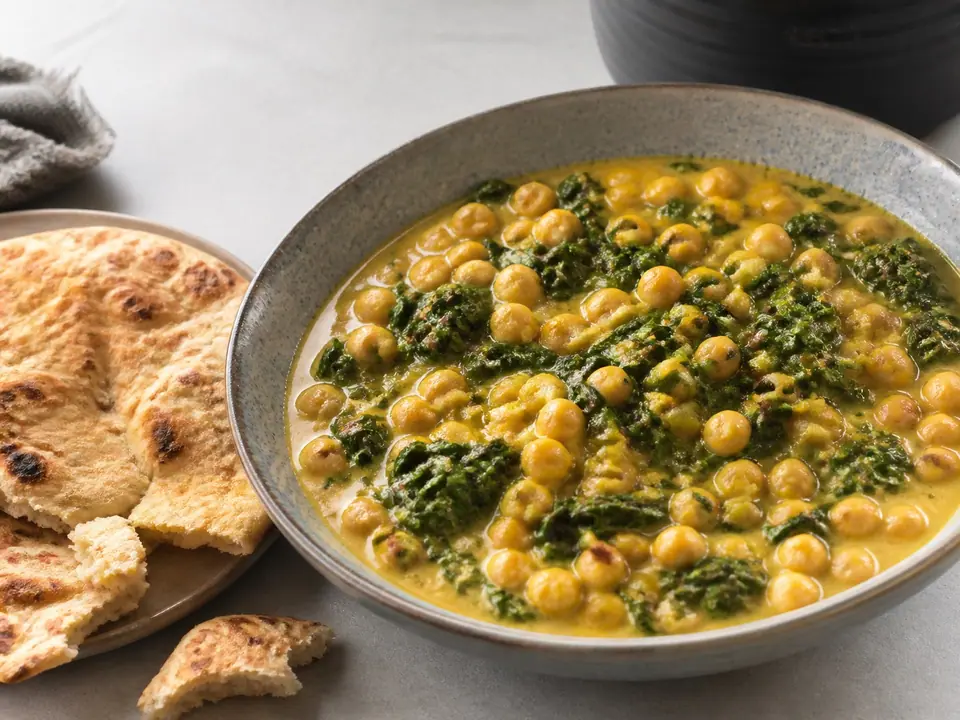
Coconut chickpea curry with greens with warm flatbread
Keep this coconut chickpea curry thick enough for flatbread to scoop, with greens folded through just before the pan leaves the heat.
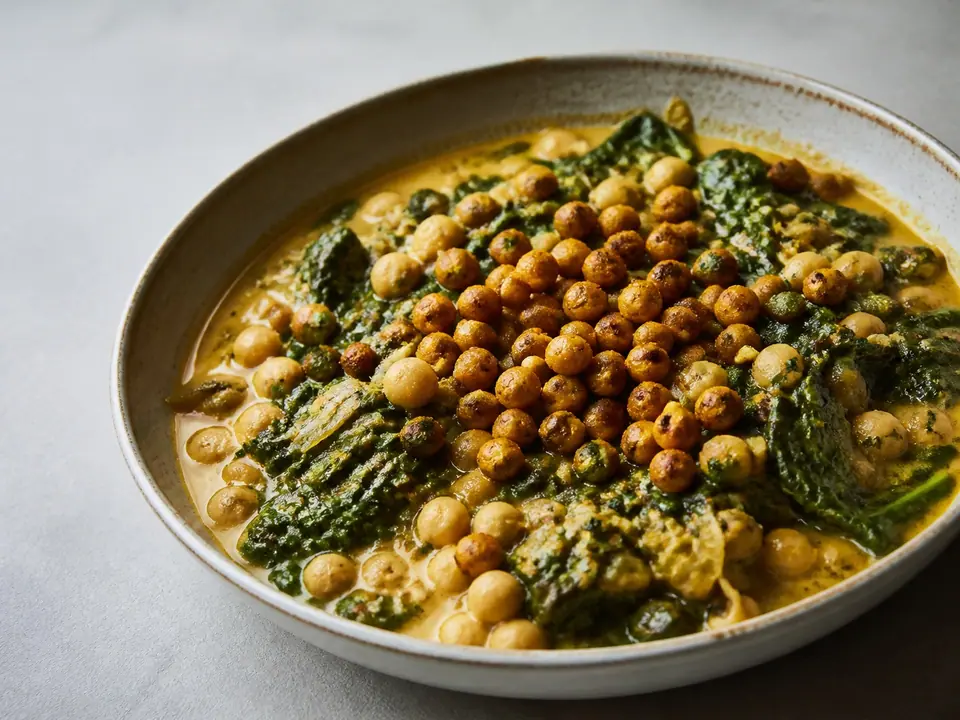
Coconut chickpea curry with greens with crispy beans
The curry stays creamy and the chickpeas on top roast until dry and crisp, giving a one-pot dinner the crunch it usually misses.
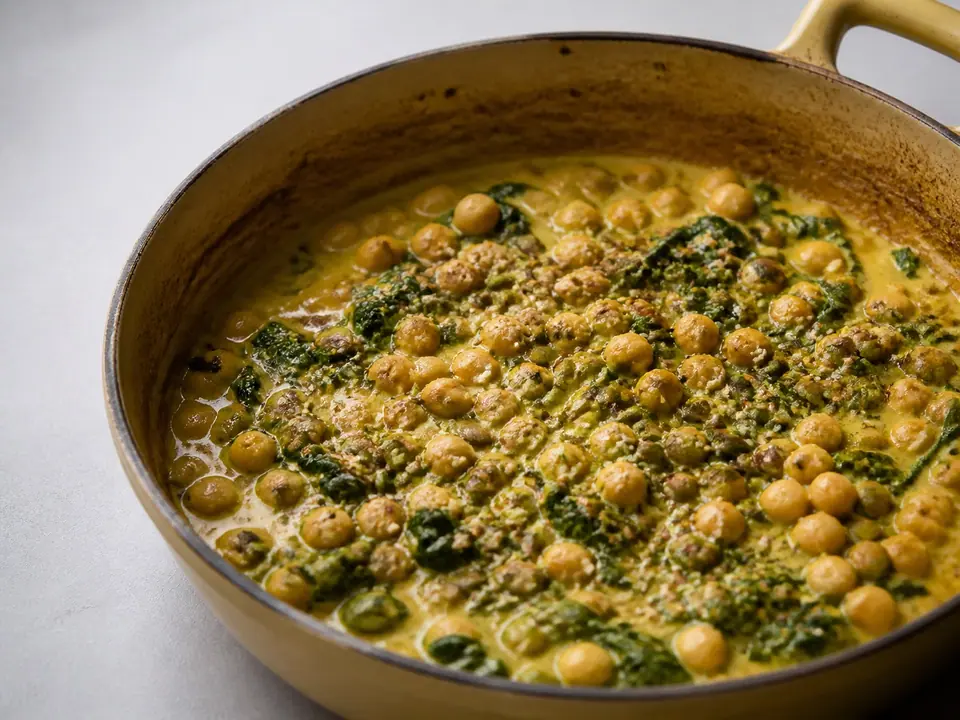
Coconut chickpea curry with greens with toasted seeds
Toasted pumpkin and sesame seeds bring a dry, nutty crunch to a creamy coconut curry without adding another complicated dish.
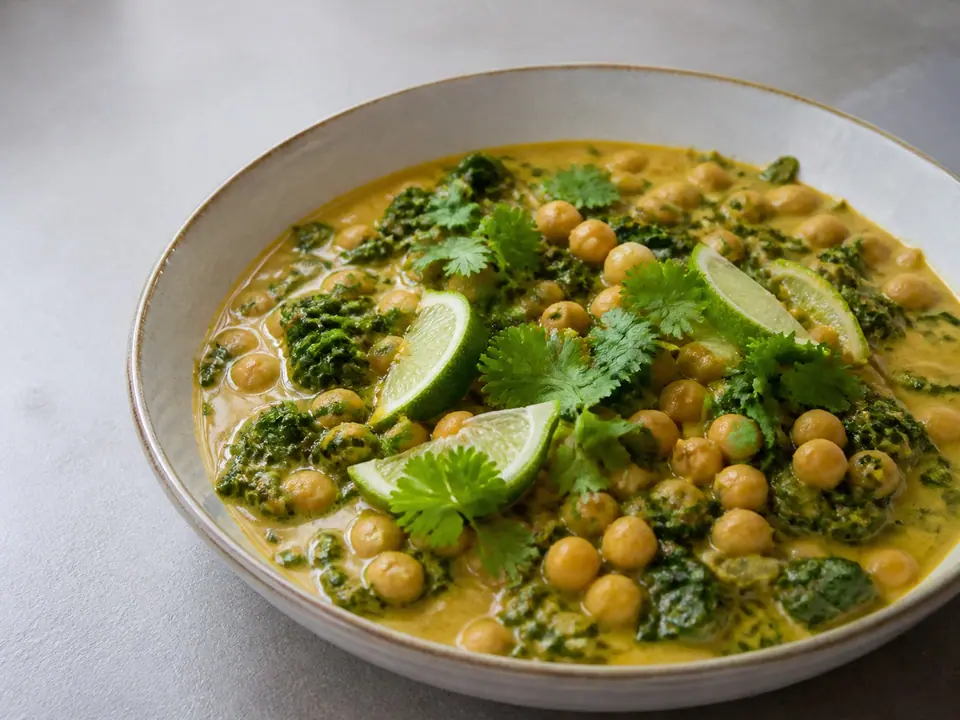
Coconut chickpea curry with greens for the freezer
Cook the coconut chickpea base now, freeze it in portions, and add fresh greens and lime after reheating so the curry still tastes alive.
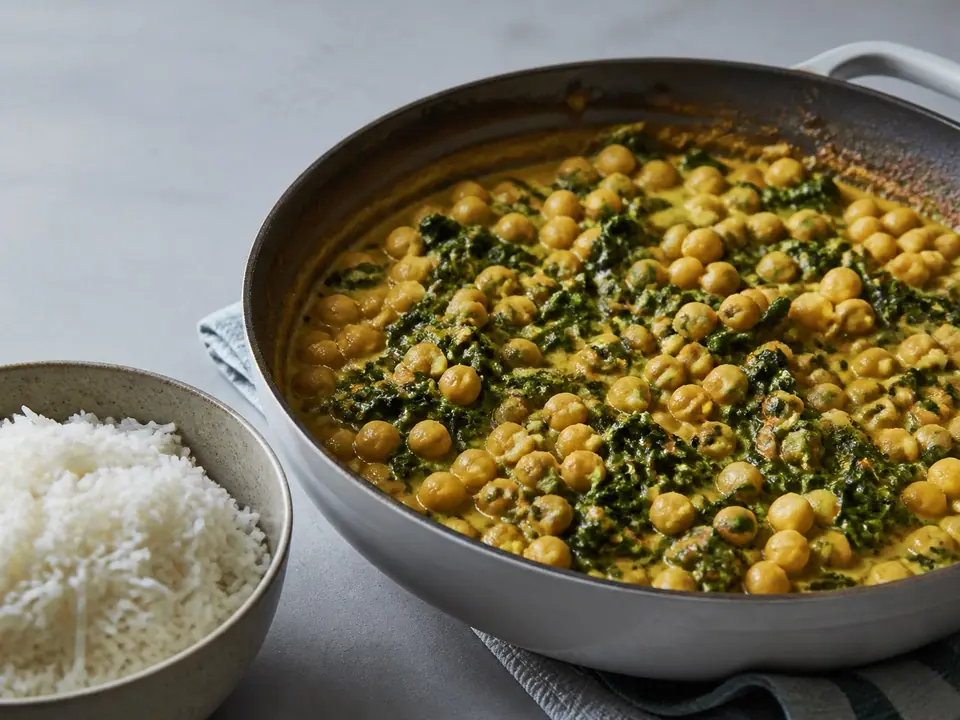
Coconut chickpea curry with greens for a one-pan dinner
Everything for this coconut chickpea curry goes into one wide pan, including the greens, so dinner is on the table with very little washing up.
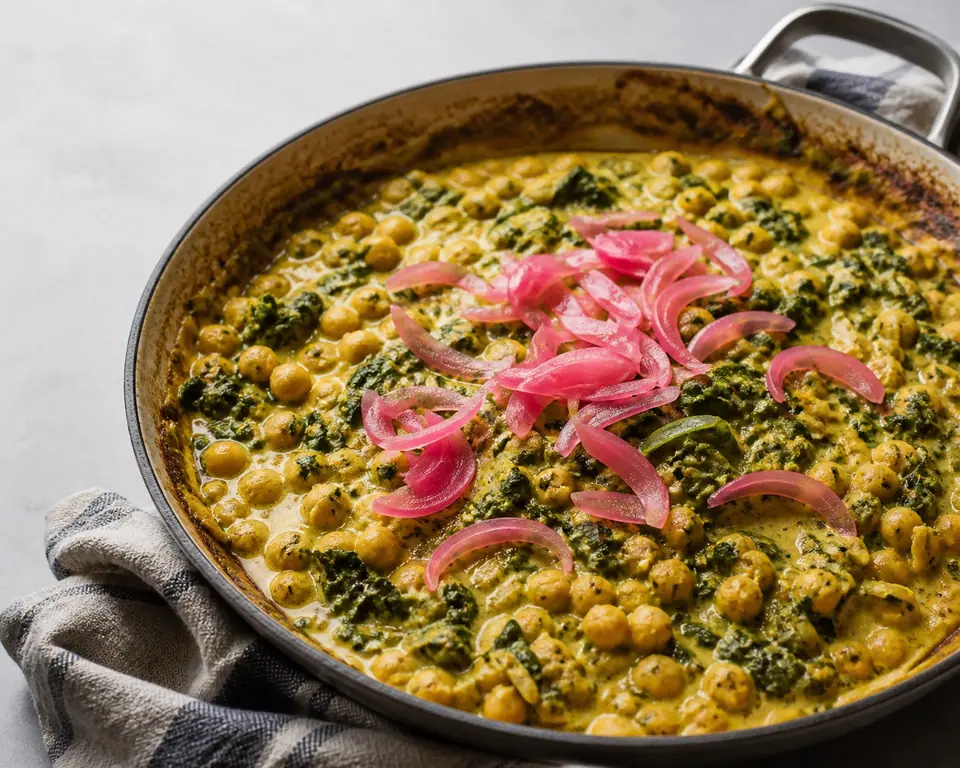
Coconut chickpea curry with greens with pickled onions
Make the onions first so they turn pink and sharp while the coconut chickpea curry simmers underneath them.
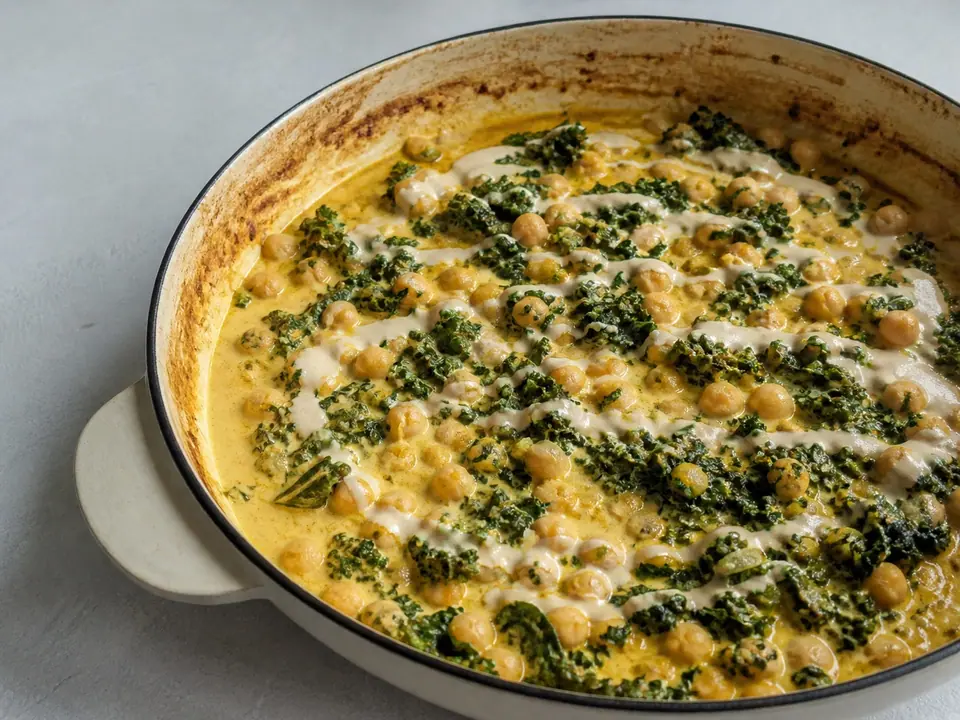
Coconut chickpea curry with greens with tahini dressing
A coconut chickpea curry gets a second kind of creaminess from lemon tahini, which is spooned over the top rather than cooked into the pot.
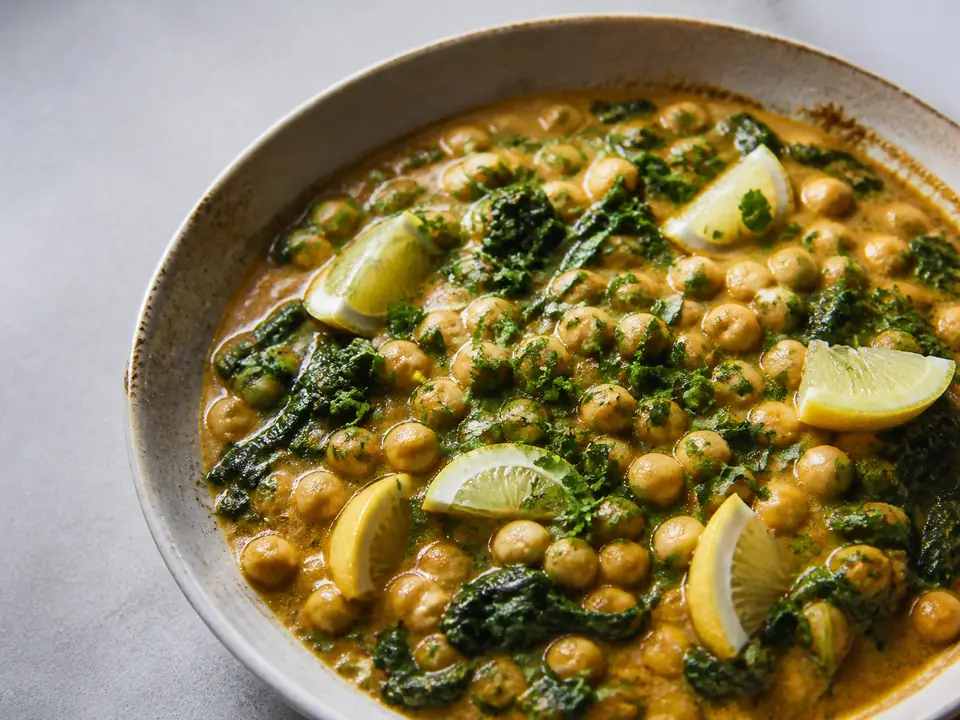
Coconut chickpea curry with greens with lemon and herbs
Chickpeas simmer in coconut milk with ginger, garlic and greens, then lemon and herbs keep the bowl from tasting heavy.
Guides about yellow onions
All guides →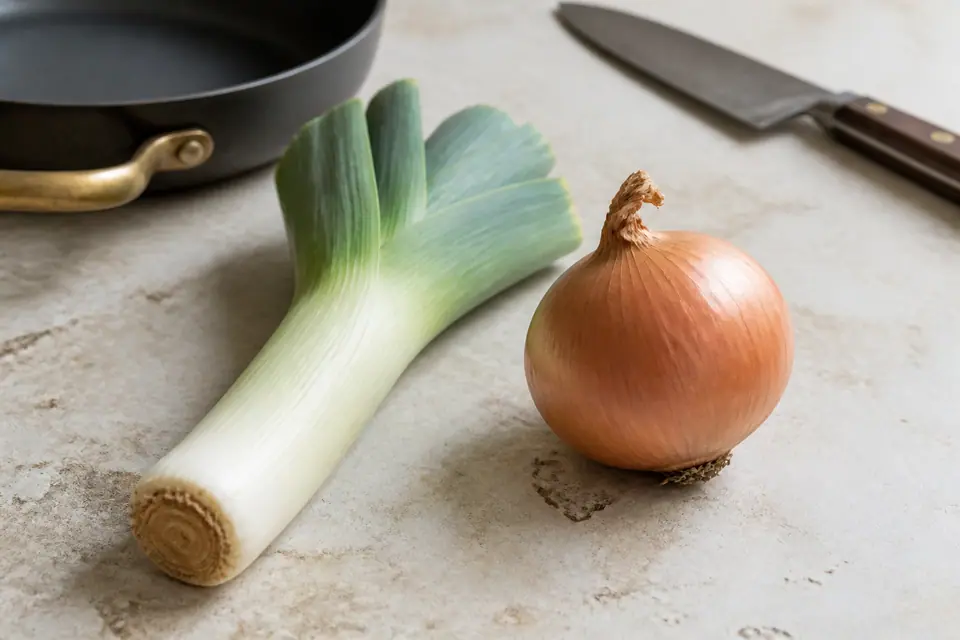
Leeks vs onions: when does the softer flavour matter?
Use onions when you want a strong savoury base; use leeks when you want a tender, sweet allium that can remain visible in the finished dish.