Spring onions add a fresh allium finish from root to green tip
Also called green onions, scallions
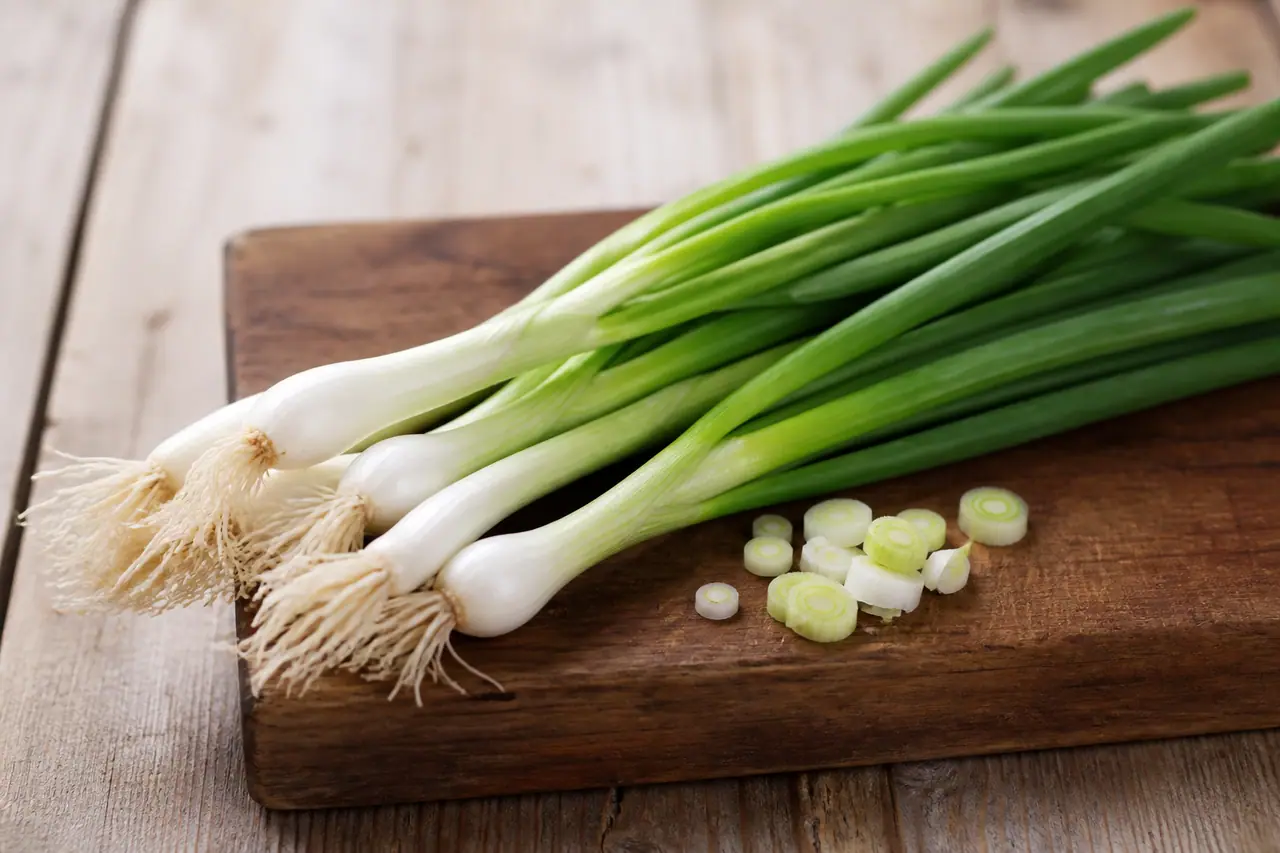
Spring onions have a mild white bulb and a crisp green top. Use both parts raw or cooked, keeping the green slices for the final minutes when you want their fresh aroma.
The numbers
| Nutrient | Amount | % RI |
|---|---|---|
| Calories | 32 kcal | — |
| Water | 89.8 g | — |
| Carbs | 7.3 g | — |
| Fibre | 2.6 g | 9% |
| Protein | 1.8 g | 4% |
| Vitamin C | 18.8 mg | 23% |
| Potassium | 276 mg | 14% |
Source: USDA FoodData Central, SR Legacy record for onions, spring or scallions, raw · % RI against EU adult reference intakes.
Buying and keeping
What to look for at the shop, and how to make it last once it is home.
How to pick
- Choose bunches with crisp, upright green leaves and firm white bulbs.
- The cut ends should look moist but not slimy, with no yellowing near the tips.
- Pick thicker bulbs for cooking and slender bunches for garnish or salads.
- Avoid leaves that collapse, smell sour or show black spots at the base.
- If the roots are attached, they should be pale and clean rather than dark and mushy.
How to store
- Remove any elastic band, wrap the bunch loosely in a damp towel and refrigerate.
- A jar with a little water can hold the roots upright, but cover the leaves loosely and change the water often.
- Trim only what you need. Whole bunches keep their crunch longer than sliced ones.
- Store cut pieces in a sealed container with a dry paper towel and use within three days.
- Freeze sliced spring onions for cooked dishes; thawed greens are soft but still useful in soups.
Best months
If you have none
Swaps that hold up, with what changes when you use them.
Use the whole bunch
Spring onions are one of the easiest alliums to use because the white bulb and green leaves offer two different textures in one bunch. The white part is crisp, lightly sweet and closer to a young onion. The green part is fresh, grassy and quick to soften. I slice the bulb for the pan, then save the green tops for the last minute or for the table.
Names vary by market. Green onions and scallions can refer to similar plants, while spring onion may mean a plant with a more rounded bulb. The useful test is the shape in front of you: a slim white base and green leaves can be cooked the same way. Taste one raw slice if you are unsure how strong the bunch is.
Clean the hidden grit
Cut off the roots, then rinse the bulbs and leaves under cold water. Dirt can sit where the leaves meet the white base, so separate the layers with your fingers. Dry the bunch before slicing. Wet greens slide on the board and steam in a hot pan instead of picking up a little colour.
Slice the white section into rounds or on a sharp angle. Roll a few green leaves together and cut them into ribbons, or leave them longer for a stir-fry. I keep the pieces separate in a bowl because the white part can start cooking early while the green part only needs a short finish.
Raw freshness and quick heat
Raw spring onion works in salads, yoghurt sauces, grain bowls, eggs and noodles. If the bite is stronger than expected, soak the slices in ice water for five minutes and dry them well. A little lime, vinegar or salt also rounds the sharpness. The green tops wilt quickly once dressed, so add them close to serving.
For cooking, start the white bulbs with oil, ginger or garlic, then add the greens near the end. They are excellent folded through an omelette, stirred into rice or scattered over soup. High heat is fine for a fast stir-fry, but long cooking turns the greens dark and soft. That is useful in stock, less useful as a garnish.
A flexible finish
Shallots give a sweeter, finer texture in a dressing, while leeks bring a softer cooked sweetness. For a sharper red accent, use red onions. Spring onions earn their place when the dish needs freshness at the very end, especially where a full onion would feel heavy.