Red onions earn their colour when they stay raw or lightly cooked
Also called purple onions, red salad onions
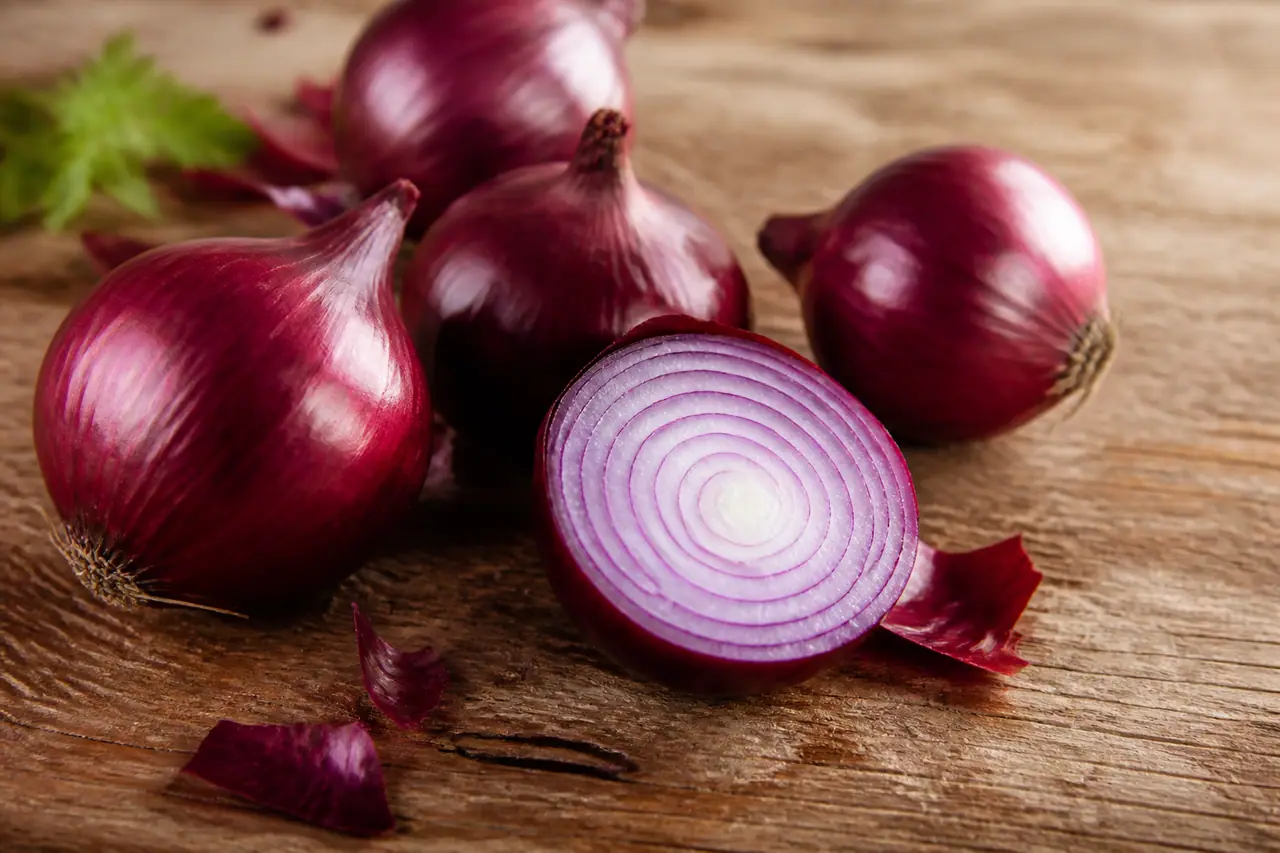
Red onions are crisp, sharp and colourful, with enough sweetness for roasting and pickling. Choose firm bulbs with glossy purple skins and store them dry before cutting.
The numbers
| Nutrient | Amount | % RI |
|---|---|---|
| Calories | 40 kcal | — |
| Water | 89.1 g | — |
| Carbs | 9.3 g | — |
| Fibre | 1.7 g | 7% |
| Protein | 1.1 g | 2% |
| Vitamin C | 7.4 mg | 9% |
| Potassium | 146 mg | 7% |
Source: USDA FoodData Central, SR Legacy record for onions, raw; red varieties vary · % RI against EU adult reference intakes.
Buying and keeping
What to look for at the shop, and how to make it last once it is home.
How to pick
- Pick bulbs that are firm from top to root, with dry purple skin and no damp patches.
- A tight neck and papery outer skin are better signs than a deep colour alone.
- Choose heavy bulbs for roasting and smaller crisp ones for slicing into salads.
- Avoid bruises around the root end. They hide soft layers that spread once cut.
- If buying a net, check the onions at the middle rather than judging only the ones on top.
How to store
- Keep whole red onions in a cool, dark, dry place with plenty of ventilation.
- Once cut, wrap the cut face or use a covered container and finish within four days.
- Pickled slices keep in the fridge according to the acidity and storage instructions of the recipe.
- Freeze chopped red onion for cooked dishes. The purple colour fades and the texture softens.
- Keep onions away from potatoes and from damp cupboards under the sink.
Best months
If you have none
Swaps that hold up, with what changes when you use them.
The colour is useful, not decorative
Red onions bring a sharp crunch and purple rings that hold their colour in a salad or pickle. Their flavour is often hotter than a yellow onion when raw, but the heat softens quickly with salt, acid or a little time in a pan. I use them raw when the onion needs to be noticed and roasted when I want the colour to stain the edges of potatoes or peppers.
Heat changes the purple pigments. A red onion can turn greyish or blue in an alkaline environment, especially around beans or hard water, and that colour shift does not mean it has spoiled. Acid keeps the colour brighter, which is why vinegar and lime make red onions look more vivid.
Take the bite down without losing crunch
Slice red onion thinly across the rings, then soak it in cold water for ten minutes if the raw heat is too strong. Drain and dry it before dressing. This removes some of the sharp compounds but leaves the crisp texture. Salt and lemon do the same job faster, though they also start softening the onion.
For a quick pickle, cover thin slices with vinegar, a pinch of sugar and salt, then wait twenty minutes. The onion turns pink and flexible while keeping a little bite. I make only what I need for a few days. A jar of onions that sits forgotten becomes soft, cloudy and less pleasant long before it becomes useful again.
When cooking is the right move
Red onions roast well in thick wedges with oil and salt. Keep the root attached while cutting so the layers stay together, then place the cut sides against the tray. They need enough heat to colour, but a little more time than thin slices. In a sauce, they behave like yellow onions, though the colour can darken the liquid.
Do not add red onion to a pan that is already full of wet vegetables and expect browned edges. Cook it alone for a few minutes or use a wide tray. If the onion is going beside tomatoes, add acid only after the onion has softened; early acid keeps it firmer and sharper than many sauces need.
The useful nearby guide
For a sweeter cooked base, compare yellow onions. For a smaller allium with a finer texture, use shallots. The existing leeks vs onions guide is useful when a recipe gives you room to choose between sharpness and softness.