Shallots bring a finer, sweeter allium note to the pan
Also called eschalots, French shallots
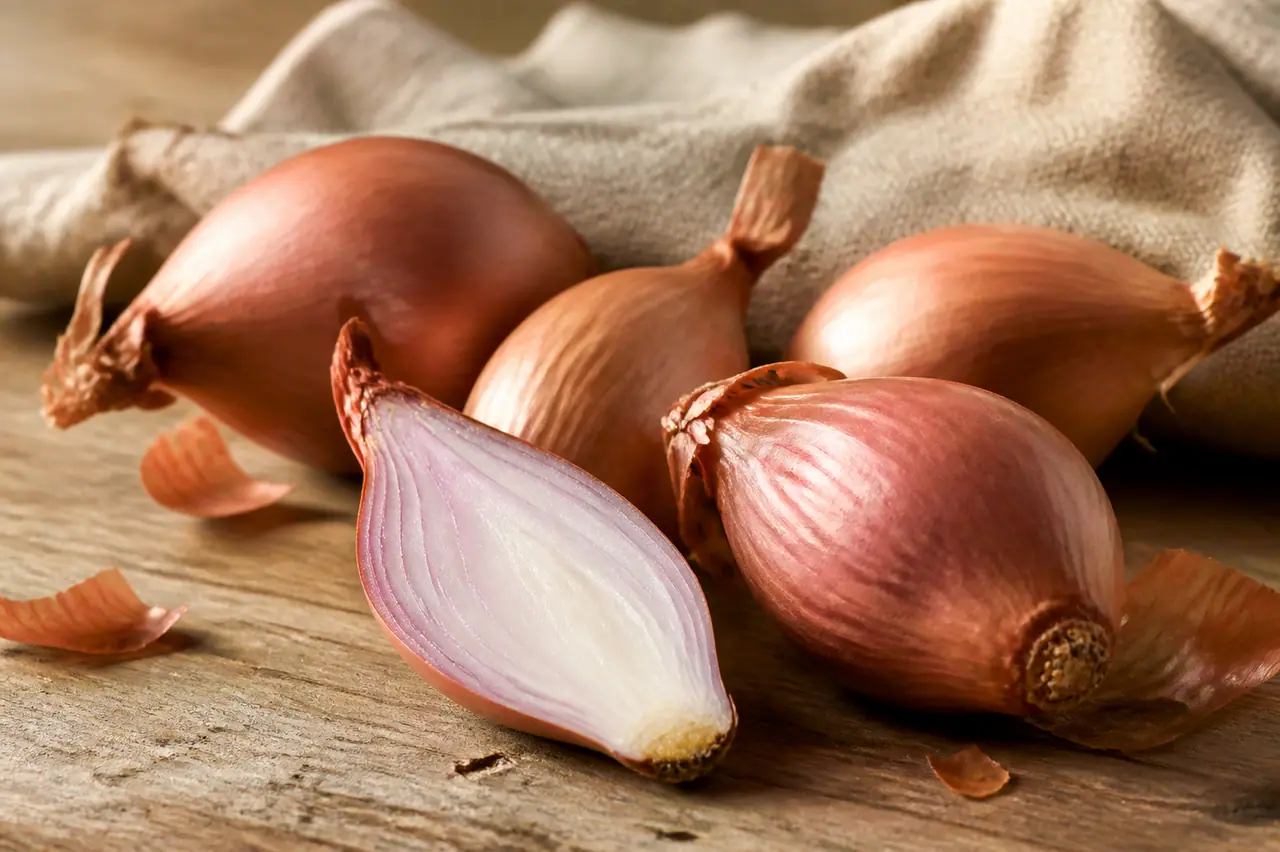
Shallots are small bulbs with a delicate onion flavour and a gentle garlic edge. Choose firm, dry clusters and use them for dressings, sauces, roasting and crisp fried toppings.
The numbers
| Nutrient | Amount | % RI |
|---|---|---|
| Calories | 72 kcal | — |
| Water | 79.8 g | — |
| Carbs | 16.8 g | — |
| Fibre | 3.2 g | 11% |
| Protein | 2.5 g | 5% |
| Vitamin C | 8 mg | 10% |
| Potassium | 334 mg | 17% |
Source: USDA FoodData Central, SR Legacy record for shallots, raw; cultivar and size vary · % RI against EU adult reference intakes.
Buying and keeping
What to look for at the shop, and how to make it last once it is home.
How to pick
- Choose shallot clusters that feel hard and heavy, with dry copper, pink or grey skin.
- Look for a tight neck and a firm root end. Loose damp skin often signals age or poor curing.
- Smaller shallots are quick to slice; larger ones are easier to peel and better for roasting whole.
- Avoid bulbs with soft shoulders, dark wet patches or a sour smell.
- If the cluster has started to sprout, use it soon and remove any green centre that tastes bitter.
How to store
- Keep whole shallots in a cool, dry, dark place with ventilation around the skins.
- Do not seal unpeeled shallots in plastic. Trapped moisture makes the outer layers mould.
- Store peeled or cut shallots in a covered container in the fridge and use within three days.
- Sliced shallots can be frozen for sauces and soups, but the texture will soften.
- Keep them away from potatoes and inspect the smallest bulbs first because they dry out sooner.
Best months
If you have none
Swaps that hold up, with what changes when you use them.
Small bulb, wide range
Shallots sit between onion and garlic in the kitchen. They have the round sweetness of an onion, but their layers are finer and their aroma has a light garlic edge. That makes them useful when a full onion would take over a dressing or leave too much moisture in a sauce. I reach for shallots when I want the allium to support wine, butter, herbs or vinegar instead of becoming the main flavour.
They are sold as single bulbs or as clusters joined at the root. Both work in the same recipes. A cluster can be separated before peeling, which makes each bulb easier to handle. The skins may be copper, pink, grey or brown depending on the type. The colour is less useful than firmness: a good shallot feels dense, dry and crisp under its skin.
Peel with less waste
Trim the root end and the stem, then peel away the papery skin. If the skin clings, put the bulbs in a bowl of warm water for a few minutes and dry them well. I avoid soaking them for long because water makes the layers slippery and reduces browning. Split a large bulb lengthwise if you need thin slices, or leave small bulbs whole for a roast.
For an even dice, halve the shallot through the root, make lengthwise cuts towards the root, then slice across. Keep the root attached until the last cut. Shallots contain the same tear-making compounds as onions, though a small bulb is often faster to prepare. A sharp knife keeps the slices clean and reduces crushed, wet edges.
Give them the heat they need
Shallots can burn sooner than a thick onion because their layers are small and their sugars are concentrated. Start them over medium heat with oil or butter, then lower the heat once the edges colour. For a pan sauce, let them soften before adding wine so they keep a little body. For a vinaigrette, slice them very thin and let the acid sit on them for ten minutes before adding oil.
Roasted whole shallots are a different ingredient from minced shallots. Their outer layers turn sticky and sweet while the centre becomes tender. Toss them with oil, salt and a little thyme, then roast until a knife passes through the thickest bulb. Crisp fried shallots need attention: use moderate heat, separate the rings and remove them while they are golden because they darken as they cool.
A practical swap
Use yellow onions when a stew needs a substantial base, and red onions when raw colour matters. Spring onions are fresher and greener, so add them late rather than asking them to build the whole sauce. The best shallot recipes are often the small ones: a dressing, a pan sauce or a tray of bulbs beside a roast.