Jalapeños give a dish heat you can still taste around
Also called jalapeno, jalapeño chillies
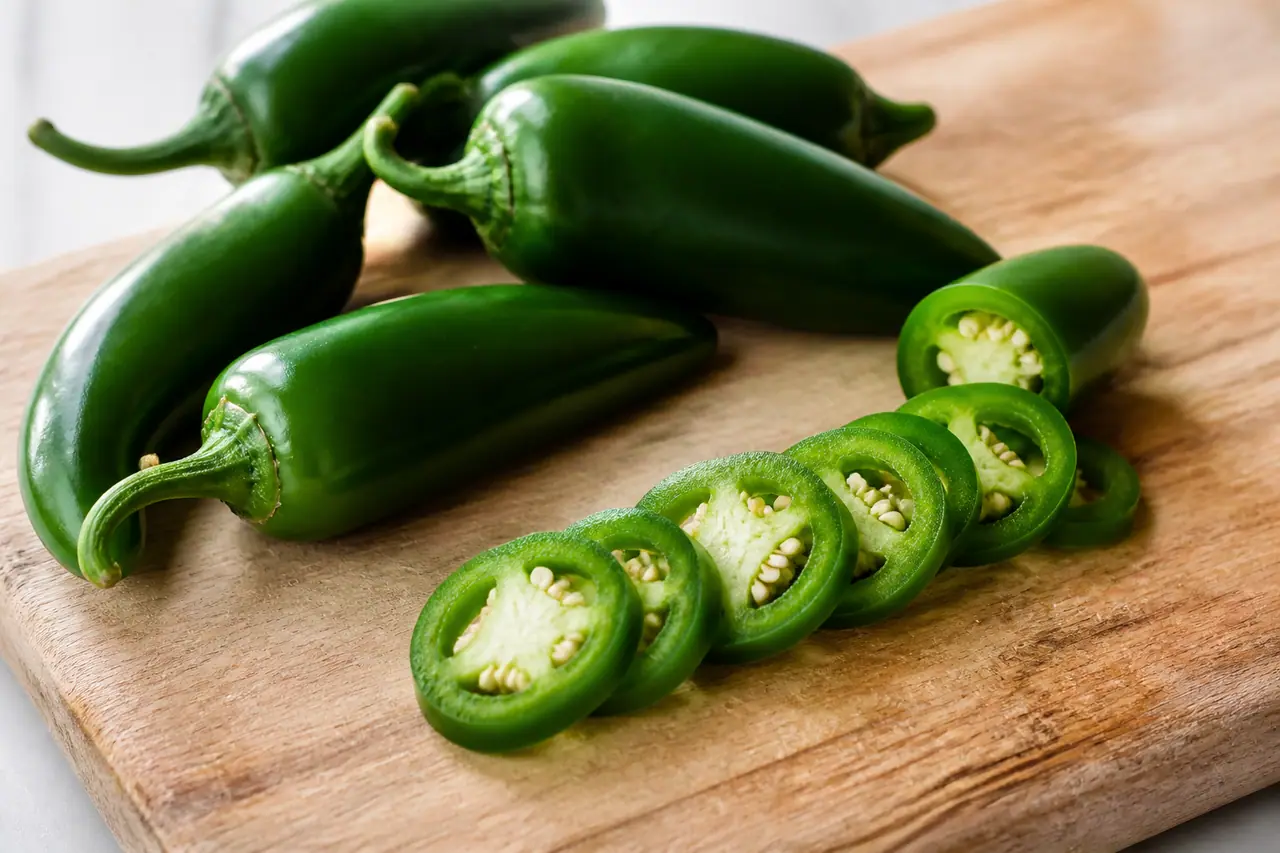
Jalapeños are thick-fleshed green chillies with a clean, medium heat. Use them raw for crunch, cooked for a softer green flavour, or ripened red when you want a fruitier edge.
The numbers
| Nutrient | Amount | % RI |
|---|---|---|
| Calories | 29 kcal | — |
| Water | 91.7 g | — |
| Carbs | 6.5 g | — |
| Fibre | 2.8 g | 11% |
| Protein | 0.9 g | 2% |
| Vitamin C | 118.6 mg | 148% |
| Potassium | 248 mg | 12% |
Source: USDA FoodData Central, SR Legacy record for peppers, jalapeno, raw · % RI against EU adult reference intakes.
Buying and keeping
What to look for at the shop, and how to make it last once it is home.
How to pick
- Choose firm, glossy pods with a green stem and no soft line running from the shoulder to the tip.
- Smooth green jalapeños tend to be younger; corky tan marks are harmless but can mean a thicker, tougher skin.
- Pick smaller pods for a sharper fresh bite and larger ones for stuffing or grilling.
- Avoid chillies with leaking ends or black sunken spots. Heat does not make spoilage safe.
- If you want red jalapeños, look for fully coloured pods with taut skin rather than green pods left to wrinkle.
How to store
- Keep whole jalapeños dry in the fridge drawer for one to two weeks.
- Store sliced chillies in a covered container and use within four days. Wash your hands after cutting.
- Freeze whole or sliced jalapeños for cooked dishes. The thawed flesh softens but the heat remains.
- Pickling extends the useful life, but chill the finished jar and follow the recipe's acidity and storage instructions.
- Do not seal warm roasted jalapeños in oil for cupboard storage. Cool them and refrigerate instead.
Best months
If you have none
Swaps that hold up, with what changes when you use them.
Where the heat lives
Jalapeño heat is concentrated around the pale ribs and the membranes holding the seeds, not inside the seeds themselves. The seeds get coated in chilli oil, so they carry plenty of heat when you cut them through, but removing them does not turn the pepper mild. It gives you a smaller, more predictable dose.
Heat also varies from pod to pod. A late-season jalapeño can be much hotter than a thick, watery one bought in winter. I slice one and taste a tiny piece before deciding how much goes into salsa. That takes less time than trying to rescue a bowl of guacamole after the fact.
Raw rings or cooked strips
Raw jalapeño has a bright, grassy bite and a clean heat that fades quickly. Thin rings are useful over beans, eggs, tacos and yoghurt. For less heat, split the chilli lengthwise, scrape out the ribs and slice it fine. Thick strips keep more texture and make sense in a stir-fry or a tray of chicken and peppers.
Cooking softens the green aroma but does not remove the heat. Fry the chilli with onion and garlic for a rounder base, or char it under a grill for smoke. If the skin blackens, cover the peppers in a bowl for ten minutes so the skin loosens. I peel them for a smooth sauce and leave them on for anything where a little texture is welcome.
Handle them as a kitchen hazard
Capsaicin sticks to skin and transfers easily to eyes, lips and contact lenses. I use a small knife and wash the board with hot soapy water afterwards. Gloves are sensible for a large batch, especially if the jalapeños are being deseeded. Water does not dissolve the heat, so rinsing your fingers under the tap is not a reliable clean-up.
If your dish is too hot, add more of the other ingredients rather than pouring in water. Fat, dairy and starch spread the heat through a larger amount of food. Lime or vinegar changes the balance but does not remove capsaicin. The useful fix is dilution, not a heroic squeeze of citrus.
Choosing a nearby pepper
Use poblano peppers when the recipe needs roasted green flavour with less heat. For a sweeter base, red bell pepper is the better partner. The pages on these peppers are useful together because a chilli swap changes heat, texture and cooking time, not only the colour in the bowl.