Orange peppers sit between crisp and candy-sweet
Also called orange sweet peppers, orange capsicum
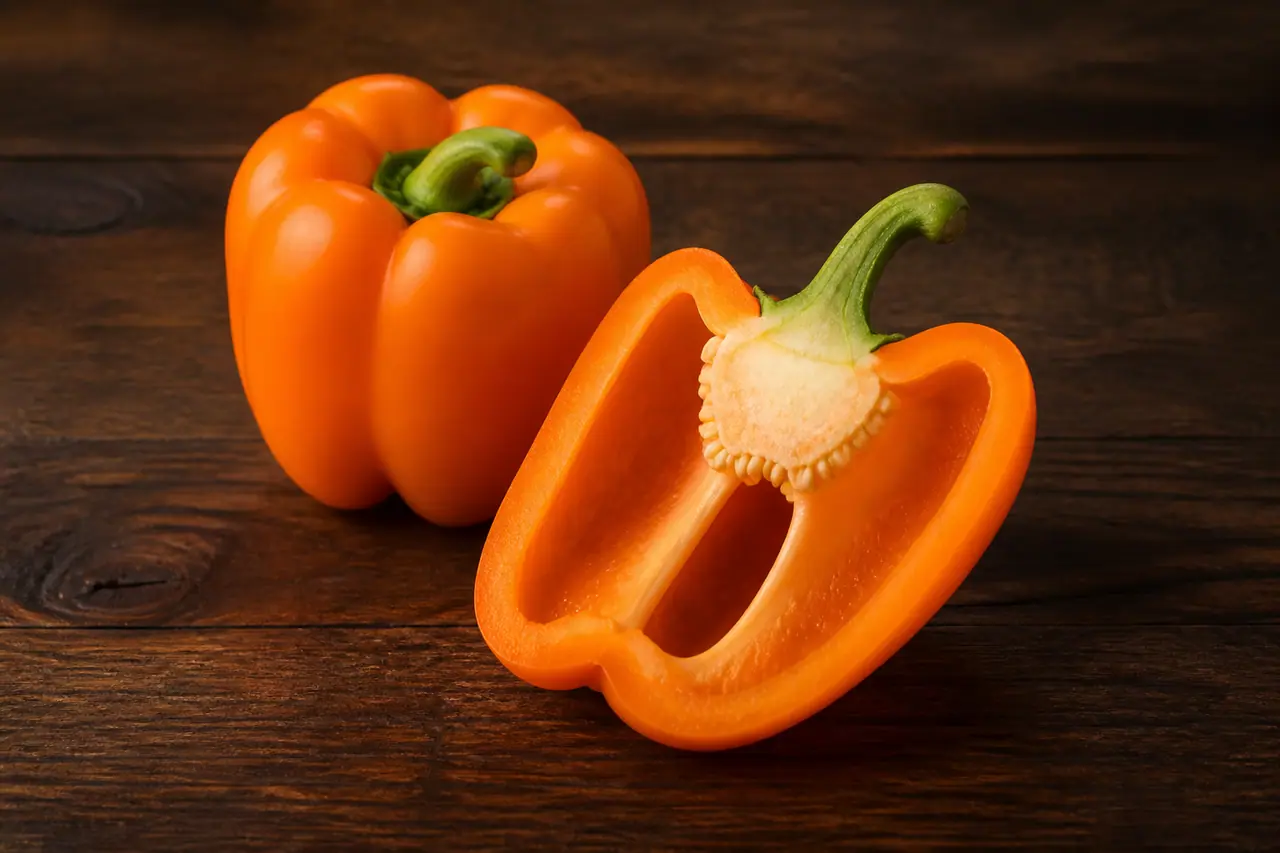
Orange bell peppers are ripe, mild and juicy, with a thick wall that holds up on a hot tray. Buy for weight and firmness, then use the brightest fruit raw before it loses its crunch.
The numbers
| Nutrient | Amount | % RI |
|---|---|---|
| Calories | 26 kcal | — |
| Water | 92.5 g | — |
| Carbs | 6 g | — |
| Fibre | 2.1 g | 8% |
| Protein | 1 g | 2% |
| Vitamin C | 120 mg | 150% |
| Potassium | 210 mg | 11% |
Source: USDA FoodData Central, SR Legacy record for sweet peppers, raw; orange variety values vary by cultivar · % RI against EU adult reference intakes.
Buying and keeping
What to look for at the shop, and how to make it last once it is home.
How to pick
- Pick fruit that feels dense for its size and has a clean, glossy skin without collapsed shoulders.
- A green stem with a little spring is a better freshness signal than the brightness of the orange skin.
- Avoid watery dents near the base. They spread quickly once the pepper is cut.
- Choose thick-walled peppers for stuffing or roasting and smaller firm ones for salads and lunch boxes.
- If the pepper is sold in a sealed tray, check underneath for condensation and soft patches before buying.
How to store
- Keep whole peppers unwashed in the fridge drawer for seven to fourteen days.
- Store cut pieces in a covered container lined with a dry towel and use them within three days.
- Freeze sliced peppers raw for sauces, stews and stir-fries. Thawing makes them soft, so do not plan them for salad.
- Roast, peel and chill them before adding oil. A warm pepper sealed under oil is a poor storage habit at home.
- Keep them away from fruit that is ripening on the counter, especially bananas and apples.
Best months
If you have none
Swaps that hold up, with what changes when you use them.
Orange is a ripeness stage, not a flavour promise
Orange bell peppers are sweet peppers that have ripened past green. Some varieties stay orange, while others pass through orange before turning red, so colour tells you where the pepper is in its life but not everything about how it will taste. I judge the fruit by smell, weight and wall thickness as well.
In the kitchen, orange peppers have a useful middle ground. They are sweeter than green peppers but still taste fresh beside lemon, herbs or yoghurt. Red peppers can dominate a mild dish with their ripe sweetness; orange peppers tend to sit in the background. That makes them my choice for a quick fish tray, a grain salad or a soup where the tomato already has plenty of personality.
Why weight matters
A heavy pepper contains more firm flesh and juice. That is useful when you are roasting because the outer skin can blacken while the wall stays moist. A light pepper is not automatically bad, but it usually has a thinner wall or has started to lose water. Thin fruit is better sliced and cooked quickly than left to bake for half an hour.
To prepare it, stand the pepper on its base and cut away the four sides around the core. This keeps the seed cluster intact and leaves clean panels for chopping. I scrape out the ribs for raw eating, though I leave them in a stew because they soften. Rinse only if seeds are stuck to the flesh; rinsing a cut pepper and storing it wet shortens its life.
How to keep the sweetness clean
Orange peppers take colour best in a wide, hot pan. Add dry strips to oil that is already warm and leave them alone for a minute before turning. Constant stirring prevents contact with the metal, so the pepper softens without taking on any browned edges. Salt after the first side has coloured; early salt draws out water and makes steaming more likely.
For a traybake, roast the pepper with onions or potatoes at 220°C fan. Keep the pieces broad and give them space. If the recipe includes fish or chicken, start the pepper first and add the protein later. For a smooth sauce, blister whole peppers under a grill, cover them for ten minutes, then peel. The trapped steam does the work; running the pepper under water washes away the roasted flavour.
A useful comparison
The closest page to keep nearby is red bell pepper, which explains the same fruit at a later stage of ripeness. For the cooking difference, see red vs yellow peppers. Orange usually behaves between those two on the pan: sweeter than green, less jammy than red.