Red is sweeter. Yellow keeps the dinner brighter.
Red bell peppers are usually sweeter and softer, while yellow peppers keep a brighter colour and a fresher bite. Choose by the finish you want.

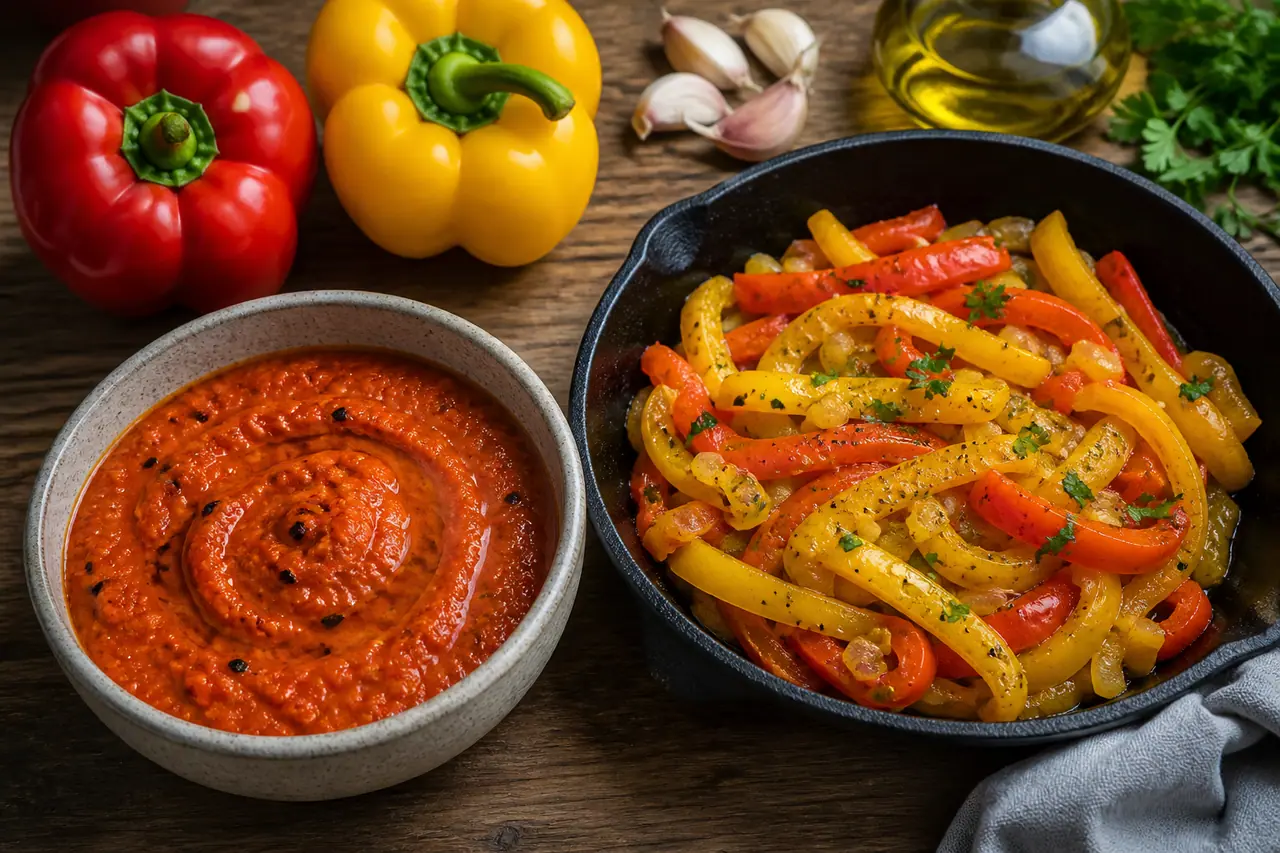
Red bell peppers are usually the sweeter choice because they have stayed on the plant longer. Yellow peppers are often a little firmer, brighter and more useful when you want colour to survive the pan. Neither is automatically better. The right one depends on whether dinner needs sweetness, a clean crunch, a smoky roast or a pepper that disappears into sauce. That is why I do not make the choice by colour alone; the cut, the heat and the final texture all matter. A pepper for a blended soup has a different job from one that must remain crisp beside rice, even when both start in the same shopping basket.
I buy red peppers for roasting and blended sauces, and yellow peppers when I am making a quick skillet where the pieces should stay visible. The difference is not dramatic enough to make a recipe fail, but it is noticeable enough to change the balance of a simple meal. There is also a practical difference in how much trimming I want to do. Red peppers are often worth taking time to char and peel, while yellow peppers are pleasant with their skin left on and can move from board to pan in a few minutes. When I am tired, that small distinction decides which colour comes home.
Red peppers have the softer, sweeter finish
Red peppers are fully mature versions of peppers that began green. As they mature, the flavour becomes less grassy and more rounded, the flesh softens and the colour deepens. That makes red peppers excellent for roasting, blending and slow cooking. Their sweetness can carry a simple soup or give a bean stew a fuller taste without much added seasoning.
The softer flesh also means red peppers collapse sooner in a hot pan. That is useful when I want a sauce, but less useful when I am building a tray of vegetables with distinct pieces. Cut red peppers into large strips for roasting so the skin can blister while the flesh keeps enough body to serve.
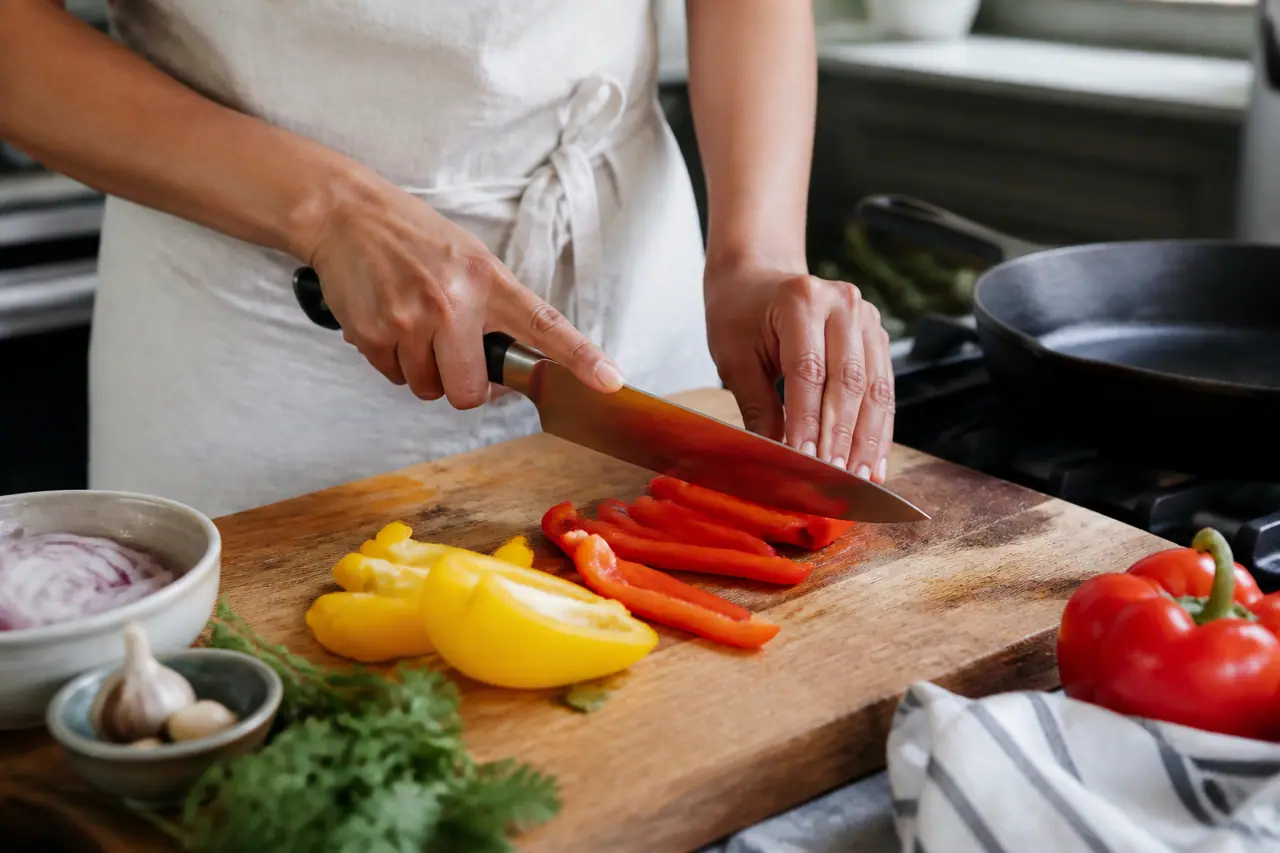
Yellow peppers keep the plate lively
Yellow peppers have a mild sweetness with a fresher, cleaner taste. They often keep a little more bite after a short saute, and their colour stays cheerful beside tomato, beans and leafy greens. I use them for fajita-style strips, quick omelettes, grain bowls and any dinner where the pepper should remain a visible part of the texture.
They are not bland by definition. A yellow pepper with a firm, glossy skin and a fresh smell can be more useful than a tired red pepper that has been sitting too long. Check the individual fruit rather than shopping by colour alone.
| Question | Red pepper | Yellow pepper |
|---|---|---|
| Flavour | Sweeter and rounder | Mild and bright |
| Texture | Softens sooner | Often stays firmer |
| Best for | Roasting and blending | Quick saute and bowls |
| Colour after cooking | Deep red and warm | Bright yellow if not overcooked |
| Pairs well with | Tomato, beans and smoky spices | Eggs, grains and fresh herbs |
Source: Maren Ashby's pepper comparison, 2026-01-16
The cooking method matters more than the colour
For a blended soup, either colour works, but red gives the smooth puree a deeper sweetness. For a fast stir-fry, yellow pepper can hold its shape beside onions and greens. For roasting, red peppers develop a soft, almost jammy edge, while yellow peppers offer a brighter contrast. For a stew, use both if you have them; the red builds the base and the yellow keeps the bowl from becoming one dark note.
Do not crowd the pan if you want browned edges. Peppers release water, and a crowded skillet steams them. Use a wide surface, let the first side colour, then turn. If the pieces need to soften after browning, add a small splash of water and cover briefly rather than continuing to blast them on high heat.
The verdict
Pick red peppers when you want sweetness, soft roasted flesh or a sauce that can be blended smooth. Pick yellow peppers when you want a mild fresh bite, bright colour and pieces that stay visible in a quick pan. The difference is small enough that either can work, but clear enough that choosing for the cooking method makes dinner easier.
Questions
Are red peppers sweeter than yellow peppers?
Which pepper is best for roasting?
Which pepper is best for stir-fry?
Can I use red and yellow peppers together?
More guides
All guides →
How to choose carrots that are crisp, not rubbery
Firm carrots with a fresh stem end and smooth, unbroken skin are more likely to stay crisp. Rubberiness means water has already left the root.
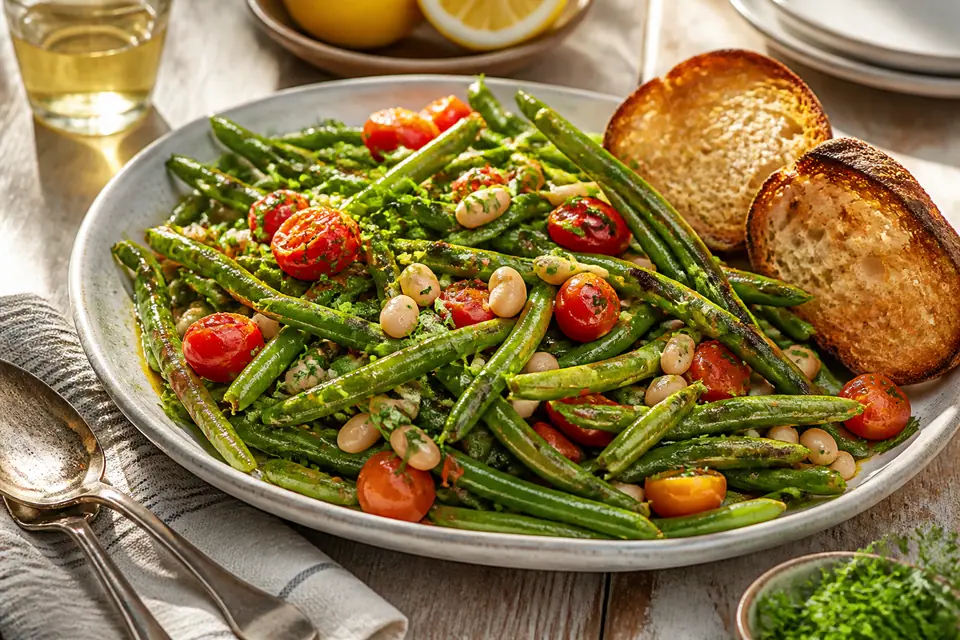
5 summer dinners for green beans
Use green beans as the vegetable that carries dinner: blister them with tomatoes, fold them through noodles, pair them with eggs or build a warm white-bean skillet.

Cauliflower vs broccoli: which roasts better?
Cauliflower gives a more even roast and creamy centre. Broccoli browns faster and has better crisp tips, so the winner depends on the texture you want.