Roasted red peppers are a shortcut with a texture to respect
Also called jarred roasted peppers, roasted sweet peppers
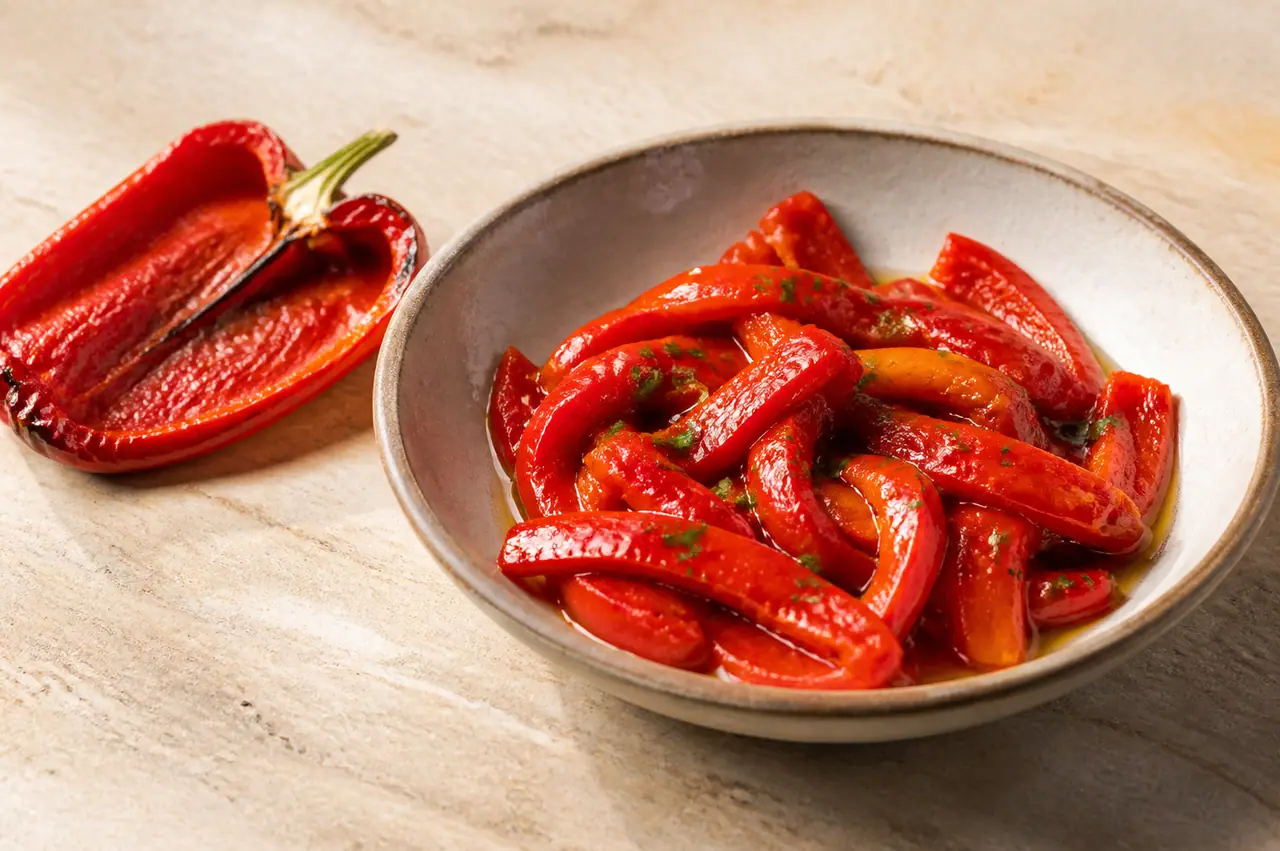
Roasted red peppers are soft, sweet and smoky, whether you made them at home or opened a jar. Drain them well, keep their oil under control and add them late when a dish needs shape.
The numbers
| Nutrient | Amount | % RI |
|---|---|---|
| Calories | 26 kcal | — |
| Water | 92.2 g | — |
| Carbs | 6 g | — |
| Fibre | 2.1 g | 8% |
| Protein | 1 g | 2% |
| Vitamin C | 127.7 mg | 160% |
| Potassium | 211 mg | 11% |
Source: USDA FoodData Central, SR Legacy 170108 (peppers, sweet, red, raw); jarred products vary with oil and salt · FDC ID 170108 · % RI against EU adult reference intakes.
Buying and keeping
What to look for at the shop, and how to make it last once it is home.
How to pick
- For a jar, look for peppers, water or oil, vinegar or salt, and no long list of sweeteners or thickeners.
- Choose strips that still have a little body rather than a jar of collapsed pepper pulp.
- Check the lid is flat and the seal intact. A bulging or leaking jar belongs in the bin.
- For fresh peppers, choose heavy red fruit with taut skin and thick walls; they roast down to more usable flesh.
- Oil-packed peppers should smell sweet and smoky, never sour, yeasty or fizzy.
How to store
- Keep unopened jars in a cool, dark cupboard and follow the label date.
- After opening, refrigerate and keep the peppers covered by their liquid. Use within the label's stated time.
- Drain only the portion you need. The liquid protects the rest from drying out.
- Homemade roasted peppers keep covered in the fridge for four days. Freeze them plain for sauces if you have too many.
- Never keep an opened jar at room temperature because it smells fine. The fridge is the safe default.
Best months
If you have none
Swaps that hold up, with what changes when you use them.
Jarred and homemade are related, not identical
Roasted red peppers are sweet peppers cooked until their skin blisters and the wall collapses into soft strips. A jar saves the smoky work, but it also brings liquid, salt and sometimes oil. That is why a jarred pepper can make a sandwich brilliant and a delicate sauce watery if you tip the whole jar in without draining.
When I have fresh red peppers, I roast them whole under a hot grill until black patches cover the skin. Then I cover the peppers in a bowl for ten minutes. Steam loosens the skin, which comes away in broad pieces. I do not rinse the peeled flesh because water removes the smoky oil and leaves the pepper bland.
How to read the jar
Check the ingredient list and the texture before buying a large jar. Peppers, water, vinegar and salt make a clean everyday version. Oil-packed peppers can be richer, but they need draining if they are going into hummus, soup or a traybake. Some jars contain sugar, garlic or herbs; none is wrong, but the additions need to fit the recipe.
Open the jar and smell it. A sweet roasted smell is good. Sourness, fizz, mould or a lid that was already loose are reasons to discard it. Do not taste questionable food to decide whether it is safe. The cost of one jar is not worth gambling with a whole meal or your stomach.
The best places to use them
Roasted peppers need little cooking. Add them to a bean stew in the last five minutes, fold them through warm grains, or blend them with yoghurt and lemon for a quick sauce. They are also good with toast, anchovies, white beans and eggs. Long boiling makes the strips disappear, so save the jar for dishes where you want the pepper to remain visible.
For a smooth dip, drain the peppers and pat them dry. Blend with nuts, tahini or beans, then adjust salt and acid at the end. If the dip is loose, reduce the amount of oil before adding more thickener. A paper towel is a better first fix than another handful of breadcrumbs.
Keep the comparisons close
The page on red bell pepper explains how to roast fresh fruit, while piquillo peppers is useful when you want a smaller jarred variety. For a full meal built around the smoky flavour, see charred red pepper and chickpea stew. The main rule is simple: drain enough to protect the dish, but keep enough liquid to stop the leftovers drying out.