Serranos are small, bright and sharper than jalapeños
Also called serrano chillies, serrano peppers
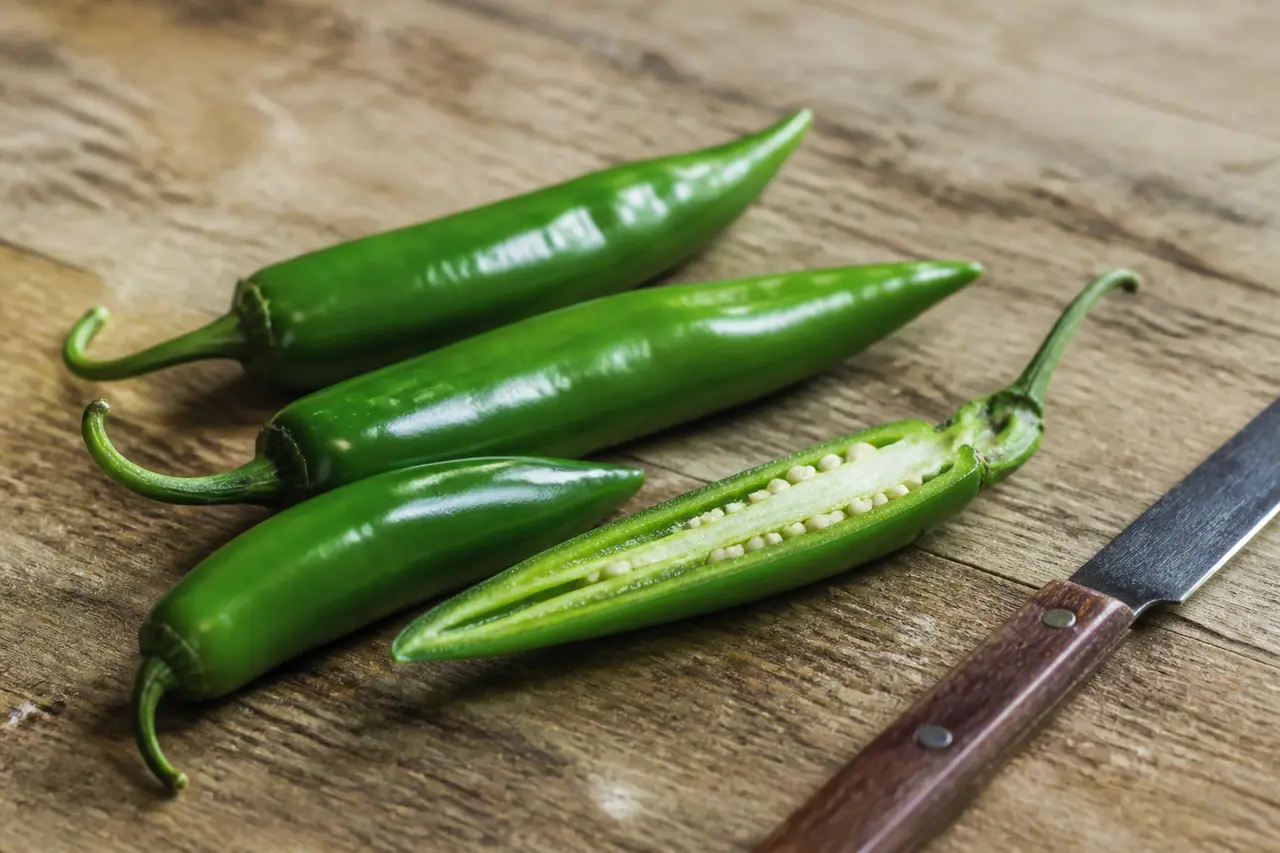
Serrano peppers are slim green chillies with crisp flesh and a direct heat. They stay lively in salsa, lose their raw edge in a pan, and need less cooking time than a thick jalapeño.
The numbers
| Nutrient | Amount | % RI |
|---|---|---|
| Calories | 32 kcal | — |
| Water | 91 g | — |
| Carbs | 6.7 g | — |
| Fibre | 3 g | 12% |
| Protein | 1.7 g | 3% |
| Vitamin C | 55 mg | 69% |
| Potassium | 300 mg | 15% |
Source: USDA FoodData Central, SR Legacy record for raw hot chilli peppers; serrano varieties vary · % RI against EU adult reference intakes.
Buying and keeping
What to look for at the shop, and how to make it last once it is home.
How to pick
- Choose slim, firm peppers with glossy skin and a green stem that has not dried to brown.
- A little bend is normal, but a pod that folds without spring has started to lose water.
- The smaller the serrano, the less flesh you get, not necessarily less heat. Taste is a better guide.
- Avoid wet black patches and split ends that smell sour.
- Red serranos are riper and fruitier. Pick them taut, before they become wrinkled.
How to store
- Keep whole serranos dry in the fridge for about one week.
- Once sliced, cover tightly and use within three days. The cut surface dries faster than a jalapeño's.
- Freeze serranos whole for cooked sauces, or slice them before freezing if you already know the portion you need.
- Pickled serranos keep longer in the fridge when made with a tested vinegar-based recipe.
- Keep them separate from ready-to-eat fruit if the bag has split pods; chilli juice transfers easily.
Best months
If you have none
Swaps that hold up, with what changes when you use them.
Serrano heat is quick and clean
Serranos are often hotter than jalapeños, though no label can tell you exactly what one fresh pod will do. Their thin walls make the heat arrive quickly and fade quickly, which is useful in salsa. You can mince one into a bowl and still taste tomato, onion and lime around it. With a thicker chilli, the green flavour can linger after the heat has gone.
I remove the ribs when I want control, then add a little of the chopped rib back if the salsa needs more fire. The seeds are not the main source of heat, but they are covered with the same chilli oils, so they count in a small quantity.
The best prep for salsa
Roll the serrano under your palm to loosen the seeds, trim the stem and mince the pod finely. Do not blend it first with all the tomatoes; the blender spreads the heat so evenly that you lose the ability to taste and adjust. Chop the chilli with the onion, add lime and salt, then wait five minutes before tasting. The salt draws liquid out and the heat spreads through the bowl.
For a roasted salsa, blister the whole serranos beside tomatoes and garlic. Cover them after grilling so the skin loosens, then peel only if the sauce needs to be smooth. A black patch on the skin is good; a fully black, bitter pod is not. Char is a seasoning, not a test of endurance.
Use less heat in a pan
Serranos need only a minute or two in hot oil. Add them late if they are going into a stir-fry, because long frying turns the thin flesh dry before the rest of the vegetables are ready. In a stew or braise, add them with the liquid and let the heat move through the pot. The chilli will soften, but its colour will fade.
Wash the knife and board with hot soapy water, and do not touch your eyes after chopping. If you cook a large batch, gloves save a painful evening. Capsaicin is oil-loving, so plain water is a poor clean-up. A little cooking oil followed by soap works better on a stubborn film.
What to read with it
For a milder green pepper with roasted depth, compare poblano peppers. If you need a red, sweet counterweight, use red bell pepper. The same rules about dry storage and careful handling apply to all fresh chillies, but serranos reward the shortest cooking time.