Tomato paste
Also called tomato puree, concentrated tomato
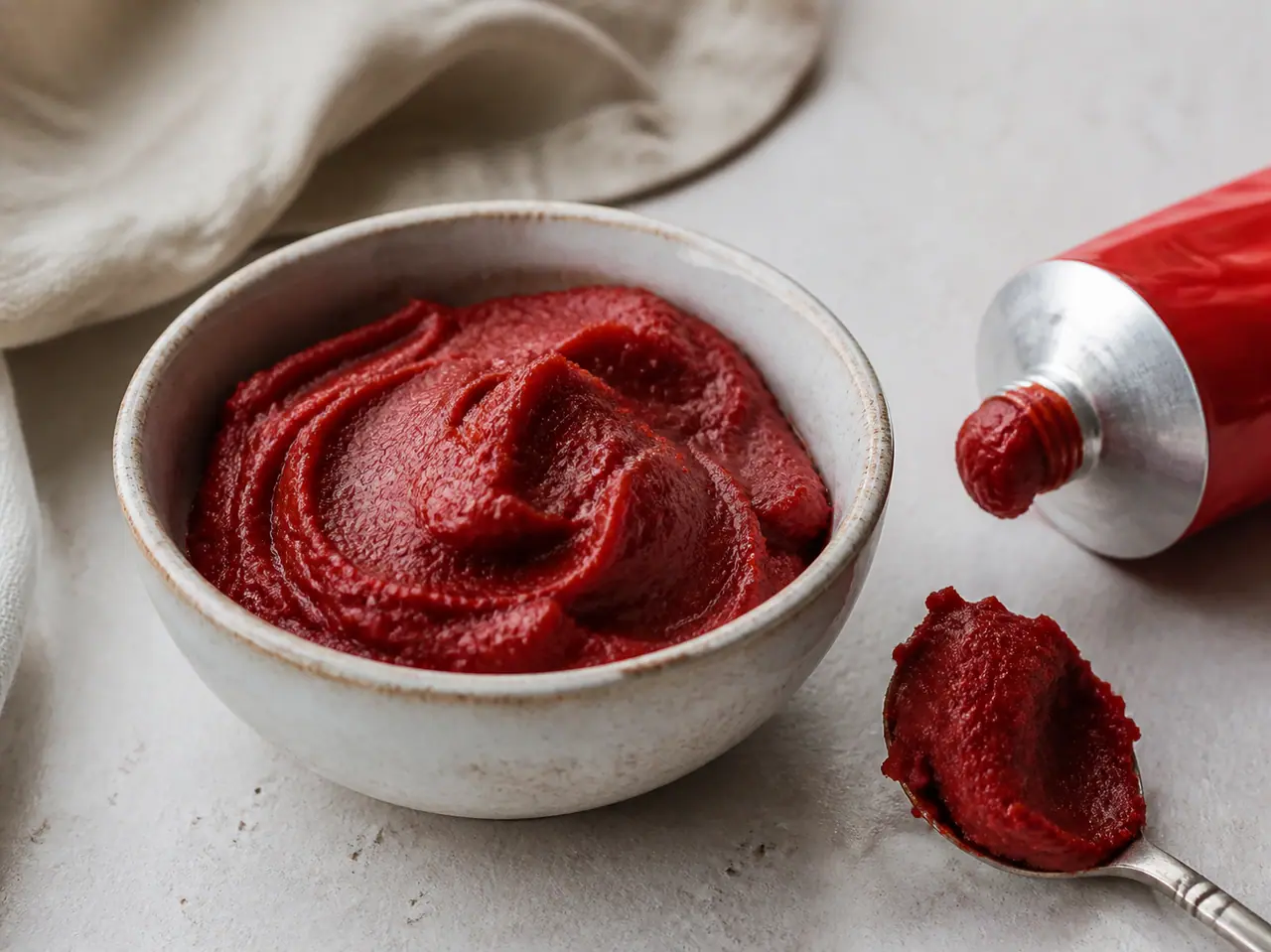
Tomato paste is a small ingredient with a loud job. Fry it in oil until it darkens, then add liquid and let it carry the base of the dish.
The numbers
| Nutrient | Amount | % RI |
|---|---|---|
| Calories | 18 kcal | — |
| Water | 94.5 g | — |
| Carbs | 3.9 g | — |
| Fibre | 1.2 g | 5% |
| Protein | 0.9 g | 2% |
| Potassium | 237 mg | 12% |
Source: USDA FoodData Central, FDC 170457 tomato reference; commercial paste varies by concentration and salt · FDC ID 170457 · % RI against EU adult reference intakes.
Buying and keeping
What to look for at the shop, and how to make it last once it is home.
How to pick
- Choose a short ingredient list: tomatoes and salt are enough for most cooking paste.
- A tube is useful when you need one spoonful at a time. A tin is often cheaper for a large batch.
- Avoid a swollen tin or a tube with a split seal. The paste should be deep red, not grey at the exposed surface.
- Check the salt before adding it to a soup that already contains stock or cured ingredients.
How to store
- Refrigerate an opened tin in a small airtight container rather than leaving paste in the metal.
- Wipe the end of a tube clean, fold it shut and refrigerate it. Use within the period on the label.
- Freeze tablespoon portions on a tray, then transfer them to a bag. Add one frozen spoonful straight to a pot.
- Cover the surface with a thin film of oil if you are keeping paste in a jar for several days.
Best months
If you have none
Swaps that hold up, with what changes when you use them.
The colour change is the cue
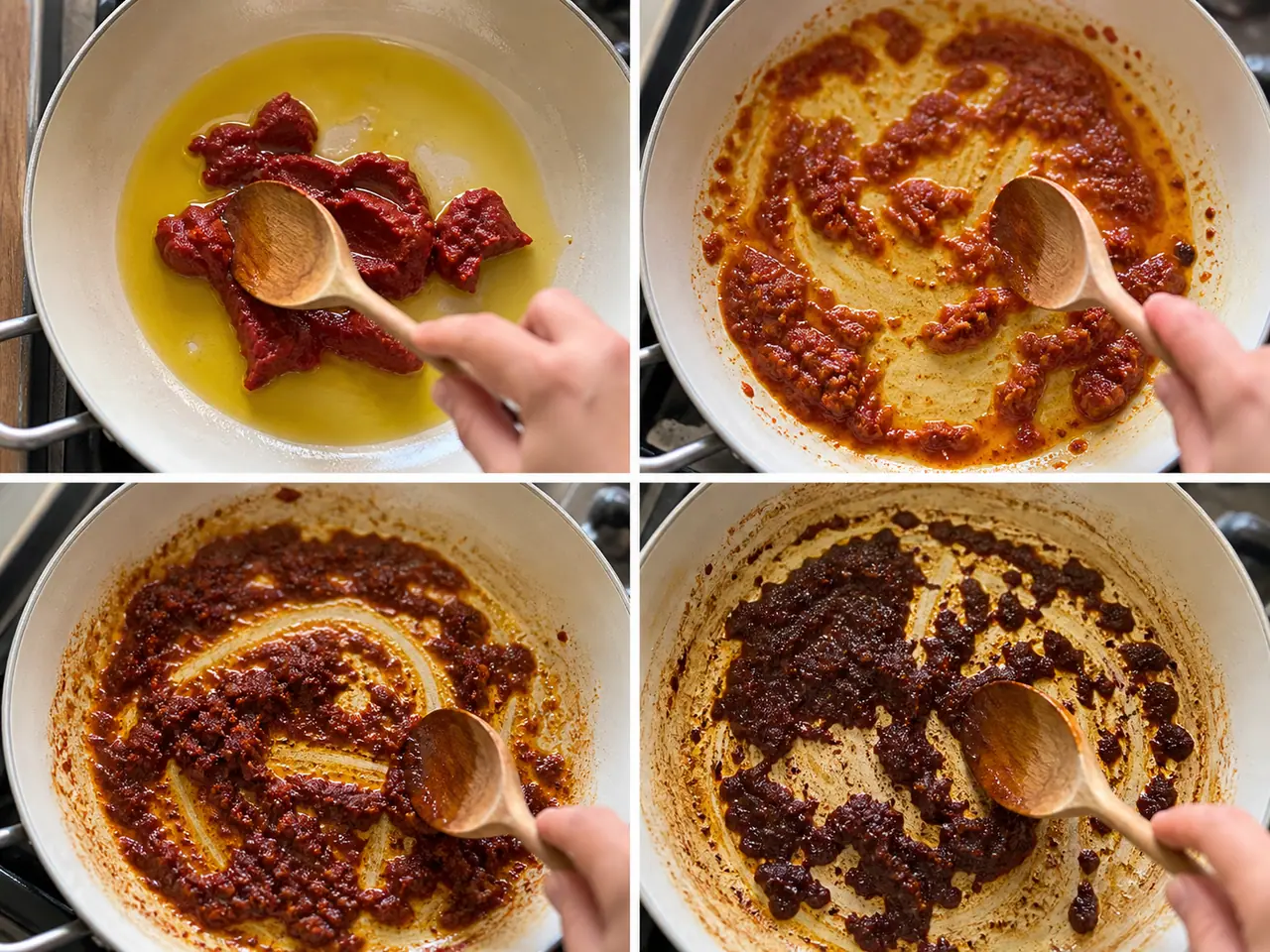
Tomato paste tastes raw when it is stirred straight into stock. Fry it in oil first and the colour moves from bright red to a darker brick red, while the smell becomes rounder and sweeter. That change is the cue to add liquid. It usually takes one to two minutes over medium heat, with constant stirring so the paste does not stick.
Watch the pan, not the clock. A shallow skillet can darken paste in seconds, while a crowded casserole needs longer to heat through. The colour should deepen without black flecks appearing. If the paste is catching around the edge, move it through the oil and lower the heat. If the spoon leaves a dry red streak across the base, the pan needs a little more oil. These are small physical signs, but they tell you more than a fixed minute count because every pan, hob and spoonful is different.
There is a narrow window between browned and burnt. Burnt paste leaves a bitter taste through the whole pot, and adding more tomatoes only spreads it. If the pan is dry, add a splash of oil rather than turning the heat higher. A tablespoon of paste is enough to change a sauce; it does not need to be scorched into the metal. I would rather stop a few seconds early and let the paste finish cooking when the stock arrives than chase a darker colour after it has started to catch. Once liquid hits the pan, scrape the base straight away. Little red spots left behind become bitter before the rest of the sauce has even started to simmer.
Tube or tin
A tube wins when your cooking uses one teaspoon or one tablespoon at a time. It is easy to squeeze, easy to return to the fridge and less likely to leave half a tin forgotten behind the beans. A tin wins for a large pot of stew or when the price per gram matters more than convenience.
The format does not tell you the flavour. Read the label, taste the paste and account for salt. Some products are thick enough to hold a spoon upright; others contain more water and need longer frying. Measure by weight when a recipe is precise, but for everyday cooking a level tablespoon is a useful working unit. I buy the tube when I know a recipe will call for small amounts across several weeks, and the tin when I am making a large pot or cooking for a crowd. The important part is to close the container properly. A dry red plug at the opening is not a sign that the paste is protected; it is a sign that air has been getting in. Scrape it away, check the smell and move the remaining paste into a clean container if the seal has become unreliable.
Where a spoonful earns its keep
Tomato paste is the quiet base in the red pepper and chickpea stew and spiced chickpea soup. Fry it with the spices, then add tomato and stock. The paste gives the liquid something to cling to and prevents a watery stew from tasting like plain stock.
It is also useful in a tray of roasted vegetables, a lentil pot or a pan sauce for beans. Use too much and the dish tastes dense and slightly sweet. Start with one tablespoon for four servings, then add more the next time you cook it.
Freezing the awkward last spoon
The last spoonful in a tin is worth saving. Drop rough tablespoon mounds onto baking paper and freeze until firm. They do not need to be perfect portions; the point is to stop the paste becoming a red crust at the back of the fridge. Label the bag so it does not become an unidentified frozen orange.
Frozen paste can go straight into hot oil, but give it a few seconds to loosen before adding garlic. It may spit. A lid held nearby is more useful than a frantic reduction of the heat.
Questions
Should tomato paste be fried?
Is tomato puree the same as tomato paste?
How long does tomato paste last after opening?
Can I use passata instead of tomato paste?
Why does tomato paste taste bitter?
Recipes using tomato paste
2 on the site so far.
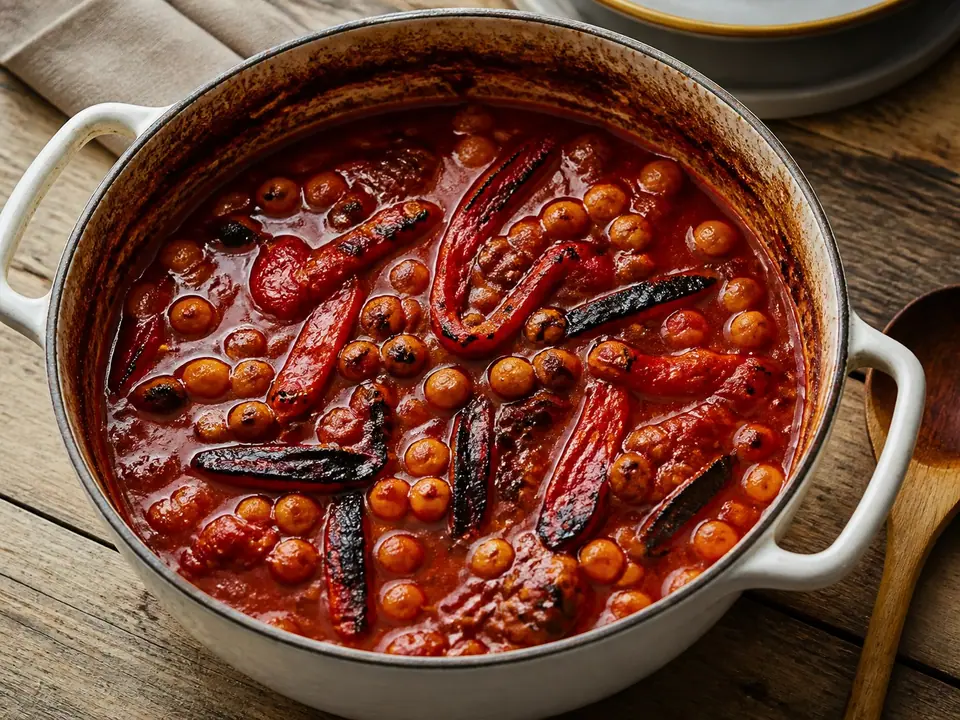
Charred red pepper and chickpea stew
The peppers go under the grill until they are properly black in patches. That ten minutes is the whole flavour of the dish.
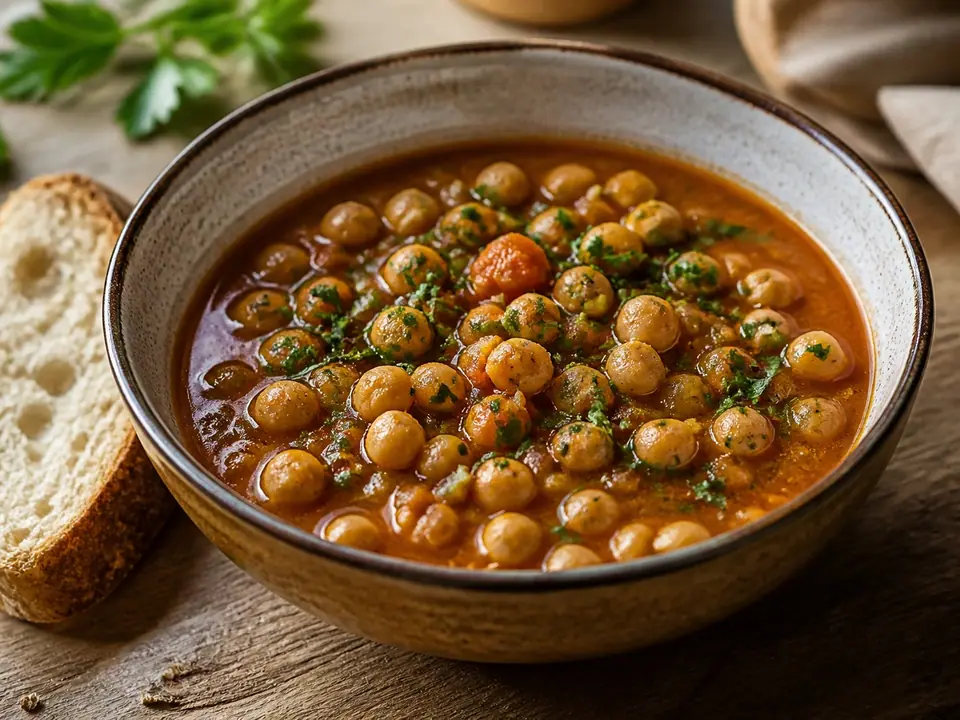
Spiced chickpea soup with lemon
Blending all of it gives you baby food. Blending none of it gives you thin broth with things in it. Half is the answer.