White onions are crisp, sharp and quick to soften
Also called white cooking onions, white salad onions
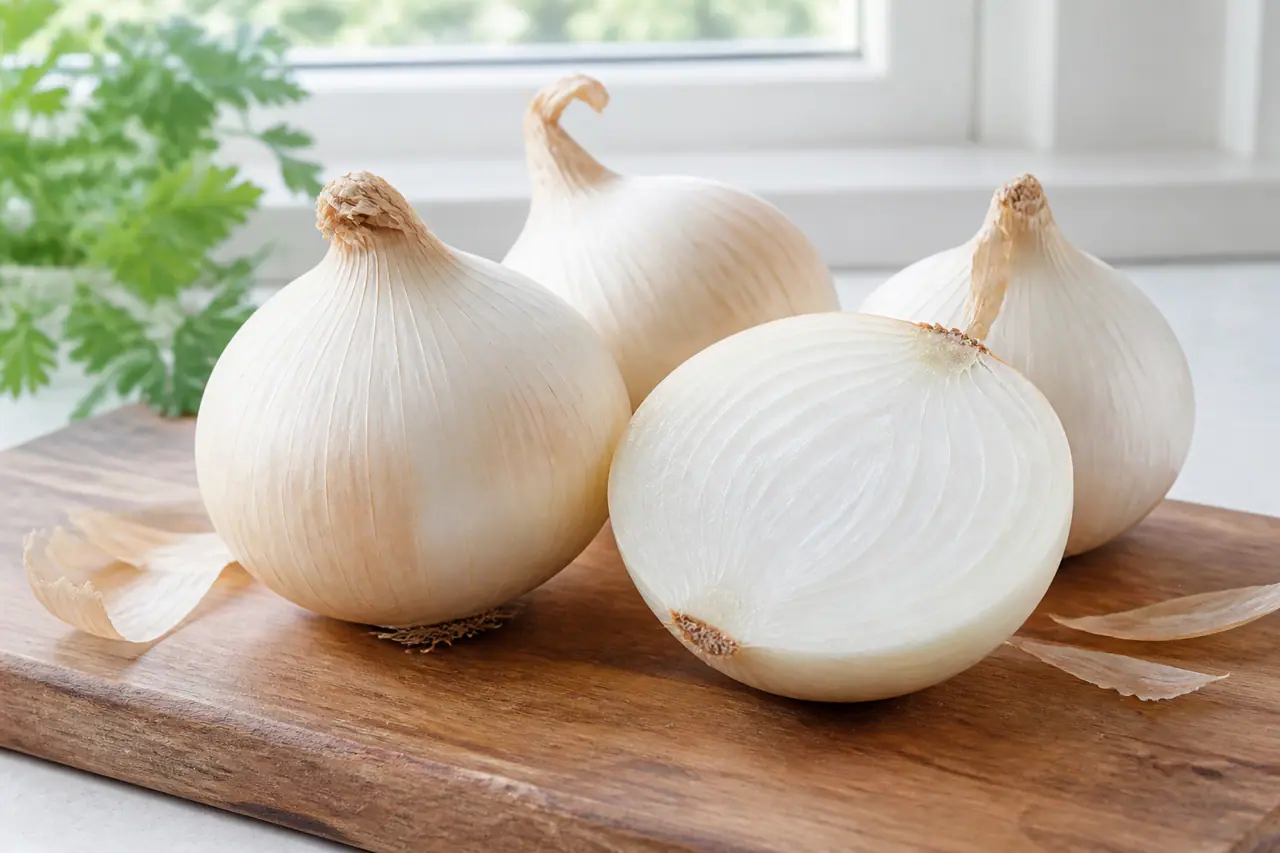
White onions have a clean, direct bite and a thinner skin than yellow onions. They are excellent raw, useful in fast cooking and less suited to long storage once their outer layers lose firmness.
The numbers
| Nutrient | Amount | % RI |
|---|---|---|
| Calories | 40 kcal | — |
| Water | 89.1 g | — |
| Carbs | 9.3 g | — |
| Fibre | 1.7 g | 7% |
| Protein | 1.1 g | 2% |
| Vitamin C | 7.4 mg | 9% |
| Potassium | 146 mg | 7% |
Source: USDA FoodData Central, SR Legacy record for onions, raw; white varieties vary · % RI against EU adult reference intakes.
Buying and keeping
What to look for at the shop, and how to make it last once it is home.
How to pick
- Choose bulbs that are hard, heavy and clean, with bright dry skin and a tight neck.
- White onions have thinner skins, so check for bruising and soft areas more carefully than with yellow onions.
- For raw salsa, choose a firm medium bulb with a fresh, sharp smell rather than a sweet fermented one.
- Avoid bulbs with wet translucent layers showing through the skin.
- If the root end is furry with fresh roots but the bulb is firm, use it soon rather than storing it for weeks.
How to store
- Keep whole white onions cool, dark and ventilated. Their thinner skins do not protect them as long as yellow skins.
- Store cut onion covered in the fridge and use within three to four days.
- Keep sliced white onion in cold water only briefly, then drain and use the same day.
- Freeze chopped white onion for soups, sauces and cooked fillings, not for raw toppings.
- Separate any soft onion from the basket so moisture does not reach the firm bulbs.
Best months
If you have none
Swaps that hold up, with what changes when you use them.
The onion for fresh food
White onions have a thinner skin, a cleaner aroma and a sharper raw flavour than many yellow onions. That directness is useful in salsa, guacamole, bean salads and sandwiches, where the onion has no long cooking time to hide behind. They also soften quickly in a pan, which makes them good for a fast dinner when a yellow onion would still have a firm centre.
They are not automatically hotter or better. Variety, age and storage change the bite. A fresh white onion can be crisp and almost juicy. An old one can taste harsh and papery. I cut a small piece from the centre before adding a whole onion to a raw dish, because the first bite tells me whether the rest needs soaking or pickling.
A clean cut makes a cleaner flavour
Peel away the thin outer skin, cut the onion in half through the root and keep that root attached while slicing. The layers stay aligned and the board collects fewer loose pieces. For salsa, dice across the slices so the pieces are small enough to share a bite with tomato. For a pan, leave the pieces larger and let the edges soften without disappearing.
If the raw onion is too sharp, rinse the diced pieces under cold water and drain them well. It takes away some of the surface bite, though it also removes a little flavour. A ten-minute soak in lime juice gives a stronger result and starts the pickle. Do not soak it overnight unless you want soft onion.
How to cook it quickly
Use a wide pan over medium-high heat, add oil and let the onion sit long enough to pick up a little colour. White onion releases water quickly, so a small crowded pan turns it translucent instead of golden. Add garlic after the onion has softened; garlic burns before the onion is ready if both go in at once.
For roasting, cut thick wedges and keep the root end close enough to hold the layers together. For a soup or stew, a fine dice will melt into the liquid. The onion can do both jobs, but the cut decides whether you notice it or taste it as background.
A useful onion comparison
For long, slow cooking, yellow onions are more forgiving. For a softer allium, the existing leeks vs onions guide explains the trade. White onion is the one I choose when raw crunch and a clean sharp edge matter more than deep sweetness.