Okra and tomato masala with pickled onions
youryum.com/recipes/okra-and-tomato-masala-with-pickled-onions · serves 4
Soft tomatoes with a crisp, sharp topping
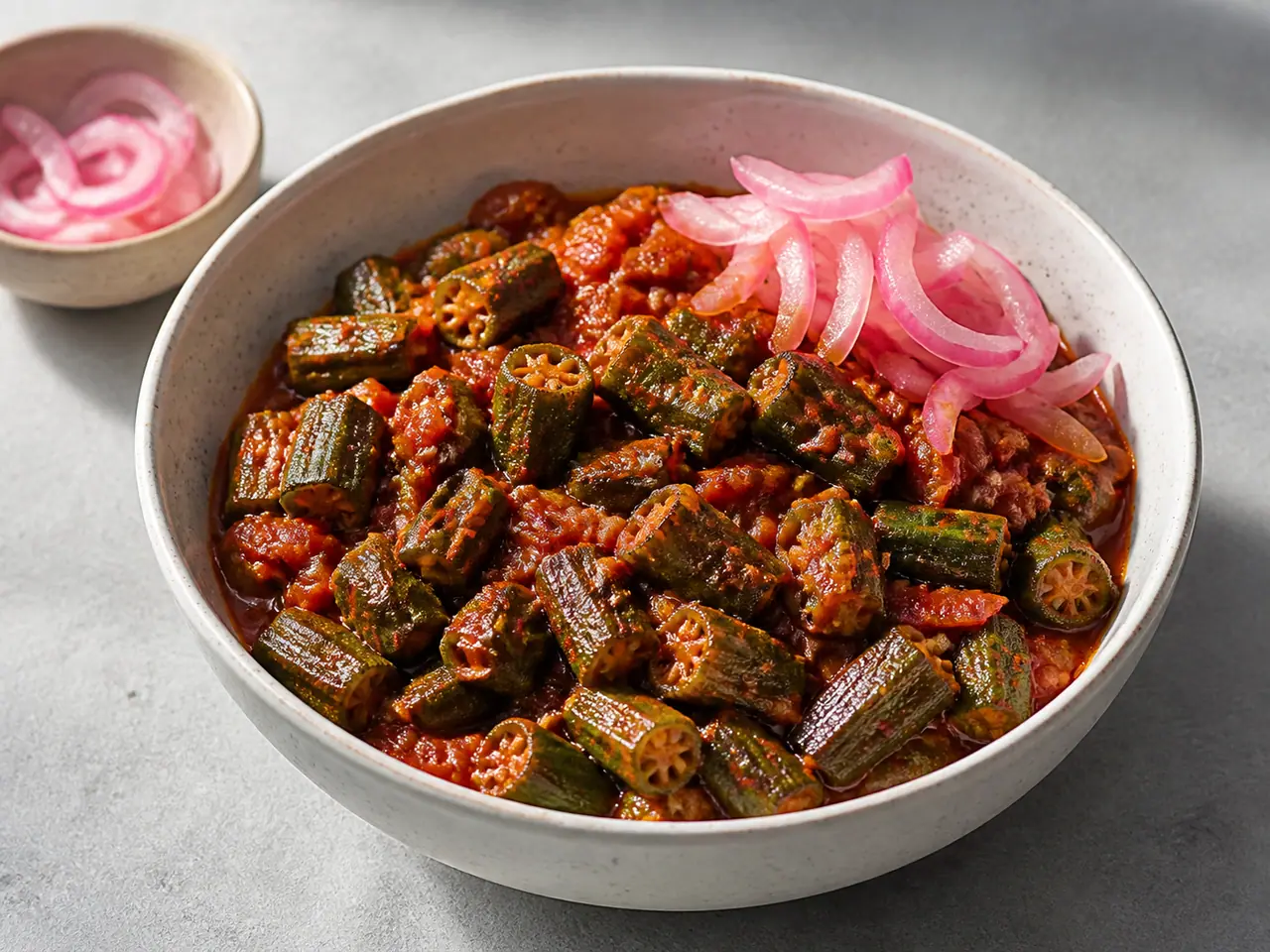
Quick pickled onions cut through the tomato masala and bring a fresh crunch to the tender okra.
- Vegan

- Prep
- 15 min
- Cook
- 30 min
- Total
- 45 min
- Serves
- 4
- Per serving
- 263kcal
- Effort
- Moderate
Okra is not difficult; it is simply unforgiving of wet handling. Wipe it dry, sear it in an open pan and only then let it meet the tomato. The cut surfaces take on colour, the pieces keep their shape, and the sauce clings instead of turning slippery.
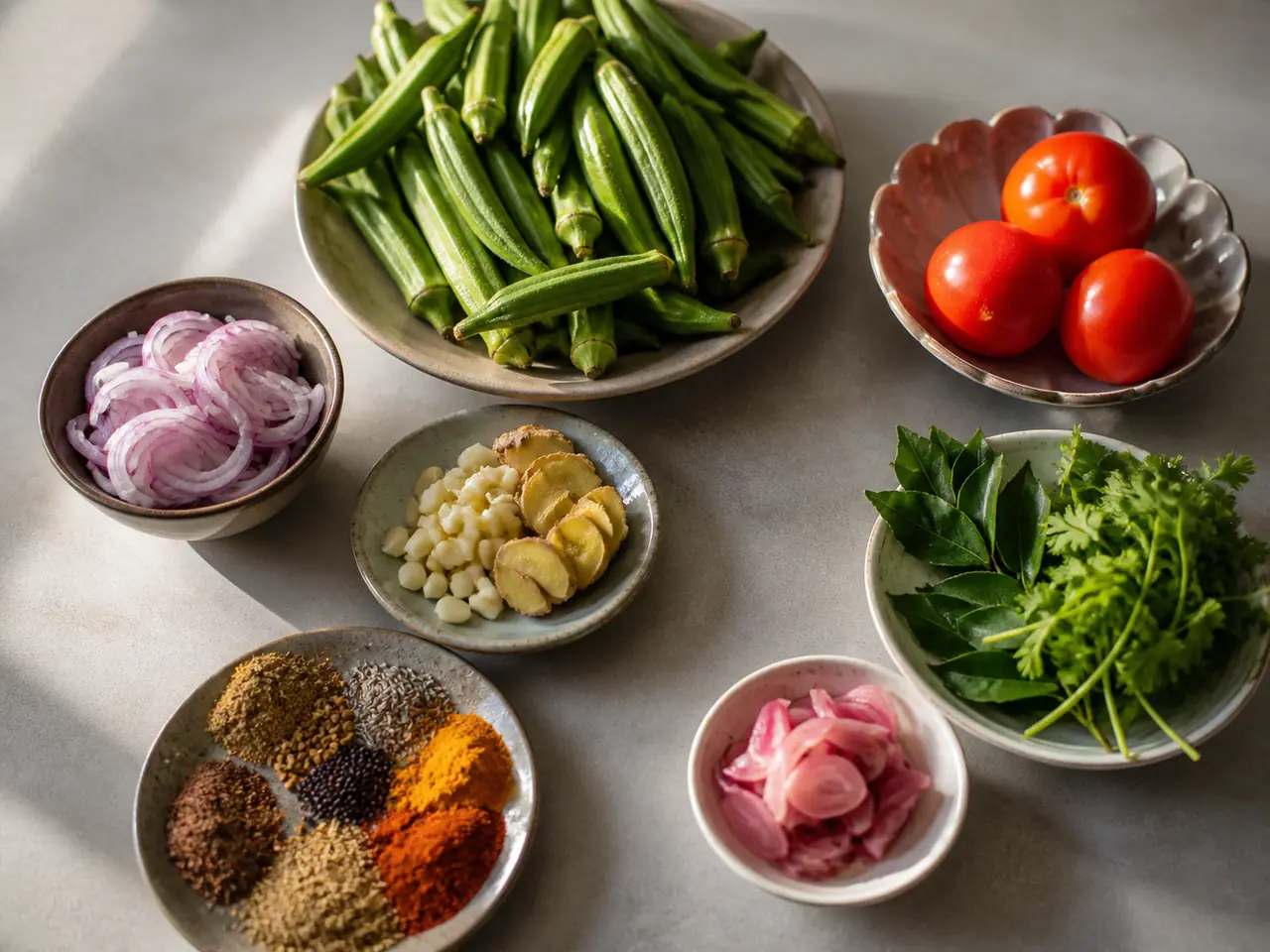
The masala is deliberately simple: onion, ginger, garlic, three ground spices and ripe tomatoes. The finish changes the mood of the pan, but the method stays the same. Give the okra a dry start and the rest becomes a quiet, useful dinner.
Ingredients
Masala
Quick pickles
Equipment
- Wide frying pan
- Wooden spoon
- Plate
Method
-
Dry and sear the okra
Wipe the okra thoroughly, trim the caps and cut it into pieces. Warm the oil in a wide frying pan over medium-high heat. Add the okra in one layer and cook for eight to ten minutes, turning occasionally, until the cut surfaces look dry and lightly browned.
Do not add salt yet. Salt draws water out at the exact moment you are trying to drive water off. The okra will look less glossy as it cooks, which is the sign that the pan is doing its work.
-
Build the spice base
Move the okra to a plate. Add the onion to the same pan with a pinch of salt and cook for six minutes until soft. Stir in the garlic and ginger for one minute, then add the cumin, coriander, turmeric and chilli. Fry for thirty seconds, just until the spices smell warm.
If the spices stick, add a teaspoon of water rather than more oil. You want the browned bits from the okra to loosen into the masala, not a greasy sauce that dulls the spices.
-
Cook the tomatoes
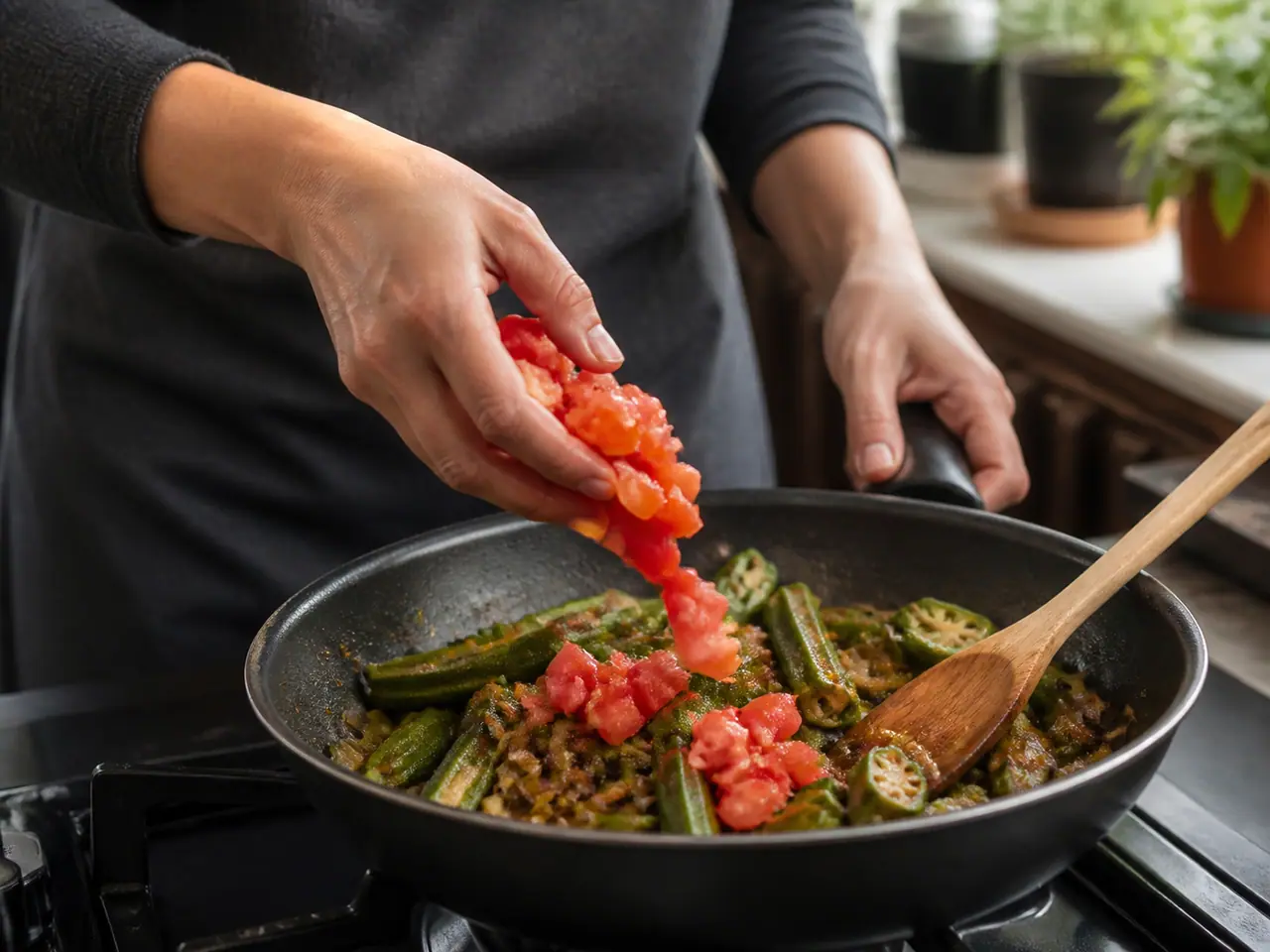
Add the tomatoes and the salt. Scrape the bottom of the pan, bring the mixture to a steady simmer and cook uncovered for ten to twelve minutes. The raw tomato smell should disappear and the sauce should leave a clean line when a spoon crosses it.
Keep the simmer quiet. A hard boil breaks the tomato down quickly but leaves a thin, sharp sauce. Slow evaporation gives the spices time to round out and gives the okra somewhere to sit rather than swim.
-
Return the okra and add the ${v.finish}
Fold the seared okra back into the masala and cook for five minutes, turning gently so the pieces are coated without breaking. Add the finishing ingredient described above only after the okra is tender.
Pour the hot vinegar mixture over the onion and leave for fifteen minutes. Lift out the pink slices and pile them over the masala just before serving.
-
Rest before serving
Take the pan off the heat and leave it for five minutes. The sauce thickens as it stands and the okra absorbs the spice without becoming mushy. Taste once more for salt and acidity.
Serve with rice, roti or flatbread. Keep a little of the topping visible on the surface so the first forkful tells you what kind of masala it is.
The dry-pan test
Cut okra has a sticky interior, and that is not automatically a problem. The problem comes when surface water turns the pan into a steamer. Wiping the pods, leaving space around them and waiting to salt gives the cut edges a chance to dry and brown.
You do not need to make every piece crisp. Look for a few browned corners and a less glossy surface. Once the tomatoes arrive, the sauce will soften the outside, but the seared start keeps the pieces intact.
A masala needs reduction, not more spice
When a tomato masala tastes flat, the first instinct is often another half teaspoon of spice. Usually it needs time instead. Raw tomato water dilutes the aromatics; uncovered simmering removes that water and lets the onion, ginger and ground spices meet properly.
Taste after the sauce has thickened. Salt and lemon behave differently in a thin sauce, and a finish such as yogurt or tahini can soften the impression again. The pan should taste complete before the topping arrives.
Nutrition
Per serving, for 4 servings. Estimated from ingredient weights — it moves with the brands and cuts you actually use.
| Nutrient | Per serving |
|---|---|
| Calories | 263 kcal |
| Protein | 8 g |
| Carbohydrate | 25 g |
| Fibre | 8 g |
| Fat | 15 g |
Source: Estimated from ingredient weights, USDA FoodData Central
Questions
Can I make the onions ahead?
Can I use white vinegar?
Can I use shallots?
Filed under
Cook this next
All recipes →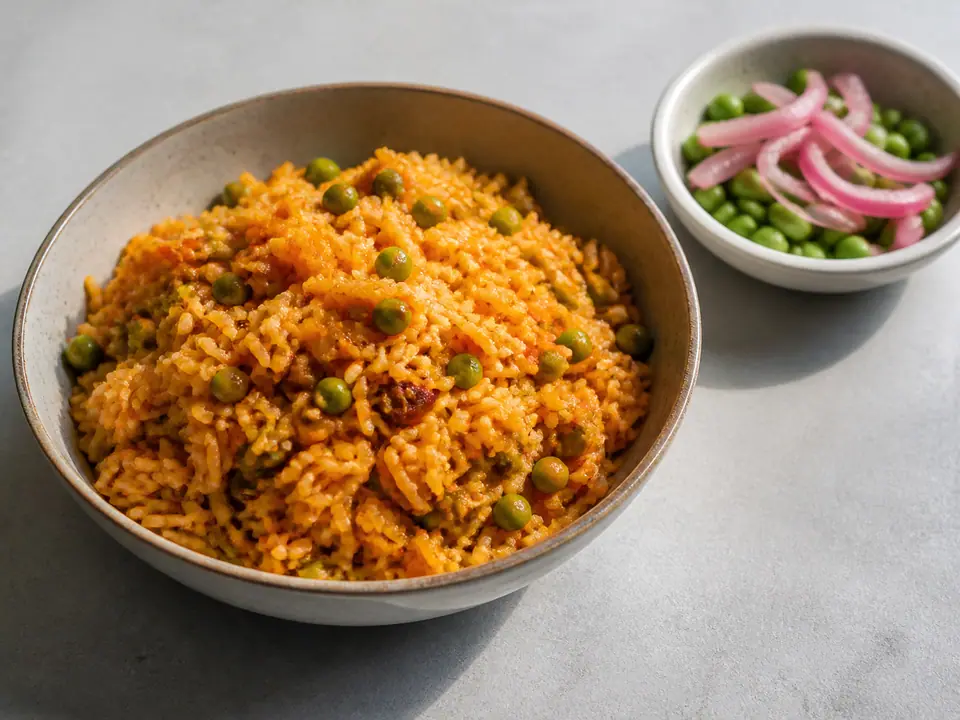
Kimchi fried rice with peas with pickled onions
Quick pickled onions cut through the savoury kimchi rice and bring a crisp, bright bite to the bowl.
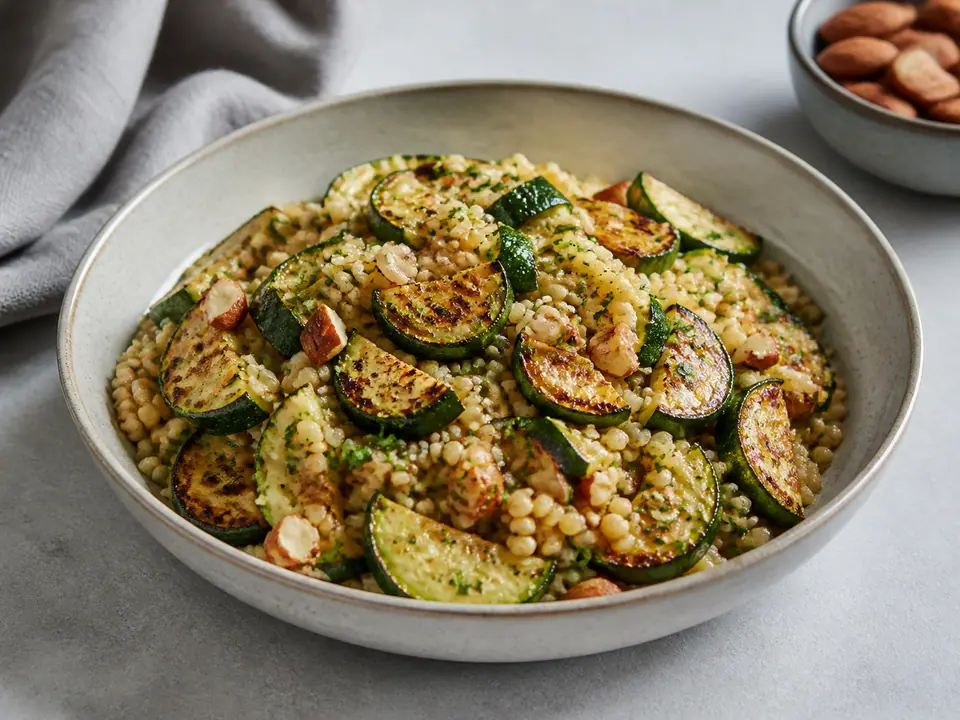
Courgette, mint and almond couscous for the freezer
Freeze the couscous base in flat portions, then bring back its brightness with fresh lemon, mint and almonds at serving time.
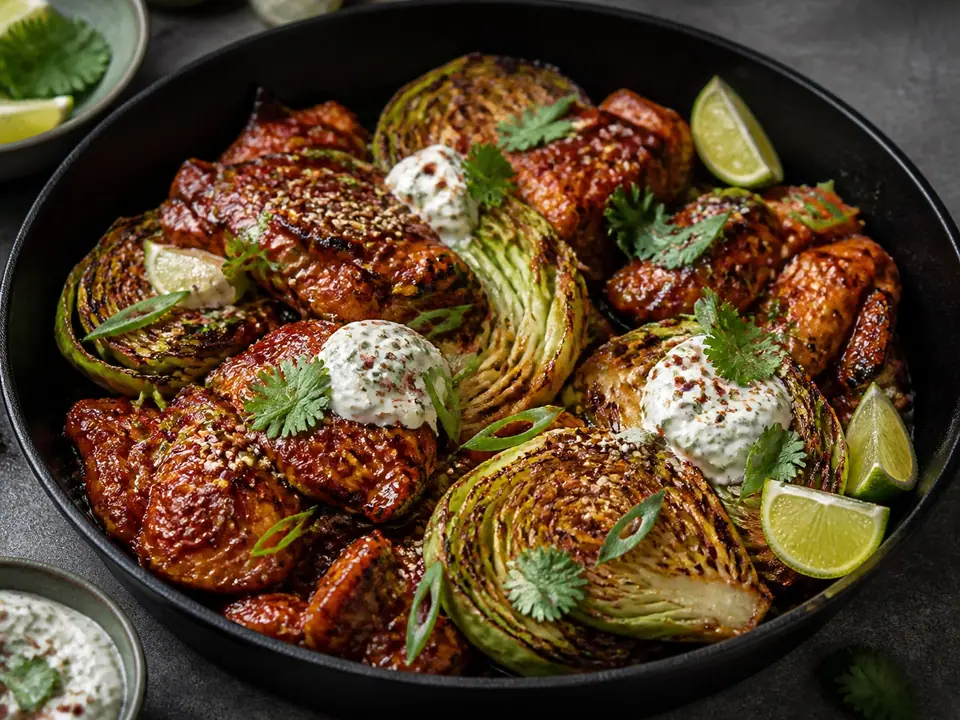
Gochujang chicken with cabbage with yogurt
Cool lime yogurt gives spicy gochujang chicken and cabbage a clean counterpoint without dulling the fermented chilli flavour.