Peach and tomato panzanella for a packed lunch
youryum.com/recipes/peach-and-tomato-panzanella-for-a-packed-lunch · serves 2
A lunch box that is better at noon than at eight
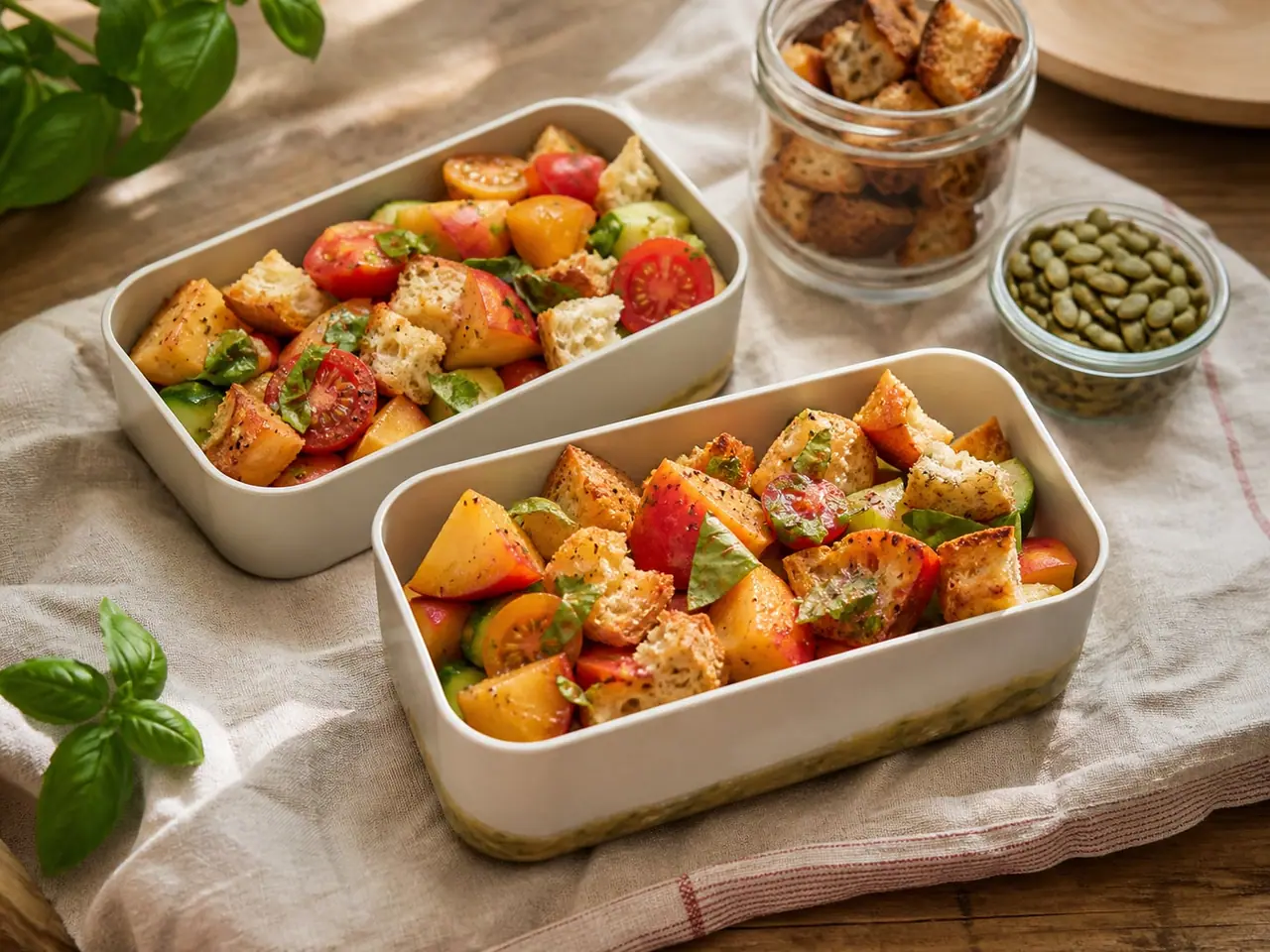
Pack the tomatoes and peaches with a lemon dressing underneath, then keep bread, herbs and seeds separate until lunch.
- Vegetarian
- Vegan
- Dairy free

- Prep
- 20 min
- Cook
- 10 min
- Total
- 30 min
- Serves
- 2
- Per serving
- 489kcal
- Effort
- Easy
A panzanella packed at eight in the morning should not be a soggy salad by twelve. The answer is not refusing to pack panzanella; it is giving the wet ingredients and the bread separate jobs until you are ready to eat.
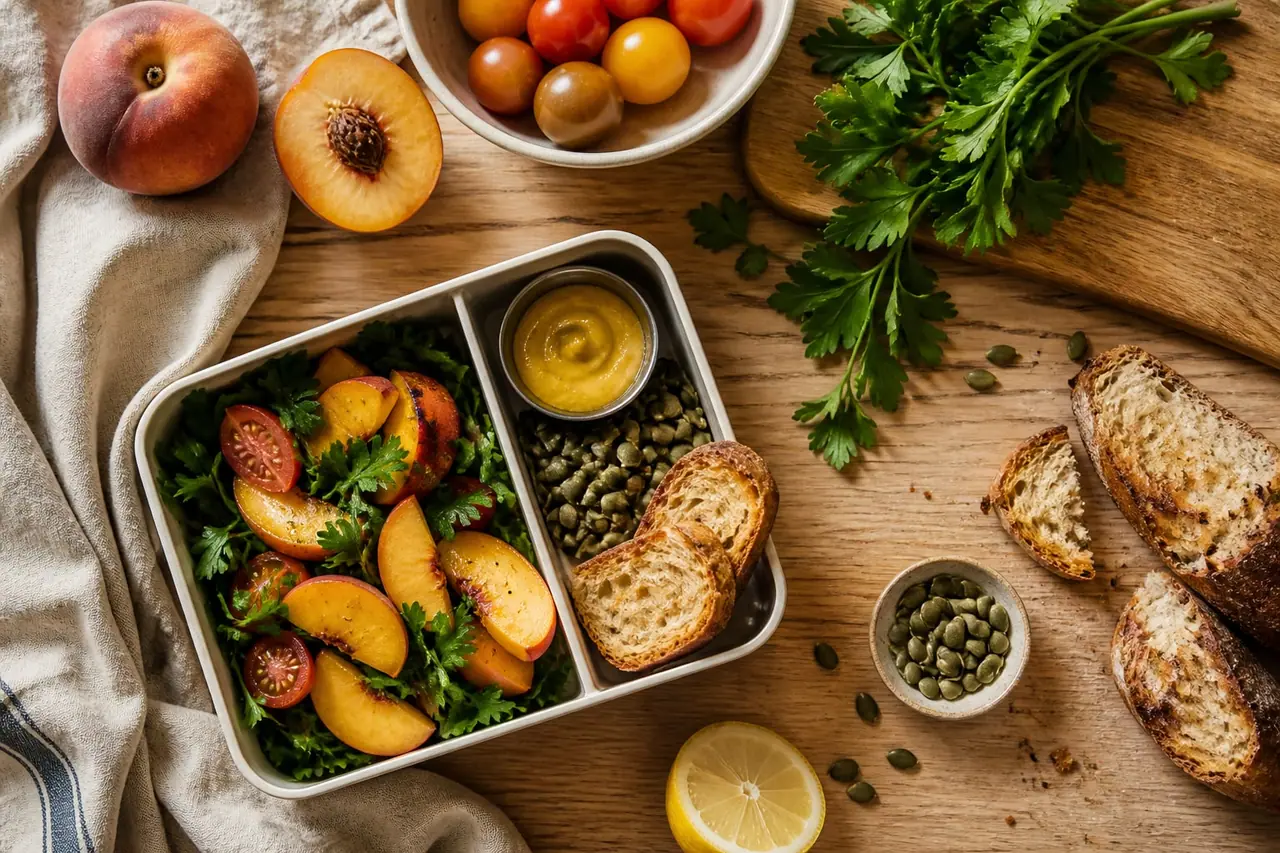
Use a wide box, put the tomatoes at the bottom with the dressing, and carry the toasted bread in a little bag or pot. The peaches sit above the tomatoes, where they stay cool and intact.
Ingredients
Salad
Jar dressing
Equipment
- Large baking tray
- Two wide lunch boxes
- Small lidded jar
Method
-
Toast bread and seeds
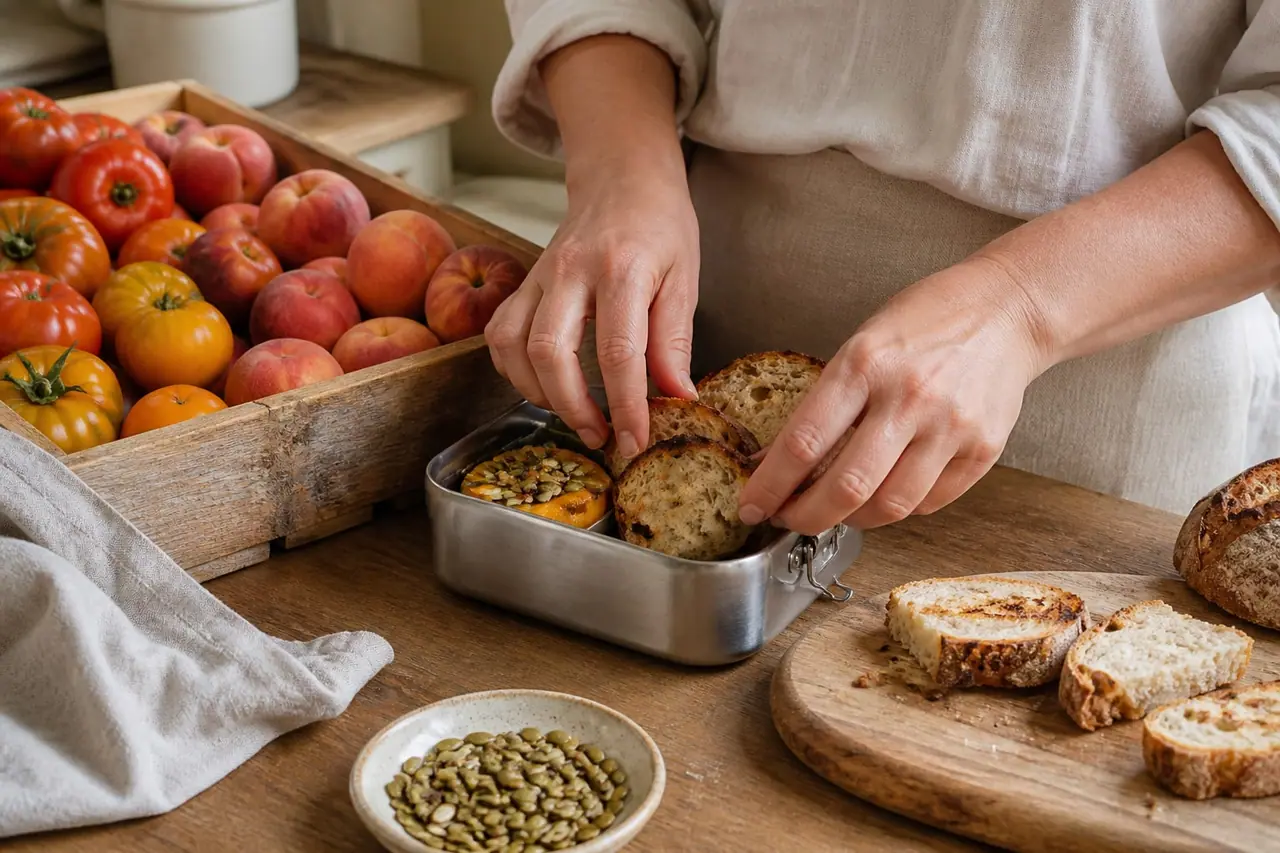
Heat the oven to 190°C fan. Put the bread on one side of a tray and the pumpkin seeds on the other. Toss the bread with one tablespoon of oil and bake for eight minutes. The seeds may be ready first; tip them into a small pot and let the bread go another two minutes.
-
Shake the dressing
Put the lemon juice, mustard, remaining oil and salt in the jar. Shake until smooth. Taste it; it should be sharp because the tomatoes will dilute it over the morning.
-
Pack in layers
Divide the dressing between two wide lunch boxes. Add the tomatoes, then the peaches. Keep the parsley, bread and seeds in separate small pots, or wrap them in baking paper under the lid.
Do not use a narrow jar. You will bruise the peaches trying to shake the salad out.
-
Keep it cold
Refrigerate the boxes overnight or until you leave, then use an ice pack in the lunch bag. Keep the bread at room temperature so it stays crisp.
-
Assemble at lunch
Let the box stand for ten minutes, add the bread and herbs, and fold gently. Scatter over the seeds last. Eat within two hours of taking it out of the fridge.
What survives the commute
Firm tomatoes travel better than very soft ones, and a peach that is just beginning to yield is much easier to pack than one that smells strongly sweet. Cut the fruit large so it has fewer exposed edges. If the box is going into a backpack, wrap it in a tea towel or put it inside a second container; tomato dressing finds the one loose corner in any lid.
Keep the bread out until lunch.
If you need a gluten-free box, use toasted cooked grains instead of bread and keep the rest of the packing method. Rice, quinoa or cooked buckwheat all carry the dressing well. For a dairy version, pack feta separately and crumble it over the top rather than mixing it in at home.
If lunch is delayed
An hour is not a problem if the box stays cold. Add the bread only when you know you can eat; it is better to have a crisp component waiting than a soggy salad waiting for a break that keeps moving.
The lunch-box test
Pack the bread in its own small container, even if that feels like one more thing to wash. The tomatoes and dressing need time to meet, while the bread needs to stay dry until the last minute. A wide box gives the fruit room to sit without being crushed, and a cool bag keeps the peaches firm enough to cut with a fork. If the tomato is very juicy, keep the dressing in the bottom and do not shake the box before you eat. Tip it into a bowl, add the bread, then fold once from underneath. The bread should pick up enough juice to taste seasoned while a few corners remain crisp. If everything looks wet before lunch, the box was either too warm or the bread was packed too early. There is no rescue in more oil. Keep a small lemon wedge or extra herbs for the table instead, and make the next batch with drier bread and a wider container.
Nutrition
Per serving, for 2 servings. Estimated from ingredient weights — it moves with the brands and cuts you actually use.
| Nutrient | Per serving |
|---|---|
| Calories | 489 kcal |
| Protein | 10 g |
| Carbohydrate | 70 g |
| Fibre | 8 g |
| Fat | 20 g |
Source: Estimated from ingredient weights, USDA FoodData Central
Questions
Can I assemble it the night before?
Can I pack it in a jar?
What if I have no ice pack?
Filed under
Cook this next
All recipes →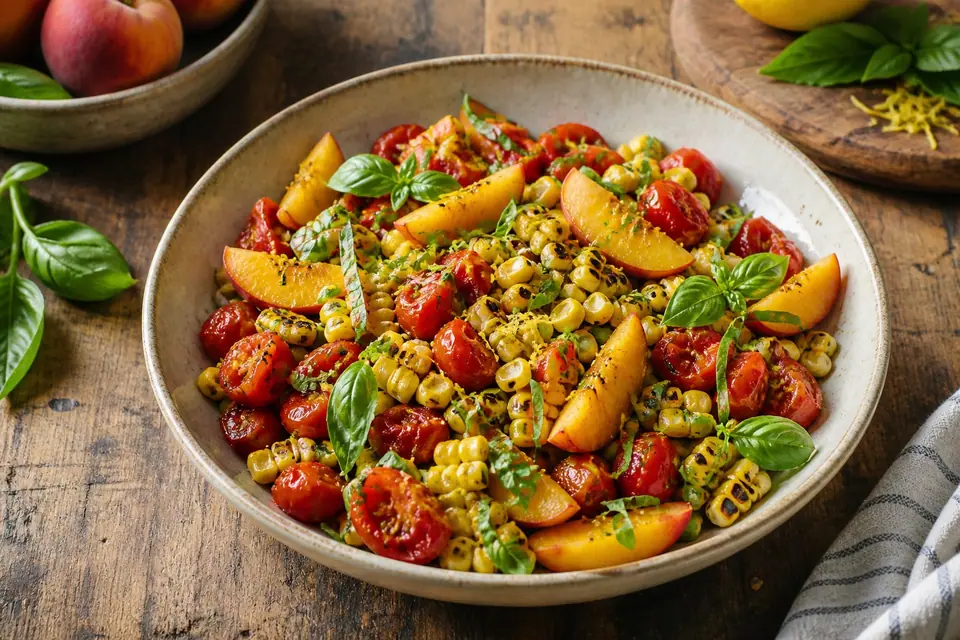
Charred corn, tomato and peach salad for the freezer
Tomatoes and corn can be frozen after roasting; peaches and herbs cannot. Freeze the cooked base, then finish it with fresh fruit when you need dinner.
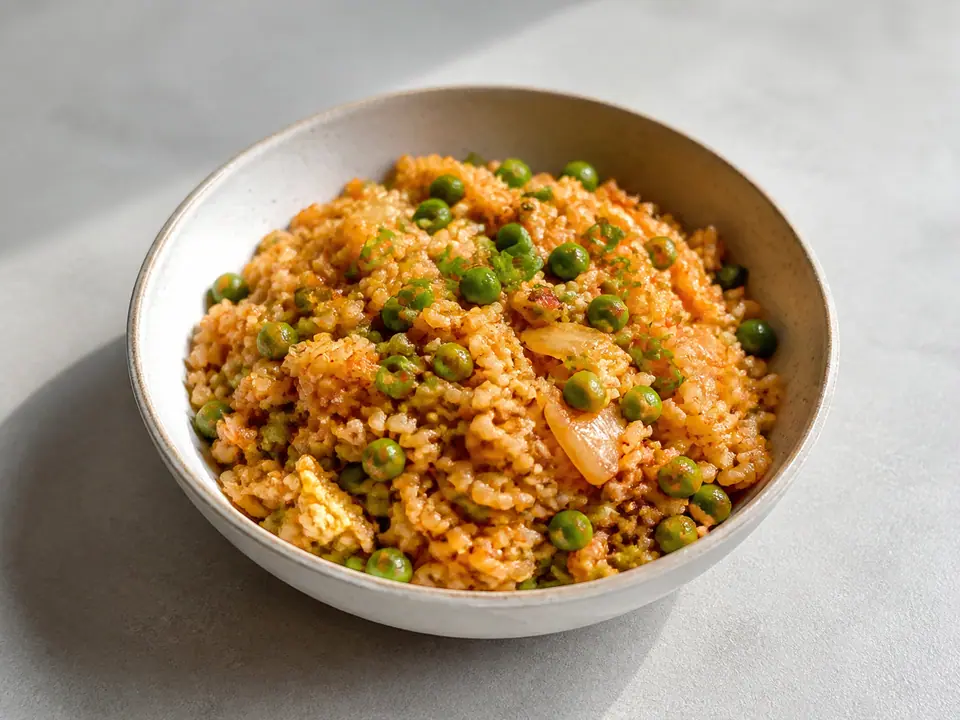
Kimchi fried rice with peas for a one-pan dinner
Spinach and a fried egg turn kimchi fried rice into a complete dinner without taking away the crisp rice at the bottom.
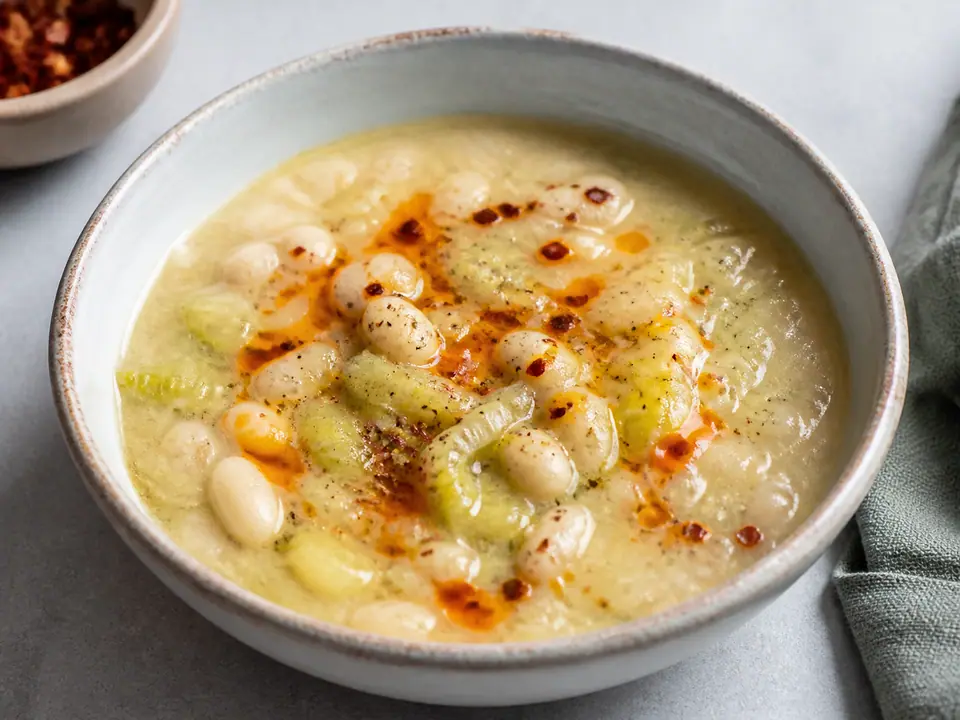
White bean and leek soup with chilli oil
A mellow leek and bean soup gives smoky chilli oil room to smell fragrant rather than simply hot.