Butternut gives a denser roast; pumpkin gives softer edges and more variation
Butternut squash usually roasts more evenly because its flesh is dense and its seed cavity is small. Pumpkin can roast beautifully, but its shape and moisture vary more.

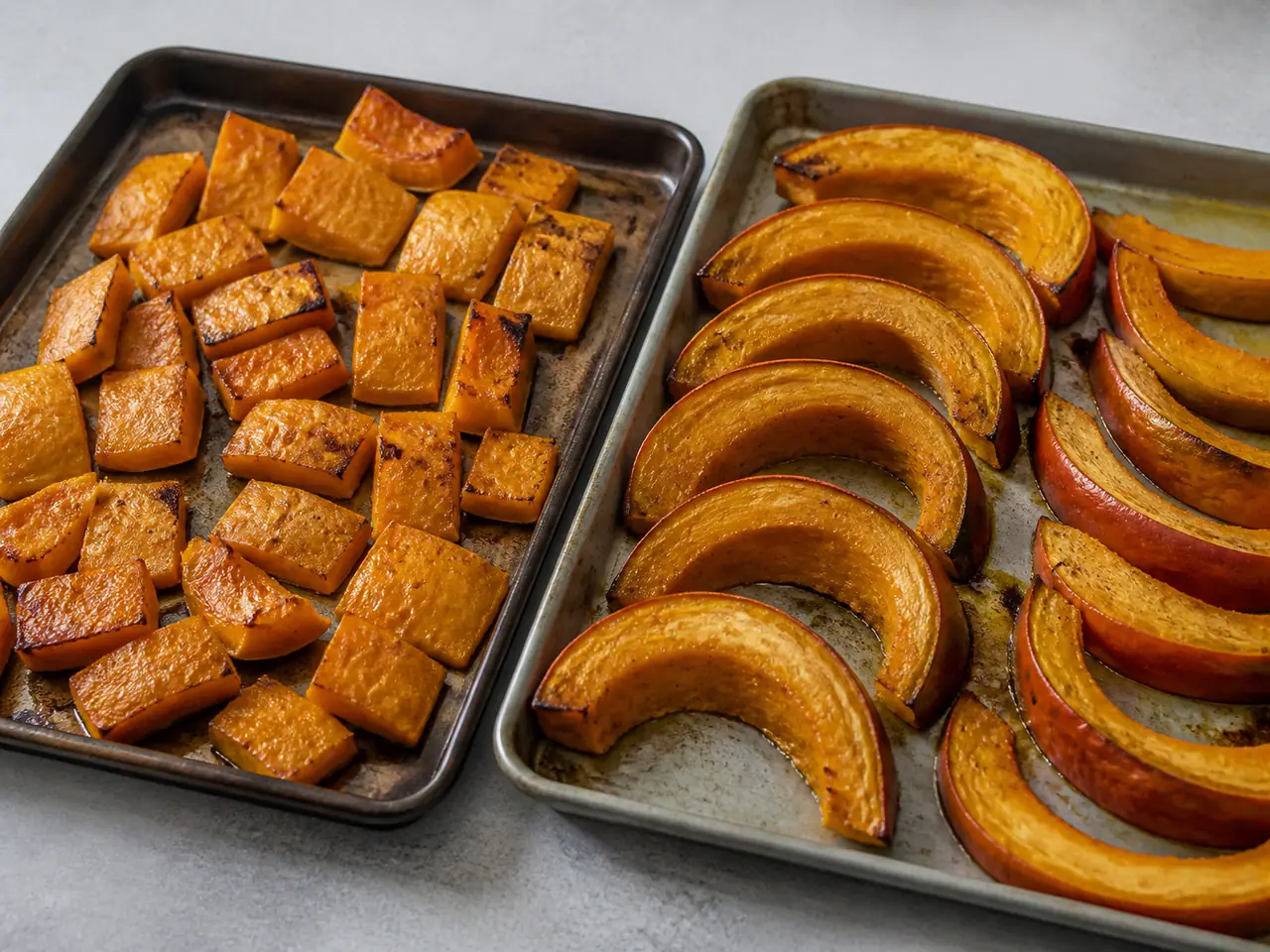
Butternut squash is the dependable roasting shape: long neck, small seed cavity and dense flesh that gives you regular cubes. Pumpkin can be more dramatic and more varied. Some pieces roast sweet and soft; others collapse or stay watery because the cavity and flesh are different from one side to the next.
I roasted matching wedges of both with the same oil and salt. Butternut browned with a firm edge and creamy centre. Pumpkin gave a softer, looser bite and needed more attention. Choose butternut when the tray needs control, pumpkin when softness and a larger shared dish are welcome.
Which squash roasts more evenly?
Matching wedges, same oil, same tray and the same oven time.
Butternut squash
Dense, even flesh
✓ More even roast
Pumpkin
Softer, more variable
Butternut squash is my small winner for this question. The other choice still works when the dish asks for its particular texture.
Source: Maren Ashby's kitchen test, 2026-03-01
Shape gives butternut an advantage
The neck of a butternut squash produces even pieces with a small amount of seed. That means more tray space is holding flesh rather than cavity, and the wedges cook at a similar speed.
The bulb end still varies, so I scoop it clean and cut the pieces a little thicker. A consistent cut matters more than making every wedge beautiful.
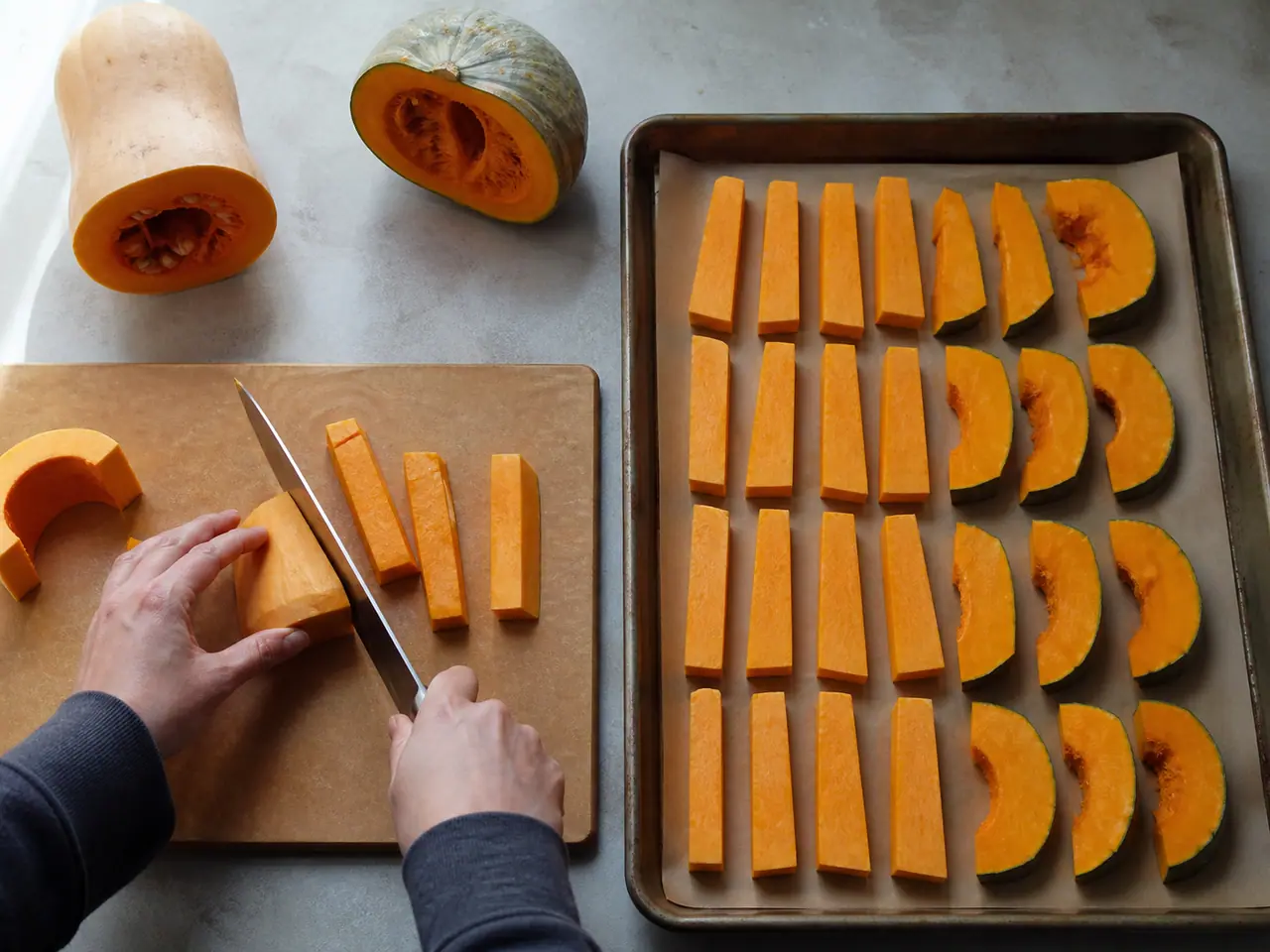
Pumpkin depends on the variety
Pumpkin flesh can be watery, fibrous, dense or soft depending on the type and maturity. The name on the sign does not tell me everything about how the tray will behave.
I roast pumpkin when I can give it space and use the softer pieces in soup or mash. For a crisp-edged dinner, I prefer a dense winter squash with a dry cut face.
I keep one piece aside so I can compare it with the next batch.
Dry heat needs room
Both squash release water as they roast. A crowded tray steams the pieces, then the surface stays pale while the centre softens. Use two trays if the pieces cover the metal.
Dry the cut faces and oil lightly. More oil cannot replace a dry surface, and a puddle under the squash slows evaporation.
The clock helps, but the surface gives the better signal.
The skin is a cooking decision
Butternut skin is usually tough, so I peel it for cubes and wedges. Some pumpkin skins soften enough to eat, but I test a small cooked piece rather than assuming.
If I leave skin on, I cut the wedges thick enough that the flesh remains stable. Thin skin-on pieces can burn before the centre is tender.
That small pause saves more food than a rescue at the end.
Use the seed cavity
Pumpkin often gives you more seeds and stringy material to remove. Scrape it clean before cutting so the pieces sit flat and the wet strands do not burn on the tray.
Butternut seeds can also be toasted. I separate them from the flesh, dry them and roast them later rather than letting them steal moisture from the wedges.
The next step works better when the excess moisture has somewhere to go.
My tray test
At 220°C fan, the butternut pieces browned with a clear cut edge and stayed together when lifted. The pumpkin softened faster at the corners and needed turning earlier.
The result is not a ban on pumpkin. It is a timing note. Pumpkin suits a soft mash, soup or a tray where its tender edges are part of the point.
I keep one piece aside so I can compare it with the next batch.
One useful substitution is to change the cut before changing the squash. If the pieces you bought are smaller, keep them thicker and shorten the cooking time. If they are older or wetter, send them into a sauce, soup or covered dish where the released moisture has somewhere to go. I get a more reliable dinner by adapting the method to the ingredient in front of me than by chasing the variety named in a recipe.
The comparison also changes with serving temperature. A texture that feels generous straight from the oven may soften under dressing, while a tender piece can feel better beside toast or grains. I taste one plain, one seasoned and one after five minutes of waiting. Those three bites tell me which version belongs on the plate and which one needs another job.
When I repeat a test, I keep the variables boring: same weight, same pan, same oil and the same time between cooking and tasting. I write down the cut because a thin slice can make two types look identical. The useful result is not a universal winner. It is a short decision I can make at the shop and repeat on a busy evening.
A fair choice still leaves room for the other ingredient. I use the comparison as a decision tool, not as a reason to ignore what is freshest at the shop. Start with the texture the meal needs, make the cut match that texture and taste the result before adding a heavy sauce. If the first batch behaves differently, record the small change that fixed it: thicker pieces, less liquid, a wider tray or a shorter wait. Those notes are more useful than a grand rule because they travel into the next kitchen, the next season and the next ordinary dinner where the ingredient has to earn its place again.
For the quality and storage details behind my kitchen observations, I use the UC Davis pumpkin and winter squash fact sheet alongside the timed test described above.
The practical verdict
Butternut squash is the easier roasting choice because its dense flesh and small cavity produce more even pieces. Pumpkin wins when you want softness, seeds or a larger cooked batch.
Let the variety and shape set the timing, not a fixed promise that every squash roasts alike.
Questions
Does butternut squash roast better than pumpkin?
Should squash be peeled before roasting?
Why is roasted pumpkin watery?
Can pumpkin and butternut roast together?
More guides
All guides →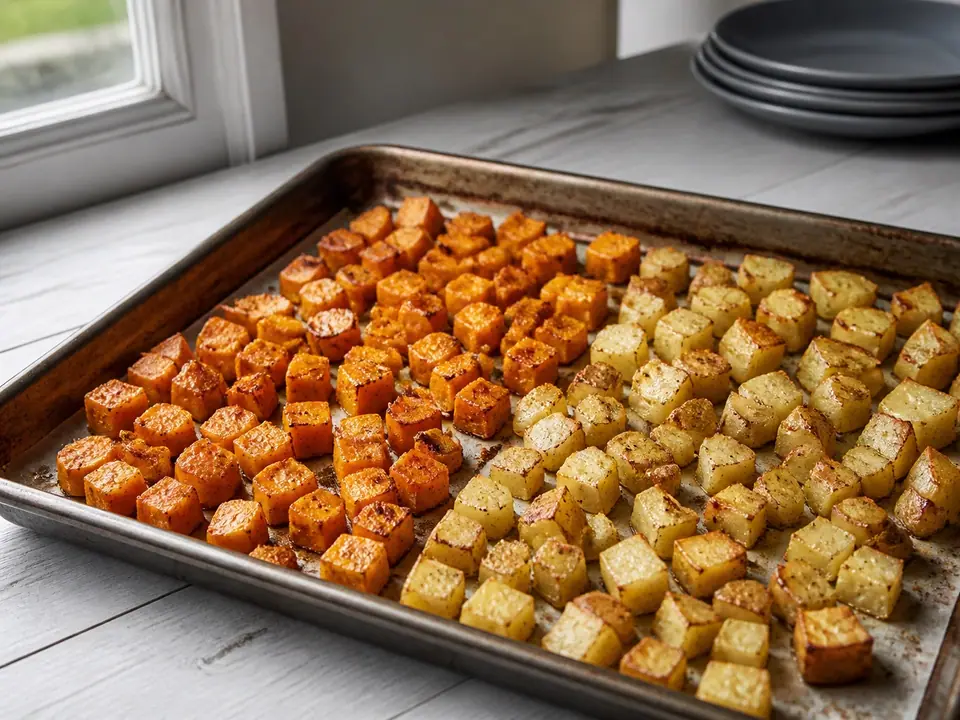
Sweet potatoes vs white potatoes: which is better for roasting?
Sweet potatoes give you a soft, sweet centre and dark edges. White potatoes give you a drier middle and a firmer crust when the tray has room.
5 squash dinners for cold evenings
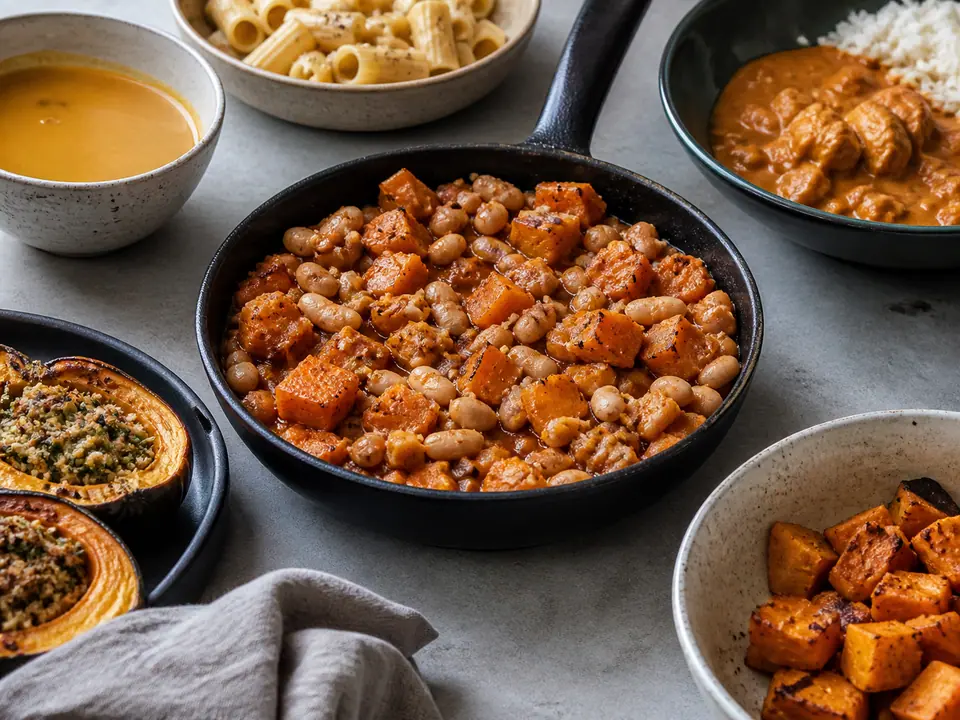
Squash makes cold-weather dinner feel generous in roasted trays, lentil soup, pasta, curry or stuffed halves. Add beans, grains or lentils so the soft centre carries a meal.
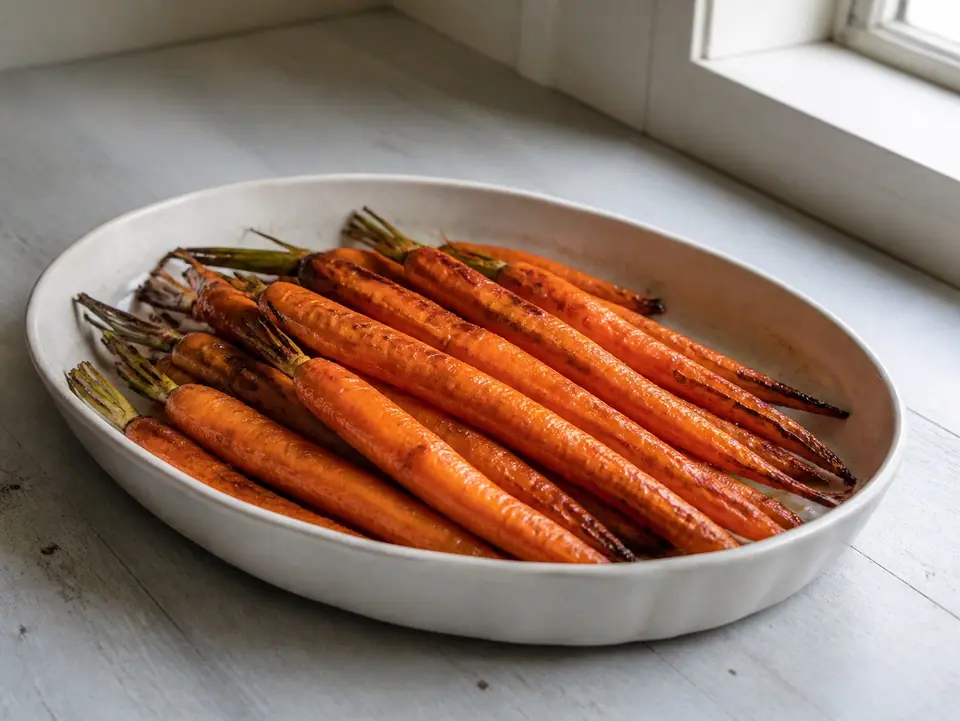
Why carrots taste sweeter after roasting
Roasting drives off water and browns the carrot surface, so its natural sweetness becomes more noticeable. The cut and tray space decide how far it goes.