Sweet or savoury, the roasting choice starts with texture
Sweet potatoes give you a soft, sweet centre and dark edges. White potatoes give you a drier middle and a firmer crust when the tray has room.

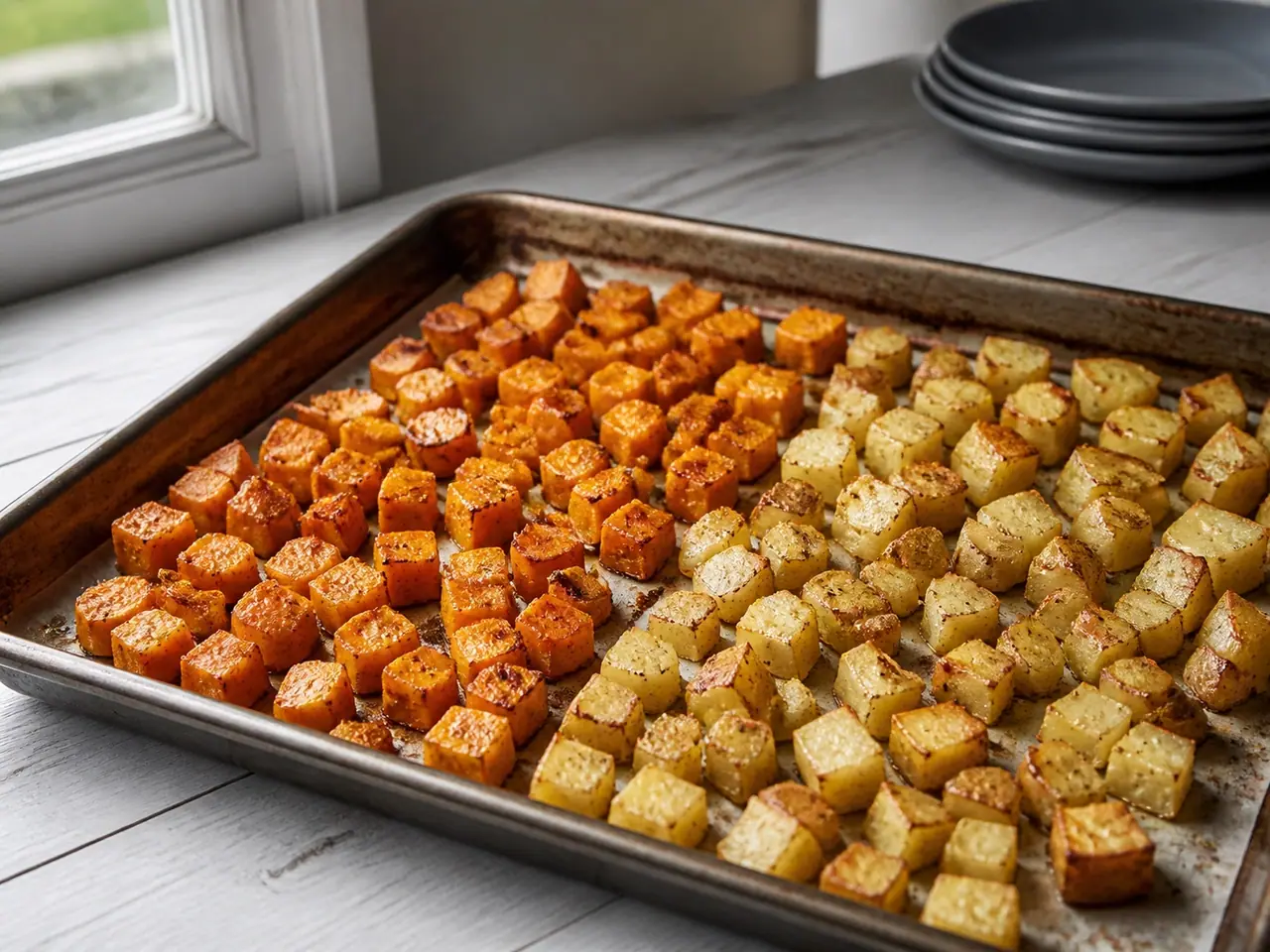
For a crisp roast, white potatoes are the safer choice. Their drier, starchier flesh gives the tray a firmer crust and a centre that stays crumbly rather than jammy. Sweet potatoes are better when you want caramelised edges and a soft, almost creamy middle. They are not failing when they stay tender; that is the trade they bring.
The cut matters more than the colour on the bag. A thin sweet potato baton can burn before its centre softens, while a large white potato cube can stay pale and waxy. I choose the potato after I choose the dinner: crisp with a roast, sticky under a glaze, or soft enough to catch yogurt.
I check that detail before adding more heat, oil or seasoning.
The fair tray test
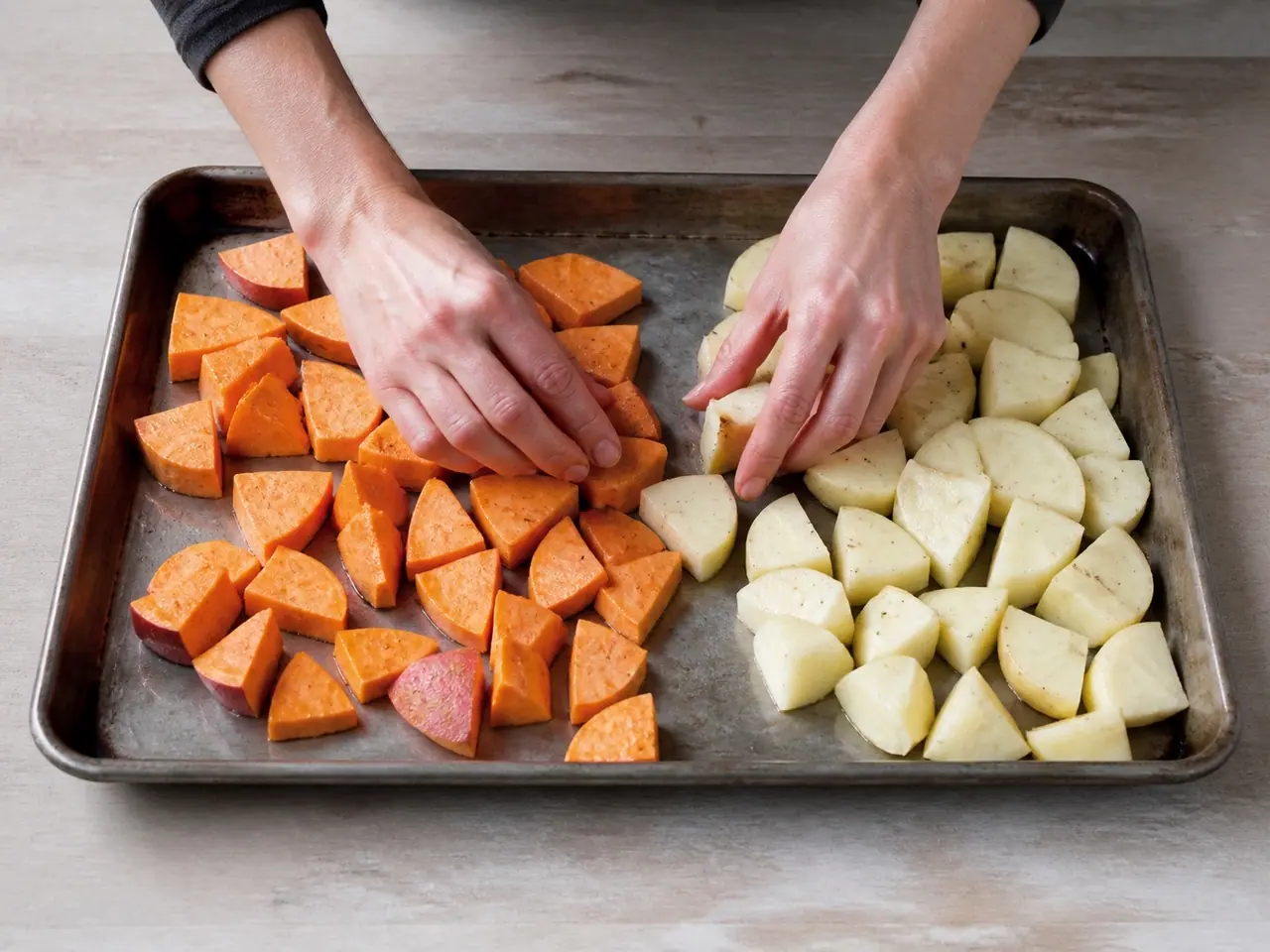
Cut one sweet potato and one white potato into matching 3 cm pieces. Dry them, coat each with the same measured oil and put them on separate halves of a preheated metal tray. The potatoes need space, otherwise their own moisture becomes the deciding ingredient instead of the oven.
At 220°C fan, the sweet potato usually shows colour first. Its sugars darken at the corners while the flesh softens. The white potato takes longer to brown, but when it gets there the surface tends to feel more brittle. Turn both once and judge the centre with a knife.
I check that detail before adding more heat, oil or seasoning.
What sweet potatoes do well
Sweet potatoes suit trays where their softness is welcome. Roast them with chickpeas, black beans or cabbage, then add a sharp yogurt or lime dressing. A little char balances their sweetness, but too much turns the outside bitter before the middle is ready.
Keep the pieces thick and avoid a sugary glaze at the beginning. Maple syrup, honey and some spice blends catch quickly. Roast with oil and salt first, then brush on the sweet finish for the last few minutes.
The clock helps, but the surface gives the better signal.
What white potatoes do well
White potatoes are the better partner for a dry, crisp roast. Floury varieties break into rough edges that catch oil, while waxier potatoes hold a neat shape and stay creamy. Parboiling can roughen the outside, though it adds another pot.
For the simplest tray, cut evenly, dry well and roast cut-side down. Do not turn the pieces every five minutes. The crust needs quiet contact with the metal. Add garlic or herbs near the end so they do not burn.
I keep one piece aside so I can compare it with the next batch.
The oil question
Both potatoes benefit from enough oil to coat the surface, not enough to pool underneath. Sweet potato flesh can look thirsty and tempt you to add more. Wait. It often releases moisture as it warms, and extra oil makes the edges heavy.
White potatoes can take a little more fat when the surface is rough, especially after parboiling. Drain them thoroughly and shake the colander to scuff the edges before oil goes on. That uneven surface is where the roast gets its crunch.
That small pause saves more food than a rescue at the end.
Pick by the plate
Choose sweet potatoes when the dinner needs colour, caramelised corners and a soft centre. Choose white potatoes when the roast itself needs to be crisp and savoury. Use both together only when you accept that the sweet potatoes may finish first.
Tahini, yogurt and chilli oil suit the sweetness of a roasted sweet potato. Chicken juices, rosemary and pan gravy sit more naturally with white potatoes. The useful winner is the one whose texture matches the rest of the meal.
The next step works better when the excess moisture has somewhere to go.
Let the tray rest
A roast is not finished when the oven door opens. Leave the potatoes uncovered for five minutes so steam can move away. Covering them at once makes the crust soft, while leaving them on a hot tray can push sweet edges too far.
If the white potatoes are ready first, lift them onto a plate and let the sweet potatoes continue. Separate timing is less troublesome than a tray where one potato is raw and the other is burnt.
The result should look ordinary and feel deliberate, not overworked.
Root vegetables reward a small check before the main work. I look at one piece, one cut face or one stored end and let that evidence choose the next step. A firm centre deserves a hot tray; a soft one belongs in soup or mash. A dry cupboard suits a whole root; a covered container suits a cut one. That habit keeps the method honest and saves me from adding more heat, water or seasoning to a problem that started with the ingredient itself.
The short answer
For a classic crisp roast, buy white potatoes and give them room. For a bowl built around caramelised sweetness, buy sweet potatoes and protect the middle with a thicker cut.
I often roast both on one tray with separate zones. The white potatoes get a head start, the sweet potatoes join later, and each reaches the plate with the texture it was chosen to provide.
Questions
Are sweet potatoes or white potatoes better for roasting?
Can I roast sweet and white potatoes together?
Which white potato is best for roasting?
Why do sweet potatoes burn before they crisp?
More guides
All guides →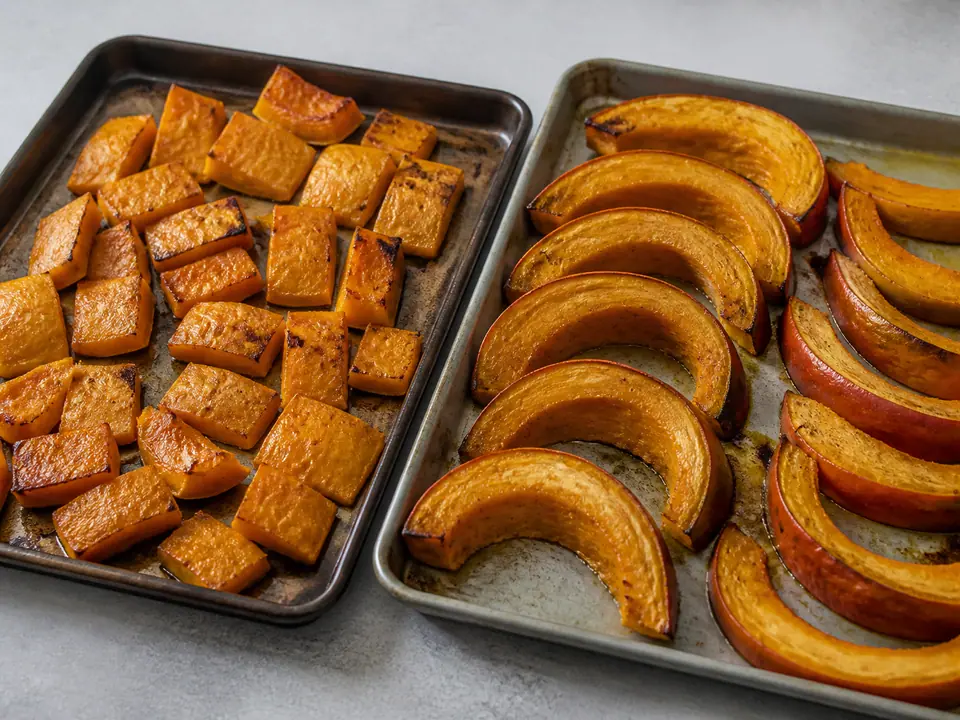
Butternut squash vs pumpkin: which roasts better?
Butternut squash usually roasts more evenly because its flesh is dense and its seed cavity is small. Pumpkin can roast beautifully, but its shape and moisture vary more.
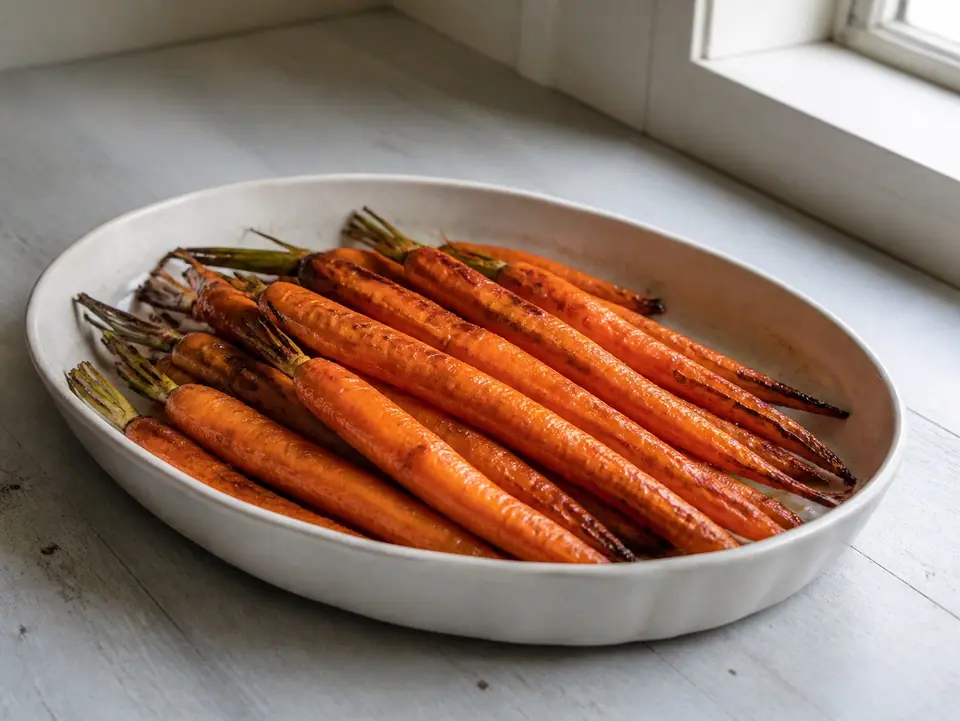
Why carrots taste sweeter after roasting
Roasting drives off water and browns the carrot surface, so its natural sweetness becomes more noticeable. The cut and tray space decide how far it goes.
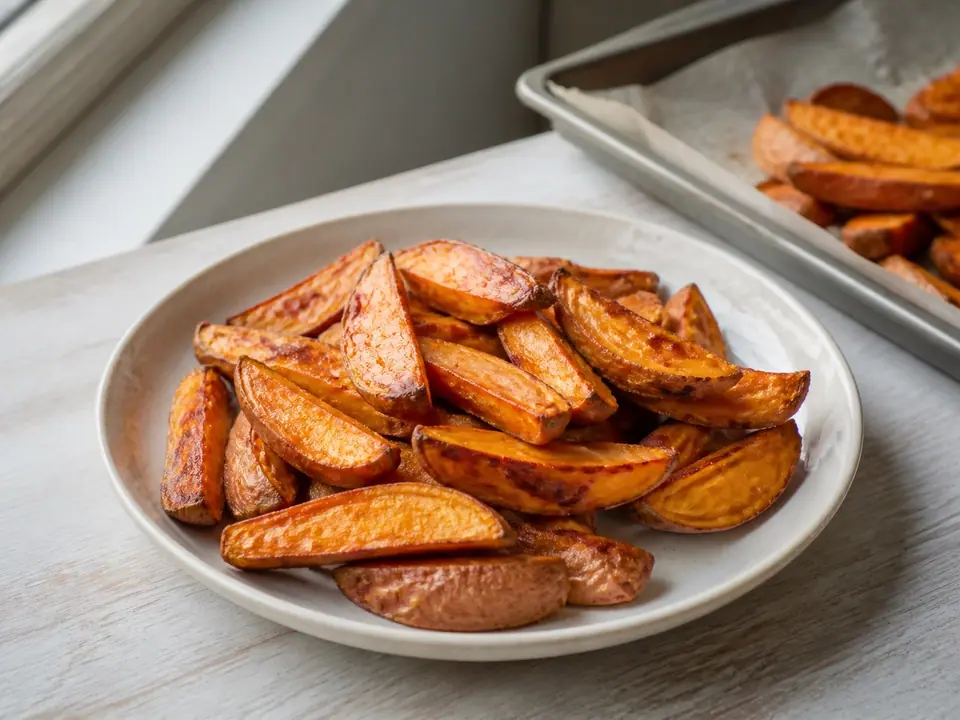
Why sweet potatoes burn before they crisp
Sweet potatoes are soft and sweet by nature. A hot, crowded tray or an early sugary coating makes the outside darken before the centre has finished cooking.