The dark edge arrives before the dry shell
Sweet potatoes are soft and sweet by nature. A hot, crowded tray or an early sugary coating makes the outside darken before the centre has finished cooking.

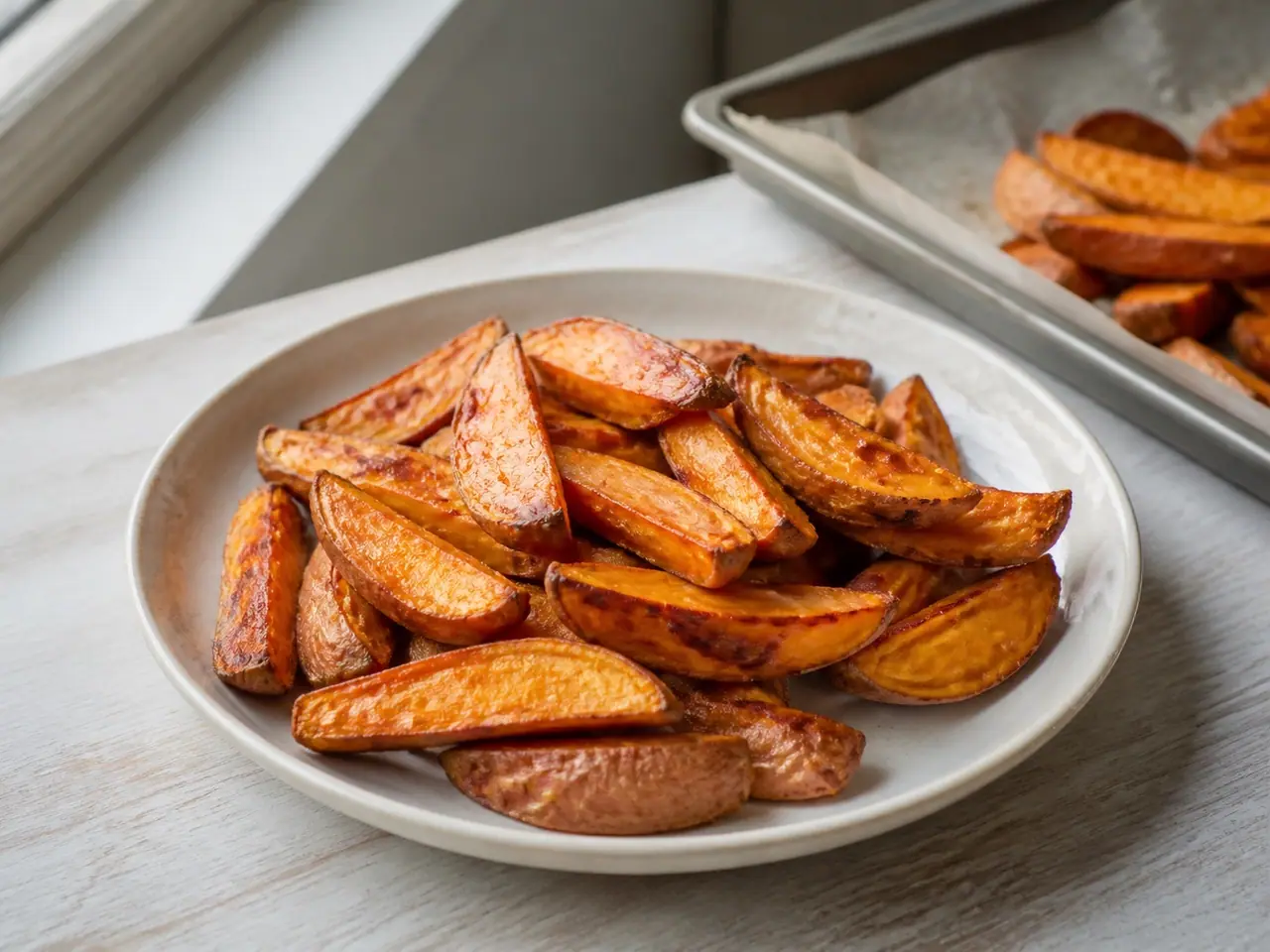
Sweet potatoes do not crisp like white potatoes, and expecting the same finish is the first trap. Their flesh carries more water and their sugars brown early. The outside can look deeply caramelised while the middle is still soft. Black corners and a bitter taste mean the heat has outrun the moisture.
I fix the problem with shape and timing. Thick wedges give the centre enough time, a wide tray lets water escape and an unsweetened first roast builds colour without burning a glaze. Sweet potato crispness is a narrow window, so the tray needs watching.
I check that detail before adding more heat, oil or seasoning.
Sugar changes the order of the roast
The sugars in sweet potato colour before the flesh has dried enough to form a brittle shell. That is why a piece can be bronze at the corner and soft under the skin. Add honey or maple syrup at the start and you put another fast-browning layer on top.
Spices can behave the same way when they contain sugar or fine particles that sit on the tray. Roast the potato with oil and salt first, then add a glaze once the edges have firmed. The coating needs minutes, not the whole cook.
I check that detail before adding more heat, oil or seasoning.
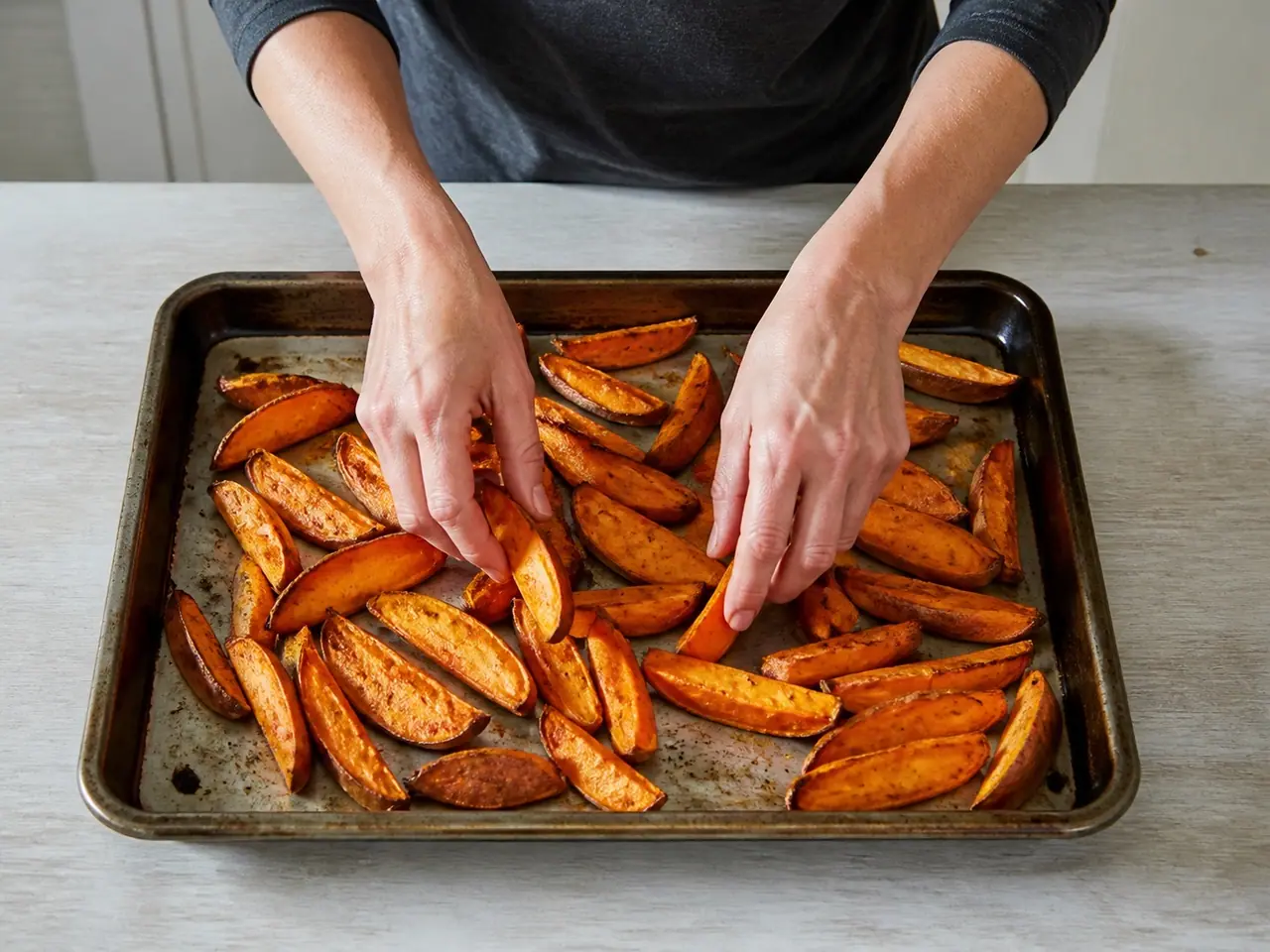
Moisture needs somewhere to leave
A crowded tray traps the steam released by the cut surfaces. The potatoes soften in that humid pocket, then the exposed edges burn when you increase the heat to chase colour. Leave a finger of space or use two trays.
Dry the cut pieces before oiling them. Visible water should be gone. A dry surface starts browning sooner, which means you can use a moderate finish instead of a fierce oven for the full time.
The clock helps, but the surface gives the better signal.
The cut decides the margin
Thin fries and small dice have a high surface area, so they brown fast. They can work in an air fryer, but they are less forgiving on a sheet pan. Use 3 cm cubes or thick wedges for a soft centre and dark edge.
Keep the skin on when it is clean and firm. The skin protects the flesh and keeps wedges together. If you peel the potato, lower the heat slightly or turn the pieces earlier.
I keep one piece aside so I can compare it with the next batch.
Use two temperatures
Start at 210°C fan so the cut faces take colour without the sugar racing ahead. Once the centres are nearly tender, raise the heat briefly or move the tray higher. The second burst is for the edge, not the middle.
If the corners are already dark, lower the oven and cover the tray loosely with foil for a short stage. Remove the foil before serving so trapped steam can leave.
That small pause saves more food than a rescue at the end.
Know the right finish
A roasted sweet potato should bend slightly when lifted and give cleanly at the centre. It will not have the brittle shell of a floury white potato. Look for a thin browned skin and sticky edges.
Let the pieces rest uncovered for five minutes. The surface firms as steam moves away. Covering them in a bowl at once makes the crust limp.
The next step works better when the excess moisture has somewhere to go.
Save sticky flavours for last
Chilli honey, miso, brown sugar and maple syrup all work on sweet potato, but they belong near the end. Brush them on once the flesh is tender and return the tray for three to five minutes.
A sharp finish makes the sweetness easier to eat. Lime, lemon, vinegar or yogurt can balance the tray without asking the oven to brown one more layer.
The result should look ordinary and feel deliberate, not overworked.
If the dinner needs a crisp topping, use toasted seeds or fried onions rather than asking the sweet potato to become a chip. The soft centre is useful: it catches sauce, holds a bean topping and gives a tray a proper base. I would rather serve that texture honestly than keep roasting until the corners taste burnt.
Root vegetables reward a small check before the main work. I look at one piece, one cut face or one stored end and let that evidence choose the next step. A firm centre deserves a hot tray; a soft one belongs in soup or mash. A dry cupboard suits a whole root; a covered container suits a cut one. That habit keeps the method honest and saves me from adding more heat, water or seasoning to a problem that started with the ingredient itself.
The short answer
Sweet potatoes burn before they crisp because sugar and surface heat move faster than water can leave the centre. Use thick pieces, dry them, leave room and save sticky coatings for the end.
The best result is not a brittle chip. It is a caramelised outside with a tender middle that can hold yogurt, tahini or beans.
Questions
Why do sweet potatoes burn in the oven?
What temperature is best for sweet potatoes?
Should I soak sweet potatoes?
How do I make the edges less bitter?
More guides
All guides →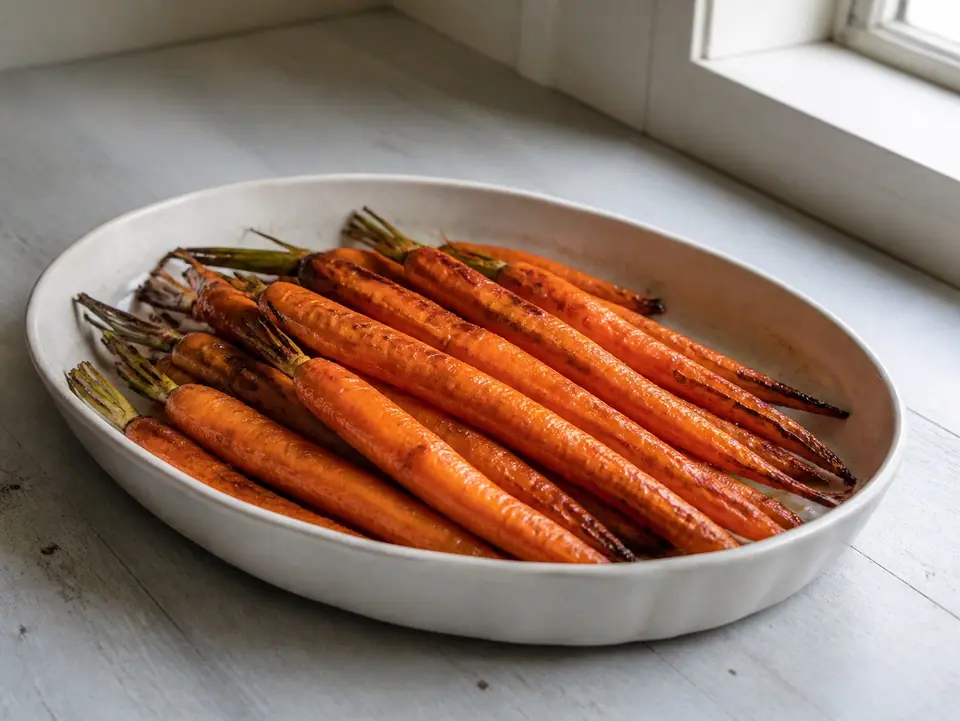
Why carrots taste sweeter after roasting
Roasting drives off water and browns the carrot surface, so its natural sweetness becomes more noticeable. The cut and tray space decide how far it goes.
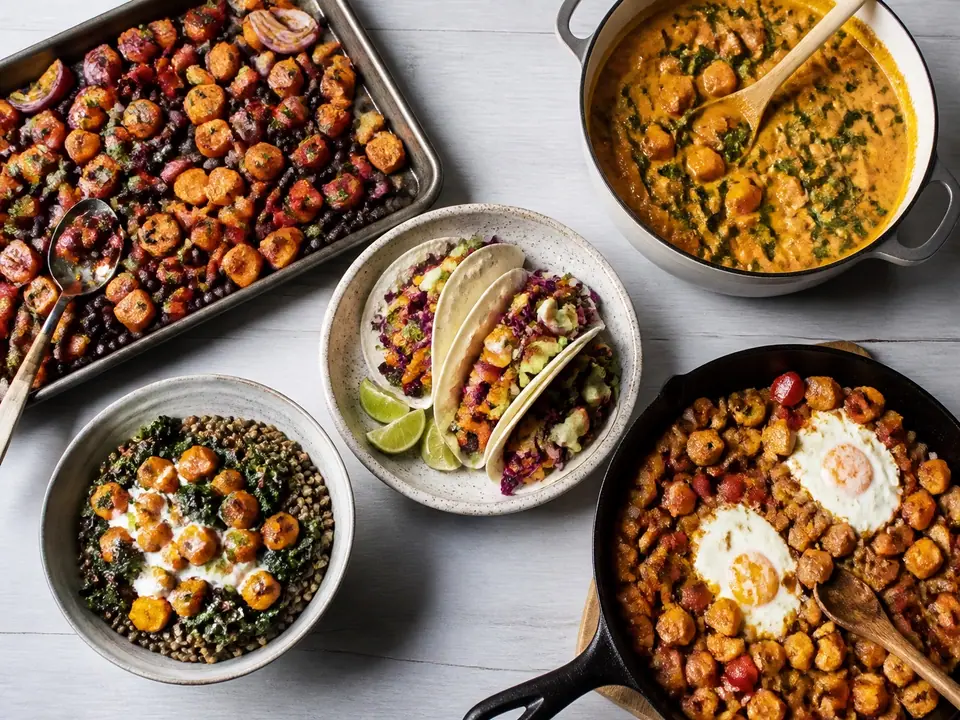
5 easy dinners with sweet potatoes
Roast sweet potatoes with beans, simmer them in curry, fold them into tacos, pair them with lentils or turn them into a quick skillet hash.
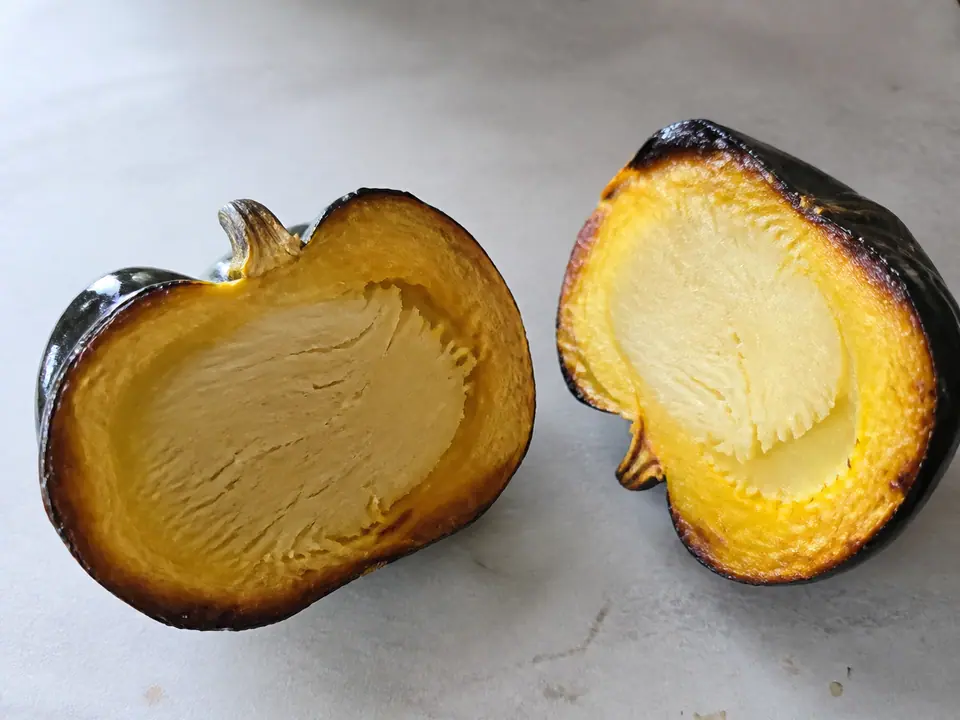
Why squash stays hard in the middle
Hard-centred squash usually needs a better cut, more space or a covered stage. Brown the surface after the thickest part is tender.