Five dinners that let the sweet potato do a different job
Roast sweet potatoes with beans, simmer them in curry, fold them into tacos, pair them with lentils or turn them into a quick skillet hash.

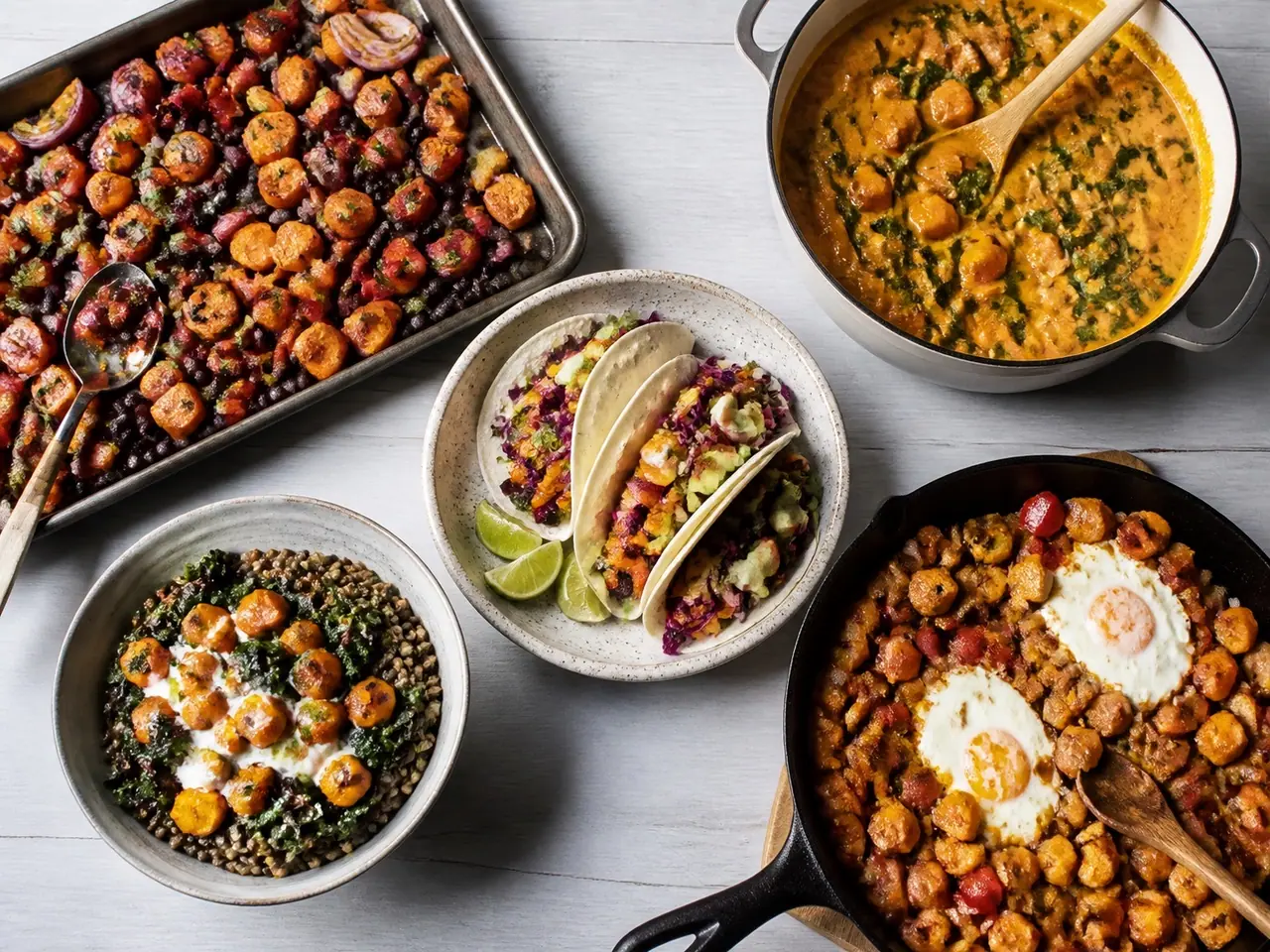
Sweet potatoes become repetitive when every dinner treats them as a side. Give them different jobs instead: roast them until the edges darken, simmer them until they thicken a curry, mash them into a taco filling, pair them with lentils or brown them in a skillet with leftover grains.
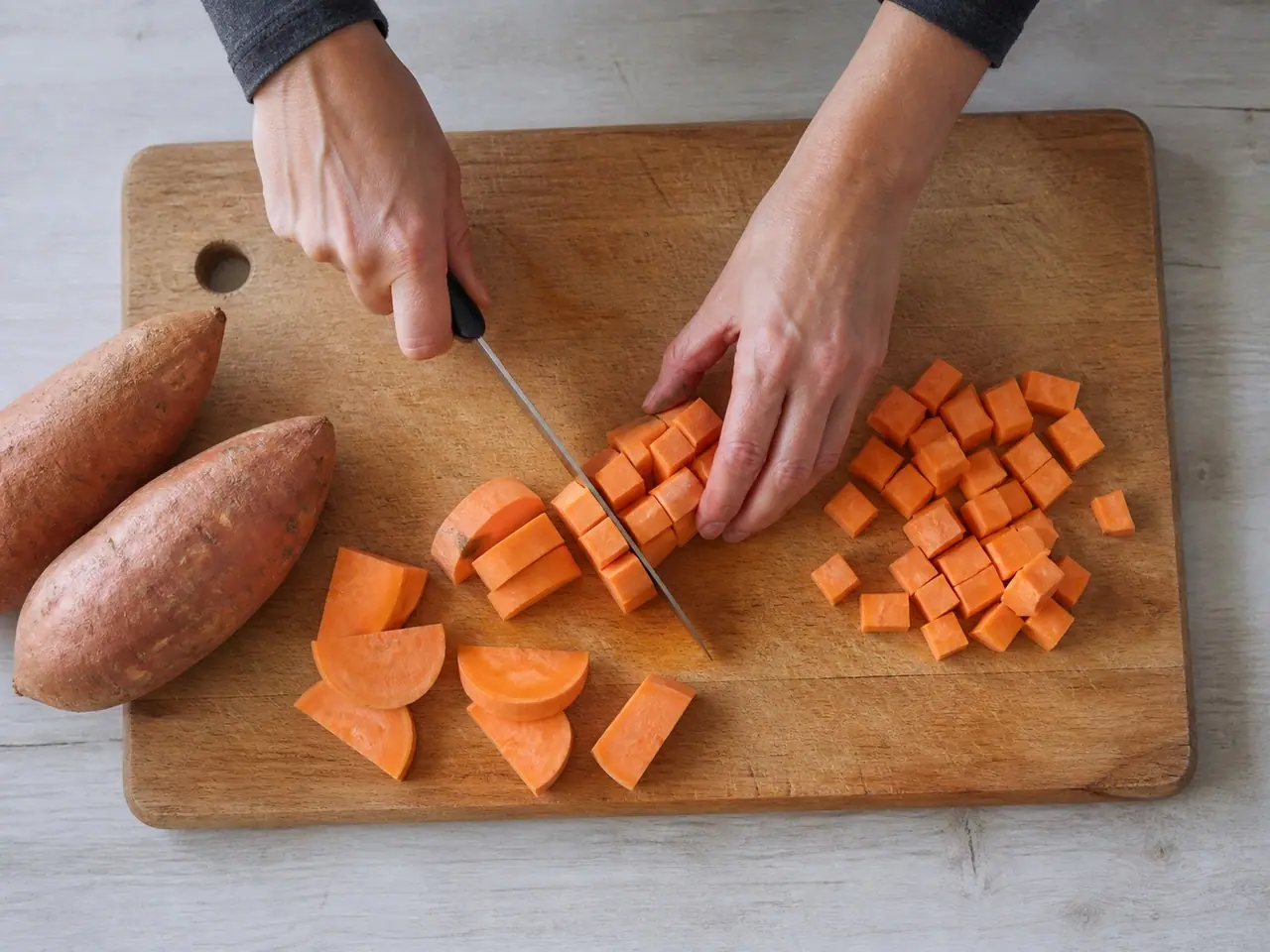
The cut decides the dinner. Large pieces can survive a long sauce, thin slices suit a quick hash and a whole root needs its own timetable. These five routes start with the sweet potato you have.
I check that detail before adding more heat, oil or seasoning.
1. Roasted sweet potato and crispy beans
Cut sweet potatoes into thick cubes and roast them with drained chickpeas or butter beans. Keep the beans dry and the tray uncrowded so the potato can caramelise instead of steaming. Finish with yogurt and lemon.
Choose the firmest, thickest carrots for this dinner. The tray needs a centre that can stay juicy while the surface colours. If the pieces are thin, add them later than the beans.
I check that detail before adding more heat, oil or seasoning.
2. Coconut sweet potato curry
Brown onion, garlic and curry spices in a pot, add sweet potato chunks and pour in coconut milk plus stock. Simmer until the pieces can be pierced but still hold their corners. Add chickpeas or greens near the end.
Use larger chunks here than for a tray. Small pieces dissolve and make the curry thick, which is not wrong, but you lose the contrast between sweet potato and sauce. Lime keeps the coconut from feeling heavy.
The clock helps, but the surface gives the better signal.
3. Sweet potato and bean tacos
Roast or steam sweet potato pieces, then crush half with black beans, lime and cumin. Leave the rest in rough chunks. Spoon the mixture into warm tortillas with cabbage, yogurt or pickled onions.
The partial mash is the useful trick. A completely smooth filling slides out, while all chunks refuse to hold together. Crushed potato binds the beans and gives the cabbage somewhere soft to sit.
I keep one piece aside so I can compare it with the next batch.
4. Lentil bowls with sweet potato
Roast sweet potato wedges while green lentils simmer separately. Make a dressing with lemon, mustard and olive oil, then layer the warm lentils, wedges and herbs. Add toasted seeds for a brittle contrast.
Keep the lentils just tender so they do not become another soft element. The sweet potato already brings softness. Cucumber or pickled onion makes the bowl feel more complete.
That small pause saves more food than a rescue at the end.
5. Sweet potato and egg hash
Dice the sweet potato small and cook it in a wide skillet with onion and oil. Cover briefly with a tablespoon of water, then uncover and let the edges brown. Add leftover rice, beans or cabbage and top with eggs.
This is the dinner for one large root with an awkward shape. The small dice make the uneven ends useful. Do not add eggs until the potatoes are tender.
The next step works better when the excess moisture has somewhere to go.
A route for leftovers
Roasted sweet potato keeps well for a second dinner if it is cooled quickly and stored covered in the fridge. Reheat it in a hot skillet or fold it into beans rather than asking it to crisp from cold in a deep bowl.
A spoonful of yogurt, lime or pickled onion can change the second meal. The root repeats; the texture and finish do not have to.
The result should look ordinary and feel deliberate, not overworked.
The finishes can travel between the five dinners. Lime yogurt cools the tray and tacos, tahini suits the lentil bowl, and a fried egg gives the hash a richer centre. Keep those extras separate until serving so the sweet potato stays roasted or crisp rather than absorbing a wet sauce in the fridge.
Root vegetables reward a small check before the main work. I look at one piece, one cut face or one stored end and let that evidence choose the next step. A firm centre deserves a hot tray; a soft one belongs in soup or mash. A dry cupboard suits a whole root; a covered container suits a cut one. That habit keeps the method honest and saves me from adding more heat, water or seasoning to a problem that started with the ingredient itself.
The short answer
Sweet potatoes do not need five complicated recipes. They need five different cooking jobs: roast, simmer, crush, pair and brown.
My favourite weekday version is the bean tray because the oven does most of the work. The hash is the better answer when the fridge already contains cooked rice.
Questions
What is an easy dinner with sweet potatoes?
What protein goes with sweet potato?
How do I stop a sweet potato dinner tasting too sweet?
Can I use canned sweet potato?
More guides
All guides →
5 dinners for a bag of carrots
Roast carrots with beans, blend them into lentil soup, fry them with rice, fold them through pasta or build a spiced traybake around them.
How to choose sweet potatoes with a dry, firm centre
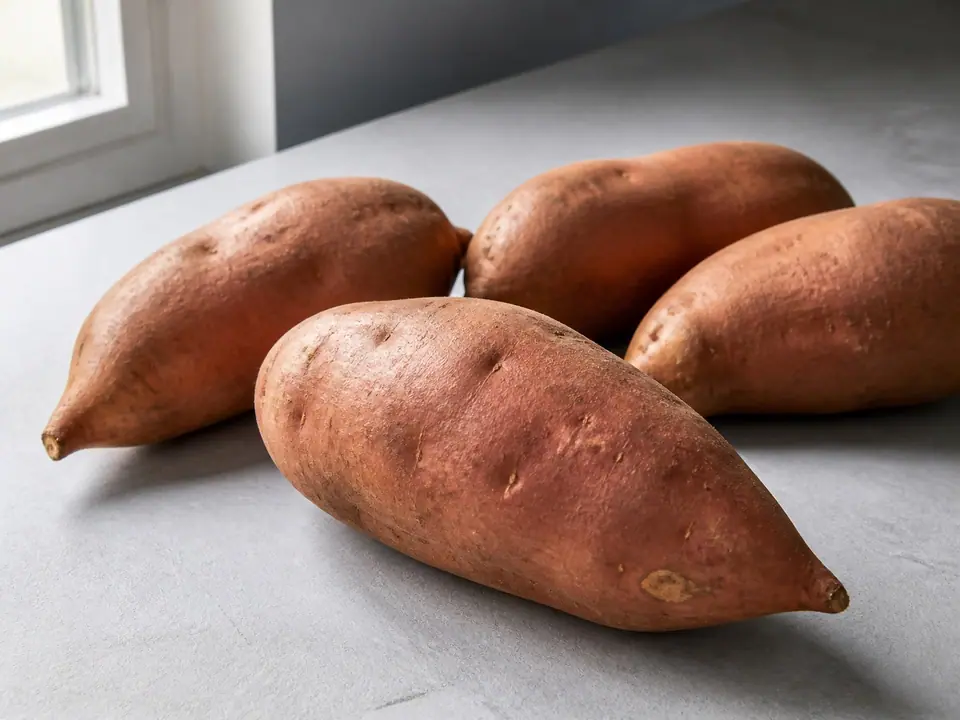
Look for a firm sweet potato with tight skin, a clean stem end and weight that feels substantial for its size. Reject soft patches before they reach the tray.
How to keep a cut cabbage fresh for a week
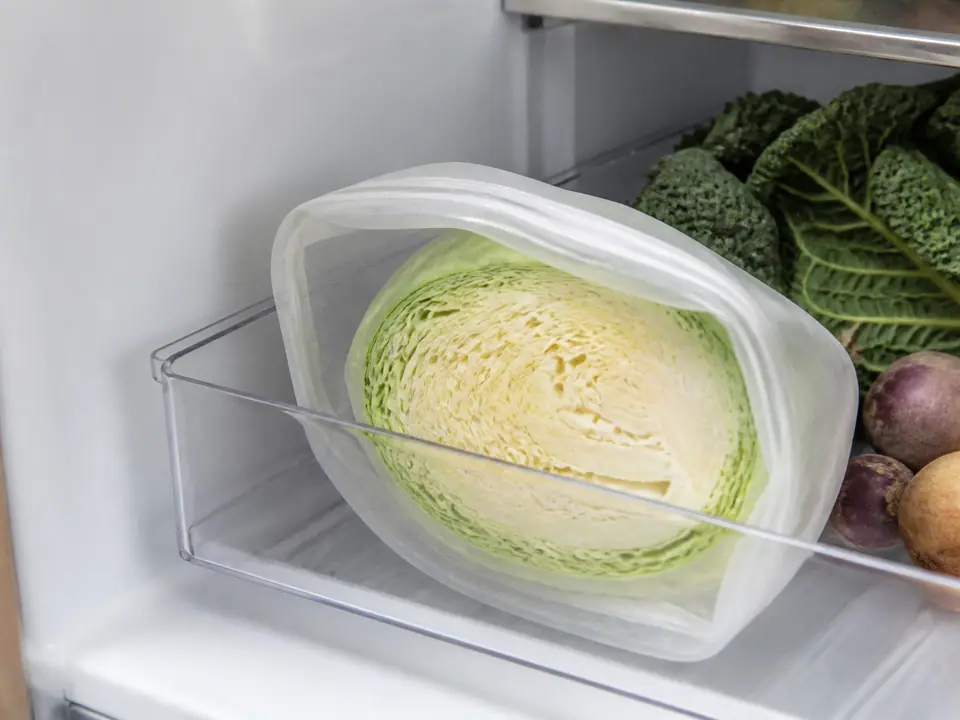
A cut cabbage can stay useful for a week when the exposed face is dry, covered and kept cold. Slice from the outside and leave the core intact.