Cut the portion you need, then protect the exposed face
A cut cabbage can stay useful for a week when the exposed face is dry, covered and kept cold. Slice from the outside and leave the core intact.

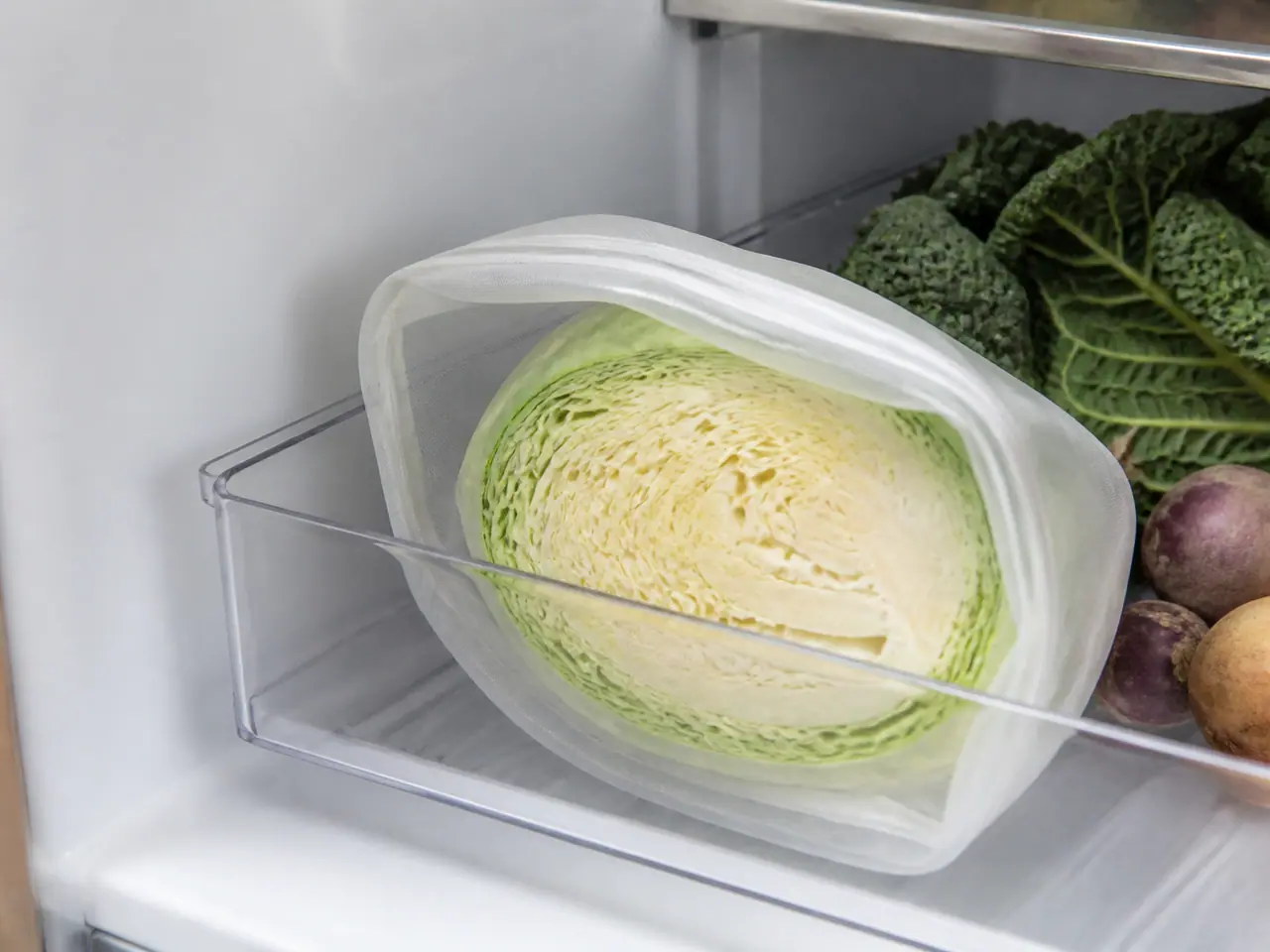
The cabbage problem usually starts with a clean knife and good intentions. You cut off a wedge for dinner, rinse the rest, put it wet in a bag and forget it under the herbs. Four days later the cut face is grey, the outer leaves are limp and the bag has a puddle. The cabbage was not too old. It was stored with water touching every cut edge.
For a week of useful texture, keep the head dry, leave the core holding the leaves together and wrap the exposed face so it does not breathe freely. Store it in the produce drawer. A cut head will not stay exactly like a whole one, but it can still give you crisp slaw, roast wedges and a good skillet dinner seven days later.
The part that makes cabbage storage work is not a special gadget. It is noticing the exposed face before it disappears into the drawer. If I can see droplets, I dry them. If the cut edge is already dull, I plan a cooked dish instead of promising myself a slaw next weekend. The head lasts because I keep checking it, not because the wrap has some secret power. A visible piece of cabbage gets used; a damp mystery at the back of a bag does not.
The cut face is the weak point
A whole cabbage has layers of leaves protecting the inside. Cutting it exposes cells to air, knocks moisture out of the edges and gives water a place to collect. The core is useful because it keeps the remaining leaves compact. I leave it attached whenever I cut a half or quarter, then remove it from the serving portion later.
The first job is drying. If the cabbage has been washed, I pat the cut face thoroughly and let it sit cut-side up for a few minutes. I do not seal visible droplets inside the wrap. A dry surface can survive storage; a wet one starts with a texture problem already in progress.
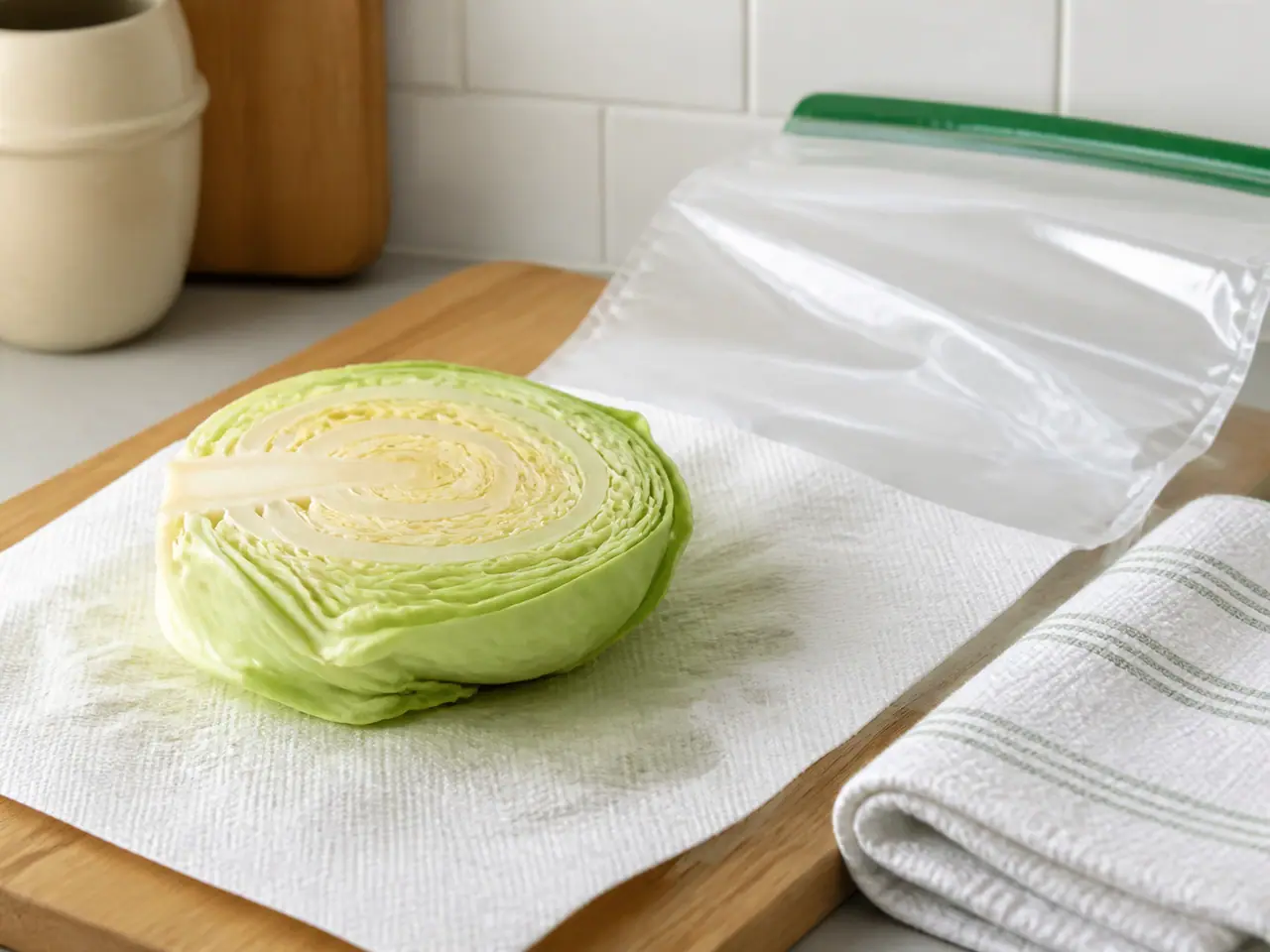
The stored face is the part I inspect first because it records every mistake made after cutting. If it is dry and firm, the head is still on my side. If it is damp, I dry it before covering. If it is soft, I cut away the edge and cook the rest that day. The routine takes less time than deciding what to do with a whole bag of leaves that have become too wet to use raw. I take the photograph as a reminder of the texture I am after, not as a decoration. The surface should show what the written method asks for: a dry cut, a browned fold, a firm curd or a leaf that has kept its shape. If the frame looks wet and crowded, I know the pan would have the same problem. If it looks pale but compact, I know the food may be ready for a different job. That is why I keep the vegetable visible while I cook. The cabbage should make sense before any garnish arrives.
| Day | Wrapped dry | Wrapped wet |
|---|---|---|
| 1 | Firm cut face | Water beading at the edge |
| 3 | Leaves still crisp | Outer fold starting to soften |
| 5 | Small dry trim only | Grey, damp edge |
| 7 | Good for cooking and slaw | Trimmed for cooking only |
Source: Maren Ashby refrigerator test, 2026-08-28
I used two similar green cabbage halves, kept them in the same produce drawer and checked them without washing again. The dry half was wrapped with the cut face covered but not crushed. The wet half went into the bag with drops of water still on the ribs. The difference was obvious on day three. Storage advice is not magic; it cannot restore a surface that started wet.
The best wrapping method is also the one I can see through in my own routine. I want the cut face visible enough that the next dinner can claim it. If the cabbage is buried under herbs or pushed behind a jar, the storage work has failed even if the leaves are still crisp. I keep the remaining piece at eye level in the drawer, dry the bag when needed and cook it before the week turns into another shopping trip.
Wrap it without suffocating it
I use a reusable bag or a loose layer of food-safe wrap around the cut face, then place the cabbage in the produce drawer. The cover should touch the exposed surface enough to slow drying but not squeeze the leaves. If the bag fogs heavily, I open it for a minute while preparing dinner and wipe away condensation before putting the cabbage back.
Do not store a cut cabbage open on the fridge shelf. Cold air moves across the surface and dries the outer leaves while the cut face picks up smells from anything nearby. A drawer gives it a steadier, more humid environment. I still keep it away from a leaking salad bag because high humidity is useful only when it is not liquid water.
How to cut less and waste less
If I need two cups of shred, I do not halve the whole head. I cut a narrow wedge from the side, keeping the core intact on the remaining piece. The smaller exposed face is easier to dry and cover. I slice the wedge across the grain for slaw, or cut it into thicker pieces for a pan.
For a pointed cabbage, I often use the tender tip first and leave the dense base for a later stir-fry. For a round head, I take an outer quarter and return the rest whole. The best storage method is the one that leaves fewer cut surfaces waiting in the fridge.
What to trim on day seven
A dry grey edge is a texture issue, not a whole-head verdict. I slice it away with a clean knife and inspect the leaves underneath. If the cabbage smells fresh and feels firm, the remaining part is fine for cooking. I do not try to hide a wet, slimy or sour-smelling area under seasoning. That part goes out.
The outer leaves can look tired before the centre does. Peel them off and check the next layer. Cabbage is forgiving when the damage is shallow, but the leaves should not be sticky. When I want crisp raw shreds, I use the best centre pieces first and send the trimmed sections to a hot pan.
Food safety is part of storage
Keep the refrigerator at or below 40°F, and move the cabbage into the cold drawer soon after cutting. USDA FSIS explains why temperature matters for refrigerated food in its refrigeration guidance.
Use a clean knife and board, especially if the cabbage is going into a raw slaw. I wash the board after cutting and keep the stored piece covered. The cabbage should not be washed, cut and left wet as a shortcut to convenience.
Three dinners for the last good handful
- Shred it thinly, salt for ten minutes and fold through yogurt or lemon for a quick slaw.
- Cut the firm pieces into wedges and roast them until the edges char, then serve with beans.
- Slice the outer leaves and cook them in a wide pan with garlic, chickpeas and a spoon of tomato paste.
The last handful is often better cooked than forced into a salad. Heat changes the texture, so a little loss of snap is not a failure. What matters is using the cabbage before the cut edge turns wet and the leaves begin to smell sour.
My verdict
For a full week, store cut cabbage dry, covered and cold, with the core holding the remaining leaves together. Do not wash it ahead, do not trap droplets under the wrap and do not leave it exposed on a shelf. Check the face every couple of days. The small habit is boring, which is why it works: the cabbage stays visible and gets used before it becomes a drawer mystery.
Questions
Should I wash cabbage before storing it?
Should cut cabbage go in an airtight container?
Why did my cut cabbage turn grey?
Can I eat cabbage after a week in the fridge?
More guides
All guides →
How to keep cauliflower from going grey
Cauliflower turns grey when exposed tissue dries or oxidises. Keep the head cold and dry, cover cut surfaces and cook before the spots spread.

5 cabbage dinners that are not boiled cabbage
A cabbage head can become a roast wedge, a noodle-like skillet, a bean dinner, a chicken tray and a crisp topping without a pot of boiling water.
How to keep green beans crisp in the fridge
Green beans lose crispness through water loss but decay quickly when stored wet. Keep them unwashed, cool and loosely contained, then rinse just before cooking.