A heavy, sound sweet potato roasts with more control
Look for a firm sweet potato with tight skin, a clean stem end and weight that feels substantial for its size. Reject soft patches before they reach the tray.

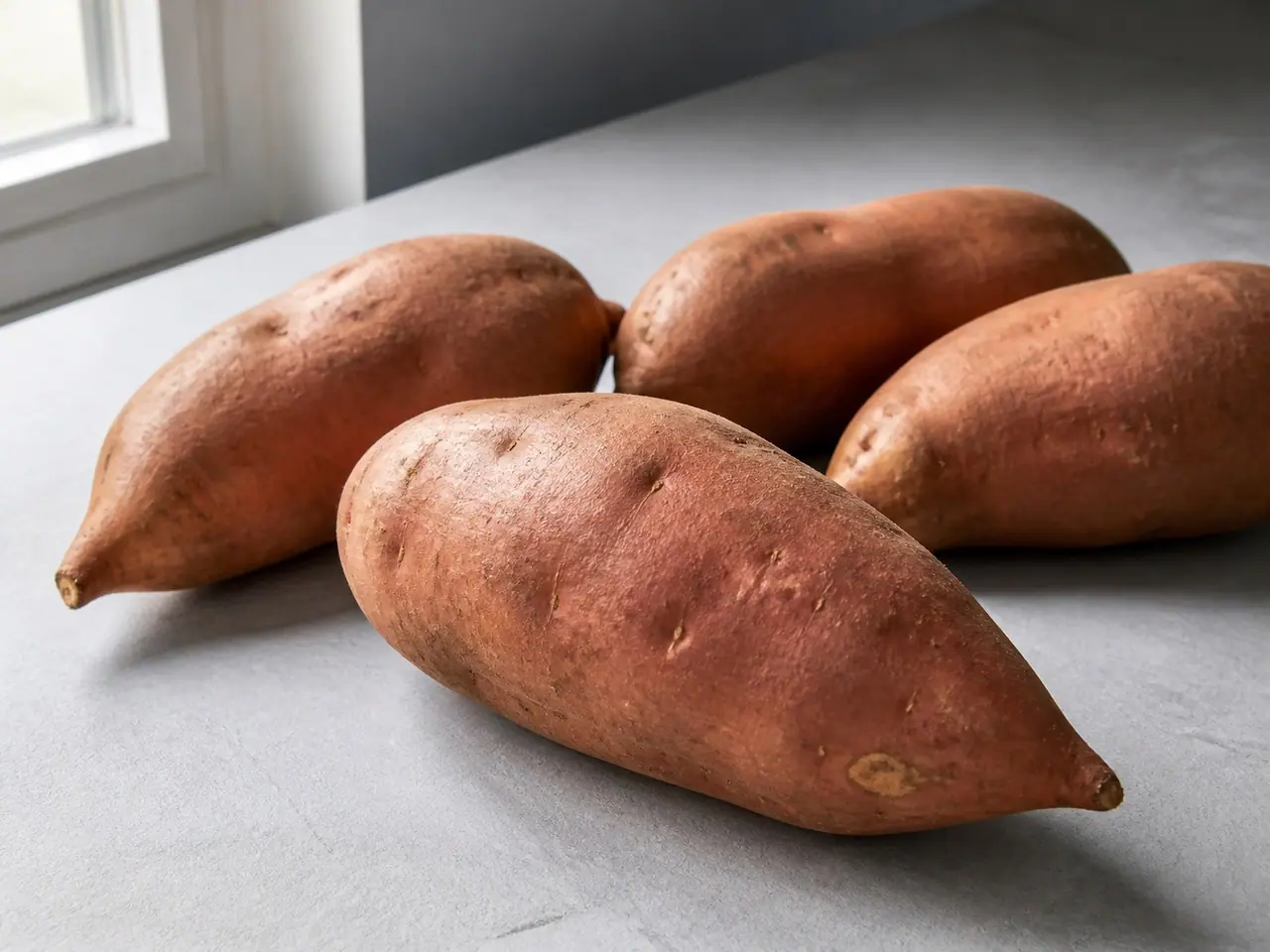
The best sweet potato for roasting feels boring in your hand: firm, heavy and free from soft dents. A sound root has a better chance of cooking evenly, while a long one with a hollow feel can give you a dry end and a wet centre on the same tray.
I shop for the actual cut I plan to make. Short, thick roots are easier to turn into even cubes or wedges. A very long root may be fine for a whole bake, but its narrow end cooks faster than the thick shoulder.
I check that detail before adding more heat, oil or seasoning.
Start with firmness
Press the skin lightly with your thumb. It should feel solid all around, with no flexible pocket under the skin. A tiny handling mark is not a problem; a soft patch that gives under gentle pressure usually means the flesh has started to break down.
Check both ends. The stem end can dry out first, and the pointed tip may be bruised inside even when the skin looks smooth. Turn the potato rather than trusting the cleanest side in the pile.
I check that detail before adding more heat, oil or seasoning.
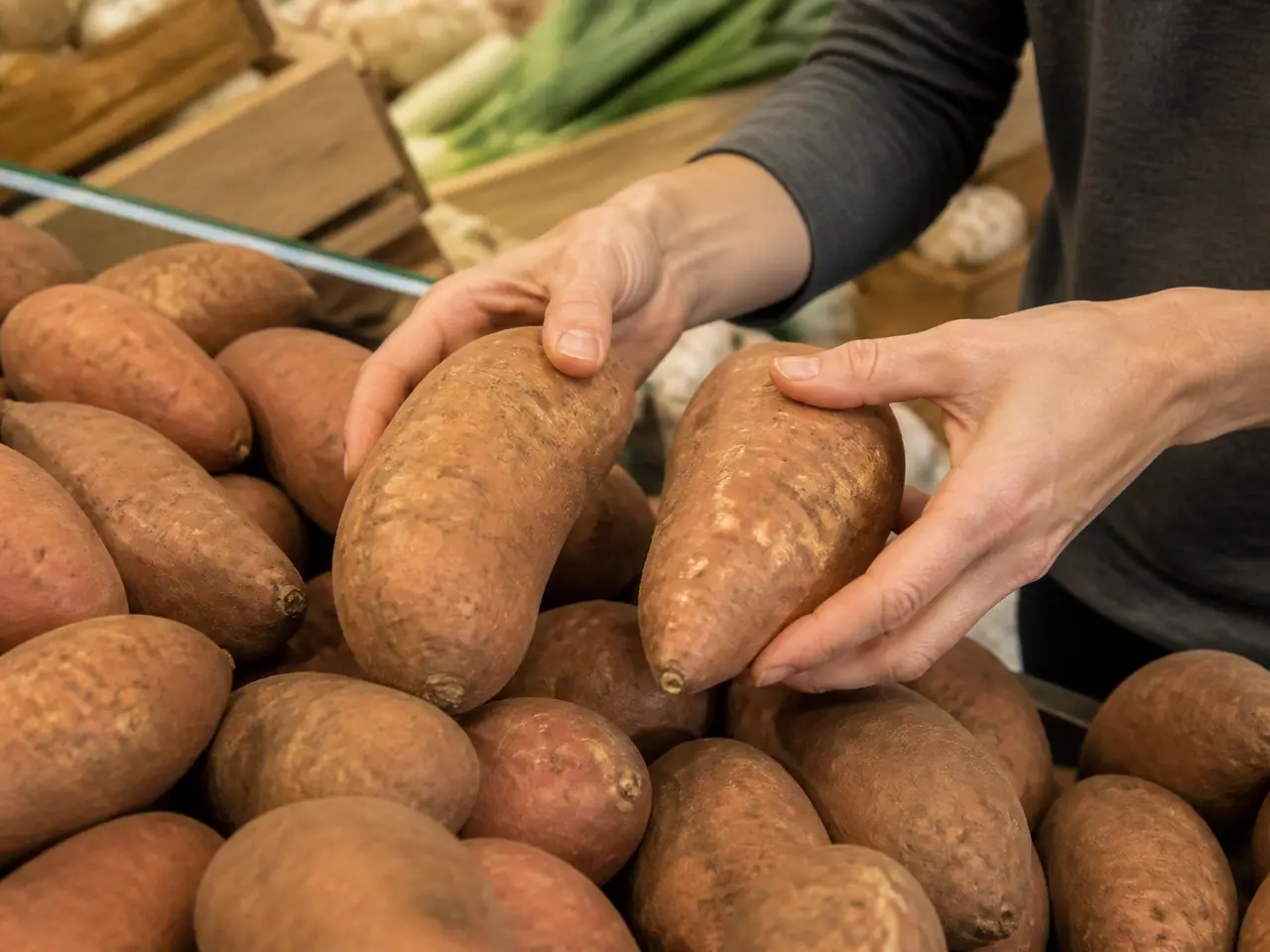
Use weight as a clue
A sweet potato should feel dense for its size. Pick up two roots of similar length and compare them. The heavier one is often the better starting point for a moist, even roast, though weight alone cannot rule out a hidden bruise.
A root that feels unusually light may have lost water in storage. It can still be useful for mash or soup, but it is less reliable for neat wedges. Save it for a dish where softness is welcome.
The clock helps, but the surface gives the better signal.
Read the skin without demanding beauty
The skin can be dusty, scuffed or marked and the flesh can still be good. Look for tight skin rather than a polished surface. Small healed scratches are different from wet cracks, mould or a soft dark area.
Avoid roots with long splits that run into the body. The opening lets the cut area dry and gives spoilage a route in. If a split is damp or smells sour, leave the potato at the shop.
I keep one piece aside so I can compare it with the next batch.
Choose the shape for the method
Short, even sweet potatoes suit roasting because their pieces can match. Medium roots work for batons, halves and stuffed bakes. Very large roots are practical for mash, soup or a whole roast, but cut away fibrous ends if needed.
Do not buy a bag with every root a different size when the meal depends on a single tray finishing together. A mixed bag is good value for soup and stews.
That small pause saves more food than a rescue at the end.
Check the cut at home
After washing, cut one root through its thickest part. The flesh should be firm, moist and evenly coloured. A few small marks are manageable; broad dark channels, a spongy centre or a fermented smell means it has passed its useful window.
Store sound roots before cutting in a cool, dry, ventilated place. Do not chill them just because the fridge is convenient. The drawer is usually too damp for a root that needs air.
The next step works better when the excess moisture has somewhere to go.
Let condition choose dinner
A firm root can roast, bake or become wedges. A lighter, older root can still thicken soup or mash. Matching the ingredient to the method is often more useful than trying to force every root into the same tray.
I choose the most even roots for guests and the more awkward ones for weekday bowls. A rough shape is not a quality problem when the knife can turn it into a sensible cut.
The result should look ordinary and feel deliberate, not overworked.
The same checks help after the potato comes home. Leave the roots whole until you know the dinner, then cut one through the shoulder before preparing the rest. If the first centre is firm and even, the others from the same batch are more likely to behave similarly. If it is spongy, change the meal while the evidence is still useful.
Root vegetables reward a small check before the main work. I look at one piece, one cut face or one stored end and let that evidence choose the next step. A firm centre deserves a hot tray; a soft one belongs in soup or mash. A dry cupboard suits a whole root; a covered container suits a cut one. That habit keeps the method honest and saves me from adding more heat, water or seasoning to a problem that started with the ingredient itself.
The short answer
Choose sweet potatoes by firmness, density and shape. Skin marks do not matter as much as soft patches, damp cracks and a root that feels light for its size.
A good potato will not guarantee a crisp tray, but a tired potato can make the oven work twice as hard. Buy the root that gives the method a fair start.
Questions
How can I tell if a sweet potato is good?
Are large sweet potatoes good for roasting?
Can I store sweet potatoes in the fridge?
Should sweet potatoes be hard?
More guides
All guides →
How to choose carrots that are crisp, not rubbery
Firm carrots with a fresh stem end and smooth, unbroken skin are more likely to stay crisp. Rubberiness means water has already left the root.

5 easy dinners with sweet potatoes
Roast sweet potatoes with beans, simmer them in curry, fold them into tacos, pair them with lentils or turn them into a quick skillet hash.

Cauliflower vs broccoli: which roasts better?
Cauliflower gives a more even roast and creamy centre. Broccoli browns faster and has better crisp tips, so the winner depends on the texture you want.