Green peppers are built for savoury cooking
Also called green sweet peppers, green capsicum
Green bell peppers are the firm, grassy stage of the sweet pepper. They stay crisp longer than ripe colours, take smoke well and bring the savoury edge that a sweet red pepper cannot replace.
The numbers
| Nutrient | Amount | % RI |
|---|---|---|
| Calories | 20 kcal | — |
| Water | 93.9 g | — |
| Carbs | 4.6 g | — |
| Fibre | 1.7 g | 7% |
| Protein | 0.9 g | 2% |
| Vitamin C | 80.4 mg | 100% |
| Potassium | 175 mg | 9% |
Source: USDA FoodData Central, SR Legacy 170427 (peppers, sweet, green, raw) · FDC ID 170427 · % RI against EU adult reference intakes.
Buying and keeping
What to look for at the shop, and how to make it last once it is home.
How to pick
- Choose peppers with taut skin and a solid weight. A dull, wrinkled surface means the pepper has been losing water.
- The stem should look freshly green and feel attached, not dry or loose.
- Pick peppers with broad shoulders for stuffing and thick panels for roasting; narrow peppers are better for fast frying.
- Avoid soft marks around the base and dark bruises hidden under stickers or packaging.
- A little uneven colour is fine. Deep green, glossy skin matters more than a perfectly uniform shade.
How to store
- Keep whole green peppers dry in the fridge drawer for up to two weeks.
- Store cut peppers in a covered container with a dry paper towel and use within four days.
- Freeze chopped peppers raw for cooked dishes. They will lose their crunch but keep their savoury flavour.
- Blanching before freezing is unnecessary for a small batch, though it helps a large harvest keep its colour.
- Do not leave green peppers on a sunny windowsill; they soften and ripen unevenly.
Best months
If you have none
Swaps that hold up, with what changes when you use them.
Green is an early stage
Green bell peppers are usually picked before the fruit has ripened into yellow, orange or red. That is why the taste is grassy and slightly bitter rather than sweet. It is also why green peppers are firm, travel well and cost less to grow: they leave the plant sooner and survive handling with fewer bruises.
I do not treat the bitterness as a fault. It is the reason green pepper works in a sofrito, a chilli or a sausage pan where a red pepper would make the base taste too sweet. The trick is to give it enough heat and enough time. Raw slices can be sharp; a pepper cooked until its edges soften becomes rounder without losing its savoury character.
How to cut it without scattering seeds
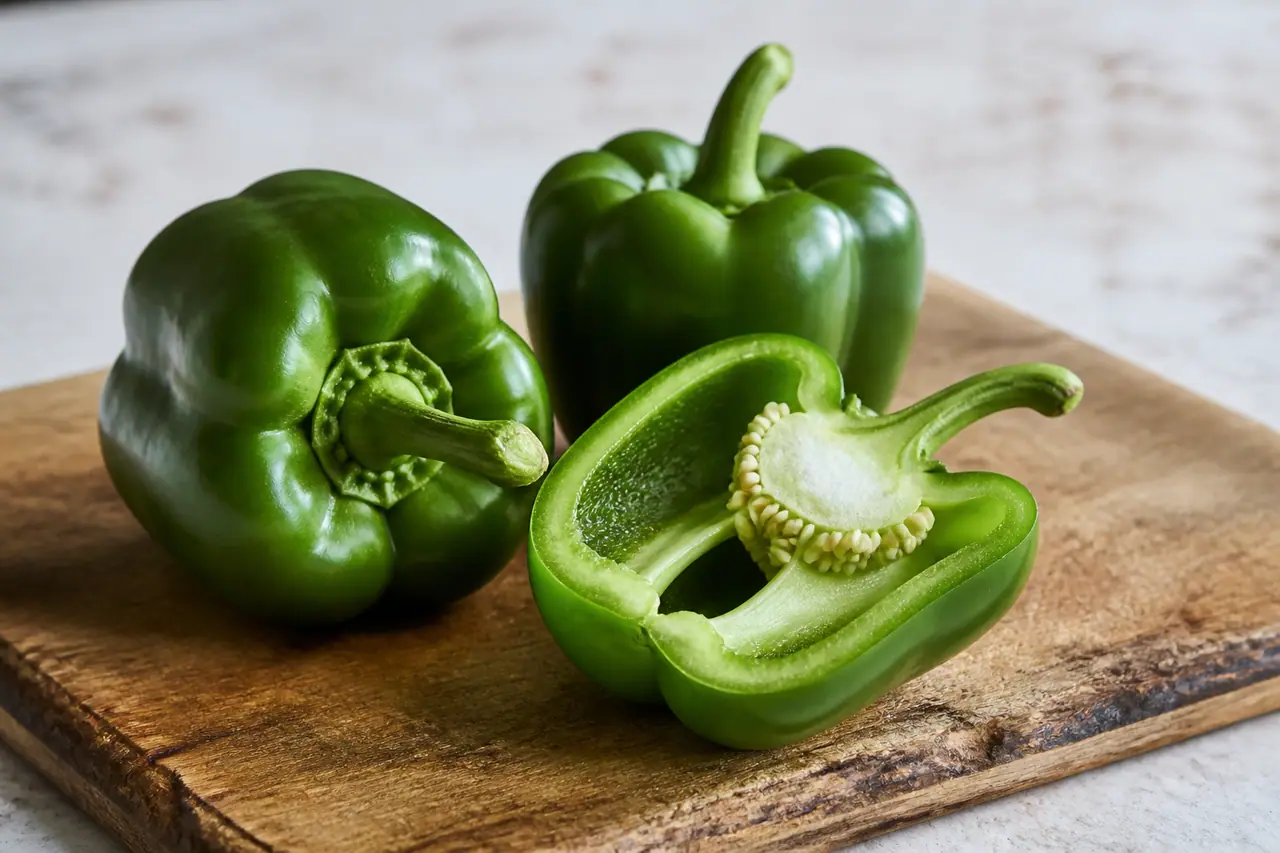
Cut the top off just below the stem, then pull out the central core in one piece. Tap the pepper over the bin or sink and most of the loose seeds fall away. Slice down one side and open it into a flat panel. Remove the pale ribs for a raw dish, but do not spend time scraping every last strand for a stew.
Green peppers hold their shape well, so I cut them smaller than ripe colours when they are going into a pan. A two-centimetre piece softens at the same time as onion. Thick strips stay crunchy and are better for grilling or a fajita-style tray. Dry the cut surfaces before frying; wet pepper steams and delays browning.
How to soften the bitter edge
Start with onion and oil, then add the green pepper once the onion has lost its raw bite. Salt after the pan is hot and give the pepper room. Medium heat makes it sweeten slowly, while high heat gives smoky edges. Both work. The failure is a crowded pan where the pepper releases water and cooks grey.
Acid belongs at the end. A squeeze of lemon, a spoon of vinegar or the juice from tinned tomatoes lifts the cooked pepper and stops the base becoming heavy. If you are making a blended sauce, char the pepper first and cover it in a bowl. Peeling removes the tougher skin, but never rinse away the char; that smoke is the useful part.
Read the colour alongside the recipe
Use red bell pepper when you need sweetness, and green when you need a savoury base. The broader comparison in red vs yellow peppers is useful for the ripe colours, while the storage habit is close to the advice on poblano peppers.