Green garlic is the tender, fresh chapter of the garlic season
Also called young garlic, fresh garlic
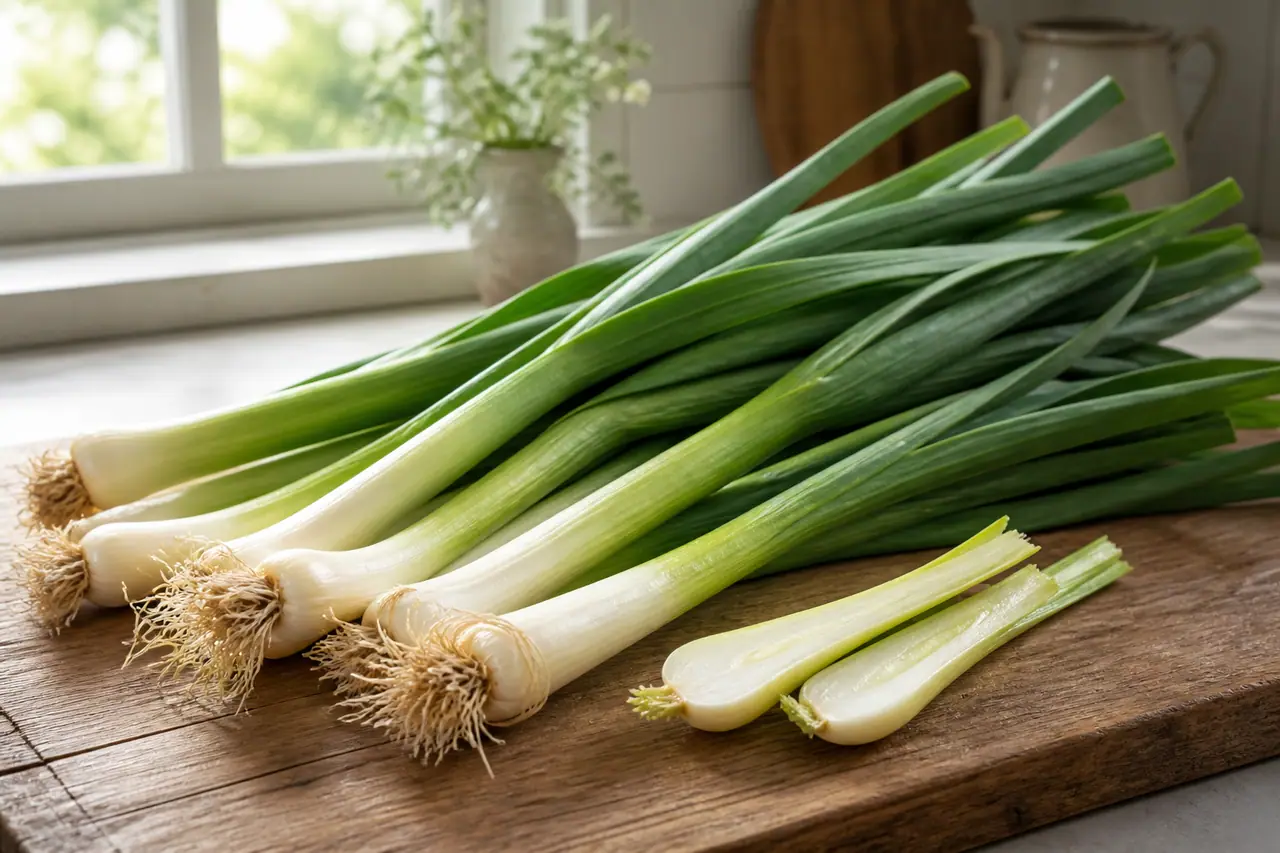
Green garlic looks like a young leek or spring onion and tastes like a mild garlic clove with grassy leaves. Use the white base and green tops in sauces, eggs, soups and dressings.
The numbers
| Nutrient | Amount | % RI |
|---|---|---|
| Calories | 149 kcal | — |
| Water | 58.6 g | — |
| Carbs | 33.1 g | — |
| Fibre | 2.1 g | 7% |
| Protein | 6.4 g | 13% |
| Vitamin C | 31.2 mg | 38% |
| Potassium | 401 mg | 20% |
Source: USDA FoodData Central, SR Legacy record for garlic, raw; young harvest varies · % RI against EU adult reference intakes.
Buying and keeping
What to look for at the shop, and how to make it last once it is home.
How to pick
- Choose stalks with crisp green leaves and a firm white or pale purple base.
- The bulb should feel dense rather than hollow, with clean roots and no slimy folds.
- Smaller, thinner stalks are mild and tender; thicker bulbs have a stronger garlic note.
- Avoid yellow leaves, black spots, limp stems and sour smells.
- A little soil on the roots is normal, but trapped mud should not hide soft tissue.
How to store
- Wrap green garlic loosely in a damp towel and refrigerate it as soon as you get home.
- Use the leaves first because they wilt before the bulb does.
- Keep trimmed pieces in a covered container with a dry paper towel and use within three days.
- Slice and freeze extra green garlic for soups, beans and sauces.
- Do not store it submerged in water for long; the leaves lose aroma and the base can become slimy.
Best months
If you have none
Swaps that hold up, with what changes when you use them.
A whole plant with two textures
Green garlic is harvested before the bulb has dried into separate cloves. It looks like a slender leek, with a pale base, roots and long green leaves, but the smell tells you what it is. The flavour is fresh and direct without the full heat of mature garlic. I use the bulb as a mild clove and the leaves as an allium herb.
The exact size changes with harvest timing. Thin stalks can be sliced almost all the way through, while thick ones may have a tougher outer layer around the base. Peel only what feels fibrous. The tender centre and young leaves are the part worth keeping. Taste a raw slice before deciding how much a recipe needs.
Wash it like a leek
Trim the roots and any dry leaf tips, then split the base if soil is caught between the layers. Rinse under cold water and dry thoroughly. The leaves can hold grit near the bulb, especially when the plant was lifted from wet ground. A quick rinse after slicing is often the safest way to get a clean result.
Slice the bulb into thin rounds for eggs, dressings or a quick saute. Cut the leaves into ribbons and add them to soup, pesto or a grain bowl. If you have a very thick stalk, separate the bulb from the leaves and cook the bulb first. The greens need little more than a final stir.
Keep the flavour fresh
Green garlic is excellent raw when blended with olive oil, lemon and salt. It can also replace part of the garlic in a yoghurt sauce or vinaigrette. Start with a small amount because its freshness can be more noticeable than its heat. Salt helps draw out the aroma, while acid makes the flavour feel brighter.
For cooking, use medium heat and add the sliced bulb before the greens. It softens in a few minutes and becomes sweet around the edges. Add the leaves to pasta, beans, rice or a soup just before serving. Long, hard frying makes the greens dull and can turn the bulb bitter, so gentle heat is usually the better choice.
When the season ends
Use mature garlic for a concentrated flavour and longer storage. Spring onions give more green crunch, while leeks are softer and sweeter after cooking. Green garlic is the choice when you want both the bulb and the leaf to taste like a fresh garden allium.