Garlic turns a little heat into a deep savoury aroma
Also called common garlic, hardneck and softneck garlic
Garlic is one of the smallest ingredients with the biggest effect on a dish. Choose firm, dry heads, store them with air around them and control the heat so the cloves turn golden rather than bitter.
The numbers
| Nutrient | Amount | % RI |
|---|---|---|
| Calories | 149 kcal | — |
| Water | 58.6 g | — |
| Carbs | 33.1 g | — |
| Fibre | 2.1 g | 7% |
| Protein | 6.4 g | 13% |
| Vitamin C | 31.2 mg | 38% |
| Potassium | 401 mg | 20% |
Source: USDA FoodData Central, SR Legacy record for garlic, raw · % RI against EU adult reference intakes.
Buying and keeping
What to look for at the shop, and how to make it last once it is home.
How to pick
- Choose heads that feel heavy and firm, with dry skin wrapped tightly around the cloves.
- The stem end should be dry, and the head should not have a soft or wet base.
- Look for large, plump cloves when you want easy peeling and even slicing.
- Avoid heads with green mould, wet papery skin or a sour fermented smell.
- A little green shoot is not dangerous, but older sprouting garlic can taste sharper and more bitter.
How to store
- Keep whole garlic in a cool, dry, dark place with good airflow, never sealed in a damp drawer.
- Do not refrigerate whole heads unless the storage conditions are unusually warm and humid.
- Store peeled cloves in a covered container in the fridge and use them within a few days.
- Freeze peeled cloves or minced garlic for cooked dishes, not for a crisp raw texture.
- Keep garlic away from direct sun and check the centre of a head if the outer skin feels loose.
Best months
If you have none
Swaps that hold up, with what changes when you use them.
A small clove needs good timing
Garlic can be warm, sweet, creamy, grassy or bitter depending on how it is cut and heated. A whole clove roasted in its skin becomes soft and spreadable. A thin slice fried in oil turns crisp and fragrant. A fine mince added to a hot pan can burn before the onion is ready. I treat garlic as a timing ingredient rather than tossing it in automatically at the start.
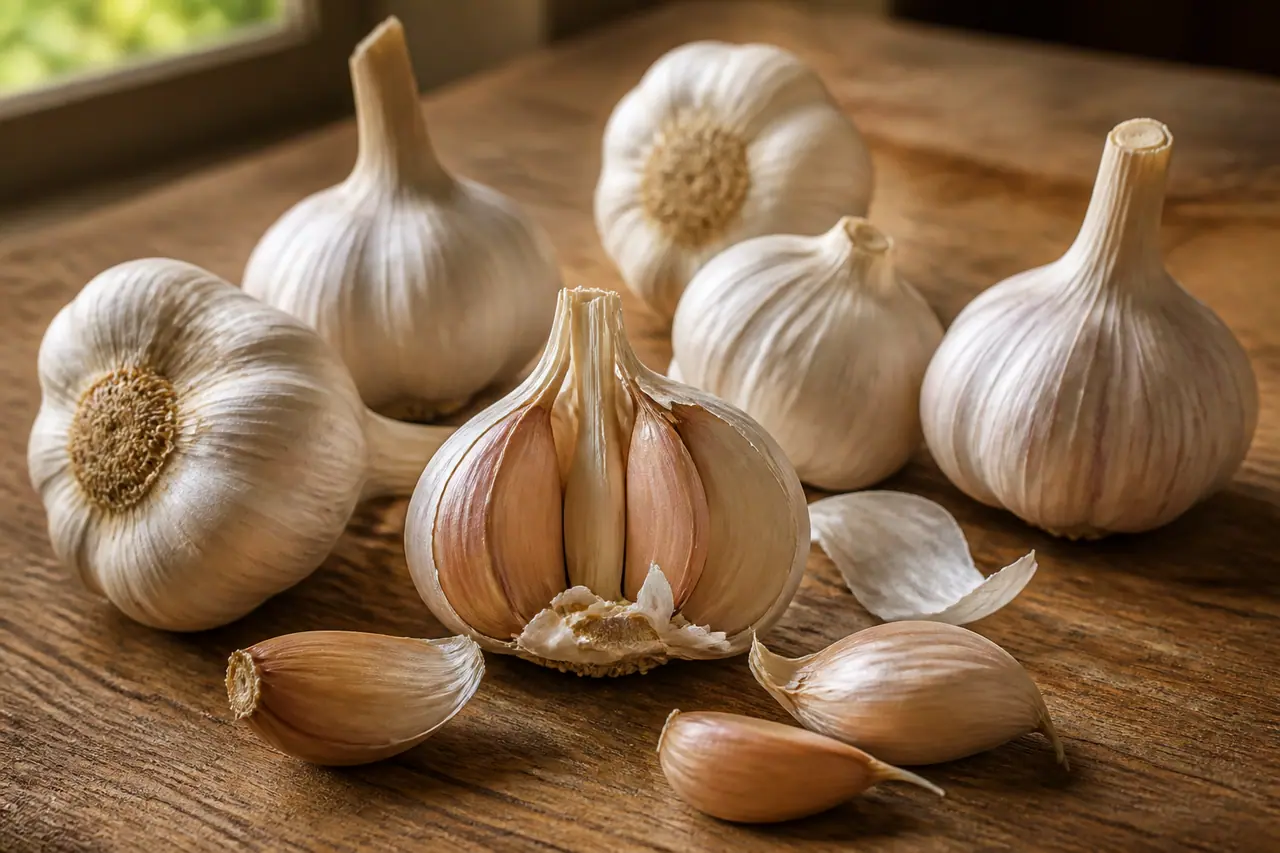
Fresh heads are made of cloves wrapped in papery layers. The skin should be dry, not mouldy, and the cloves should feel tight. If a clove has a green shoot, split it and pull the shoot out if you dislike its sharper taste. A little sprouting does not make a firm clove unusable, but softness, mould and a sour smell are reasons to discard it.
Peel and cut for the result you want
Crush a clove under the flat side of a knife to loosen the skin, then peel it. For a gentle flavour, leave the clove whole or slice it thickly. For a stronger aroma, mince it finely or grate it. A garlic press produces a wet paste that spreads quickly through a sauce, while a knife mince gives you more control over the size of the pieces.
Keep your knife clean between garlic and delicate fruit or dairy if you want to avoid transferring the smell. Rub the board with lemon and wash it soon after chopping. Garlic oils cling to plastic, so a glass or stainless-steel container is easier for leftovers. These small habits matter when you cook garlic often.
Golden is the sweet spot
Add minced garlic after the onion or other base has softened, then cook until fragrant and pale gold. If it becomes dark brown, lower the heat and add the liquid for the recipe. Burnt garlic brings a bitter note that can spread through an entire pot. In a stir-fry, add it with ginger and move quickly. In a soup, add it to the oil before the stock so its aroma blooms.
Roasting a whole head is slower but forgiving. Slice off the top, drizzle the exposed cloves with oil, wrap the head and roast until soft. Squeeze the cooled cloves into mash, dressing, beans or toast. For confit-style garlic, keep the temperature low and follow safe storage guidance: garlic held in oil needs careful refrigeration and should not sit at room temperature.
Fresh alternatives
Green garlic gives a younger, softer flavour, while shallots bring sweetness and fine texture. Spring onions are fresher and lighter, useful when raw crunch matters. For a classic base, pair garlic with yellow onions and give each ingredient enough time to show up clearly.