Passata
Also called sieved tomatoes, strained tomatoes
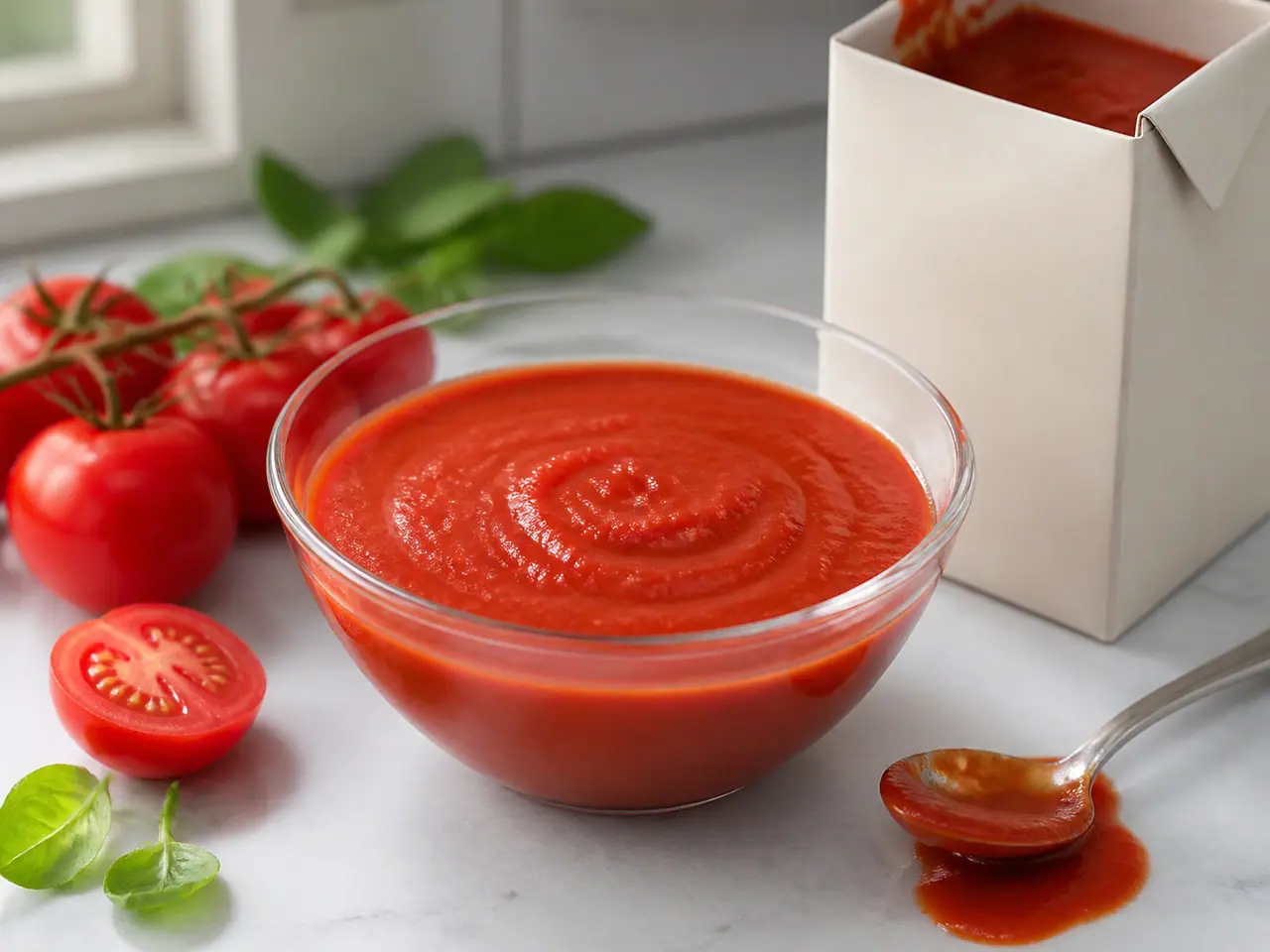
Passata is the smooth tomato shortcut. It gives a sauce a clean texture, but it still needs time in the pan to lose its raw, watery edge.
The numbers
| Nutrient | Amount | % RI |
|---|---|---|
| Calories | 18 kcal | — |
| Water | 94.5 g | — |
| Carbs | 3.9 g | — |
| Fibre | 1.2 g | 5% |
| Protein | 0.9 g | 2% |
| Potassium | 237 mg | 12% |
Source: USDA FoodData Central, FDC 170457 used as the raw tomato reference; passata labels vary by recipe and salt · FDC ID 170457 · % RI against EU adult reference intakes.
Buying and keeping
What to look for at the shop, and how to make it last once it is home.
How to pick
- Choose a carton or bottle with tomato as the main ingredient and a salt level you can season around.
- Check the texture by tilting the container. Very thin passata needs more reduction; thick passata gives the pan a head start.
- Avoid a sweetened product unless the recipe specifically wants a sweeter sauce.
- Buy a small carton if you rarely use it. An opened carton loses freshness in the fridge before you expect it to.
How to store
- Keep unopened passata in a cool cupboard away from heat and direct light.
- Refrigerate opened passata in a covered container and use it within four days.
- Freeze leftover passata in measured portions for soups, stews and quick sauces.
- Stir before measuring. The thicker tomato solids can settle at the bottom of a carton.
Best months
If you have none
Swaps that hold up, with what changes when you use them.
Smooth does not mean ready
Passata has already been crushed and sieved, so it starts with a clean texture and no skins to catch in the spoon. That convenience can make it look finished before it tastes finished. Straight from a carton it often has a raw, slightly sharp edge and more water than a pasta sauce can carry.
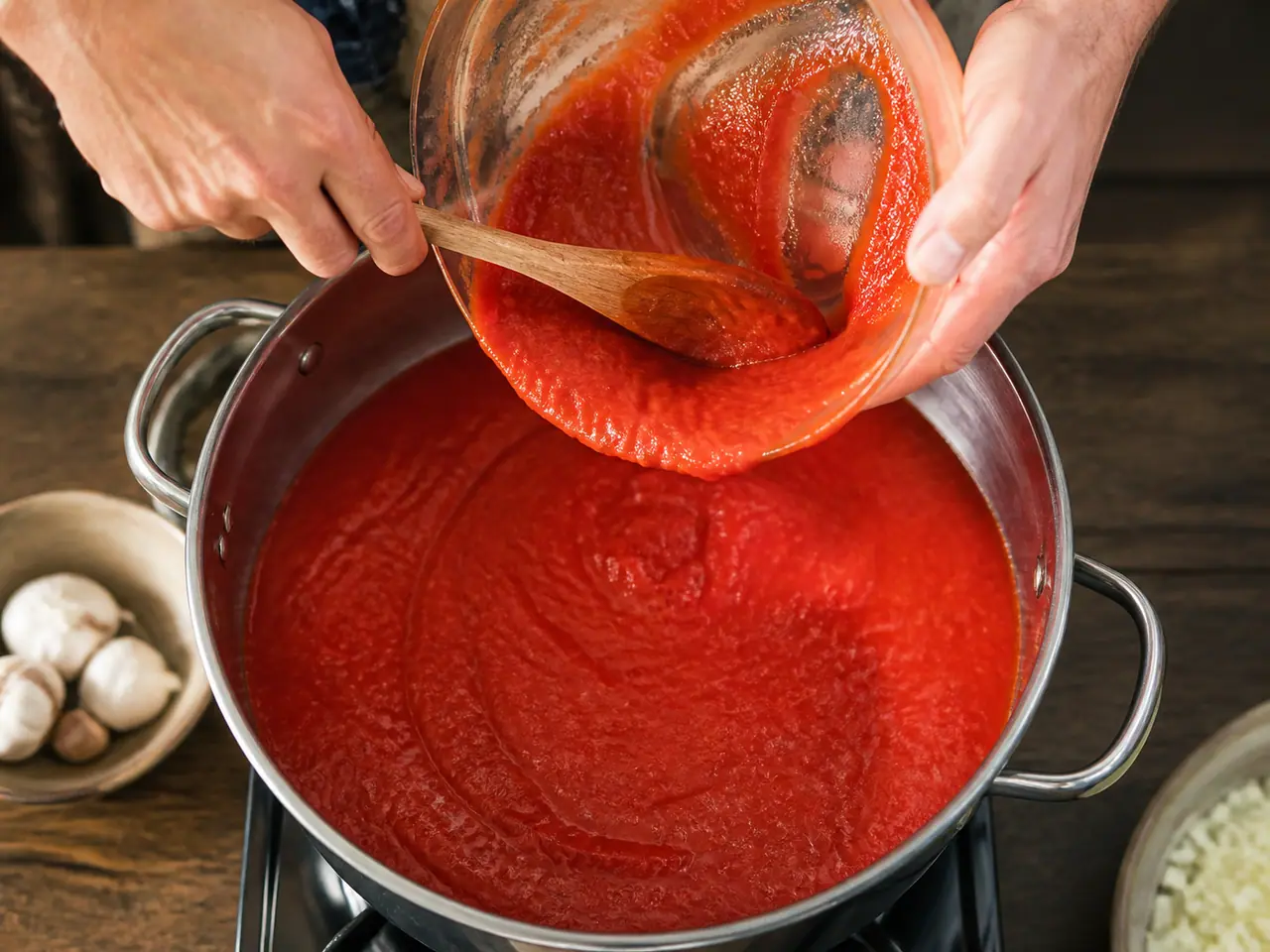
Give it a wide pan and a little time. Ten to fifteen minutes uncovered is enough to change a quick sauce, while a long stew may need less because other ingredients will continue to reduce it. If you simmer passata in a narrow covered pot, the water has nowhere to go and the sauce stays thin no matter how long it bubbles.
When passata is the right texture
Use passata when you want sauce to coat pasta without pieces, a soup to stay smooth, or a braise where tomato should sit behind the main ingredient. It is especially useful for people who dislike tomato skins or large seed chambers. The trade is that you lose the irregular texture that makes a rustic sauce feel substantial.
Do not use it automatically for every tomato dish. A summer salad needs fresh pieces. A stew may be better with whole tomatoes you can crush as they soften. Passata is a tool for texture, not a quality ranking.
Frying paste before passata
For deeper flavour, cook onion and garlic in oil, add a spoonful of tomato paste and fry it until the red darkens, then pour in the passata. The paste gives concentrated tomato flavour while the passata supplies volume and a smooth body.
Do not brown garlic to the point of bitterness while waiting for the paste. Use medium heat, stir often and watch the colour. The paste should look a shade darker and smell sweet rather than raw. Then add the passata and scrape the base of the pan.
A note on cartons and bottles
Packaging does not decide the sauce, but it changes how much air reaches the leftovers. A carton is convenient for a one-use meal. A bottle can be resealed more neatly when you use two spoonfuls at a time. Once opened, transfer leftovers to a clean covered container if the original cap does not close well.
For a practical use, try the passata version of the red pepper and chickpea stew or the smooth base in spiced chickpea soup. Both recipes benefit from reducing the tomato before serving.
Questions
Is passata the same as tomato sauce?
Does passata need cooking?
Can I use passata instead of chopped tomatoes?
How long does opened passata last?
Why is my passata sauce watery?
Recipes using passata
2 on the site so far.
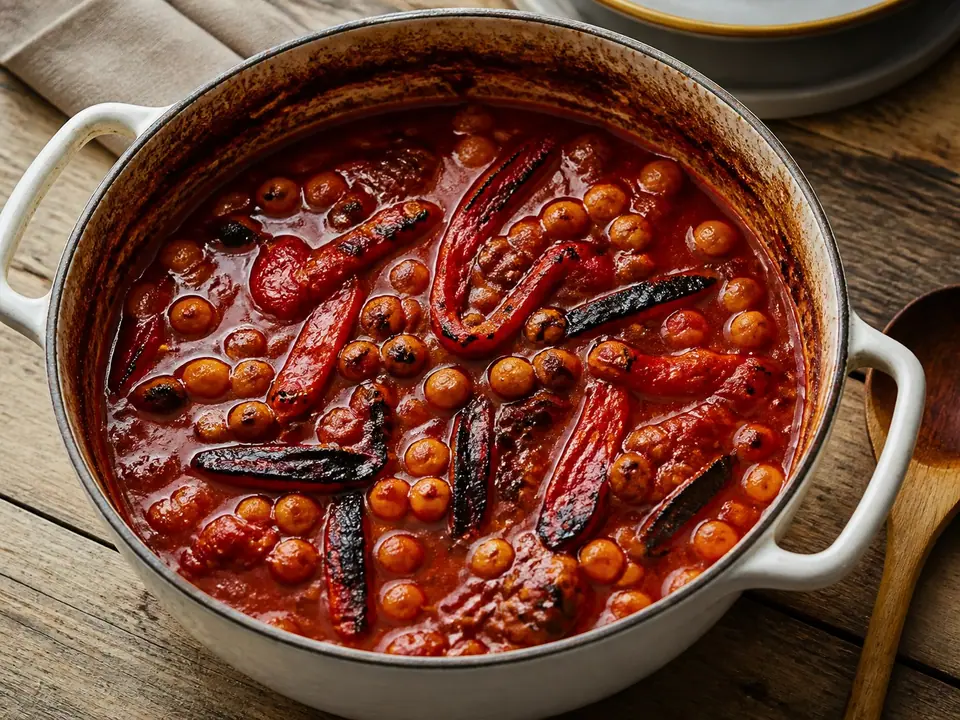
Charred red pepper and chickpea stew
The peppers go under the grill until they are properly black in patches. That ten minutes is the whole flavour of the dish.
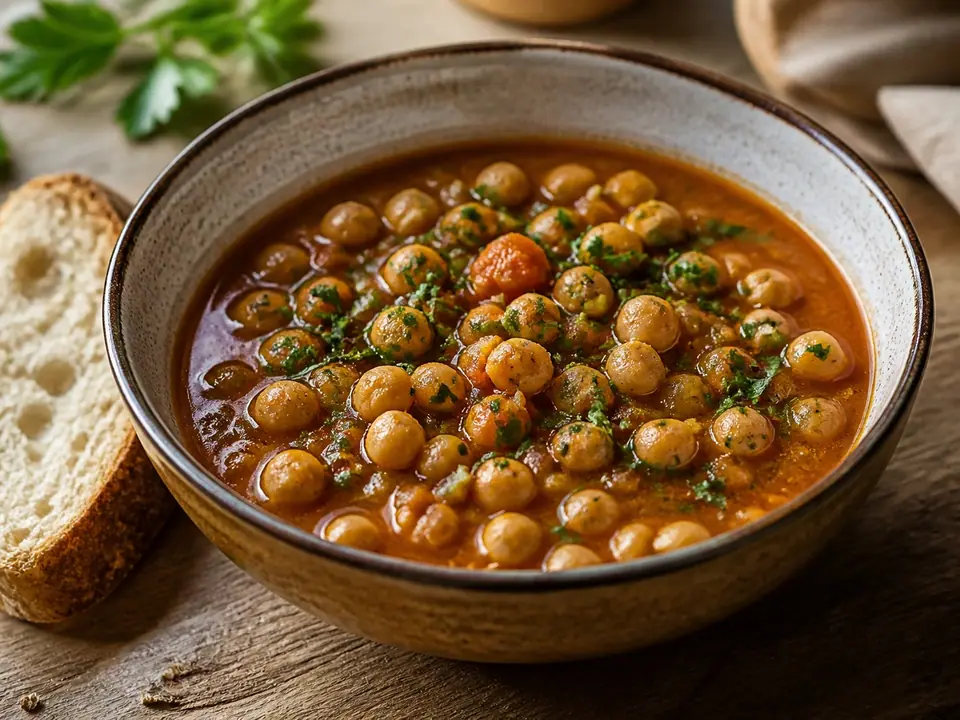
Spiced chickpea soup with lemon
Blending all of it gives you baby food. Blending none of it gives you thin broth with things in it. Half is the answer.