Shishitos are a ten-minute pan of small surprises
Also called shishito, Japanese frying peppers
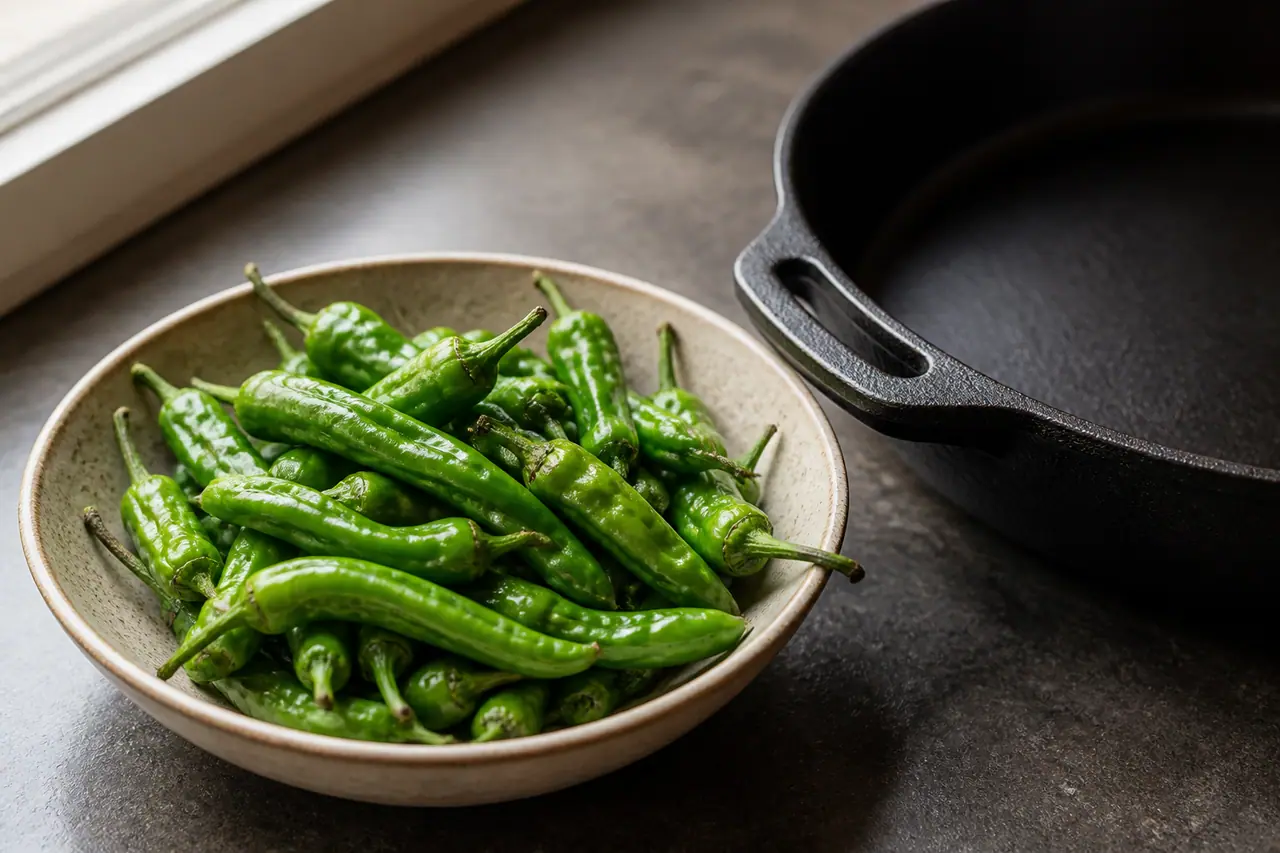
Shishito peppers are thin-walled, mild green peppers made for blistering in a hot pan. Most are gentle; an occasional pod has a sharper bite, which is part of the fun.
The numbers
| Nutrient | Amount | % RI |
|---|---|---|
| Calories | 20 kcal | — |
| Water | 94 g | — |
| Carbs | 4.6 g | — |
| Fibre | 1.7 g | 7% |
| Protein | 0.9 g | 2% |
| Vitamin C | 80 mg | 100% |
| Potassium | 175 mg | 9% |
Source: USDA FoodData Central, SR Legacy record for raw green sweet peppers; shishito varieties vary · % RI against EU adult reference intakes.
Buying and keeping
What to look for at the shop, and how to make it last once it is home.
How to pick
- Choose bright green pods with firm stems and a little natural wrinkling along the skin.
- Avoid peppers that feel limp or have black wet marks around the stem end.
- Small to medium pods blister more evenly than long oversized ones.
- A mixed bag of straight and curly peppers is normal; shape does not reliably predict heat.
- Buy enough for a single layer in your widest frying pan. A crowded pan gives you steamed peppers.
How to store
- Keep shishitos dry in a paper bag or loose produce drawer for up to five days.
- Do not wash them until cooking. Surface water makes the oil spit and stops the skin blistering.
- Once cooked, chill leftovers in a covered container and use within three days.
- Freeze raw shishitos only for sauces or stir-fries; thawing removes the crisp texture that makes them useful.
- If a pod is already wrinkled and soft, cook it first rather than mixing it into the fresh bag.
Best months
If you have none
Swaps that hold up, with what changes when you use them.
Why the odd hot one appears
Shishitos are usually mild, but the plants do not make every pod identical. Heat can rise with growing stress, ripeness and variety, so one pepper in a bowl may taste noticeably hotter than the rest. I do not cut every pod open to check. I blister them whole, taste the first one carefully and serve the rest with enough plain food to balance the odd surprise.
They are thin-walled and low in water compared with a bell pepper, which is why a hot pan can colour them before they collapse. Their job is not to become a sauce. It is to become a smoky, wrinkled bite that carries salt, lemon, soy or a spoon of yoghurt.
The ten-minute blister
Dry the peppers, heat a wide skillet until a drop of water skitters, then add a teaspoon of neutral oil. Tip in the pods and leave them alone for thirty seconds. Turn them with tongs when the first side has dark blisters. Keep turning until several sides are marked and the peppers are soft enough to bend but not collapsed.
Season after the heat is off. Flaky salt clings to the hot skin, while lemon juice cuts through the oil. Soy sauce works, but use it sparingly because it can hide the mild sweetness. I serve blistered shishitos with rice, grilled fish or beans. They also make an excellent fridge-door snack cold from the container, though the skin is at its best warm.
Do not trim them first
Leave the stems on while cooking. They give you something to hold, and the pepper stays intact in the pan. The stem is not intended to eat, so pull it away at the table. Slitting every pod lets steam out but also loses the juice and makes the pan messier. If a pepper is unusually large, make one small cut near the tip instead.
Wash the pods before they go into storage only if the market has left visible soil on them, and dry them thoroughly. Moisture trapped in the folds is the fastest route to a soft, dark patch. A paper towel in the storage bag catches condensation without turning the peppers airtight.
How they fit with other peppers
Keep the broader pepper notes on poblano peppers and red bell pepper nearby. Shishitos cook faster than both and are better treated as a side than as the base of a stew. If you are comparing colours, the guide to red vs yellow peppers explains why ripe sweet peppers behave differently in the same pan.