Tinned tomatoes
Also called canned tomatoes
A tin is not a failed fresh tomato. It is a dependable cooked ingredient, with ripe fruit, juice and enough acidity for soups, sauces and stews.
The numbers
| Nutrient | Amount | % RI |
|---|---|---|
| Calories | 18 kcal | — |
| Water | 94.5 g | — |
| Carbs | 3.9 g | — |
| Fibre | 1.2 g | 5% |
| Protein | 0.9 g | 2% |
| Potassium | 237 mg | 12% |
Source: USDA FoodData Central, FDC 170457 used as the raw tomato reference; canned products vary with salt and juice · FDC ID 170457 · % RI against EU adult reference intakes.
Buying and keeping
What to look for at the shop, and how to make it last once it is home.
How to pick
- Read the ingredient list. Tomatoes, juice and salt are enough for most everyday tins.
- Choose whole peeled tomatoes when you want to control the final texture; crush them in the pan yourself.
- Choose chopped tomatoes for speed, but expect more variation in chunk size and sometimes a thinner liquid.
- Check the salt on the label before seasoning a soup or stew. Brand differences are large enough to matter.
How to store
- Keep unopened tins in a cool dry cupboard and use the oldest ones first.
- Move leftovers to a glass or plastic container after opening. Do not store acidic tomato food in the opened metal tin.
- Refrigerated leftovers keep for about four days if cooled promptly and covered.
- Freeze cooked tomato sauce in flat portions. Leave room for expansion and label the date.
Best months
If you have none
Swaps that hold up, with what changes when you use them.
Whole, chopped or crushed
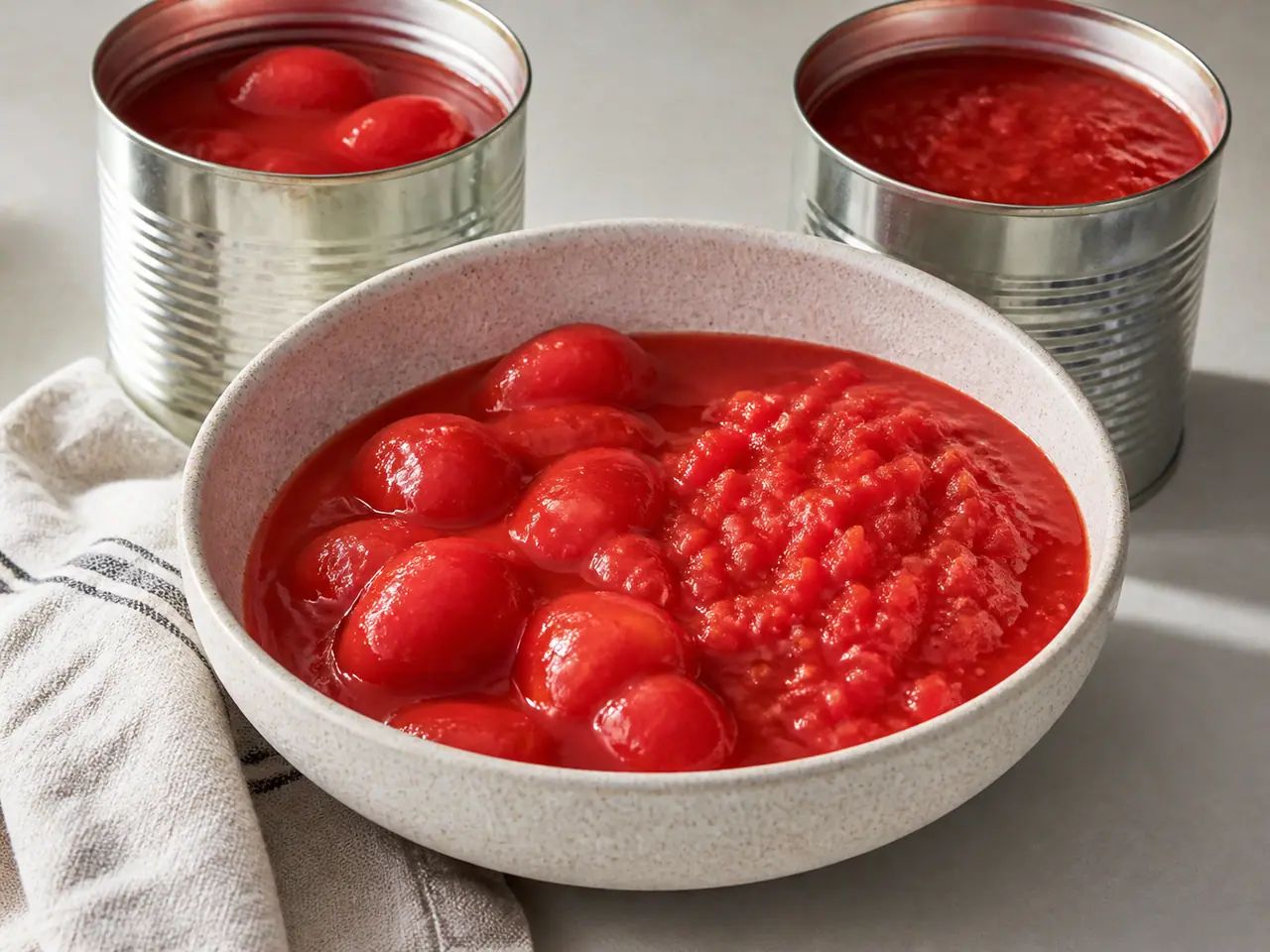
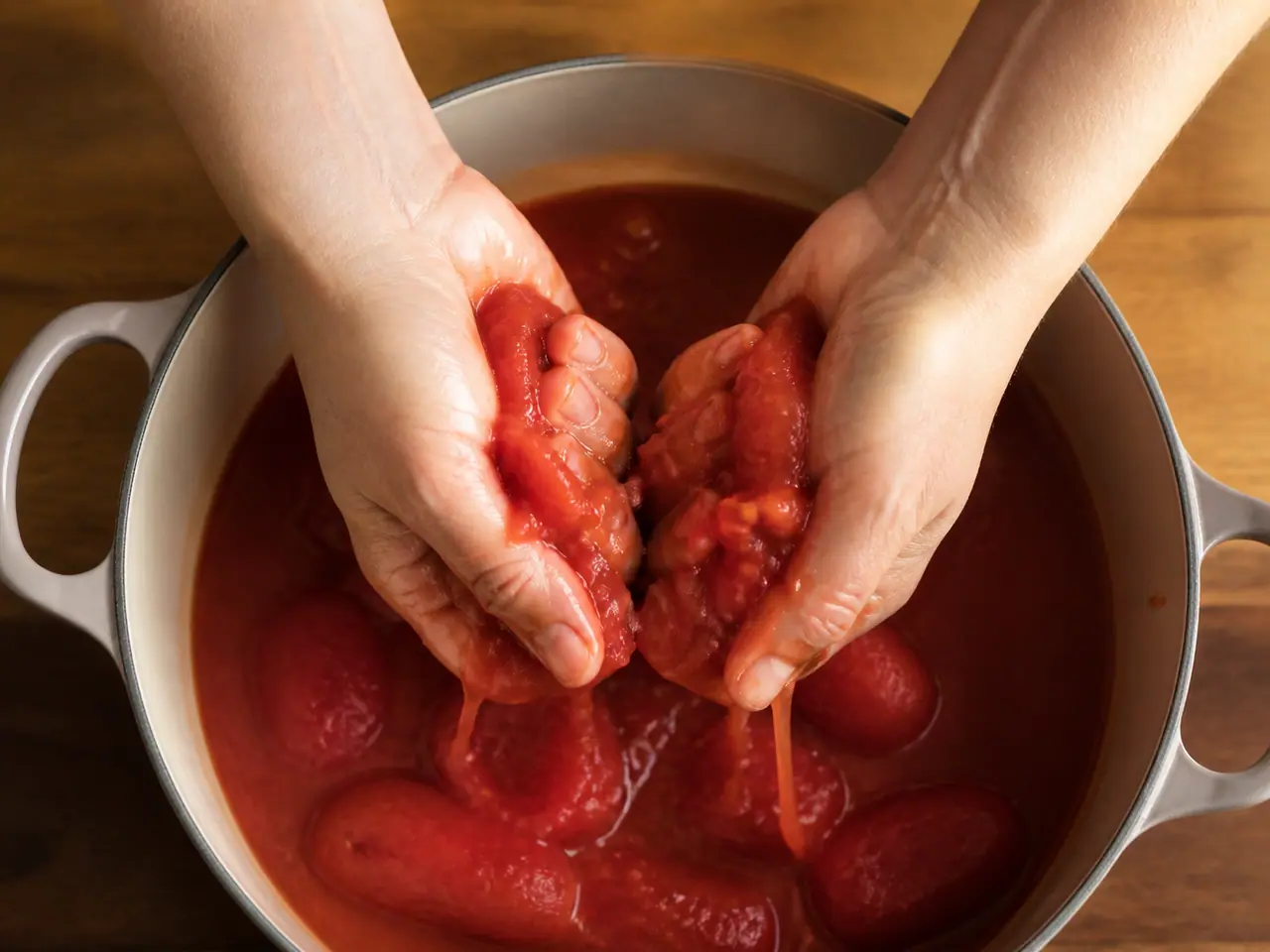
Whole peeled tomatoes give you the most control. Crush them with your hands over the pot, leave them in large pieces for a rustic stew, or break them down with a spoon after they soften. Chopped tomatoes save a minute but do not guarantee a chunky sauce; some tins contain small soft pieces suspended in a lot of liquid.
The tin is a starting point, not a guarantee. Read the liquid level, feel how quickly the pan is reducing and adjust before the sauce gets away from you. Some brands arrive with firm fruit and a thin juice, others with soft pieces already close to a sauce. Both can work. The mistake is using the same amount of stock and the same cooking time without looking at the pan. I keep the lid off, taste after the first ten minutes and decide whether the sauce needs more reduction or more liquid. That small pause saves a lot of watery dinners.
The label matters less than the pan. A good whole tomato in a narrow covered pot can still make a thin sauce. A basic chopped tin in a wide uncovered skillet can reduce into something useful. Start with the cooking surface, not the promise on the front of the tin. A tin is convenient because it removes the question of season, but it does not remove the question of water. Let the sauce tell you when it is ready: the spoon should leave a track for a moment, the bubbles should look slower and the tomatoes should cling to the sides instead of running straight back. If those signs are absent, give it more uncovered time before adding anything else.
The tin juice is part of the ingredient
Drain a tin only when the recipe needs less liquid from the start. The juice carries tomato flavour and can be reduced with the fruit. Pouring it away and replacing it with water gives you less seasoning and no advantage unless the tomatoes are unusually thin.
For a stew, use the whole tin and reduce uncovered. For a quick pan sauce, drain some juice into a cup and add it back if the pan looks dry. This is easier than trying to rescue a dish that started with no liquid at all.
How to make a tin taste less metallic
Give the onion and garlic time before the tomatoes arrive. Frying tomato paste in the oil for a minute helps too, as does a full simmer that lets the sharp canned edge soften. Acid is not always the answer; vinegar can brighten a dull sauce, but it cannot replace the sweetness that comes from reducing.
A pinch of sugar is rarely my first move. Taste after twenty minutes, check the salt, then add olive oil, herbs or a few drops of vinegar according to the problem. A flat sauce often needs salt or time, not sugar.
Where the tin earns its place
Tinned tomatoes are the backbone of the charred red pepper and chickpea stew and the spiced chickpea soup. Both dishes need a consistent cooked base, not the gamble of a winter tomato. For a comparison of the two main forms, see fresh versus tinned tomatoes.
Questions
Are whole tinned tomatoes better than chopped?
Should I drain tinned tomatoes?
How long do opened tinned tomatoes last?
Can I replace tinned tomatoes with fresh?
Why does my tomato sauce taste metallic?
Recipes using tinned tomatoes
2 on the site so far.
Charred red pepper and chickpea stew
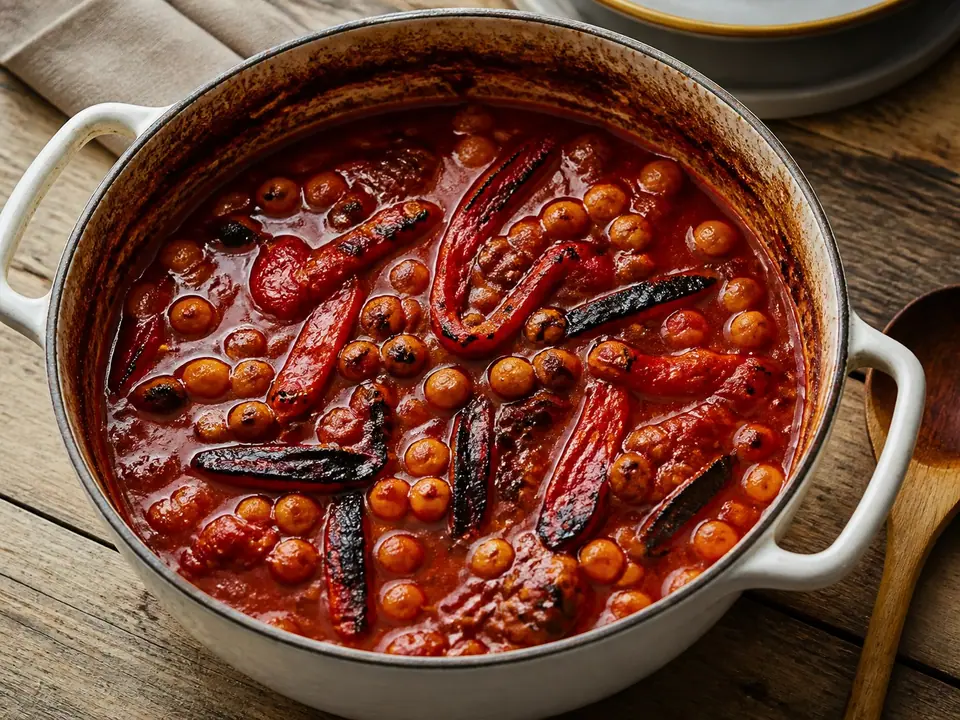
The peppers go under the grill until they are properly black in patches. That ten minutes is the whole flavour of the dish.
Spiced chickpea soup with lemon
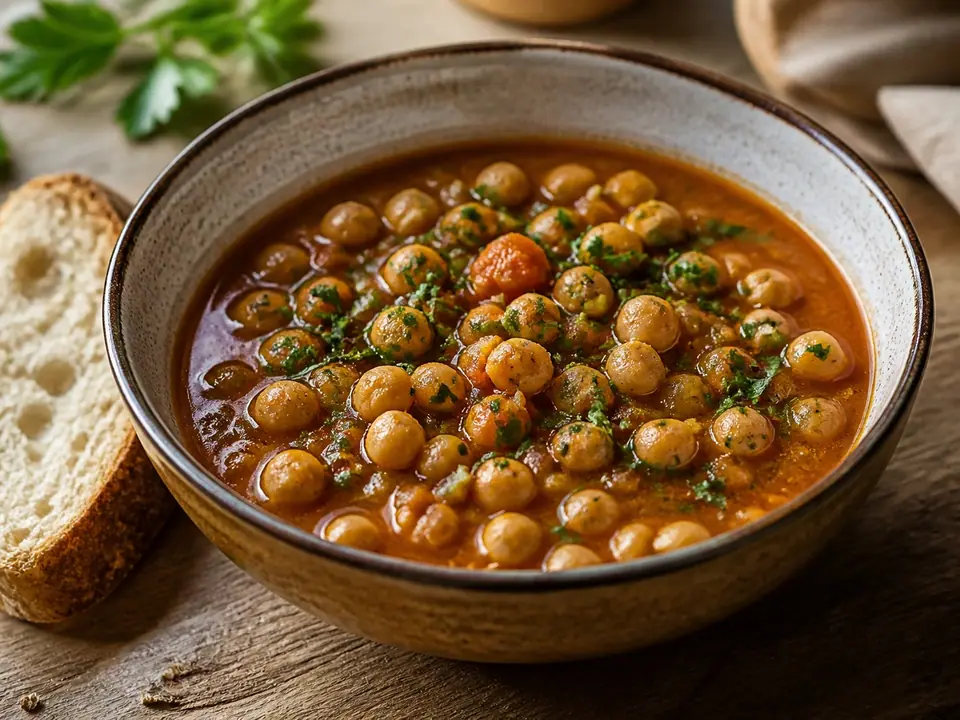
Blending all of it gives you baby food. Blending none of it gives you thin broth with things in it. Half is the answer.