Yellow peppers bring sweetness without taking over the pan
Also called yellow sweet peppers, yellow capsicum
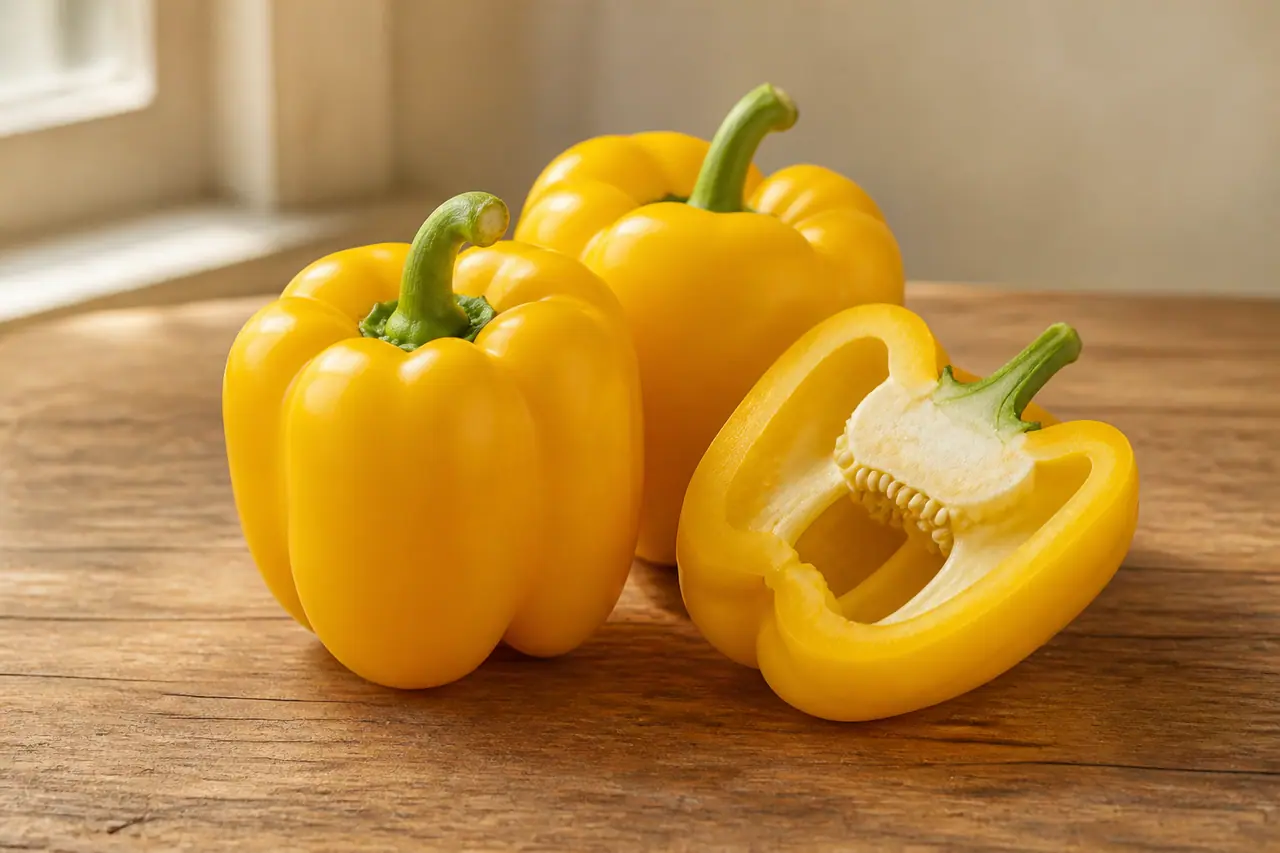
Yellow bell peppers are ripe, crisp and mild, with enough sweetness for salads and enough structure for a hot tray. Pick heavy fruit with taut skin and keep it cold until you are ready to cook.
The numbers
| Nutrient | Amount | % RI |
|---|---|---|
| Calories | 27 kcal | — |
| Water | 92.2 g | — |
| Carbs | 6 g | — |
| Fibre | 2.1 g | 8% |
| Protein | 1 g | 2% |
| Vitamin C | 120 mg | 150% |
| Potassium | 210 mg | 11% |
Source: USDA FoodData Central, SR Legacy record for sweet peppers, raw; colour varieties vary slightly · % RI against EU adult reference intakes.
Buying and keeping
What to look for at the shop, and how to make it last once it is home.
How to pick
- Choose peppers that feel heavy, with skin pulled tight over the shoulders and no soft dents at the base.
- The stem should be green and firm rather than dry, brown or collapsed into the top of the pepper.
- Look for an even yellow colour. A green patch usually means the fruit was picked before it had finished ripening.
- For roasting, broad peppers with thick walls give you more usable flesh after the skin and seeds are removed.
- Buy loose when you can. Condensation inside a plastic tray speeds up the soft spots that yellow peppers show first.
How to store
- Keep whole peppers in the fridge drawer, dry and unwashed, for about one to two weeks.
- Once cut, remove the seeds, wrap the cut face and use within three days. The flesh stays firm longer than the damp seed core.
- Sliced peppers freeze well for cooked dishes. Freeze them in a single layer first so they do not form one solid block.
- Roasted and peeled peppers keep in a covered container for four days. Add oil after cooling rather than storing warm peppers under oil.
- Do not store them beside ripe bananas or apples if you want the skin to stay taut.
Best months
If you have none
Swaps that hold up, with what changes when you use them.
What yellow means on the plant
Yellow bell peppers are sweet peppers left on the plant beyond the green stage. The colour is not painted on and it is not a separate vegetable family. As the fruit ripens, the green taste fades, the flesh becomes sweeter and the walls often soften a little. That extra time on the plant is why a yellow pepper costs more than a green one in the same pack.
I use yellow peppers when I want sweetness but do not want the dark, almost jammy flavour that a fully ripe red pepper can bring. They are good raw with a salty dressing, but their best weeknight job is a hot tray with onions, chickpeas or fish. They catch at the edges while keeping enough bite in the middle.
The right way to cut one
Put the pepper upright and slice down each side of the central seed core. You get four clean panels, no scraping and fewer seeds on the board. Trim the pale ribs with the tip of a knife if you are serving it raw; they are harmless, but their texture is tougher than the wall around them.
For a salad, cut the panels across the grain into thin strips and salt them five minutes before dressing. For roasting, keep the strips wider than you think you need. They shrink, and thin strips burn before the skin has time to blister. I leave the skin on for a traybake and remove it only when I want a smooth sauce or a pepper spread.
Raw, roasted or softened in oil
Raw yellow pepper gives a clean crunch and a mild sweetness. Roasting concentrates that sweetness, but it also makes the flesh slippery and soft, which is why it should not share a tray with a delicate fish fillet from the first minute. Give the pepper a head start at 220°C fan, then add the fish once the edges have started to colour.
For a quick pan sauce, cook the strips over medium-high heat with a little oil and salt. A crowded pan steams them, while a wide pan gives them browned corners. Add garlic only after the pepper has softened; garlic burns before a thick pepper wall has lost its raw centre. A splash of vinegar at the end keeps the result from tasting sweet and heavy.
Useful links
For the red version, see red bell pepper. The colour comparison is covered in red vs yellow peppers, and the storage advice belongs beside fresh produce storage when you are planning a whole shopping trip.