Kimchi fried rice with peas for the freezer
youryum.com/recipes/kimchi-fried-rice-with-peas-for-the-freezer · serves 4
A freezer rice base for busy nights
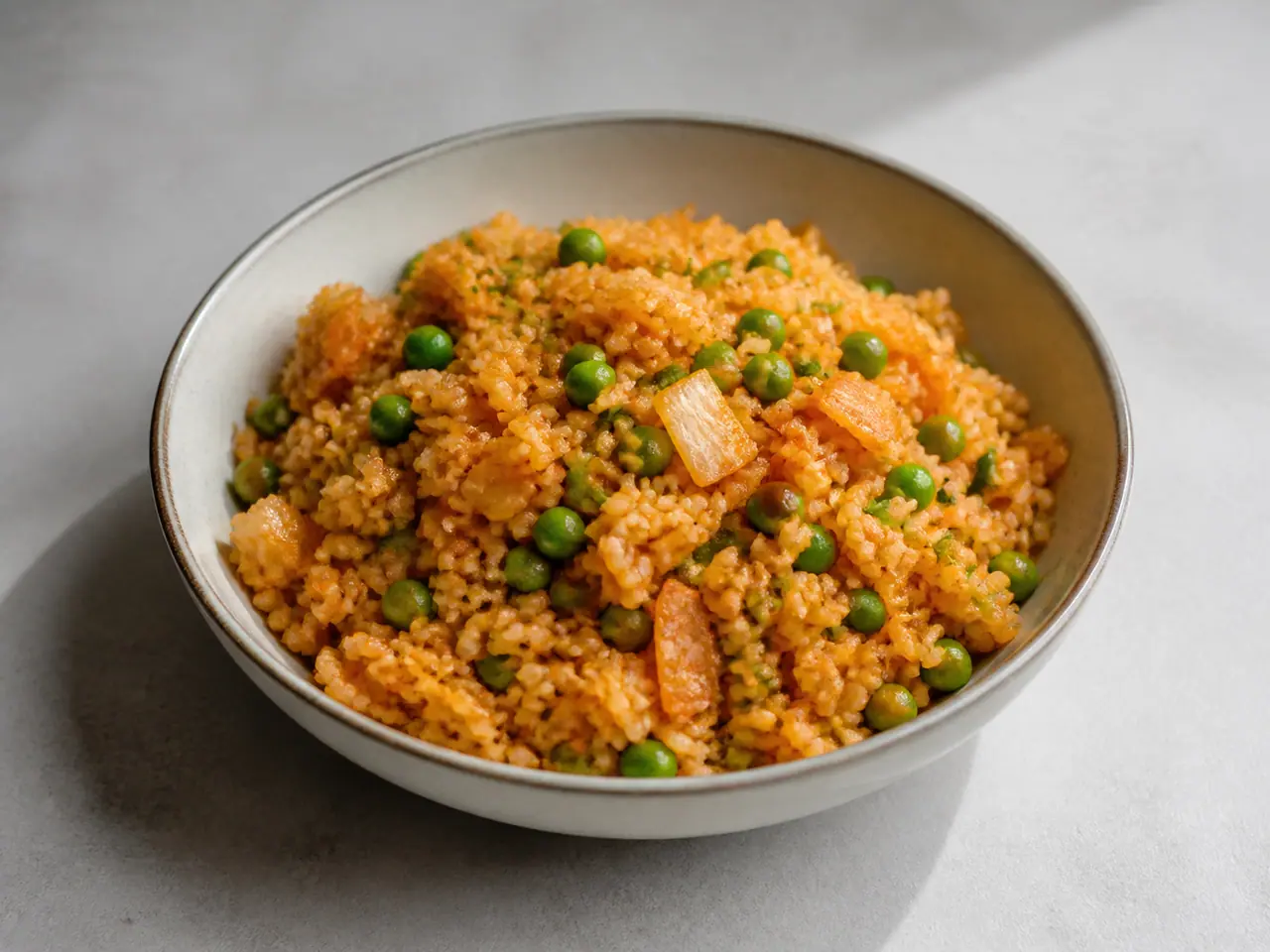
Freeze the kimchi rice in flat portions, then bring back its aroma with sesame oil and spring onions after reheating.
- Vegan

- Prep
- 15 min
- Cook
- 20 min
- Total
- 35 min
- Serves
- 4
- Per serving
- 386kcal
- Effort
- Easy
Fried rice is less about a long ingredient list than about dry rice, a hot pan and the discipline to leave the grains alone for a minute. Kimchi gives the base salt and acidity, peas add sweetness, and the finishing ingredient decides whether the bowl feels sharp, creamy or crunchy.
I cook the vegetables before the rice so their water has time to leave. Once the grains go in, the pan is about texture. Spread, wait, stir, spread again. That small pause is what makes a home pan of rice taste fried rather than simply warmed.
Ingredients
Fried rice
After reheating
Equipment
- Wide frying pan
- Wooden spatula
- Baking tray for cooling rice
Method
-
Dry the rice and prep the pan
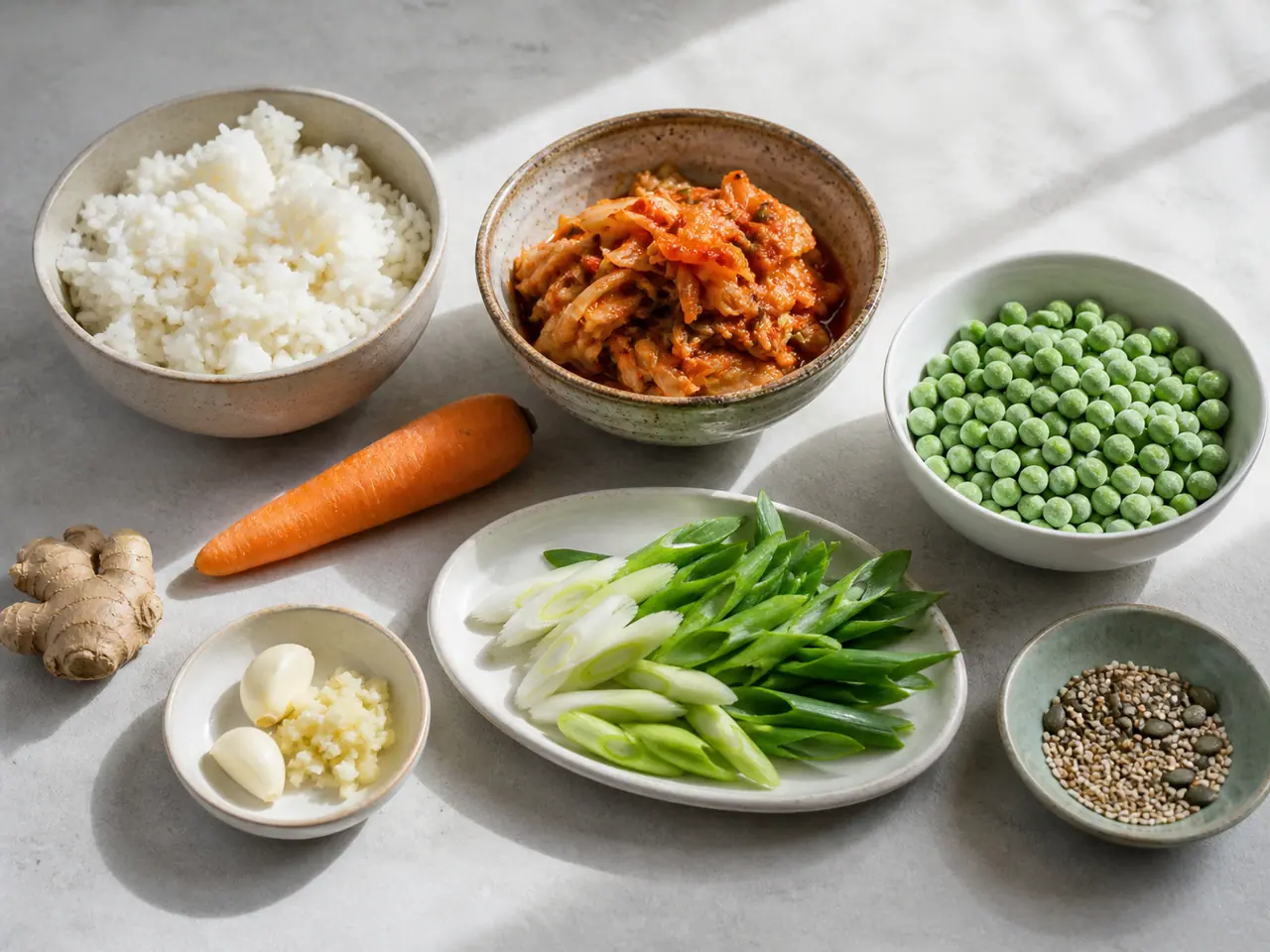
Break the cold rice into loose clumps with your fingers. Put the kimchi, peas, carrot, spring onion whites, garlic and ginger beside the hob because the pan moves quickly once it is hot.
Cold, dry grains are the starting point for fried rice. Freshly cooked rice carries too much steam and turns the first stage into a soft stir-fry. If your rice is fresh, spread it on a tray and chill it uncovered for at least thirty minutes.
-
Cook the kimchi and vegetables
Heat one tablespoon of neutral oil in a wide frying pan over medium-high heat. Add the carrot and spring onion whites and cook for three minutes. Add the garlic, ginger and kimchi and fry for two minutes until the kimchi darkens slightly and the pan smells savoury.
Keep the kimchi moving but let it touch the metal. The browned bits are useful seasoning for the rice, while a pan that is crowded or too cool leaves the vegetables wet.
-
Fry the rice
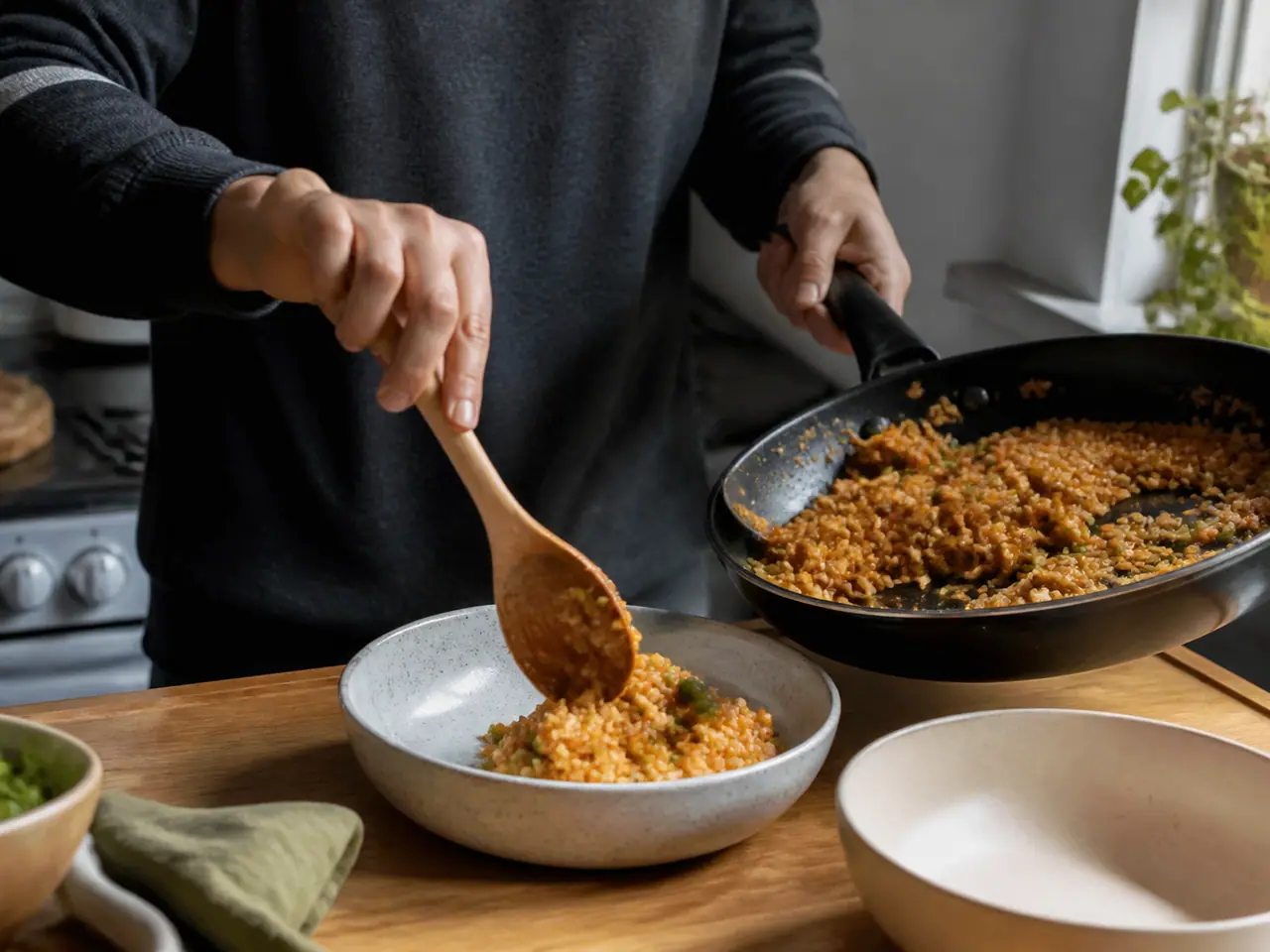
Add the remaining oil and the cold rice. Toss to coat, then spread everything across the pan. Leave it alone for two minutes so the bottom grains can catch. Stir, spread it again and repeat once more. The rice should look dry at the edges and glossy only where the kimchi has touched it.
Pour the soy sauce around the hot edge of the pan rather than onto one pile of rice. It sizzles, reduces and seasons more evenly. Add the peas during the final three minutes so they stay green and sweet.
-
Add the ${v.finish}
Cool the rice quickly, portion it into shallow freezer-safe containers and freeze for up to one month. Reheat until piping hot, then add sesame oil, spring onions and vinegar.
Fold gently. Kimchi is already tender and the rice has earned its edges, so hard stirring now breaks both down.
-
Rest and serve
Take the pan off the heat and leave it for two minutes. Stir through the toasted sesame oil, then taste for salt and acidity. Serve immediately while the rice still has crisp patches.
A good bowl has separate grains, soft kimchi, green peas and one clear finishing note. If it tastes flat, add a teaspoon of kimchi juice or rice vinegar before reaching for more soy sauce.
Why cold rice matters
The goal is not to dry rice until it becomes hard. It is to remove enough surface moisture that the grains can meet hot metal. Cold rice has already set its starch structure, so it separates when tossed. Fresh rice is still releasing steam and wants to clump.
If you only have fresh rice, spread it thinly on a tray and chill it uncovered. The surface will firm up while the centre stays tender. That is enough to give the pan a chance.
Kimchi brings its own seasoning
Kimchi is salty, acidic and variable. One jar may be sweet and mild, another sharply fermented and hot. Frying it first softens the raw edge and lets its juice coat the aromatics before the rice arrives.
Taste the finished pan before adding soy sauce. If the bowl needs brightness rather than salt, use a little kimchi juice or rice vinegar. That keeps the rice savoury without making it taste like soy sauce.
Nutrition
Per serving, for 4 servings. Estimated from ingredient weights — it moves with the brands and cuts you actually use.
| Nutrient | Per serving |
|---|---|
| Calories | 386 kcal |
| Protein | 11 g |
| Carbohydrate | 65 g |
| Fibre | 7 g |
| Fat | 14 g |
Source: Estimated from ingredient weights, USDA FoodData Central
Questions
Can I freeze rice safely?
How do I reheat it?
Can I freeze the peas in it?
Filed under
Cook this next
All recipes →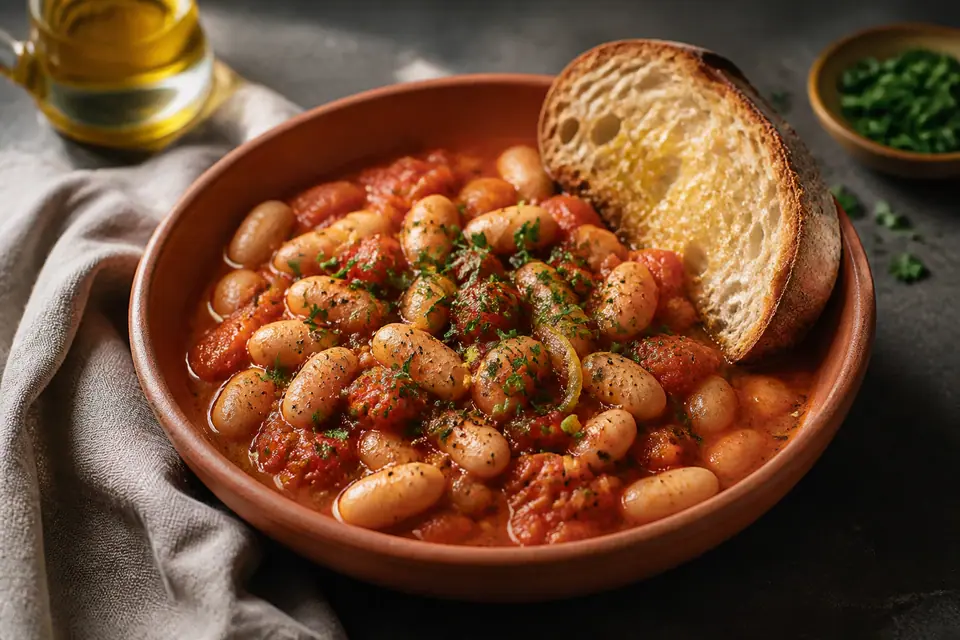
Tomato butter beans with toast for the freezer
The tomato butter beans freeze well when kept slightly loose, so dinner only needs fresh toast and a squeeze of lemon later.
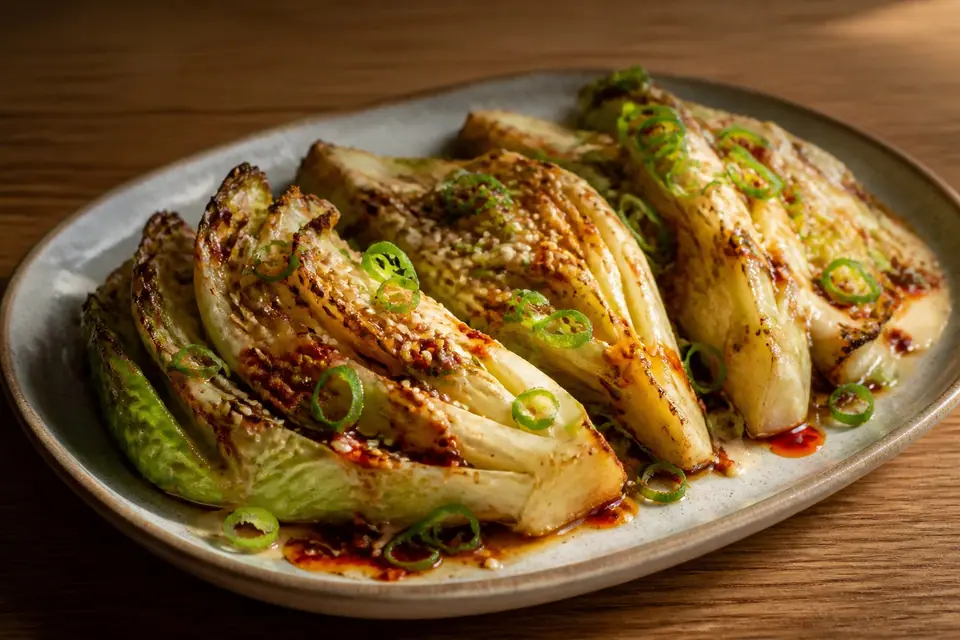
Miso-roasted cabbage with chilli oil
The chilli oil stays raw and fragrant while the cabbage takes a long, hot roast under a thin miso glaze.
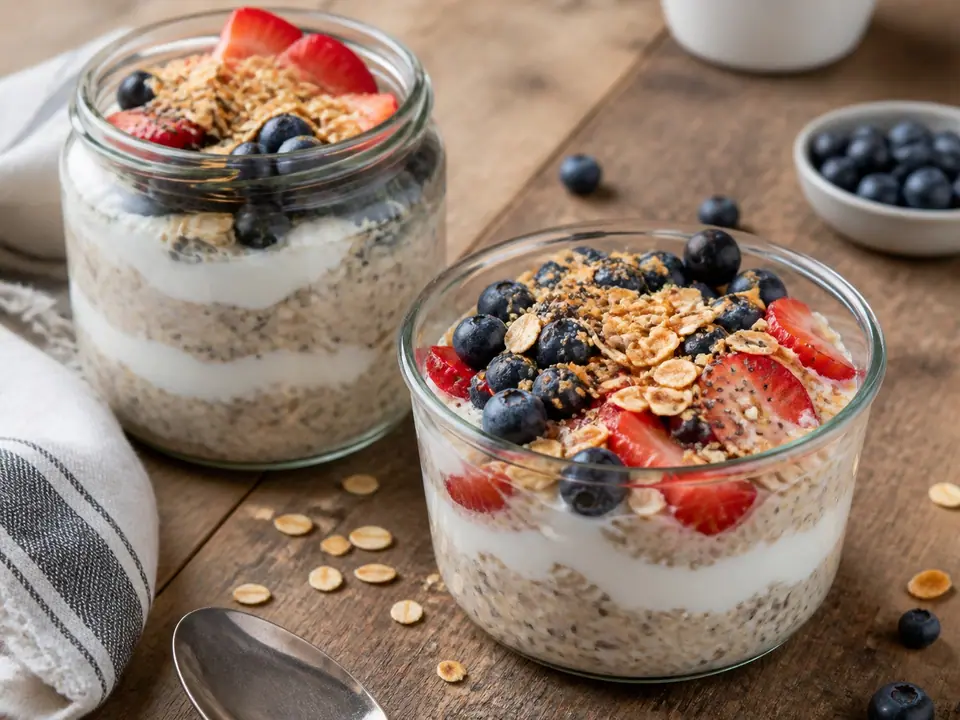
Overnight oats with Greek yogurt
Equal parts oats, milk and yogurt by volume. Everything after that is a topping, and none of it changes whether it works.