Peach and tomato panzanella for the freezer
youryum.com/recipes/peach-and-tomato-panzanella-for-the-freezer · serves 4
Freeze the useful part, add the peaches later
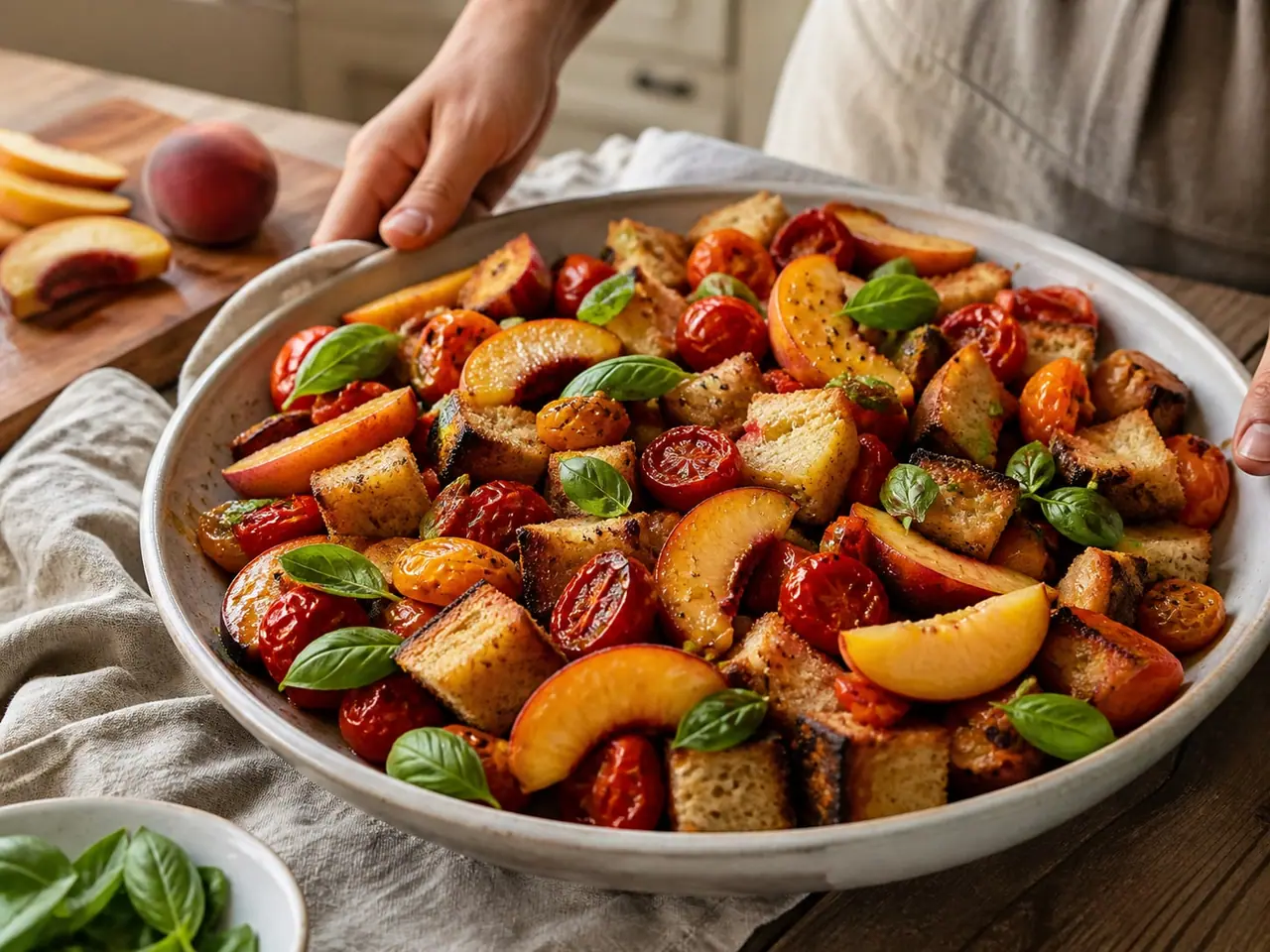
A practical freezer base of roasted tomatoes and crisp bread, finished later with fresh peaches, herbs and lemon.
- Vegetarian
- Vegan
- Dairy free

- Prep
- 20 min
- Cook
- 35 min
- Total
- 55 min
- Serves
- 4
- Per serving
- 309kcal
- Effort
- Easy
A finished panzanella does not freeze well. Peaches turn soft, herbs blacken and the bread loses the texture that makes the salad worth making. The useful freezer version is a base: roast the tomatoes, toast the bread, freeze them separately, then add a fresh peach when dinner arrives.
It is a way to save a glut of tomatoes, not a way to make February taste like August. Label the bag with the fresh ingredients you still need; otherwise it will come out looking like an unpromising container of roasted vegetables.
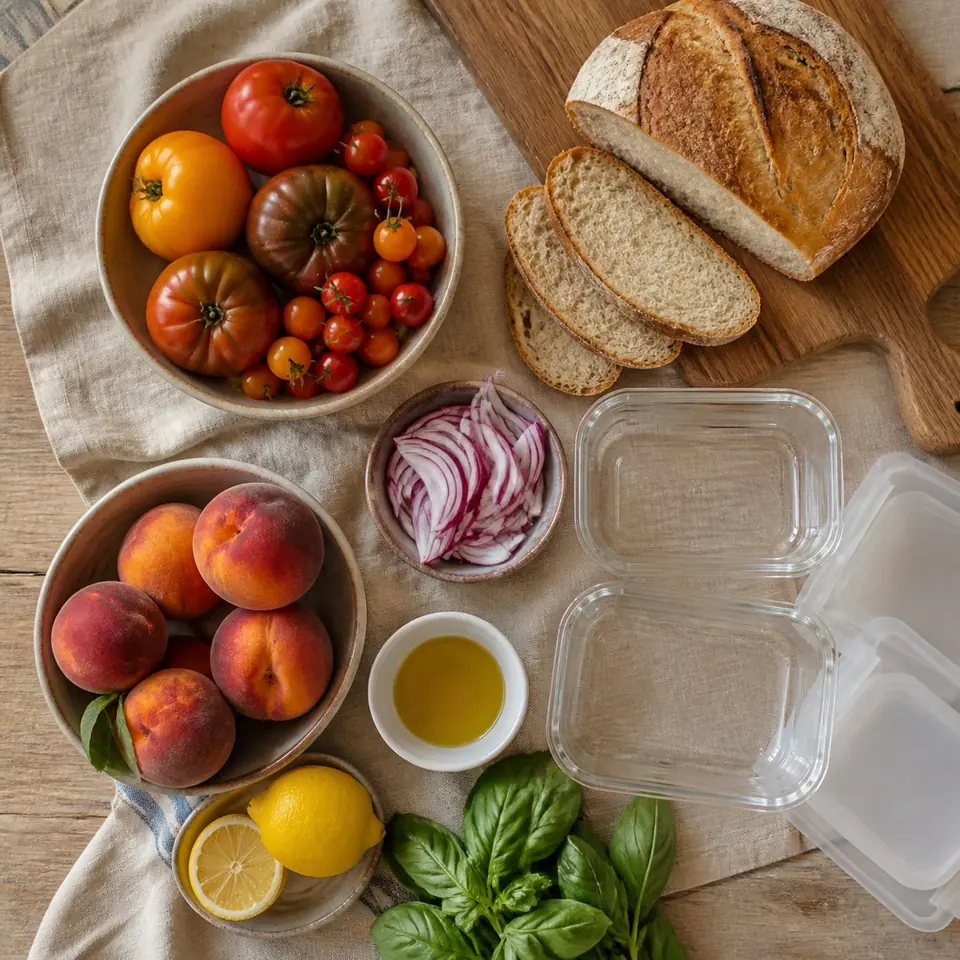
Ingredients
Freezer base
Finish after thawing
Equipment
- Large roasting tray
- Wire rack or plate
- Two freezer containers
Method
-
Roast the tomatoes
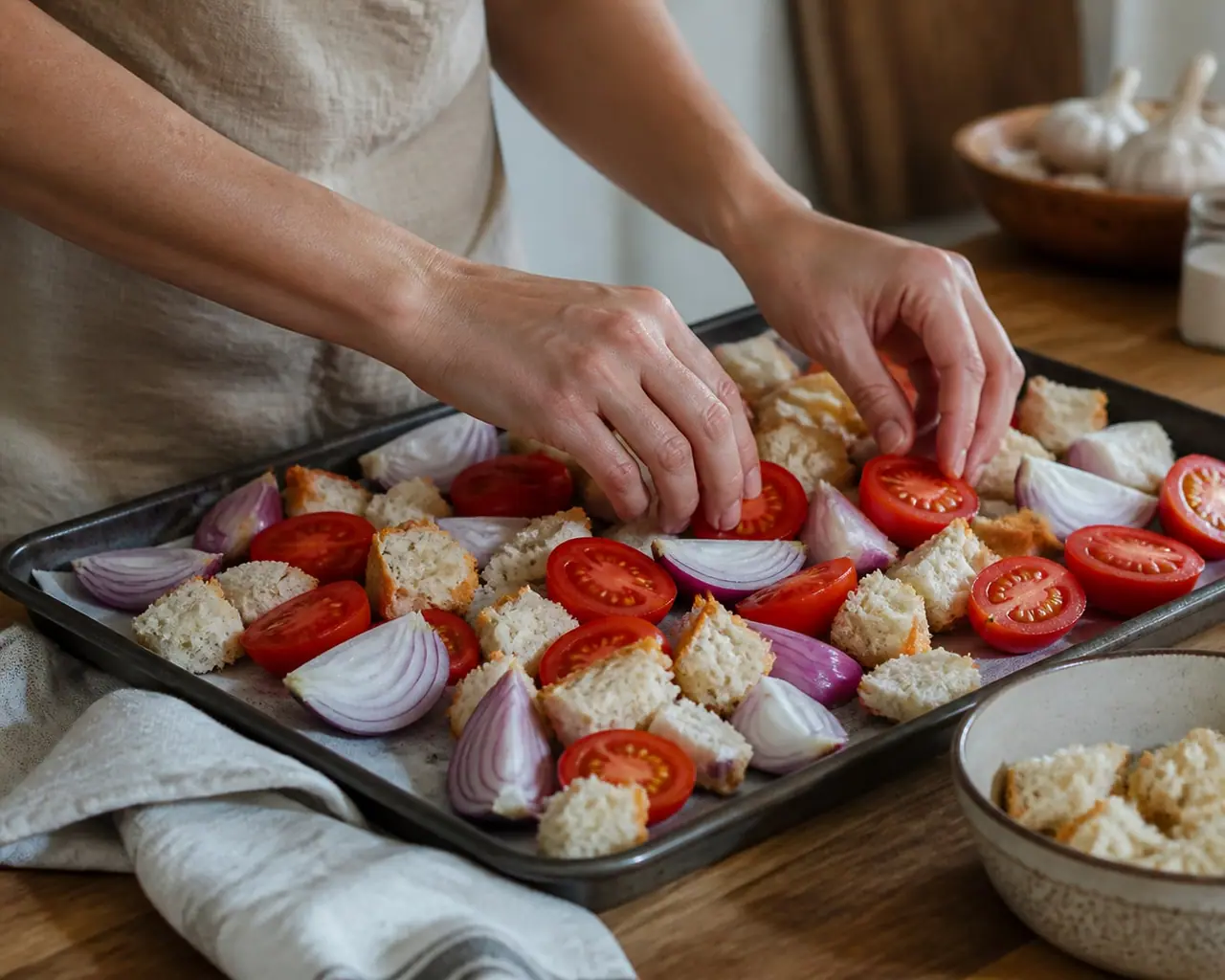
Heat the oven to 210°C fan. Put the tomatoes and onion on a tray, toss with two tablespoons of oil, salt and pepper, and roast for 25 minutes. The tomatoes should wrinkle and give up some juice without collapsing into sauce. Leave the cut sides facing up so the liquid concentrates instead of running straight off the tray.
Roasting changes the freezer result because it removes water before the cold air gets involved. Keep the tray juices; they are useful when the thawed bread needs moisture, but do not pour them over the bread before freezing. Let the vegetables cool in one layer, then scrape every dark sticky bit from the metal into the tomato bag. Those browned edges carry more flavour than the soft centre and stop the finished salad tasting like vegetables that were boiled, frozen and forgotten.
-
Toast the bread
Move the tomatoes and onion to one side of the tray. Toss the bread with another tablespoon of oil and put it on the other side. Bake for ten minutes, turning once, until the bread is dry at the edges but not dark all over. Cool everything completely. A few pale faces are useful because they soften gently after thawing, while the browned corners give the final salad some structure.
-
Freeze separately
Spread the bread on a plate until fully cold, then pack it in one freezer bag. Pack the tomatoes and onion, with their tray juices, in another. Press out air, label with the date and write: add peaches, lemon, herbs and vinegar. Freeze for up to two months.
-
Thaw in the fridge
Move the tomatoes and bread to the fridge the night before. Keep the bread in its bag but open it for the last hour so condensation does not soften it further. Bring both to room temperature before mixing.
-
Add the fresh finish
Put the thawed tomatoes in a bowl with the peaches, lemon, vinegar and herbs. Fold in the bread just before eating. Taste for salt and add a spoonful of olive oil if the tomatoes were not very juicy.
What freezing can and cannot do
Roasted tomatoes come back softer because their cell walls have already been heated and then frozen. That is why the fresh peach matters: it brings a clean edge and a little resistance to a cooked base. The bread is separate for a different reason. It can be toasted again in a dry pan if it has softened in the freezer bag, but it cannot recover once it has been frozen in tomato juice.
Cool everything before it goes into a bag.
If you do not have peaches when you thaw the base, use grapes, plums or fresh tomatoes. Add a handful of parsley and enough lemon to wake up the cooked vegetables. The freezer base also makes a good topping for beans or a piece of grilled fish, so do not treat the labelled salad plan as the only possible ending.
Portioning helps
Freeze in two small bags instead of one large tub if you expect to use it on separate nights. Thin portions thaw quickly and make it easier to keep the bread separate.
What survives freezing
Freeze the cooked tomatoes and bread separately, then add the fresh pieces after thawing. The tomatoes will lose some of their raw firmness, but their juice becomes useful against toasted bread. Cool every component before it goes into a freezer bag; warm food creates condensation, and condensation becomes ice. Flatten the bags so they stack and thaw quickly. When you are ready to eat, thaw the tomatoes in the fridge overnight or in a bowl of cool water, then drain only the excess liquid. Toast the bread again in a dry pan if it has softened. Add peaches, herbs and lemon after everything is at room temperature. The result is not the same as a summer salad made from fresh fruit, and it should not pretend to be. It is a practical way to keep a tomato-heavy lunch when the freezer is doing the work. Label the bags with the date and the dressing style so you do not have to guess what is inside.
Nutrition
Per serving, for 4 servings. Estimated from ingredient weights — it moves with the brands and cuts you actually use.
| Nutrient | Per serving |
|---|---|
| Calories | 309 kcal |
| Protein | 6 g |
| Carbohydrate | 46 g |
| Fibre | 6 g |
| Fat | 12 g |
Source: Estimated from ingredient weights, USDA FoodData Central
Questions
Can I freeze a finished panzanella?
How long does the base keep?
Can I thaw it on the counter?
Filed under
Cook this next
All recipes →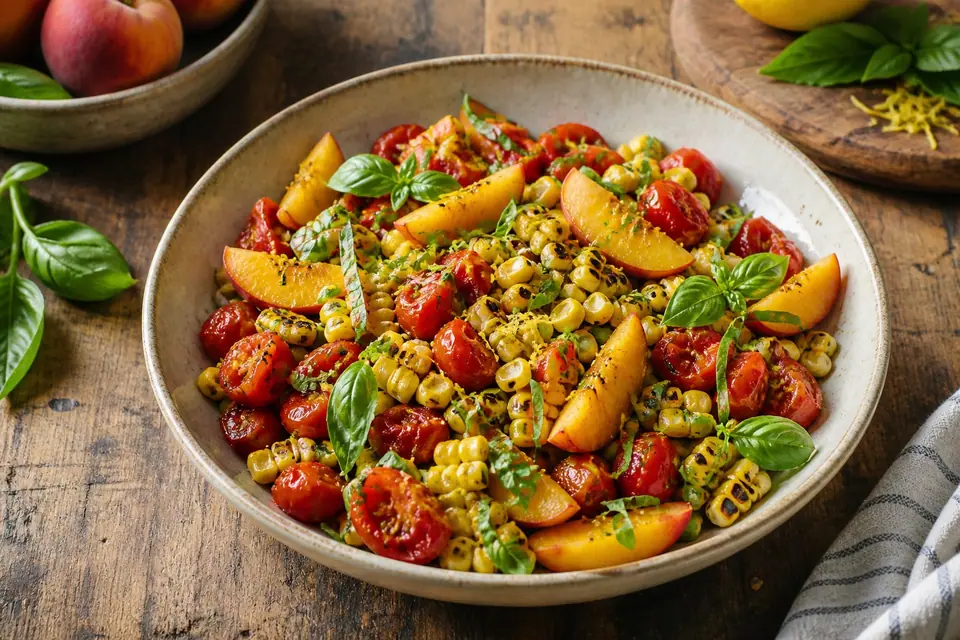
Charred corn, tomato and peach salad for the freezer
Tomatoes and corn can be frozen after roasting; peaches and herbs cannot. Freeze the cooked base, then finish it with fresh fruit when you need dinner.
Kimchi fried rice with peas for a one-pan dinner
Spinach and a fried egg turn kimchi fried rice into a complete dinner without taking away the crisp rice at the bottom.
Spiced chickpea soup with lemon
Blending all of it gives you baby food. Blending none of it gives you thin broth with things in it. Half is the answer.