Give aubergine the centre of the plate
Aubergine can carry dinner when it gets enough heat, a sharp finish and something with substance beside it. These five meals give it the main role.

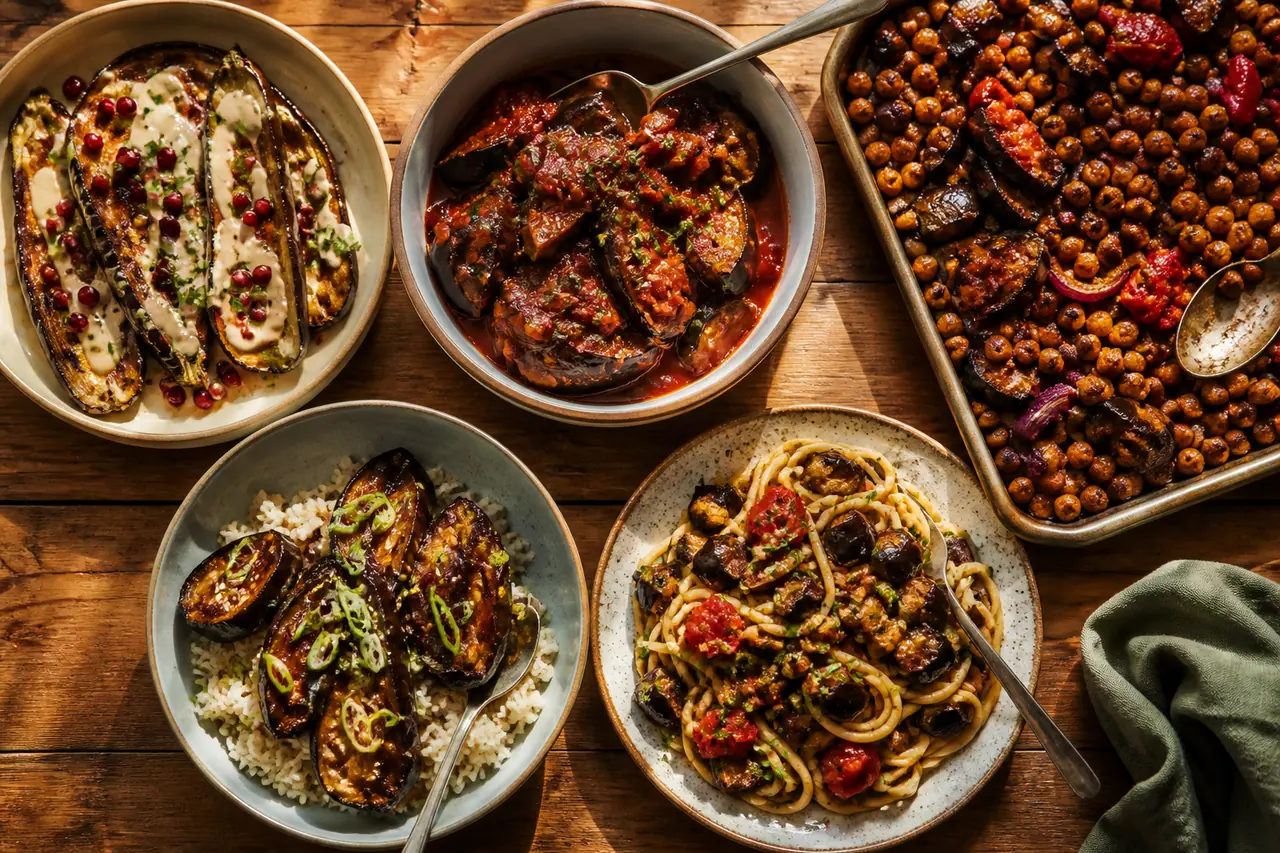
Aubergine becomes a main course when it gets more than a soft supporting role. It needs a browned edge, a sharp or fresh finish, and something that carries the bowl when the vegetable turns silky. I use five routes: roast it under tahini, fold it through a smoky tomato stew, pair it with chickpeas on one tray, glaze it over rice, or let it replace part of the pasta sauce.
The common mistake is cooking a whole pan of aubergine until soft and calling that dinner. Softness is only the middle. The meal needs contrast and enough substance to keep you full. These five dinners solve that with beans, grains, pasta, yogurt or bread without hiding the aubergine flavour.
1. Roasted aubergine with lemon tahini
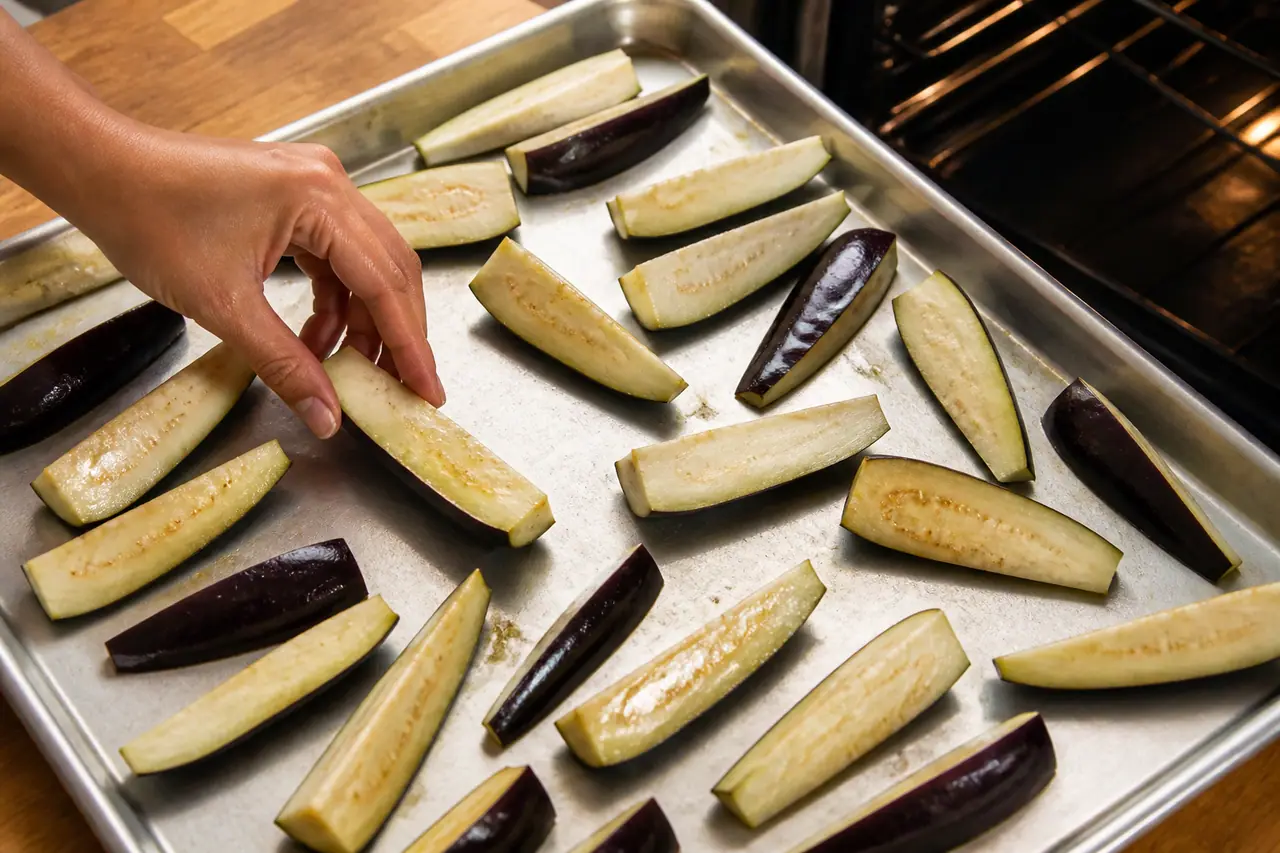
Cut aubergine into thick wedges, brush with measured oil and roast at 220°C fan until the cut faces are bronze and the centres collapse.
Whisk tahini with lemon, garlic and cold water until it becomes pourable. Spoon the sauce onto a plate, lay the hot aubergine over it and finish with parsley and toasted seeds.
The sauce goes underneath, not only on top.
That gives the soft flesh a cool, bitter contrast in every forkful. Add warm flatbread and the dinner is complete. The [harissa aubergine with chickpeas and tahini](/recipes/harissa-aubergine-with-chickpeas-with-tahini-dressing) takes the same idea further when you want chickpeas in the tray.
2. Smoky aubergine and tomato stew
I decide the supporting ingredient before I cut the aubergine. Chickpeas need a tray, beans need a sauce and rice needs a glaze that can be brushed on late. That choice keeps me from overcooking the vegetable while I improvise the rest of dinner. Aubergine is generous with time once it is soft, but it is not generous with texture. A few minutes between tender and collapsed can turn a slice into a smear, so the side dish should be ready first.
Brown thick aubergine chunks in a wide pot, remove them, then cook onion with smoked paprika, tomato paste and garlic.
Add tinned tomatoes, return the aubergine and simmer uncovered until the sauce clings. Add white beans at the end so they warm through without breaking into the sauce.
The aubergine should be visible, not blended into a red puree.
I cut pieces at least 4 cm wide because the sauce softens them quickly. Finish with vinegar or lemon. A teaspoon of acid makes the smoky tomato taste less heavy and keeps the bowl from becoming one soft note.
3. Harissa aubergine with chickpeas
Roast aubergine wedges with harissa and cumin until the edges darken, then add drained chickpeas for the final 10 minutes.
The chickpeas catch colour while the aubergine finishes softening. Add lemon, herbs and yogurt or tahini at the table. This is the most reliable route when I want a full dinner from one tray.
Do not add the chickpeas at the beginning if you want them creamy inside.
They dry out while the aubergine catches up. The [one-pan harissa aubergine](/recipes/harissa-aubergine-with-chickpeas-for-a-one-pan-dinner) keeps the tomato and spinach in the same pan, which makes a useful batch when the leftovers matter.
4. Miso aubergine rice bowls
Roast or sear thick aubergine slices, then brush them with miso, maple and rice vinegar for the final few minutes.
Serve over rice with cucumber, sesame and a fried egg or edamame. The glaze should go on late; miso sugars catch quickly, and a burnt coating hides the vegetable.
I make the rice first and keep it warm while the aubergine cooks.
That removes the pressure to overcook the slices because the side dish is waiting. Cucumber or pickled onions add the crunch the soft aubergine needs. A bowl should have a clear temperature and texture contrast.
5. Aubergine and tomato pasta
Dice aubergine into 2 cm cubes and brown it in batches.
Cook garlic and chili in the same pan, add tomato paste and passata, then return the aubergine while the pasta boils. Toss with a little pasta water and finish with basil or parsley. The aubergine does not need to dissolve; small browned pieces give the sauce its body.
If you add raw cubes directly to the tomato sauce, they turn soft without developing the roasted taste that makes the dish satisfying.
Browning first is the only extra step I insist on. It takes 12 minutes and gives the sauce something to say.
| Dinner | Aubergine job | Contrast |
|---|---|---|
| Tahini roast | Silky roasted wedges | Lemon, seeds and bread |
| Tomato stew | Soft chunks that hold shape | Beans and vinegar |
| Harissa tray | Charred wedges | Creamy chickpeas and herbs |
| Miso rice bowl | Glazed slices | Cucumber and rice |
| Pasta | Browned cubes in sauce | Pasta water and herbs |
Source: Maren Ashby dinner planning notes, 2026
My main-course rule
Aubergine can be the main event when you give it browned edges, a sharp finish and a partner with substance.
Choose the route by the texture you want: dry roast for char, stew for sauce, rice bowl for glaze, or pasta for a coating. The vegetable stays in charge because the other ingredients make its softness useful rather than invisible.
The leftover plan
Cold roasted aubergine is not as crisp, but it is excellent in a sandwich with pickled onions, folded through grains or warmed in tomato sauce.
Keep the sauce separate when possible so the pieces do not spend the night absorbing liquid. A leftover becomes a new dinner when the texture is given a new job.
I often roast an extra tray for this reason. The first meal gets the browned edges; the next day gets the smoky soft centre with something crunchy beside it.
Questions
How much aubergine do I need for dinner?
What goes well with aubergine for a full meal?
How do I stop aubergine dinner feeling greasy?
Can I make these dinners ahead?
Recipes for this guide
All recipes →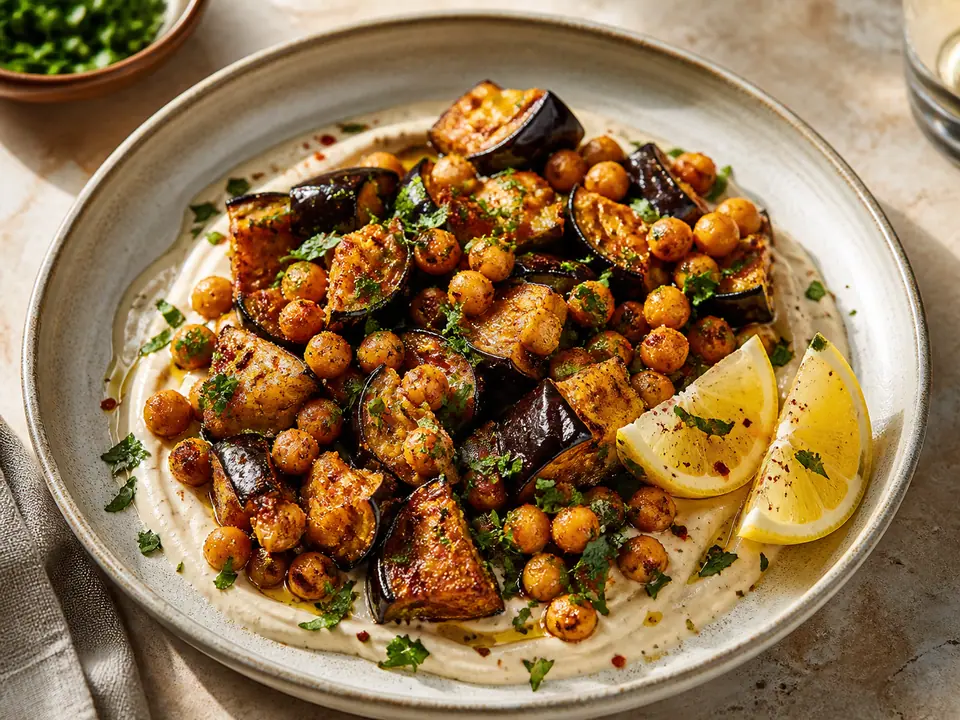
Harissa aubergine with chickpeas with tahini dressing
Roast the aubergine hard, then loosen tahini with lemon and water until it pours instead of clumps.
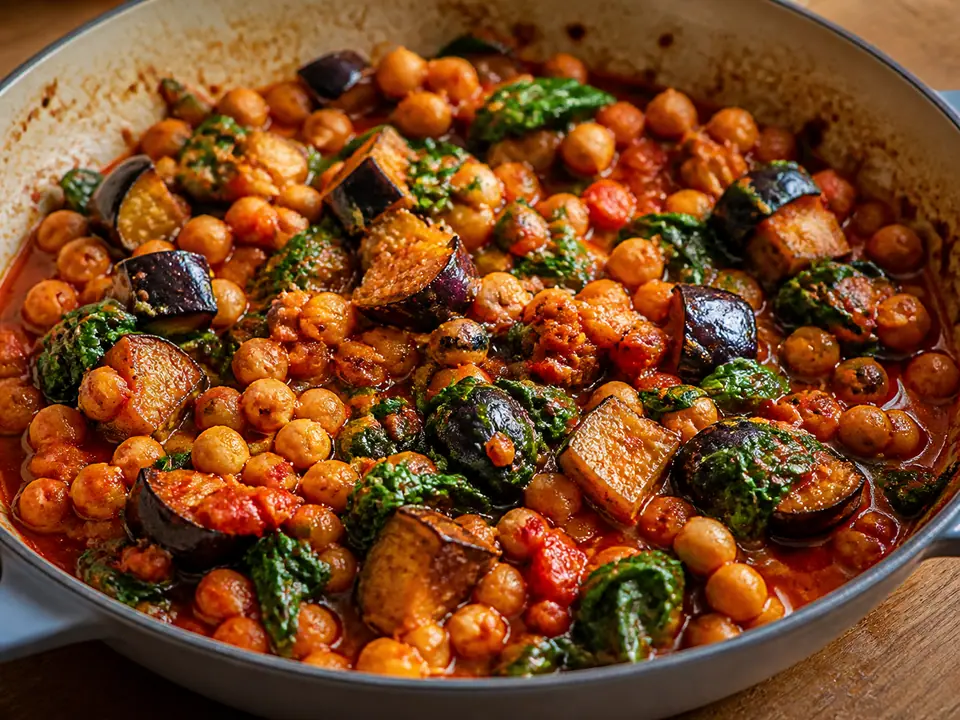
Harissa aubergine with chickpeas for a one-pan dinner
Add tomatoes for moisture, chickpeas for substance and spinach at the end, so the whole dinner still comes from one pan.
More guides
All guides →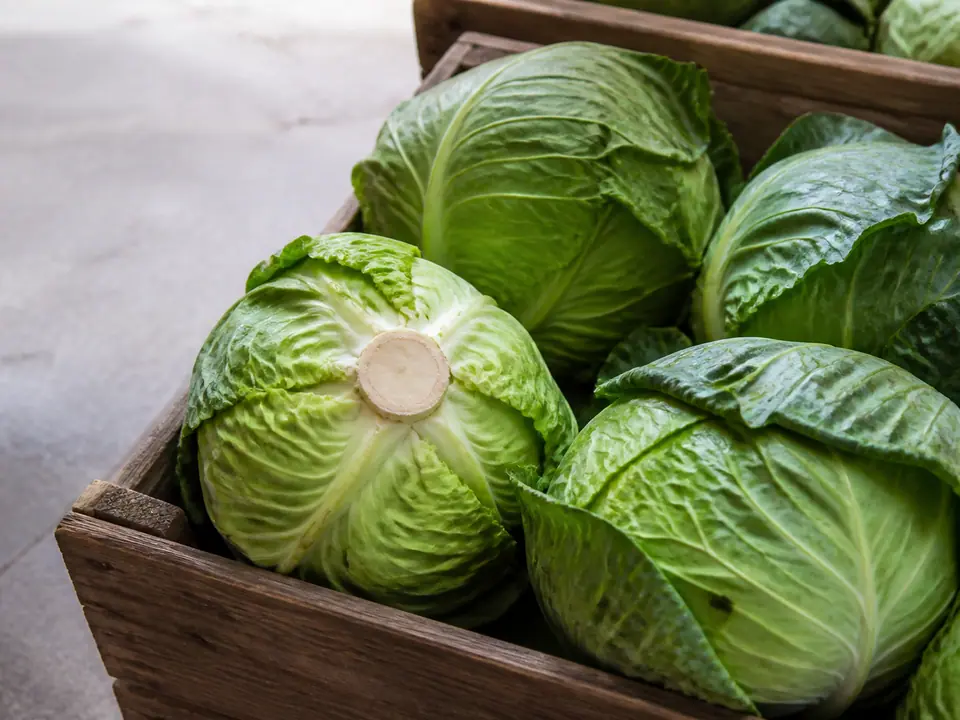
How to choose a cabbage that will stay crisp
A crisp cabbage feels dense, has tightly packed leaves and a dry cut base. The shop test takes less time than rescuing a wilted half later.
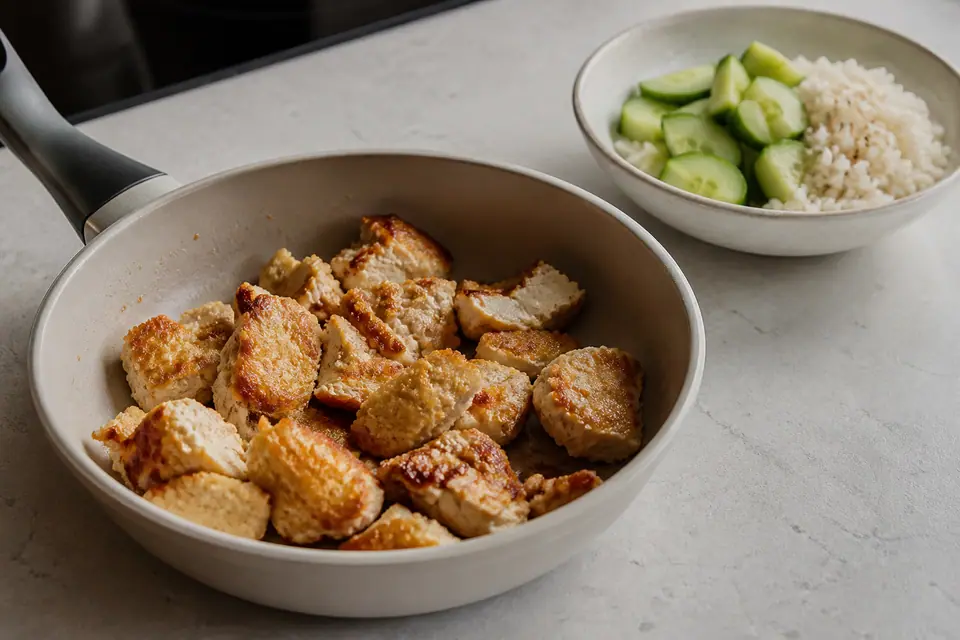
Firm vs extra-firm tofu: which crisps best?
Extra-firm tofu is the reliable choice for crisp edges and turning. Firm tofu can still work when you press it gently, use larger pieces and avoid overhandling.

5 dinners for a bag of carrots
Roast carrots with beans, blend them into lentil soup, fry them with rice, fold them through pasta or build a spiced traybake around them.