Extra-firm tofu gives the easiest crust, but firm tofu has a place
Extra-firm tofu is the reliable choice for crisp edges and turning. Firm tofu can still work when you press it gently, use larger pieces and avoid overhandling.

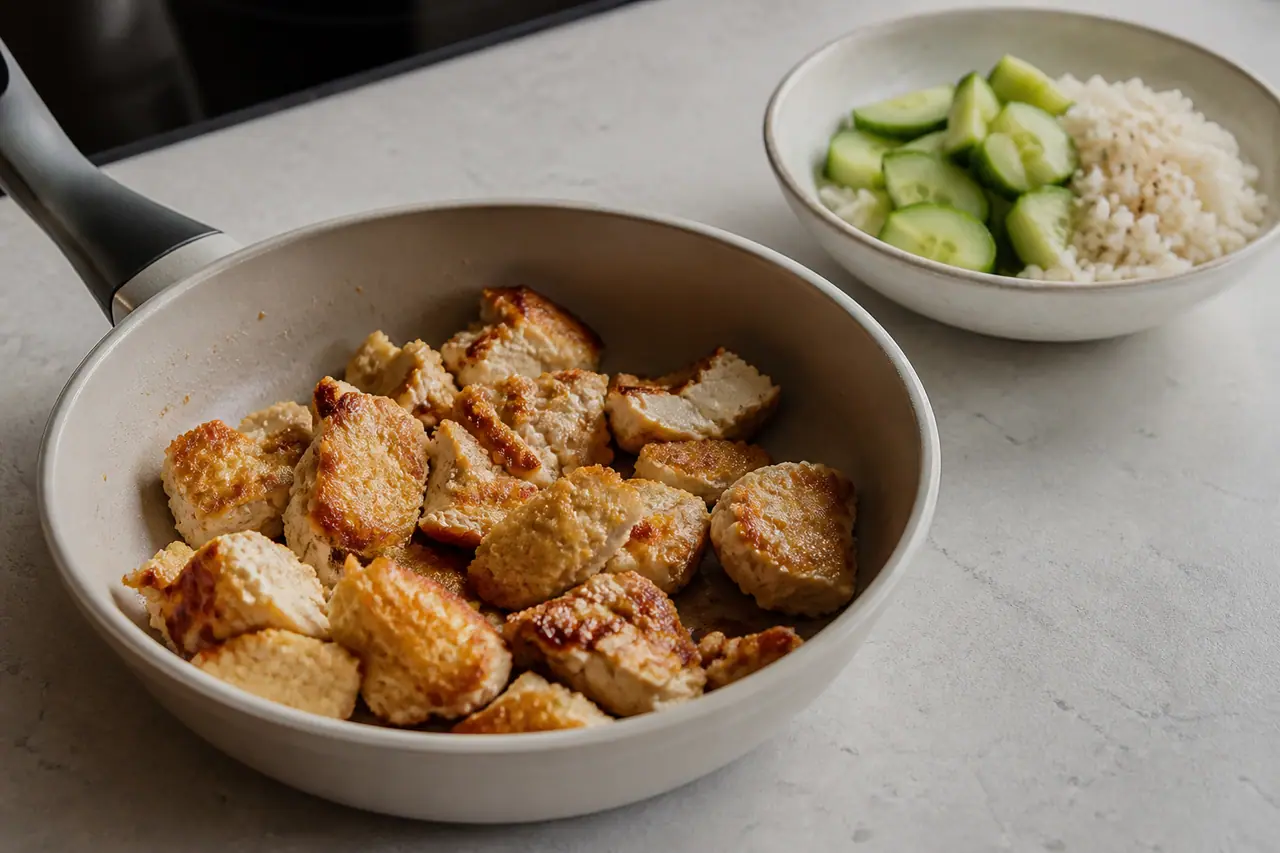
The label tells you how much the tofu can tolerate, not whether it will taste good. Extra-firm tofu is denser, easier to press and less likely to break when you turn it. Firm tofu has more give and can make a softer, tender bowl when you handle it carefully. Both can be useful. They simply need different expectations.
For a crisp coating, I reach for extra-firm first. It gives the pan dry surfaces and keeps its shape while the crust forms. If the shop only has firm tofu, press the block whole, tear larger pieces and turn them once. The aim is to protect the soft centre while the outside browns.
Extra-firm is the easier starting point
Extra-firm tofu usually carries less free water and has a compact structure. It can take a tea-towel press, a light cornstarch coat and a few turns in a wide skillet. Rough torn pieces develop more corners, which means more browned surfaces without needing a deep fryer.
Start with the denser block when crispness matters at the table.
It is also forgiving when a bowl has a wet finish. The crust will soften eventually, but the pieces stay intact under cucumber, rice or a spoonful of tahini. Use it for the tofu and toasted seeds bowl when you want the topping to stay visible instead of sinking into crumbs.
Let the softer block show you when fewer turns make better tofu.
Firm tofu needs gentler handling
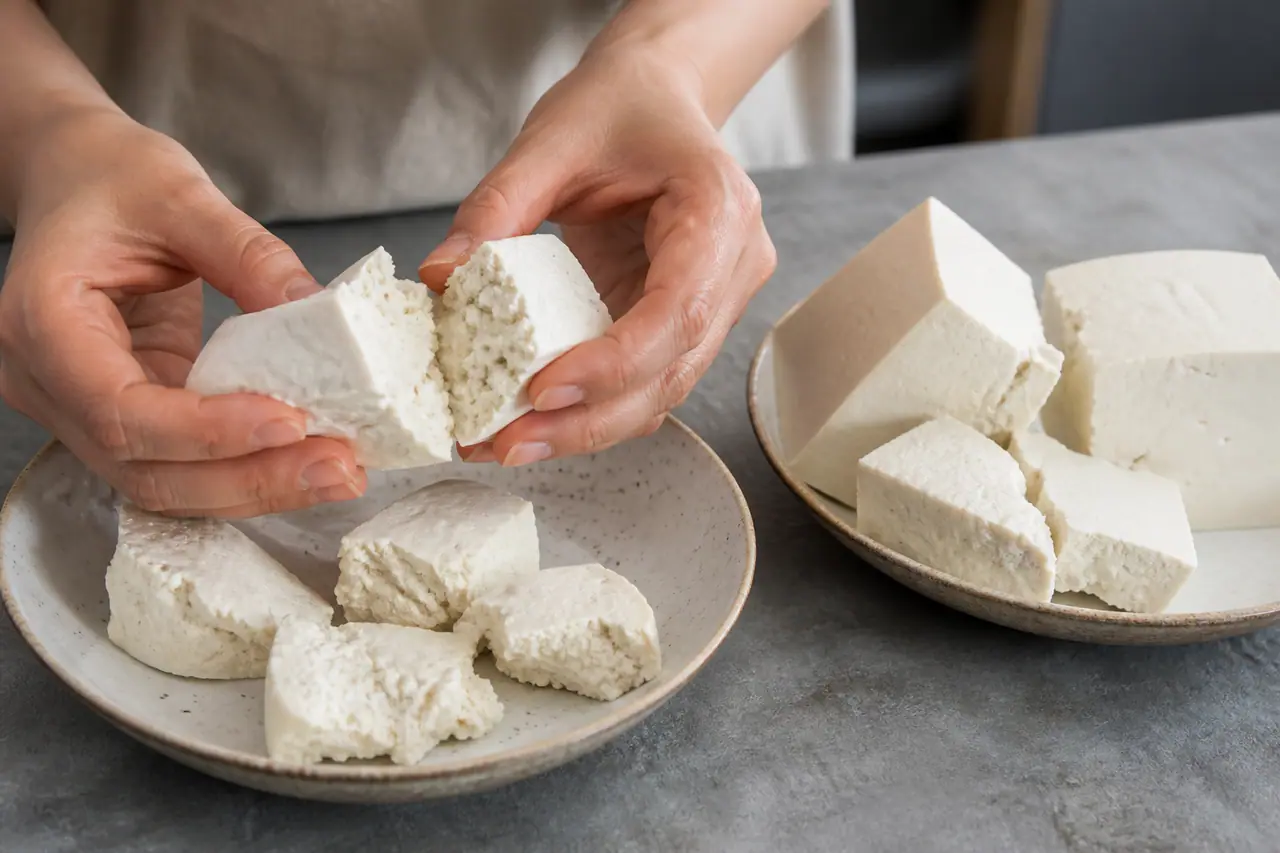
Firm tofu can crisp, but small pieces may crumble before the starch has set. Press the block with moderate weight, then cut it into slabs or large chunks. Pat those surfaces dry and coat them just before the oil is hot. Larger pieces give the centre more protection while the outside cooks.
Leave firm tofu alone for longer than feels comfortable. An early turn breaks the soft underside and leaves a sticky patch in the pan. Use a thin spatula, slide under a whole piece and turn once. If a corner breaks, keep cooking the pieces you have rather than stirring the pan into a scramble. Let the first side become properly golden before you decide that the tofu is stuck. Soft tofu often releases once the crust has dried, and moving it sooner only spreads the coating across the pan.
Pressing changes the starting point
Two packets with the same label can behave differently. One block may feel dense and another may release a lot of water. Press the tofu until the towel is damp and the surface feels matte, then decide whether it needs more time. A longer press helps the wet block, but it cannot turn firm tofu into extra-firm tofu.
Do not press so hard that the block becomes a thin slab unless that is the shape you want. Uneven pressure creates thin edges that burn before the centre is ready. A flat board and a stable pan distribute the weight better than a single heavy object placed on one corner.
Match the tofu to the finish
Extra-firm is the better choice for a soy glaze, seed topping or freezer base because it holds its shape. Firm tofu is pleasant with a soft yogurt sauce, cucumber and herbs, where a tender middle is part of the contrast. The cucumber yogurt version can use either, as long as the pieces are browned before the cold sauce arrives.
Silken tofu is a different ingredient. It is not a softer substitute for frying. Use it in blended sauces or gentle dishes where the custard-like texture is wanted. Buying the right firmness saves more trouble than adding another spoon of starch.
There is no single best tofu
Extra-firm tofu makes the crisp method easier and more repeatable. Firm tofu can give a softer centre when the pan is treated gently. Press the block you have, give it space and choose a sauce that respects its texture. The label is a starting instruction, not a verdict on dinner.
When you cook both kinds, do not compare them by colour alone. Check whether the piece survives the spatula, whether the centre remains pleasant and whether the sauce has somewhere to sit. A dense block may win the crispness test while a softer one wins the texture you wanted for a cool yogurt bowl. The useful choice is the one that matches the plate, not the one with the most confident label.
Questions
Is extra-firm tofu better for crispy tofu?
Can firm tofu be pan-fried?
Is silken tofu the same as soft tofu?
How do I choose tofu at the shop?
More guides
All guides →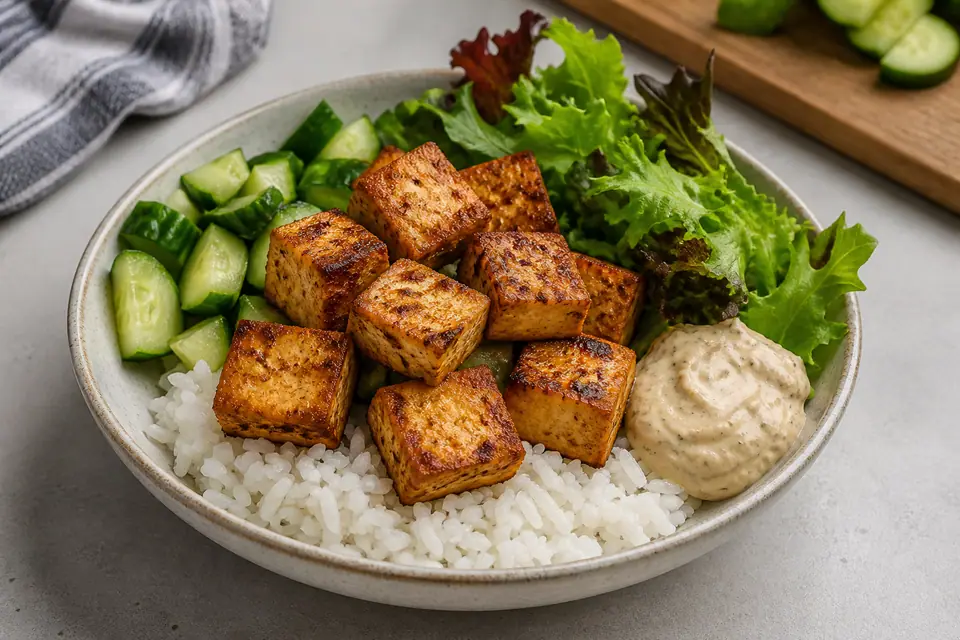
How to build a filling tofu bowl
Build the bowl around crisp tofu, then add a base, a fresh vegetable and one strong sauce. Texture and portion balance make simple ingredients feel complete.
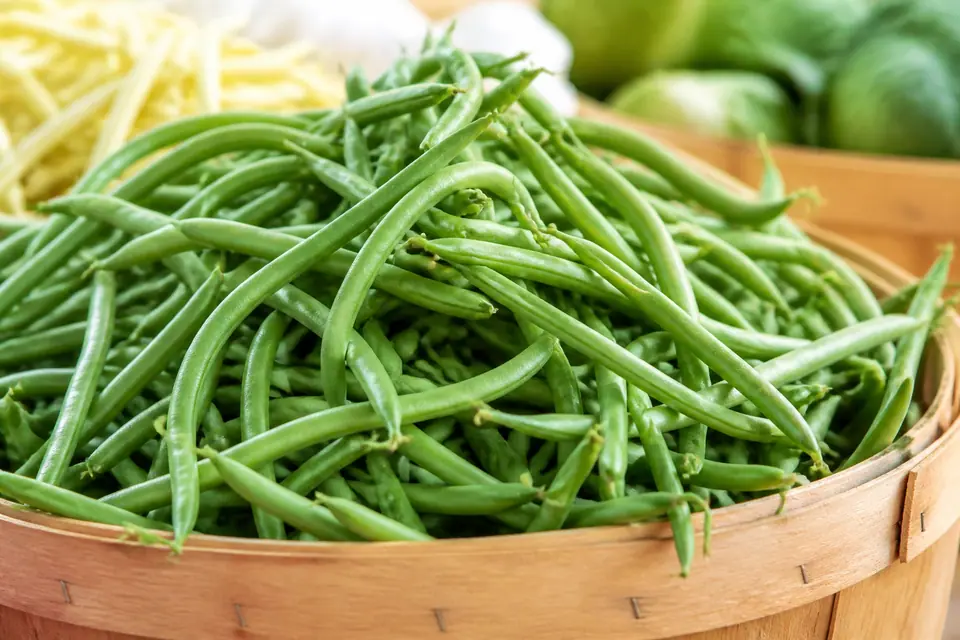
How to choose green beans that still snap
Fresh green beans are smooth, bright and firm, with a clean snap and no swollen seed bumps. A flexible limp pod is usually a thirsty older pod, not a tender one.
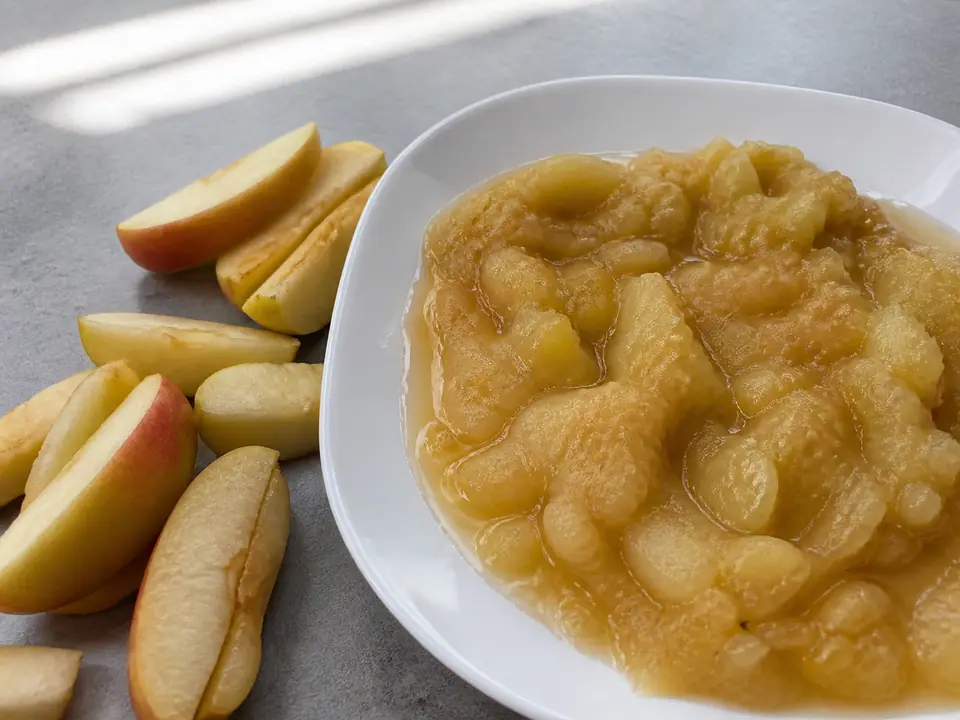
Why some apples collapse into sauce and others stay sharp
Apples soften at different rates because varieties hold their cell structure differently. Heat, liquid and thin cuts speed collapse, while thicker slices and dry heat preserve shape.