The best green beans bend once, then break cleanly
Fresh green beans are smooth, bright and firm, with a clean snap and no swollen seed bumps. A flexible limp pod is usually a thirsty older pod, not a tender one.

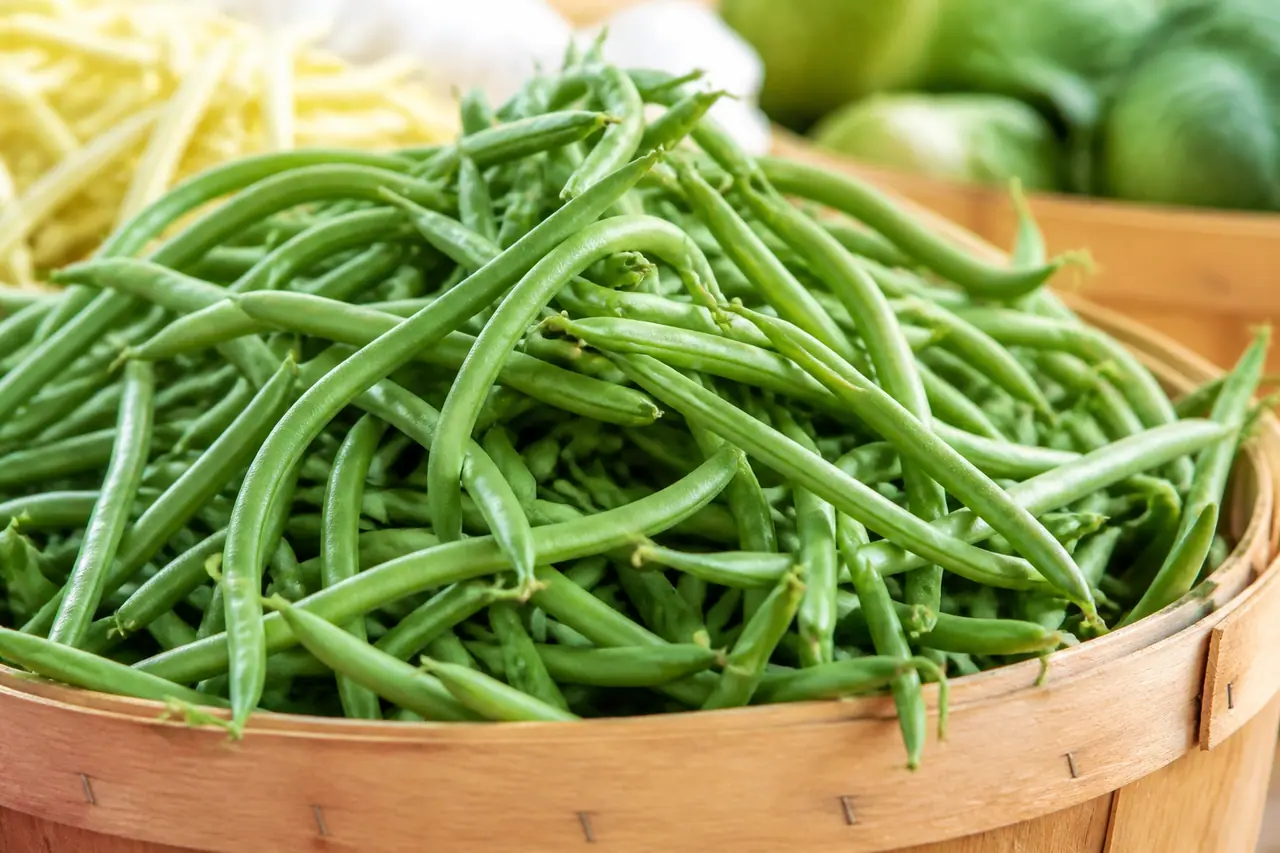
The word “snap” is not marketing decoration. It is the quickest test for a green bean that is still fresh and tender. Pick up one pod, bend it gently and listen. It should break cleanly rather than fold into a tired limp curve. If the stall or shop will not let you handle the beans, look for the same clues in the skin: bright colour, smooth taut pods and no deep wrinkles.
One pod tells you more than the label on the bag.
Do not buy the biggest beans by instinct. A swollen pod can mean the seeds have developed too far, leaving a tougher, more fibrous bite. The best bunch is usually uniform, firm and slender enough that the seeds do not make obvious bumps. The UC Davis produce guide gives the same practical quality signs: bright colour, a fresh appearance, tender firmness and pods that snap easily.
If the beans are sold tied in a bundle, inspect the middle rather than trusting the bright pods on top. Dampness and pressure often show first where the bunch touches itself.
The ten-second shop check
- Bend one: a fresh pod should snap cleanly. Do it gently; you are checking the batch, not breaking half the display.
- Look along the pod: choose smooth, straight or naturally curved beans without swollen seed bumps.
- Check the colour: vivid green is a useful freshness clue. Avoid widespread yellowing, grey patches or a dull, dry surface.
- Feel the skin: it should be taut and firm, not leathery, sticky or deeply wrinkled.
- Inspect the ends: dry stems are normal; wet, dark or collapsing ends are not.
Why the seeds matter
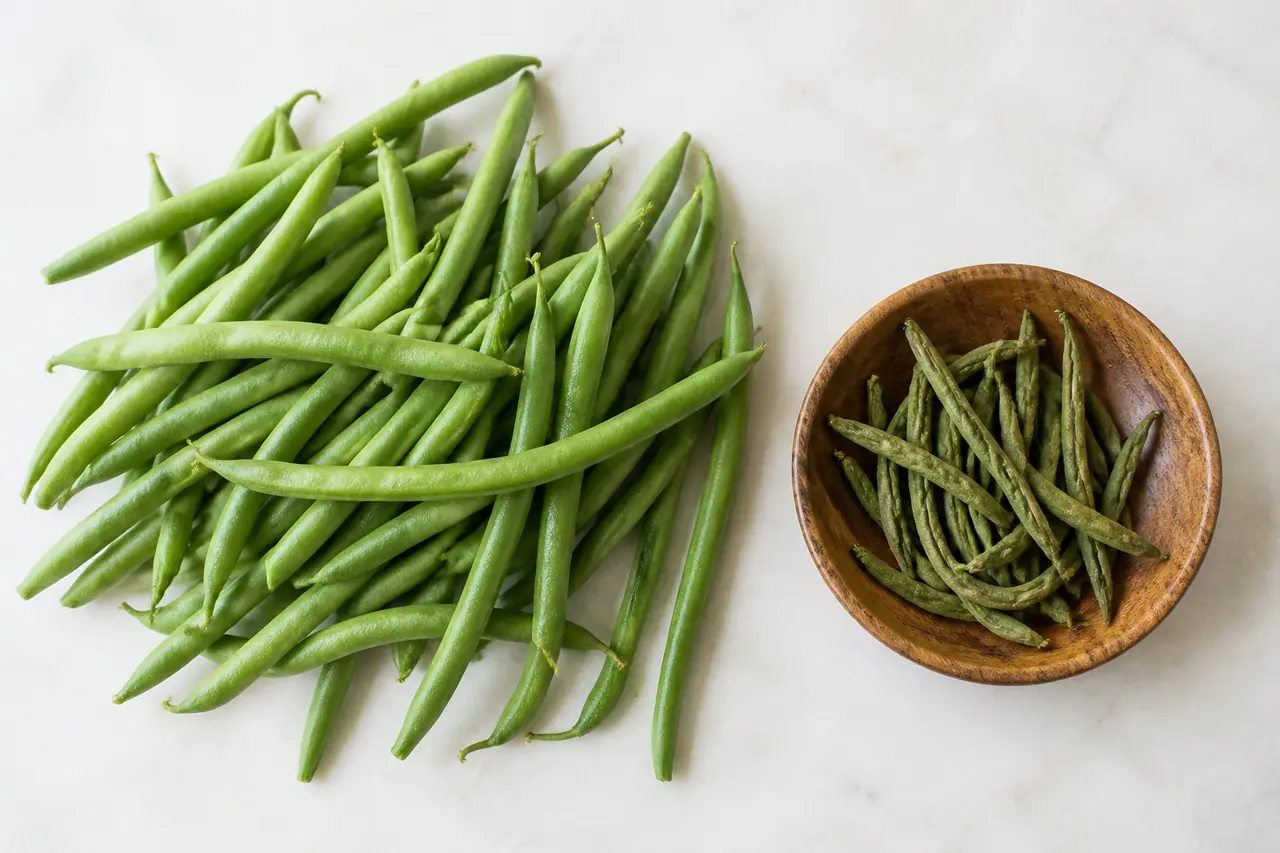
Green beans are harvested while the pod and seeds are still immature. As the seeds swell, the pod becomes less tender and the texture moves from crisp to pithy. You do not need to know the harvest date to spot the change. Run your eyes along the bean. Distinct bulges often mean a thicker, older pod.
The seed bumps are the clue I trust most when the pile looks polished.
Very thin beans are not always better: some can be dry or fibrous if they have been handled roughly. Look for a consistent batch with a little weight and a smooth skin. The aim is not miniature size. It is a pod that is developed enough to taste substantial but not so mature that the seeds dominate.
Freshness has a feel before it reaches the recipe on your table.
Do the bend test without bruising the bunch
Choose a bean from the middle of the pile, not just the freshest-looking one on top. Hold it between your fingers and bend it once. A crisp snap is useful evidence. If it flexes and stays whole, the pod may have lost water or matured past the most tender stage. If it breaks but has brown scars or a soft centre, inspect more of the batch before buying.
Do not force a decision from one bruised pod in the middle.
Freshness is not perfection. A few bent beans can still cook well if the rest are firm. I reject a bag when the whole handful feels limp, because the pan cannot put water back into a pod without changing the texture. Buy the lively batch and cook it before it becomes a storage project.
Fine beans, broad beans and the same principle
Fine beans should be slender and even. Broad or runner beans can be wider, but they should still be firm and free from swollen, obvious seeds. A broad pod needs a little more slicing and cooking; it should not feel leathery in the shop. The name changes, but the quality check stays familiar: taut surface, lively colour, firm body and a clean break.
The shape changes, but the shopping test stays the same.
Do not confuse a flexible bean with a tender bean. Tenderness comes with the right maturity and cooking; limpness at the shop usually signals water loss. The Illinois Extension buying notes recommend smooth, crisp beans and avoiding wilted or scarred pods, which is exactly the distinction I want to make at the counter.
The basket test
Pick green beans that look awake: smooth skin, bright colour, firm body and a clean snap. Avoid bulging seeds, wet ends and widespread wrinkling. You do not need a perfect vegetable. You need a pod with enough life left to taste crisp after it meets the pan.
Questions
Should fresh green beans snap?
Are large green beans tougher?
Can I buy wrinkled green beans?
Should green beans be firm or flexible?
More guides
All guides →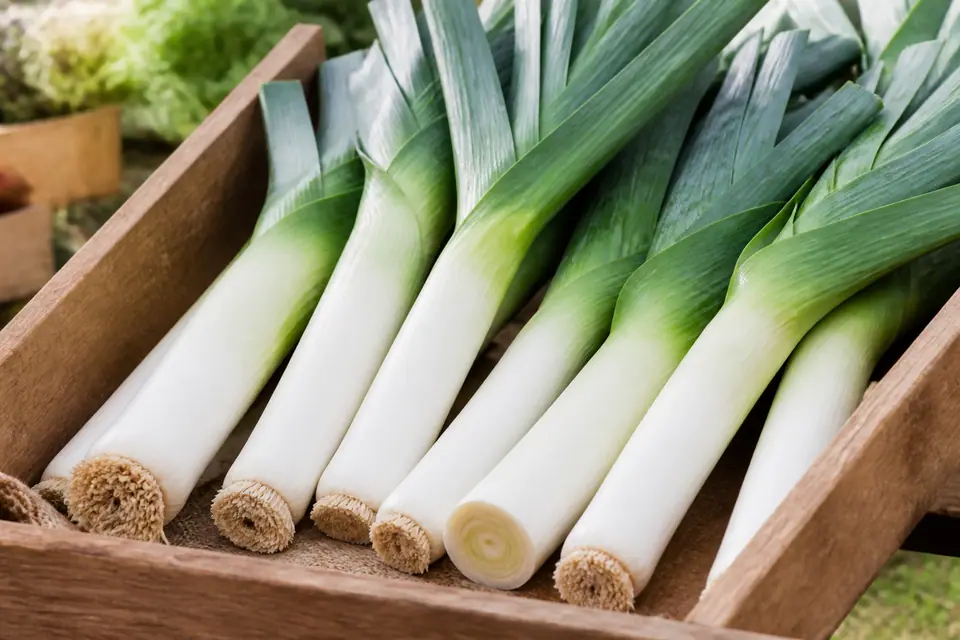
How to choose leeks with the most usable white part
The best leek for dinner is firm and heavy for its size, with a generous white-to-pale-green shaft and crisp leaves rather than a huge green top.
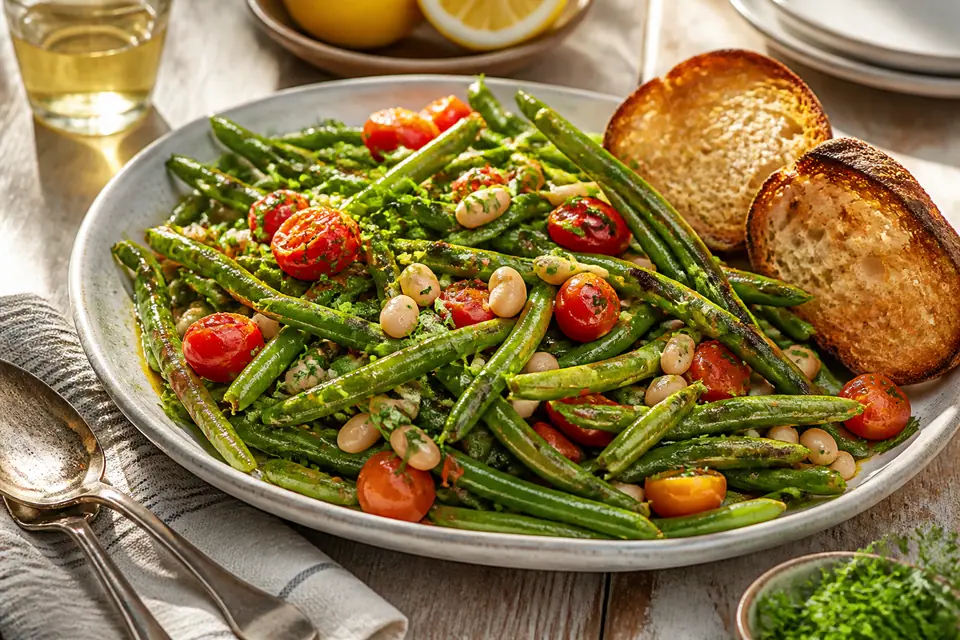
5 summer dinners for green beans
Use green beans as the vegetable that carries dinner: blister them with tomatoes, fold them through noodles, pair them with eggs or build a warm white-bean skillet.

Cauliflower vs broccoli: which roasts better?
Cauliflower gives a more even roast and creamy centre. Broccoli browns faster and has better crisp tips, so the winner depends on the texture you want.