Look for a long white shaft, not just a big leek
The best leek for dinner is firm and heavy for its size, with a generous white-to-pale-green shaft and crisp leaves rather than a huge green top.

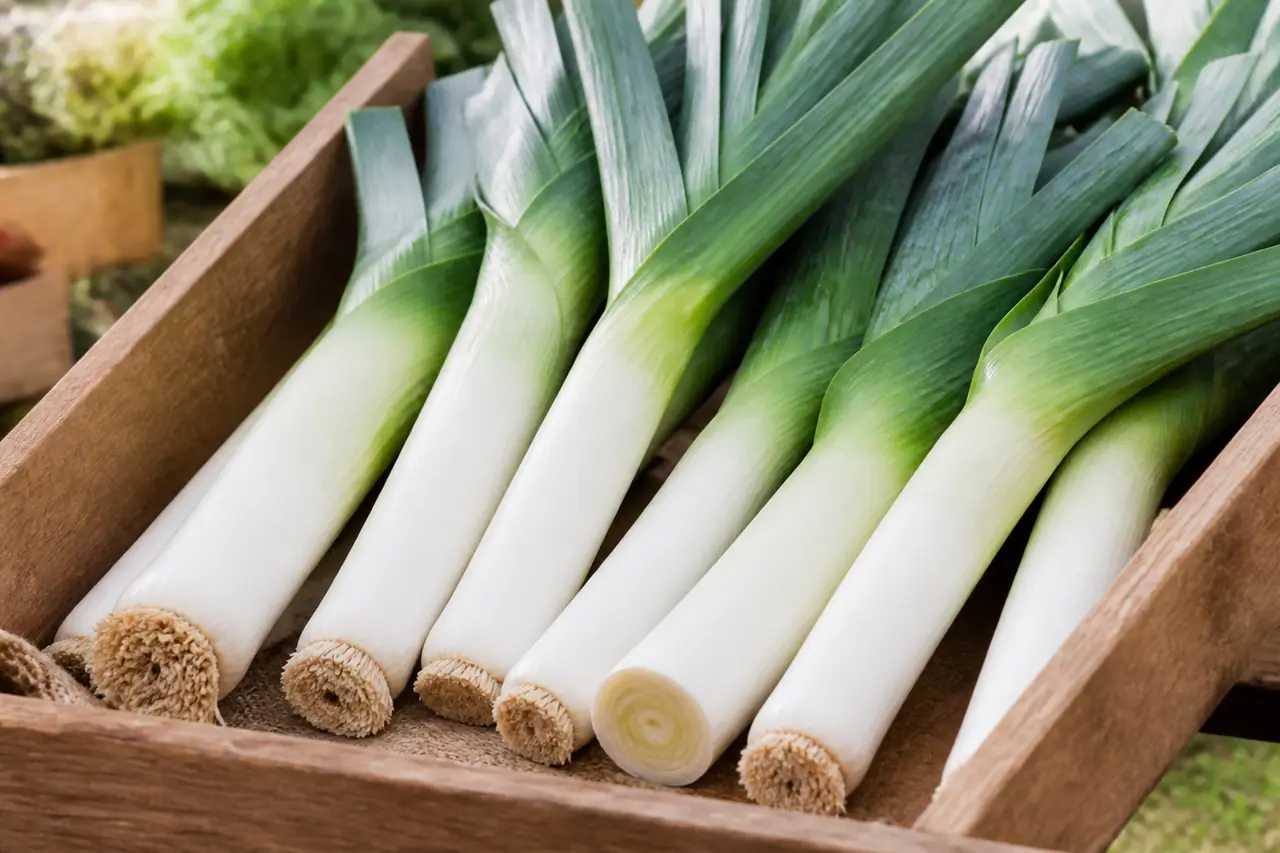
A large leek is not automatically a good leek. I have brought home impressive-looking specimens with a thick green flag and barely any tender white shaft underneath. The part I wanted for dinner was small, and the part I paid for became stock.
At the shop, look for a leek that is firm, straight enough to handle and heavy for its size, with a long white to pale-green shaft. The green leaves should look crisp, but they do not need to be enormous. For most cooking, a leek with more usable white is better value than a larger leek whose lower half is short or bruised.
The white shaft is the useful measurement
Leeks grow by building a layered sheath around the stem. The lower part is kept pale by the soil or other covering around it, and that is the section that cooks down most tenderly. The dark leaves are edible, but they are more fibrous and better suited to long cooking or stock. The Utah State University leek guide describes a mature edible sheath at about one inch in diameter, but diameter is only half the shopping decision. Length matters too.
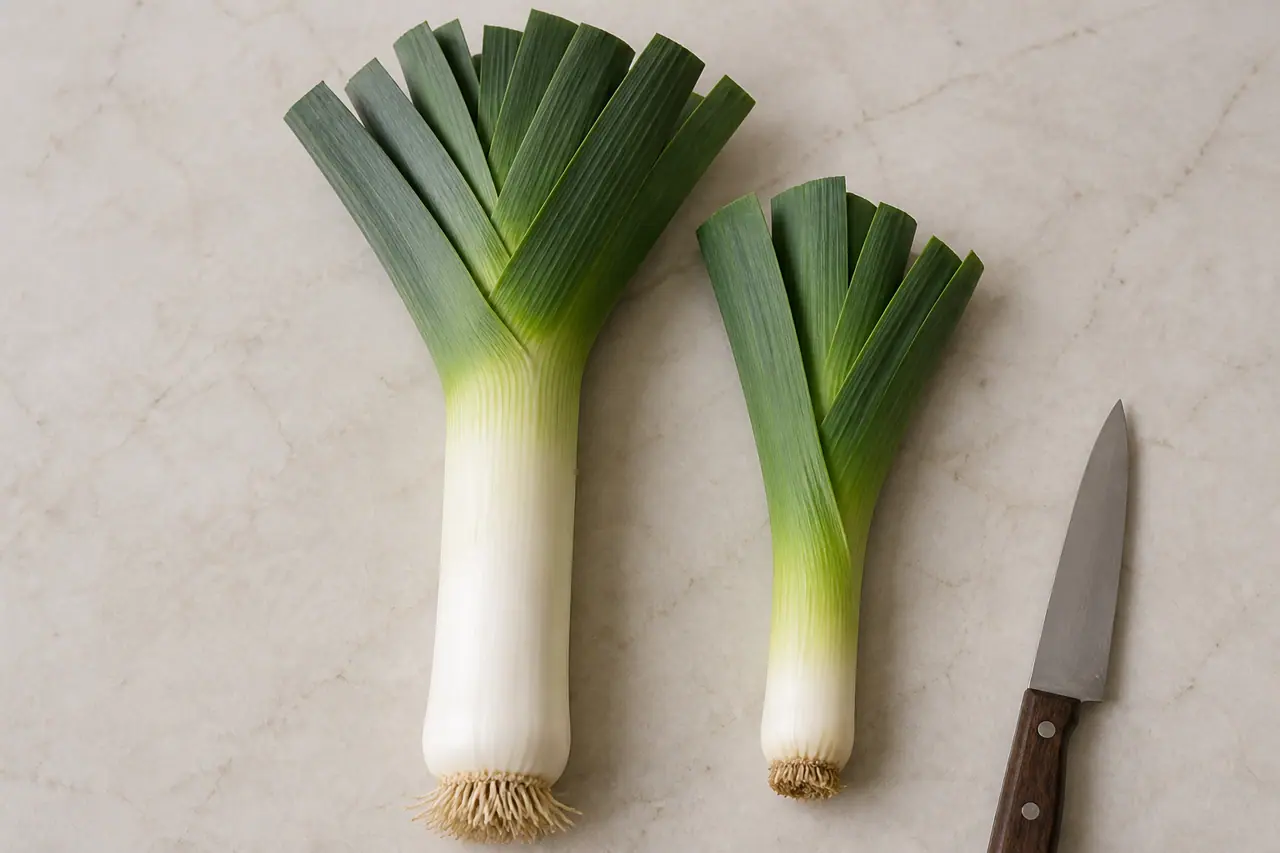
Hold the leek by the green end and look at the pale section. A good one has a long, solid run from root to the point where the colour turns green. If the white part is short but the leaves are oversized, you are buying more trim than dinner.
What to check in ten seconds
- Firmness: the shaft should feel solid when you hold it lightly. A soft patch near the root usually means bruising or decay has started.
- Weight: a leek that feels heavy for its size has not lost as much water. It should not feel hollow or papery.
- Colour: choose a clean white to pale-green shaft and lively green leaves. Avoid yellowing, slimy folds or widespread browning.
- Proportion: favour a long white section over a dramatic fan of dark leaves. This is the part that changes how much you can cook immediately.
- Roots: a little soil is normal. The root end should be firm, not wet, black or collapsing.
Thin leeks or thick leeks?
Thin leeks are quick to slice and often tender, with a delicate flavour that works well in eggs and fast sautés. Thick leeks give you broad rounds that hold their shape in a braise and a larger yield for soup. Neither is universally better. I choose thin ones when the leek will be cooked briefly and thick ones when it is the main vegetable.
Very thick leeks can have a tougher outer layer, so peel away the first damaged leaf and inspect the inside. Very thin leeks may offer less usable food per piece, especially once the root and dark tops are trimmed. If the price is by bunch rather than weight, the thick, firm option is usually more practical for a family-sized dish.
The false bargain is the pre-trimmed pack
Pre-trimmed leeks look convenient, but the cut ends tell you less about how long they have been sitting and the pack may contain more green trim than the label suggests. They are useful when you need a small amount immediately, not automatically cheaper. Whole leeks keep their protective leaves and give you the choice of saving the tops for stock.
I buy whole leeks, trim them at home and keep the firm dark leaves in a freezer bag. If a pack of trimmed leeks is the only option, choose one with dry cut ends, no slippery liquid in the tray and pale shafts that still feel firm.
Plan for the dark tops
If the leek has a short white part, it is not useless. Slice the tender pale green leaves into the dish and save the dark green outer leaves for stock. The mistake is buying a leek for a recipe that needs tender rounds and then discovering that most of the vegetable is fibrous. Match the proportion to the recipe before you put it in the basket.
Choose a clean, firm leek with a generous pale shaft and you will spend less time trimming and more time cooking. A good leek does not need to be spotless at the shop; it needs to be structurally sound and useful after washing.
Questions
What part of a leek is best to eat?
Are thick or thin leeks better?
How can I tell if a leek is fresh?
Can I buy pre-trimmed leeks?
More guides
All guides →
How to choose green beans that still snap
Fresh green beans are smooth, bright and firm, with a clean snap and no swollen seed bumps. A flexible limp pod is usually a thirsty older pod, not a tender one.

Cauliflower vs broccoli: which roasts better?
Cauliflower gives a more even roast and creamy centre. Broccoli browns faster and has better crisp tips, so the winner depends on the texture you want.
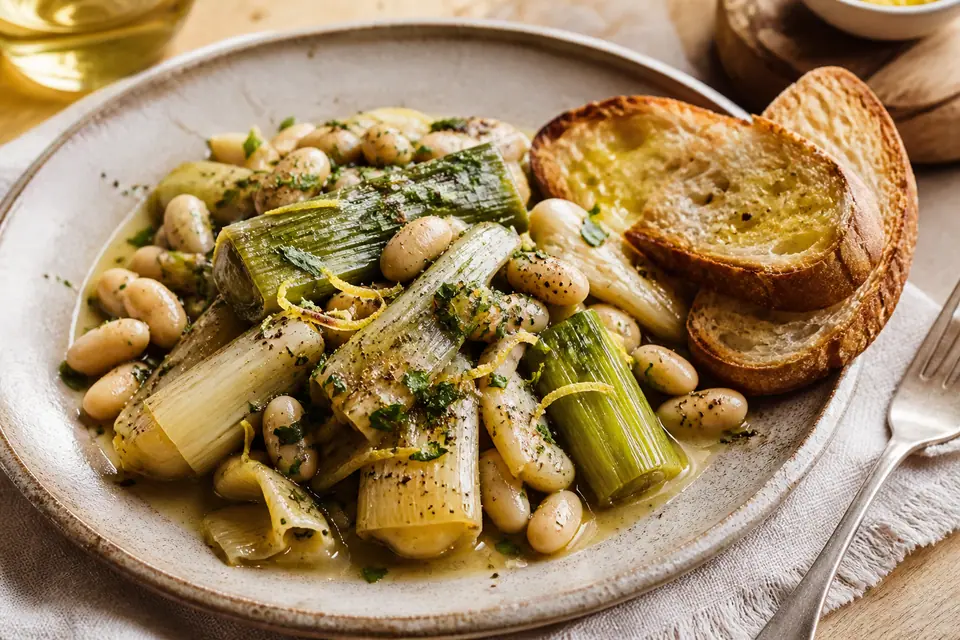
5 dinners that make leeks the point
These five dinners use leeks as the vegetable you notice: slowly softened, browned, folded through pasta, layered into a gratin or paired with beans and lemon.