The heavy, tight head buys you more crisp days
A crisp cabbage feels dense, has tightly packed leaves and a dry cut base. The shop test takes less time than rescuing a wilted half later.

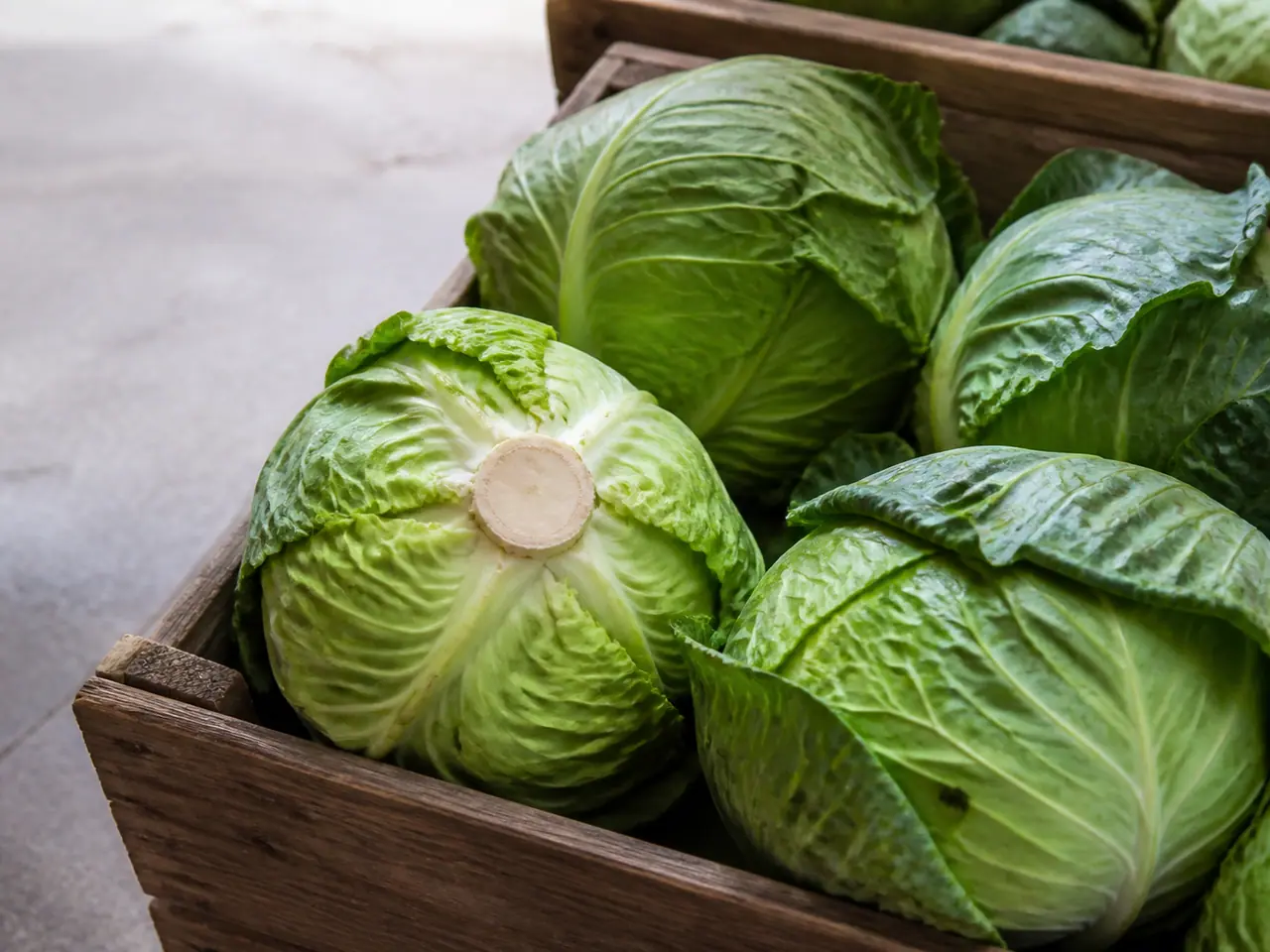
I used to judge cabbage by colour because the round heads were stacked too high to lift. Then I cut into one that looked bright and found loose, dry leaves around a hollow centre. The better head was smaller, heavier and slightly less glossy. It stayed crisp for nine days in my fridge, while the large-looking one started to soften at the cut base after four.
Choose cabbage that is firm for its size, tightly packed and dry where it has been cut. The outer leaves can carry a few marks; the core and the folds are what tell you how much life is left. Buy the head that feels like a compact vegetable, not a light bundle of leaves.
A crisp cabbage is a storage decision made in the shop. I am not looking for a flawless head that photographs well. I want a compact one with enough weight to suggest that its leaves have not been drying out for days. The difference becomes obvious after cutting: one head gives clean shreds that spring back, while another sheds tired leaves around a loose centre. Ten seconds of lifting and turning saves more food than a clever container bought later.
The ten-second shop test
Start with weight. Lift two heads of a similar size and choose the one that feels denser. Cabbage is mostly water, but a compact head keeps that water inside firm leaf tissue. A light head may have loose leaves, internal gaps or moisture loss. Weight is not a guarantee, but it is the fastest useful filter.
Next, press the sides with your fingertips. They should resist gently rather than collapse. I do not squeeze hard enough to bruise the leaves. I am listening for structure: a head that feels solid all the way round will slice cleanly, while a soft patch usually marks damage or age.
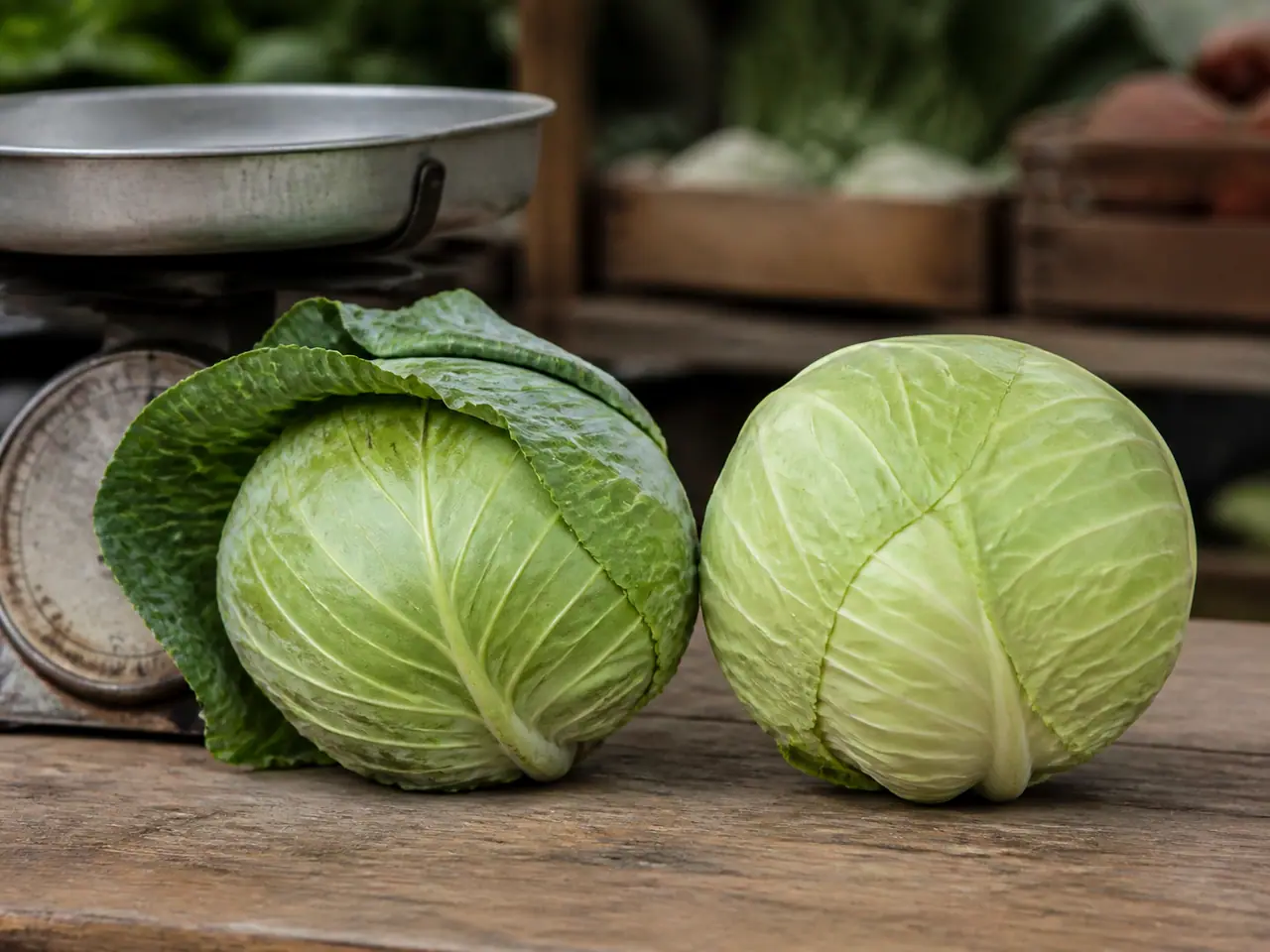
I make the final call after turning the head over. The base should not be wet from a produce mister, and the leaves should still sit close to the stem. A dry mark is easy to trim; a damp fold travels inward while the cabbage waits. That is why I prefer an imperfect head that feels dense to a spotless one that feels light. The outside can be cleaned. Lost structure cannot be put back. I take the photograph as a reminder of the texture I am after, not as a decoration. The surface should show what the written method asks for: a dry cut, a browned fold, a firm curd or a leaf that has kept its shape. If the frame looks wet and crowded, I know the pan would have the same problem. If it looks pale but compact, I know the food may be ready for a different job. That is why I keep the vegetable visible while I cook. The cabbage should make sense before any garnish arrives.
| Clue | Good sign | Walk past when |
|---|---|---|
| Weight | Dense for its size | Unusually light or hollow |
| Leaves | Tight and crisp | Loose, limp or wet |
| Base | Dry and firm | Soft, dark or leaking |
| Outer skin | A few dry marks only | Deep cuts or slimy folds |
| Smell | Fresh and mild | Sour or fermented smell |
Source: Maren Ashby market test, 2026-08-28
Colour is a weak clue
Green cabbage can be pale or deep green, and pointed cabbage can have leaves that look almost yellow at the tip. Colour changes with variety, light and how much of the outer leaf has been removed. I do not reject a good head because it is not the darkest one in the crate.
I care more about the cut base. A fresh base is dry, pale and firm. A base that is brown around the edge is not automatically unusable, but it tells me the head has been cut and waiting. If the same area is wet or soft, I choose another. Moisture gives bacteria and mould a better starting point, and the texture will not improve in the fridge.
The head that passes the first check still comes home with a plan. I put it in the cold drawer without washing it and decide which side will be cut first. A cabbage lasts better when I do not keep handling every leaf. The shop test is about confidence, not perfection. If the head feels dense and the base is dry, I can remove one tired leaf later without losing the whole vegetable.
The false bargain is the oversized head
A large head can be good value if I have a plan for soup, slaw and roasted wedges. It is poor value if I only need a small handful of shreds. The outside leaves dry first, then the cut face loses its snap, and I end up trimming the part I paid for. A smaller dense head often gives more usable crisp cabbage per portion.
At home I weigh the trimmed leaves once. A 1.1 kg head gave me about 860 g of firm usable cabbage after the outer leaves and base were removed. A 720 g head gave me 610 g. The larger head was still useful, but the price per usable gram was not as impressive as the shelf label suggested. The numbers are not universal; they are why I now buy for the meal rather than the kilogram.
How the head should feel in your hand
A good cabbage is not rock hard. The leaves have some spring, especially on the outer layers. I want a compact head that does not rattle or shift when I turn it. Pointed cabbage is naturally looser, so I compare it with other pointed heads rather than with round green cabbage.
The stem should be firm enough that it does not wobble. If the outer leaves are held on by a dry, cracked base, the head may have lost moisture for a while. One or two peeled leaves can hide that, so I look underneath the loose edge before deciding.
What I do with cosmetic marks
Small scratches and a few pale leaf scars are normal shop damage. They do not tell me the whole head is tired. I remove a damaged outer leaf at home and inspect what is underneath. Deep cuts that reach several layers are different because they let moisture collect between the leaves.
Do not choose the most perfect-looking head if it is light and soft. A crisp head can have a rough leaf and still be the better cook. It will shred cleanly, hold dressing and stay useful for more meals.
Keeping the crisp head crisp
Do not wash the whole head before storing it. Extra water settles into the folds and makes the outer leaves age faster. I wrap a cut head loosely, place it in the produce drawer and slice only what I need. Iowa State Extension recommends a crisp, firmly packed head and refrigerator storage; that matches what I see in my own drawer.
Their cabbage storage guidance is a good reference for the basic handling: Iowa State Extension on cabbage. Keep the fridge at or below 40°F according to USDA FSIS.
My buying verdict
Buy the cabbage that feels heavy, tight and dry, not the one with the shiniest leaves or the biggest sign. If you are cooking tonight, any fresh firm head will work. If you want crisp shreds three or four days from now, density and a dry base matter more. A good cabbage is quiet in the hand: compact, springy and free of wet surprises.
Questions
How do I know if a cabbage is fresh?
Can a cabbage be good if the outer leaves are damaged?
Should cabbage be hard or soft?
Does a bigger cabbage stay fresh longer?
More guides
All guides →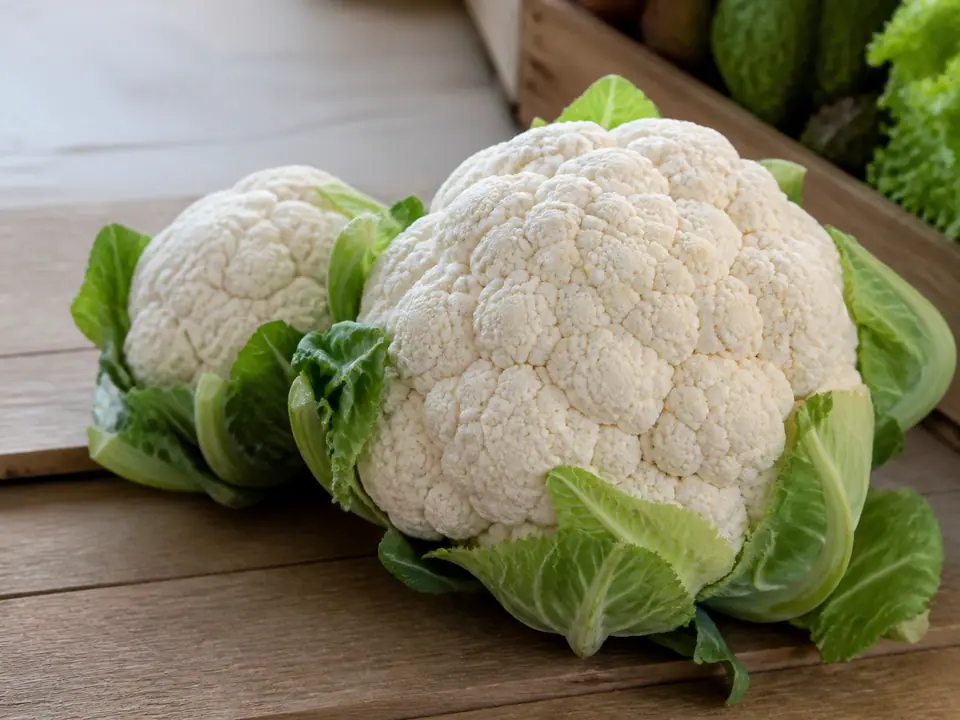
How to choose a dense cauliflower with fresh leaves
A good cauliflower feels heavy for its size, has a tight white curd and fresh leaves around a dry base. The leaves are the quickest freshness clue.
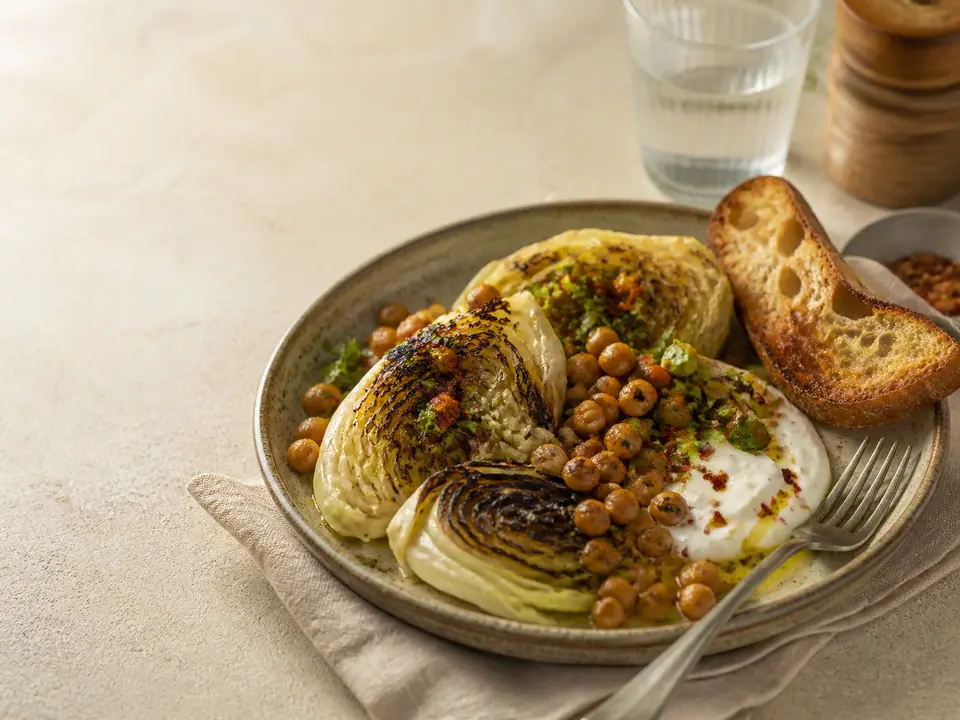
5 cabbage dinners that are not boiled cabbage
A cabbage head can become a roast wedge, a noodle-like skillet, a bean dinner, a chicken tray and a crisp topping without a pot of boiling water.

How to choose carrots that are crisp, not rubbery
Firm carrots with a fresh stem end and smooth, unbroken skin are more likely to stay crisp. Rubberiness means water has already left the root.