Turn the head over: the leaves and base tell the truth
A good cauliflower feels heavy for its size, has a tight white curd and fresh leaves around a dry base. The leaves are the quickest freshness clue.

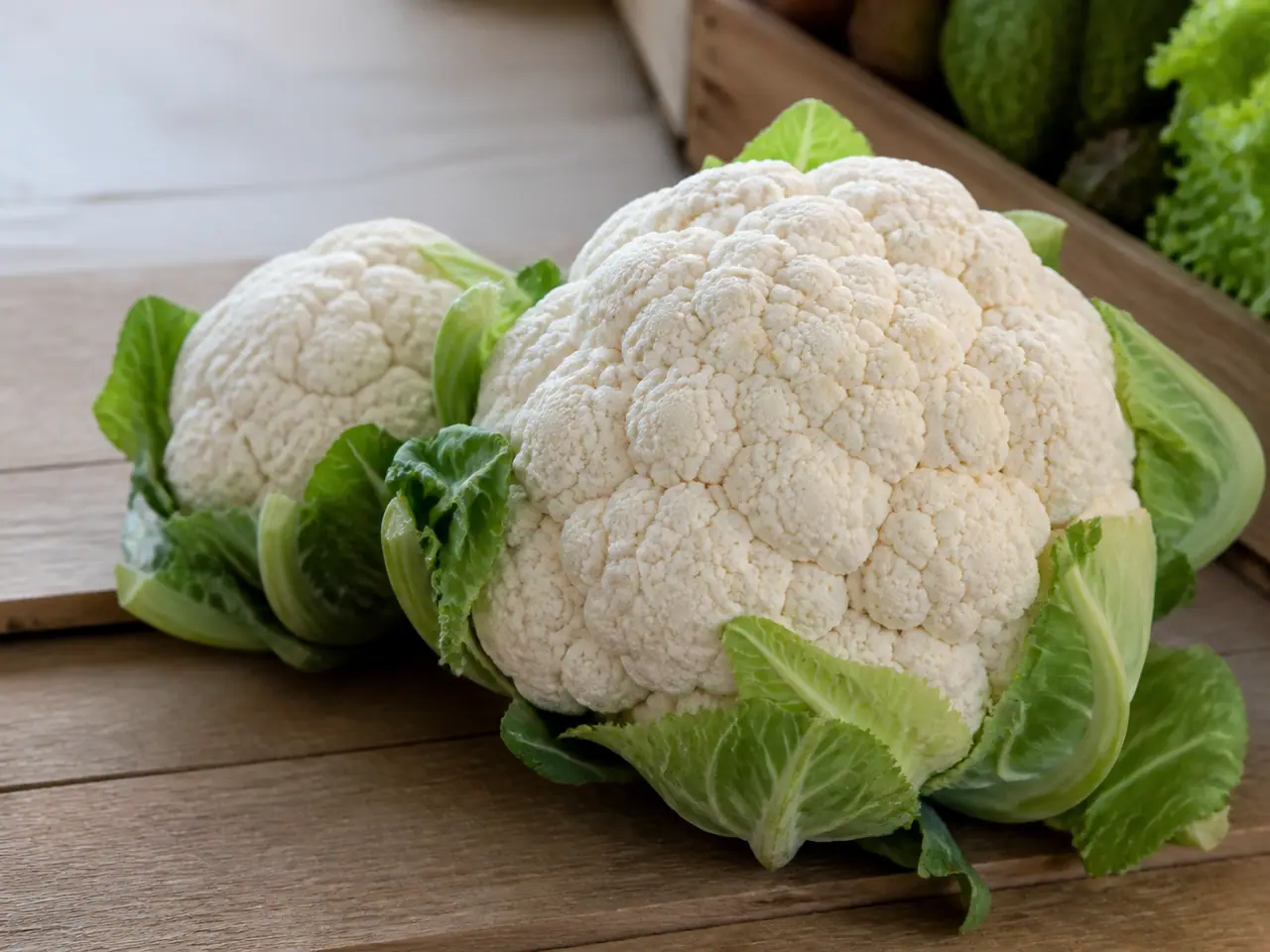
The white part of a cauliflower gets all the attention, but I start with the green leaves. Fresh leaves hug the head, the curd feels tight and the base is dry. A cauliflower with bright white florets can still be light, hollow and tired underneath its packaging. I have bought both side by side; the heavier head gave me firmer roasting pieces and less trimming.
Choose a cauliflower that feels dense for its size, with compact florets and leaves that are crisp rather than limp. A few pale marks are not a problem. Wet gaps, soft brown areas and a sour smell are the reasons to put it back. The shop check takes less than a minute.
A cauliflower can look immaculate from the top and still be a poor buy. The hidden base may be soft, the leaves may have gone flat and the curd may break apart as soon as the knife touches it. I turn the head because the underside has more useful information than the display-facing florets. Fresh leaves do not guarantee a perfect vegetable, but tired leaves lower my confidence quickly. A dense head is worth carrying home because it gives you more firm pieces for the same amount of trimming.
Start with the leaves
Fresh cauliflower leaves are green, crisp and close to the curd. They may have small tears from handling, but they should not look collapsed or wet. I lift the head enough to see where the leaves meet the base. If the leaves are dry and paper-like, the cauliflower may have lost moisture before reaching the shelf.
The leaves are not decoration. They protect the curd from bruising and give you a time clue. A head with fresh leaves can still have one old spot, so I use them alongside weight and texture. A head with tired leaves and a soft base needs a very good price and a same-day plan, not a place in the back of the fridge.
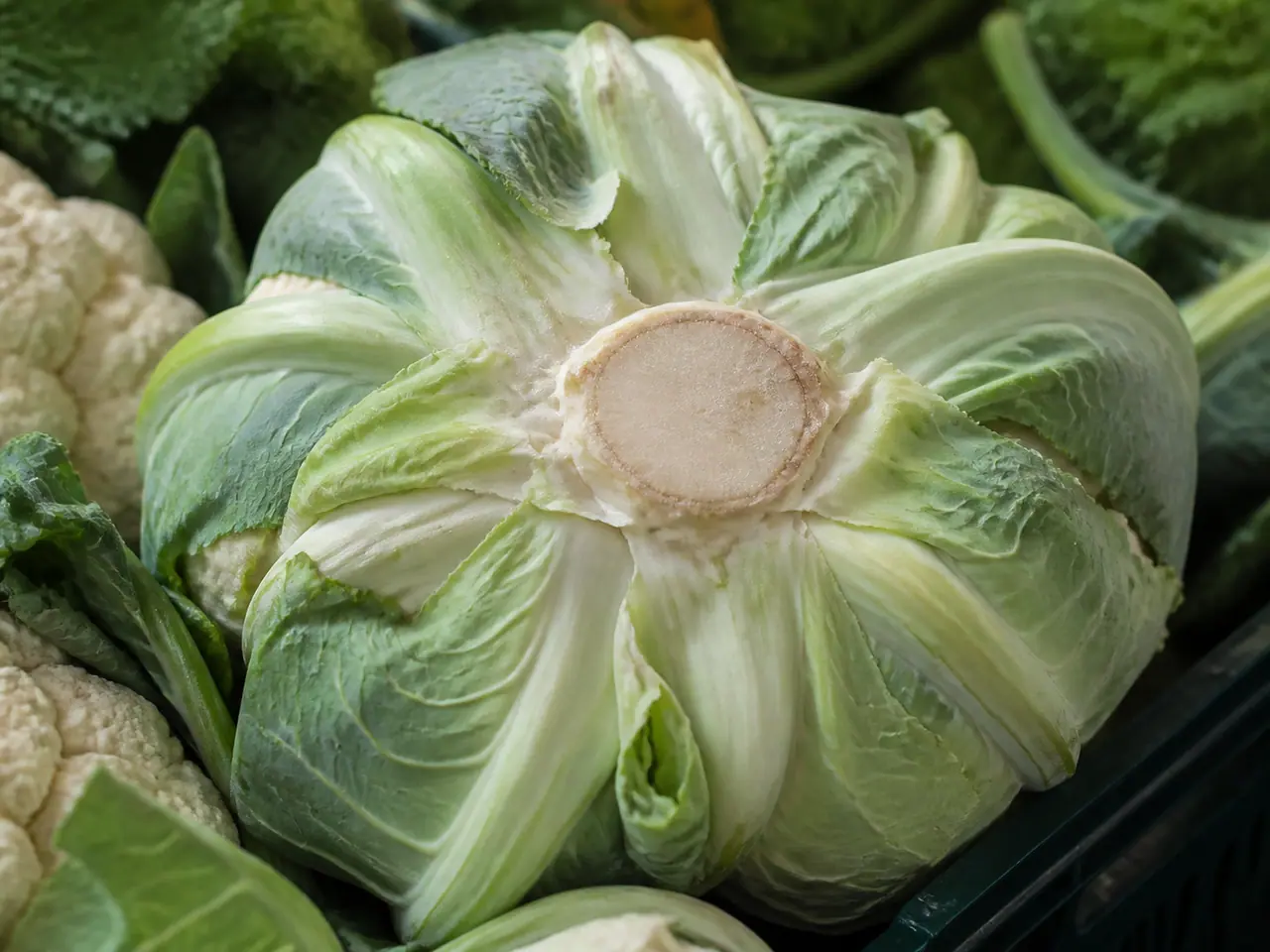
A dense head gives me options after I get home. I can cut large florets for a roast, slice the stalk for a skillet and save the leaves for a crisp tray. A light head gives fewer firm pieces and more breakage. I am not trying to buy the whitest cauliflower in the shop. I am buying one whose structure will survive the knife, the tray and the leftovers. I take the photograph as a reminder of the texture I am after, not as a decoration. The surface should show what the written method asks for: a dry cut, a browned fold, a firm curd or a leaf that has kept its shape. If the frame looks wet and crowded, I know the pan would have the same problem. If it looks pale but compact, I know the food may be ready for a different job. That is why I keep the vegetable visible while I cook. The cauliflower should make sense before any garnish arrives.
Lift two heads of the same size
The density test
Two similar cauliflower heads lifted and compared before trimming.
Head A
860
grams
✓ Heavier head
Head B
690
grams
The heavier head had a tighter curd and a thicker edible stem. Weight is not a quality grade by itself, but it is a useful clue when the heads are the same approximate size.
Source: Maren Ashby market test, 2026-08-28
I do not need scales at the shop. My hands can feel the difference between a dense head and a light one. The heavy head should not have a hidden soft spot, so I turn it and press the sides gently. If it gives in one place, I check whether the leaves are hiding damage.
A large cauliflower is not automatically denser. Some heads are broad and airy, with florets that look generous but separate easily. I want compact curds with little open space. That gives me better roasting pieces and a centre that does not crumble when I cut through the stem.
Look at the curd, not only the colour
White curds should be compact and firm. Creamy or pale ivory colour is normal, especially under shop lights. I avoid broad grey, brown or black patches that feel wet or soft. A few small freckles can often be trimmed, but a head with several damp gaps has already started losing structure.
The curd should look like a group of tight florets, not a sponge with deep channels. I rotate the head and look into the folds. Packaging can hide the underside, so I never make a final decision from the top alone.
The base gives away storage
Turn the cauliflower over if the shop allows it. The base should be dry and firm, with a cut stem that has not become dark and wet. A little dried soil on the leaves is easier to deal with than moisture under plastic. If the base smells sour, the head is past the point I want for raw salads or roasting.
I trim the leaves at home, but I do not remove them before buying. They protect the curd on the journey. If the head has no leaves, I inspect the stem more carefully and choose the one that feels solid rather than spongy.
| Part | Fresh and dense | Older or damaged |
|---|---|---|
| Leaves | Green, crisp, close to head | Limp, yellow, wet |
| Curd | Tight, firm florets | Loose, hollow gaps |
| Weight | Heavy for size | Light or airy |
| Base | Dry, firm cut stem | Dark, soft or leaking |
| Smell | Mild and fresh | Sour or strong before cooking |
Source: Maren Ashby market test, 2026-08-28
The best head is the one that gives a clean knife cut. When I split it, the curd should resist slightly and the stalk should look moist but not wet. Loose crumbs are not a disaster, but a head that collapses around the base will not give me good roasting pieces. I can trim leaves and peel a stem. I cannot make a hollow curd dense after I have bought it.
The biggest head is not always the best buy
Cauliflower loses usable weight when I remove leaves and the thick outer stem. I once took home a large head that looked like the obvious deal and lost 280 g to soft leaves, a hollow base and trimming. A smaller dense head gave me almost the same amount of firm curd with less waste.
Buy for the meal. A large head is sensible for roasting, soup and leftovers. A small dense head is easier when two people need one dinner. If the price is by head, I compare the weight in my hands and the amount of trimming the leaves suggest. The most useful head is not the one that fills the bag; it is the one that fills the pan.
How I store it after buying
I keep cauliflower dry and cold, ideally in the produce drawer with the leaves still around the head. I do not wash it before storage. Commercial storage guidance for cauliflower stresses temperature and humidity control; at home, the practical version is a cold fridge, a dry head and no sealed puddle around the curd.
The USDA Agricultural Research Service storage note explains why commercial handling is careful about temperature and moisture. I use the same principle on a smaller scale.
My buying verdict
Choose the head that feels heavy, has tight curds, fresh green leaves and a dry firm base. Small marks are fine when the tissue beneath is solid. Leave the light, wet or sour-smelling head behind. Good cauliflower starts with density, and density is something your hands can find before the oven has to fix anything.
Questions
How can I tell if cauliflower is fresh?
Should cauliflower feel heavy?
Is a little brown on cauliflower okay?
Can I eat cauliflower leaves?
More guides
All guides →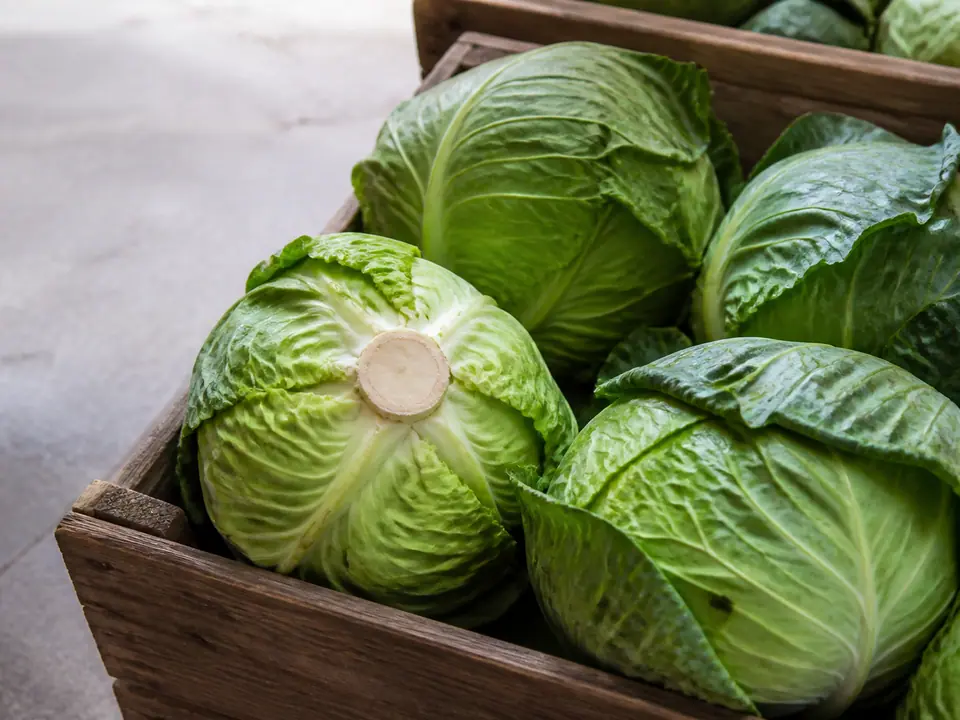
How to choose a cabbage that will stay crisp
A crisp cabbage feels dense, has tightly packed leaves and a dry cut base. The shop test takes less time than rescuing a wilted half later.

5 dinners for a bag of carrots
Roast carrots with beans, blend them into lentil soup, fry them with rice, fold them through pasta or build a spiced traybake around them.
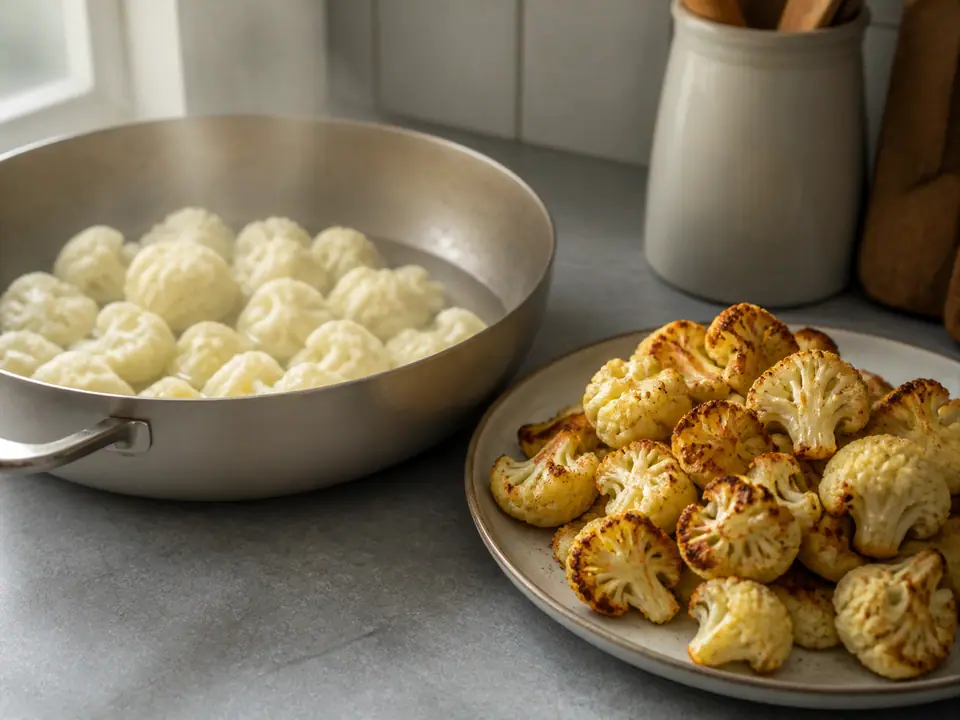
Why cauliflower can smell strong when it is overcooked
Cauliflower contains sulfur compounds that become more noticeable with prolonged wet cooking. Shorter, hotter cooking keeps the smell quieter and the texture firmer.